Tag Archives: undefined

European QE: Implications And Investment Opportunities
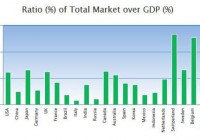
Summary The European QE, while beneficial, will have different impact and consequences than the US and the UK style QE. The retail European market is not as well developed as in the US, UK so the main risk asset likely to benefit from a large QE will be real estate. Countries with largest equity markets to GDP like the Netherlands, Belgium, France and Spain will benefit disproportionately from a risk on equity trade. Difference between European QE and US and UK style QE The European QE announced by ECB last week consists of a monthly Euros 60 bn private and public bond buying that will last until at least September 2016. The euro denominated debt purchases will be all along the yield curve between 2 and 30 years maturities and will represent no more than 25% of each issue. The debt purchases will be mutualised, sharing the loss up to 20% and the rest of 80% will stay with the national central banks. Interestingly, the government debt to be acquired by ECB is investment grade only so Greece and Cyprus debt will likely not be considered for this QE round. While both the Fed and the BoE bought back government debt, so in nature the style of the ECB QE is similar, the lack of debt mutualisation across the Euro zone will skew the benefits towards the countries with best fundamentals in 2016 when the QE starts to slow down. In addition, the funding transmission mechanism in the Euro zone does not work quite the same as in the US or in the UK. Lower rates across the euro zone should lower rates for corporates and individuals but we may not see the impact of these rates in the short term and uniformly across the Euro countries. Euro corporates use far less bond debt than the UK Plc or the US corporates. Even though the European bond market has seen significant growth after the 2009 financial crisis, the majority of the corporate debt, especially for the long term maturities and for the small and medium sized companies, is still bank debt which will be slow to adjust to market yields. The positive and perhaps intended long term consequence here is that it may encourage SMEs to increase financing with corporate bonds issuances in the eurobond market, just like it did after 2009 when bank liquidity dried up. So in the medium and longer term – this is some of the SMEs in Spain and Italy and other non-core Euro markets where the bank lending rates are at 4-6% (Reuters). Most of the immediate positive impact however will be on the larger Eurozone corporates from Germany, France, Spain and the Netherlands (that operate mainly within the Eurozone and as such don’t have a negative currency impact on their revenues) and who can improve their average debt rate substantially. Eurozone mortgages are by and large fixed mortgages from 1 to 5 years and longer and refinancing for these mortgages is not straightforward. While the proportion of variable rate mortgages has increased since 2009, the fixed rate mortgages are still predominant in France, Italy, the Netherlands and Germany, so it will take some time for the wealth effect from lower mortgages and refinancing to have an impact on the consumers in these markets. On the other hand, countries like Spain and Ireland, where most mortgages are based on variable rates may benefit most on short term. Investment Implications As yields are going down, institutional and individual investors are likely to chase higher yield assets like equities, high yield bonds and alternative assets like real estate and private equity: Equity markets in the Eurozone are not as developed as in the UK or the US relative to the size of their GDP. As the chart below shows, the ratio of the equity market to GDP in some European countries like Germany at 54% or Italy at 15% is incredibly low when compared to the UK or the US. Countries with the most developed equity markets, like the Netherlands (NYSEARCA: EWN ), Belgium (NYSEARCA: EWK ), France (NYSEARCA: EWQ ) and Spain (NYSEARCA: EWP ) will likely benefit most from a risk on equity trade. (click to enlarge) Source: Gurufocus, ECB, Reuters Low rates will benefit new investment in real estate and we are likely to see real estate prices going even further up especially in countries where equity markets are not very popular and in countries with mostly variable mortgage rates. Despite a strong performance in the past year, German REITs like Deutsche Wohnen ( OTC:DWHHF ) and Deutsche Annington ( OTC:DAIMF ) are still the best positioned to take advantage of a rising real estate market. Some Spanish real estate developers like Immobiliaria Colonial [COL.SM] may also be an interesting though volatile play. (click to enlarge) Source: Bloomberg Lower Euro will likely bring significant positive changes, even though some economists don’t think so as too many of the goods produced by the euro companies are outside of the Eurozone territory. The services sector, especially the travel and leisure sector including companies like TUI AG, is a clear winner from a lower currency. The SMEs and the corporates with competitive manufacturing bases in the Eurozone exporting outside of the area will also benefit. A lower exchange rate for the Euro will further support the exporters, especially the largest two exporters in the Eurozone who are also highly competitive manufacturers: mostly Germany (which according to WTEx, produced about 29% of the European exports in 2013 and has a large SME sector) and to a lesser extent the Netherlands (with about 9-10% of the European exports in 2013 but a smaller SME sector). In Italy only, the estimated boost to GDP from a lower currency is about 0.6% per year ( CSC, Il Sole 24) While the QE benefits will be widely spread and may give a fresh respite to countries like Italy and France, somewhat ironically the largest positive impact will benefit the countries that have fought it mostly. The Dutch and to a lesser extent the Belgian equity markets and real estate sectors in countries like Germany and Spain will likely be the big winners. Disclosure: The author has no positions in any stocks mentioned, but may initiate a long position in EWN over the next 72 hours. The author wrote this article themselves, and it expresses their own opinions. The author is not receiving compensation for it (other than from Seeking Alpha). The author has no business relationship with any company whose stock is mentioned in this article. Editor’s Note: This article discusses one or more securities that do not trade on a major exchange. Please be aware of the risks associated with these stocks. Disclosure: The author has no positions in any stocks mentioned, but may initiate a long position in EWN over the next 72 hours. (More…) The author wrote this article themselves, and it expresses their own opinions. The author is not receiving compensation for it. The author has no business relationship with any company whose stock is mentioned in this article.
Beware Of Industries About To Be Upended

Ratios are great, but incomplete. To be a great investor, you have to predict the future. But remember your predictions will be imperfect. I’m an analyst at heart, so I love metrics and ratios and data visualizations that show how one investment will work and another will not. When I scour Google finance for the next big idea, I look for low price/book ratios, or low P/E ratios, or high dividend yields. But before you get caught up in all the numbers, think about this from an article on BBC News : “The average lifespan of a company listed in the S&P 500 index of leading US companies has decreased by more than 50 years in the last century, from 67 years in the 1920s to just 15 years today, according to Professor Richard Foster from Yale University.” This information should terrify you, or at least make you think twice about stocks you think of as being “value” investments. It means that our conception of value isn’t just looking for “cheap” but rather do as Warren Buffett does: “It’s far better to buy a wonderful company at a fair price than a fair company at a wonderful price.” What does this mean? Let’s take two companies: Intel (NASDAQ: INTC ) & Coca-Cola (NYSE: KO ). Which is more over (under) valued? Based purely on an analysis of the most-used ratios: Forward P/E ratio: INTC: 13.5 KO: 19.6 Price to cash flow: INTC: 9.0 KO: 17.9 Price to book: INTC: 3.1 KO: 5.7 By every valuation metric, Intel is cheaper than Coca-Cola. If you treated each stock as a bond, you’d earn 11% in cash on Intel vs. only 5.6% on Coca-Cola. Plus, Intel is a tech stock (ignore recent problems in personal computers). Technology has higher growth rates, so that 11% will likely be far more than Coca-Cola’s 5.6% in 10 years, right? Of course I primed you, so you know that logic is faulty. If I imagine a world 20 or 30 years from now, I can still see myself sipping a Coke Zero (or Coke 100 or some Coke brand). There’s not much that can replace my physical and mental relationship with the Coca-Cola brand. Could someone come up with a better formula? Maybe. Could they market it better? Perhaps. Could they secure my loyalty. Could happen. What about incorporating an addictive drug in their drink? Yeah, sure. What about all of the above? Not bloody likely. Because of the amount of change in the technology landscape within my lifetime, I can easily imagine a world without Intel in 20 years (maybe even 10). That doesn’t mean Intel will go away. In fact, Intel may be a good buy, but there’s an added risk. I don’t have the same relationship with my computer chips that I have with Coke. If the processing is fast, and I can do it anywhere, and it’s not crazy expensive, I don’t care if it’s Intel or AMD or the next new thing. Project this outward. If I want to know the total value/price of Coca-Cola vs. the total value/price of Intel, I should take the current market cap of each, the return in cash flow on each compared with the total future cash flows due to me as an owner over the lifetime of the company (discounted by inflation year over year). Intel $176.2 billion market cap $10 billion free cash flow Expected lifetime? 15 years (this is a wild guess, by the way) Coca-Cola $189.7 billion market cap $8 billion free cash flow Expected lifetime? 50 years (again, a wild guess) Ignoring the discount rate (because cash flows will likely grow), we get a rough return from Intel of -15% vs. a rough return of 111% for Coca-Cola. Notice how the least knowable bit of information becomes the most important. This is the essence of Buffett’s philosophy for not getting stuck in value traps. As an analyst, I like to have perfect data. I’m tempted to ignore imperfect data because they’re based on a hunch or a guess or something completely unknowable. But a stock investment is a bet on the future. You cannot ignore the most important piece of information just because it’s imperfect. It’s better to conduct a valid analysis on imperfect data than an irrelevant analysis on perfect data. So if you buy a company based on a ratio, take a little time to think about whether that company would have existed 50 years ago, and will still exist 50 years from today. Disclosure: The author is long KO. (More…) The author wrote this article themselves, and it expresses their own opinions. The author is not receiving compensation for it. The author has no business relationship with any company whose stock is mentioned in this article.

The 6 Best Passive Large-Cap ETFs

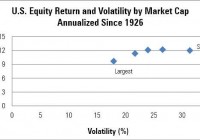
By Michael Rawson The S&P 500 outperformed 80% of active managers in 2014 and beat the small-cap Russell 2000 Index by more than 8 percentage points. Strong fund flows reflected investor preference for large-cap funds as the three exchange-traded funds with the strongest flows in 2014 each track the S&P 500, an index of large-capitalization stocks. While the S&P 500 is the most popular, it is not the only large-cap index that investors can choose. A total stock market index fund is usually the most efficient way for index investors to get exposure to the U.S. stock market because they offer comprehensive coverage of the market with very low turnover. However, there are at least two scenarios where it could make sense to hold separate size segment funds. They could be appropriate for investors who want to give an overweighting to certain size segments, such as small-cap stocks, when they believe that segment will outperform. However, it is very difficult to consistently get these calls right. Because different size segments tend to exhibit different risk and return characteristics, investors could also use these funds to exercise more control over their strategic portfolio allocations. In addition, investors may use size segment funds to balance out a portfolio of active managers. The chart below illustrates the annualized volatility and return for stocks sorted by market capitalization and grouped by quintile dating back to 1926. While smaller-cap stocks have generally offered higher returns over the very long term, there have been several market cycles that favored different size segments. The S&P 500 beat the Russell 2000 each year from 1994 through 1998, but that reversed in each year from 1999 through 2004. – source: Morningstar Analysts There is no industry-agreed-upon definition for large cap , so each index provider defines the large-cap universe in its own way. Morningstar defines large cap as all of the largest stocks, which in aggregate make up 70% of the market value of all stocks; this currently corresponds to stocks with a market cap larger than $17 billion. In terms of index performance, it’s a statistical dead heat. Because the indexes have similar risk and return profiles, the choice of which ETF to use largely comes down to factors such as fees, liquidity, tax efficiency, and personal issues such as which brokerage platform is used or how the other assets in the portfolio are positioned. There are 11 ETFs that track market-cap-weighted passive indexes, excluding mega-cap and total stock market funds that also land in the large-blend Morningstar Category. In terms of fees, they charge between 0.04% and 0.20%. While these fees are low relative to the average large-blend mutual fund, which charges 1.1%, there is no reason to pay more than necessary. We can eliminate the funds charging 0.20%. In fact, it is somewhat odd that iShares is willing to charge just 0.07% for iShares Core S&P 500 (NYSEARCA: IVV ) but charges 0.15% for iShares Russell 1000 (NYSEARCA: IWB ) , which offers similar exposure. The expense ratio is just one aspect of cost. Trading costs also have an impact on total return. While the underlying stocks in each of these indexes are mostly the same and are all liquid, some of the ETFs with fewer assets trade less and have wider bid-ask spreads. For example, the iShares MSCI USA (NYSEARCA: EUSA ) has just $57 million in assets and trades less than $1 million of volume a day. The average bid-ask spread of 17 basis points would quickly eat into the returns of a frequent trader. In contrast, SPDR S&P 500 ETF (NYSEARCA: SPY ) trades more than $20 billion a day, and its bid-ask spread is frequently less than 1 basis point. U.S. equity ETFs tend to be tax-efficient because of their ability to transfer low-cost-basis shares out of the portfolio through in-kind redemptions. However, there have been instances where they have issued capital gains. This is more likely to happen to ETFs with a smaller asset base or trading volume or that happen to switch indexes. The only ETF in this group that has issued a capital gains distribution in the past 14 years is SPDR Russell 1000 ETF (NYSEARCA: ONEK ) . Personal factors also enter into the equation. Brokers such as Schwab, Vanguard, and Fidelity offer trading commission discounts for using certain ETFs (check with your broker). A $10 savings per trade can have a big impact for those investing small sums or making frequent trades. Investors should also consider how their choice will have an impact on their overall portfolio. Investors who already have assets with one index family may want to stick with that suite of index products. For example, if you have a Russell 2000 fund for small-cap exposure, you may want to use a Russell 1000 fund for large-cap exposure to avoid overlaps. After eliminating the higher-cost, less-liquid, and less-tax-efficient ETFs from the list of 11, we are left with IVV, SPY, IWB, Vanguard S&P 500 ETF (NYSEARCA: VOO ) , Vanguard Large-Cap ETF (NYSEARCA: VV ) , and Schwab US Large-Cap ETF (NYSEARCA: SCHX ) . These funds track the four market-cap-weighted indexes in the table below. S&P 500 Unlike the other indexes listed, the constituents of the S&P 500 are selected by a committee that has some discretion over which stocks make it into the index and has stricter rules regarding public float and profitability for new index additions. These rules do not have much of an impact for large caps but can have a bigger impact for small caps. In addition, S&P does not follow a set rebalancing calendar, which helps to keep turnover low. Of the four indexes, S&P has the highest average market cap and includes the fewest mid-cap stocks. The lower exposure to mid-caps explains why the S&P 500 slightly underperformed the other indexes. However, the S&P MidCap 400 outperformed most mid-cap indexes. Of the three ETFs tracking the S&P 500, we prefer IVV or VOO over SPY. While SPY is the most liquid, it is technically organized as a unit investment trust, a more restrictive legal structure, which prevents it from engaging in securities lending, reinvesting dividends, and using index futures. Consequently, SPY has lagged the S&P 500 by more than its expense ratio. CRSP US Large Cap Index This benchmark is more comprehensive than the S&P 500. It targets the largest 85% of the market and applies buffering rules to limit turnover. This sweeps in both large- and mid-cap stocks. VV adopted this index in 2013. Vanguard has a history of working with index providers to refine best practices and negotiate better fees. In fact, it previously switched some index funds to MSCI from S&P. Russell 1000 The Russell 1000 Index dips even deeper into mid-cap territory. The average market capitalization of its holdings is $54 billion compared with $72 billion for the S&P 500. The index includes all but six of the stocks that are in the S&P 500 as well as many more mid-caps. IWB is lower-cost and has better liquidity than the ETFs from Vanguard and SPDR that track the same index. Dow Jones US Large Cap Total Stock Market This index tracks approximately the 750 largest U.S. stocks and is available through SCHX. Schwab offers a suite of ETFs based on Dow Jones indexes. The Dow Jones Small Cap Total Stock Market Index includes the next largest 1,750 stocks, while the mid-cap index encompass 501st to 1,000th largest stocks. S&P acquired the Dow Jones indexes business in 2010. Schwab’s size segment funds have the lowest expense ratios in their respective categories, and liquidity has improved as these funds have gained assets. Disclosure: Morningstar, Inc. licenses its indexes to institutions for a variety of reasons, including the creation of investment products and the benchmarking of existing products. When licensing indexes for the creation or benchmarking of investment products, Morningstar receives fees that are mainly based on fund assets under management. As of Sept. 30, 2012, AlphaPro Management, BlackRock Asset Management, First Asset, First Trust, Invesco, Merrill Lynch, Northern Trust, Nuveen, and Van Eck license one or more Morningstar indexes for this purpose. These investment products are not sponsored, issued, marketed, or sold by Morningstar. Morningstar does not make any representation regarding the advisability of investing in any investment product based on or benchmarked against a Morningstar index.