Tag Archives: undefined

MLP Returns In Your IRA Or Tax Protected Account: Number 3 In The Series
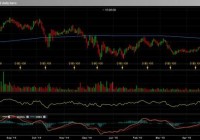
Two MLP CEFs that offer yields over 7% at current prices. Using these CEFs allows one to keep them in an IRA or Tax protected account without concern over the $1000.00 UBTI limit. Both of these CEFs is currently selling below NAV. This is the third article to cover various CEFs, ETFs and ETNs that cover high return issues like MLPs and REITs that are useful for an IRA and/or other tax deferred accounts. The first article in the series is here and the second is here . This piece examines several funds that were suggested in the comments section of my first article, NML and CEM . Neuberger Berman MLP Income Fund distributes payments monthly and currently pays $0.105 per share on the last day of the month. At a price of around $16.00 per share, the fund offers nearly an 8% yield. The chart below indicates that the fund is selling at its low for the year. (click to enlarge) Source: Interactive Brokers NML originated on 3/25/2013 as a CEF and the value of the fund has increased just short of 6% over the past 2 years. The fund is selling at about an 8% discount to NAV since the NAV was $18.43 as of 6/18/2015 and sold for about $17.00 per share on the same date. The CEF’s holdings as of 5/31/2015 are displayed below: (click to enlarge) Source: Neuberger Berman Web Site The current list of holdings is showing either a yield that is the same or greater than last year, which should indicate that the current dividend is relatively safe. However, there is no guarantee that there will not be decreases in the monthly payment at some future time if the prices of oil and gas don’t hold up. The managers of the fund are Douglas Rachlin with 29 years of investment experience and Yves Siegel who has 30 years of investment experience. Both managers personally own several thousand shares of the fund, assuring investors they have a vested in interest in the CEF doing well. The portfolio turnover ran at 10% for 2014 and expenses for the fund excluding income tax were 1.77%. Total expenses including income tax ran near 8%. Since the fund pays income tax on MLP earnings, one does not have to deal with a K-1 or have any concern about having this fund in an IRA. The fund uses leverage and recently updated its lending facility. The fund has the ability to finance $500 million of leverage with a $300 million floating rate facility and a $200 million fixed-rate facility. Clearbridge Energy MLP Fund Inc. (NYSE: CEM ) is a MLP closed end fund run by Legg Mason Global Asset Management. Total assets of the fund amount to $3.12 billion with quarterly distributions that have been increasing gradually since the fund was first started in 2010. Distributions started at $0.35 per share in 2010 with the latest distribution at $0.42 per share. This fund like the others covered in the series sends a 1099 at the end of year so an investor does not need to be concerned about K-1s. Michael Clarfeld, a CFA with 15 years of investment experience, Chris Eades with 23 years of investment experience and Peter Vanderlee, a CFA with 16 years of investment experience are the directors of the fund . The investment objective of the fund is to provide a high level of total return with an emphasis on cash distributions. The fund has grown both the dividend and the NAV since inception, see below: (click to enlarge) Source: Clearbridge Web Site The top 10 holdings of the fund are listed below: Source: Clearbridge Web Site One can see from the fund’s asset allocation below that it is not dependent upon drilling for oil and gas the dividend: Source: Clearbridge Web Site CEM recently completed a private placement of preferred stock and notes totaling $258 million to make new investments. So it is certain that the managers of the fund are planning to exercise leverage in the portfolio. The current expense ratio for this CEF is 2.19%. The current price of CEM is around $23.00 per share with a quarterly distribution of $0.42 per share so that the current yield of the fund is around 7.3%. The fund is selling about 7.5% below NAV just as NML is, so one can buy either of these funds at a discount to the actual worth of their holdings. The holdings of these 2 funds are somewhat different, so an investor desiring greater diversification with one’s MLP holdings could consider buying some of both funds. Conclusion: Both of these CEFs offers a yield over 7% at current market prices and is selling considerably below NAV. Although both have relatively high expense ratios, the leverage these CEFs uses helps cover these costs so that yields remain high. CEM has been in existence longer and has shown greater appreciation and growth in yield than NML and could be the better CEF. However, buying a bit of both gives one greater diversification in the MLP industry without having to deal with K-1s. Using these CEFs as well as others I have covered in the past allow one to have MLPs in a tax-protected account without the concern over the $1000.00 limit imposed by the IRS on UBTI. In addition, they also offer greater diversification and no concern about K-1s if one desires to use them in a regular account. Disclosure: I/we have no positions in any stocks mentioned, and no plans to initiate any positions within the next 72 hours. (More…) I wrote this article myself, and it expresses my own opinions. I am not receiving compensation for it (other than from Seeking Alpha). I have no business relationship with any company whose stock is mentioned in this article.

The Joy Of Portfolio Boredom

The word boring is worth exploring further as it is a very important building block of long-term investment success. Getting rich slowly or maybe the more modest goal of getting financially comfortable slowly means some pretty plain vanilla portfolio construction. The more exciting a portfolio is on the way up, the more “exciting’ it will be on the way down. Last week I stumbled across an article that favorably critiqued an alternative-strategy ETF for being boring which is its objective. “Boring” is not the stated objective in the prospectus but terms like market neutral, absolute return, low correlation to equities and some others really are about boredom. You can judge for yourself whether a given fund that is supposed to be boring is indeed boring, as not every fund will deliver on its stated objective. The word boring is worth exploring further as it is a very important building block of long-term investment success. Ten years ago I wrote a post called Getting Rich Slowly and while I have no idea whether the phrase was a Random Roger original, I think it captures the path that most people want to take in terms of realistic participation in capital markets. Getting rich slowly, or maybe the more modest goal of getting financially comfortable slowly, means some pretty plain vanilla portfolio construction. How you get to plain vanilla probably depends on the level of engagement you want to have in markets but from the top down it should start with blending together things like equities, fixed income and a small slice to alternatives (what for years I’ve been referring to as diversifiers) with relatively simple products and/or individual issues in such a way where all three sleeves avoid trading in lockstep, but over a long period of time gives a chance for having enough money when you need it, which presumably is at retirement. As we have discussed many times before, one of the biggest impediments to long-term financial success is succumbing to emotion at the worst possible times, which can mean panic selling your portfolio at a low or repeatedly panic buying hot stocks at their highs after a pundit just extrapolated past returns on stock market television. I had the opportunity to moderate a panel that included Dr. Richard Thaler about behavioral economics/finance, and one thing he talked about as a very common bias is loss aversion, which basically means that pound for pound people feel losses far more than they feel gains. Take that out a little further and it explains why people often react to large declines like they’ve never happened before; the tendency to think this one is different. The more exciting a portfolio is on the way up, the more “exciting’ it will be on the way down. Investors of course don’t mind excitement when it is resulting in gains, but the longer it goes on, the more complacent they become in terms of forgetting the last decline or using hindsight bias to explain away the last decline. Investors don’t want boring until the market peaks out, which of course is plenty guessable but not knowable. If there is no way to know when the market will peak and losses trigger twice the emotion that gains do, then right there is the argument for boring all of the time. Again, the context for boring is not no equities but if you can buy into the idea that an adequate savings rate, proper asset allocation and not panicking are the most important determinants to long-term portfolio success then the focus shifts more in line with the true long-term objective. You are very unlikely to remember what your portfolio did in the 3rd quarter of 2013 or what the market did that quarter, without looking, because it doesn’t matter in the context of your long-term financial plan. An exception would be if that was the quarter you retired. The only other way some random calendar quarter from your past is likely to matter is if you made some sort of catastrophic mistake like selling out in the first quarter of 2009. The conclusion for me is a diversified portfolio of equities that at the very least offers decent upside participation, fixed income exposure that offers some ballast to normal equity volatility and a little exposure to diversifiers, as I said above, that hopefully allows for managing volatility and correlation such that the potential for panic is at least partially mitigated. Disclosure: I/we have no positions in any stocks mentioned, and no plans to initiate any positions within the next 72 hours. (More…) I wrote this article myself, and it expresses my own opinions. I am not receiving compensation for it. I have no business relationship with any company whose stock is mentioned in this article. Additional disclosure: To the extent that this content includes references to securities, those references do not constitute an offer or solicitation to buy, sell or hold such security. AdvisorShares is a sponsor of actively managed exchange-traded funds (ETFs) and holds positions in all of its ETFs. This document should not be considered investment advice and the information contain within should not be relied upon in assessing whether or not to invest in any products mentioned. Investment in securities carries a high degree of risk which may result in investors losing all of their invested capital. Please keep in mind that a company’s past financial performance, including the performance of its share price, does not guarantee future results. To learn more about the risks with actively managed ETFs visit our website AdvisorShares.com .

Funds For A Crazy Volatile Market

Even though I believe the market is ready for at least a 5-10% correction, I always keep a good part of our portfolios and our clients’ portfolios invested. Why? For these reasons… resulting in these buys! Why? Because the market goes up, not down, about two-thirds of the time. Because no one has a crystal ball. Because we believe in building a Lifetime Portfolio. And because great companies have a way of protecting “somewhat” on the downside by the power of their ability to keep their earnings strong and increase their market share. This makes them less ulcer-producing, as do the kinds of mutual funds that own such gems. One such ulcer-averse fund is Brown Advisory Flexible Equity (MUTF: BIAFX ). This is a very low-turnover fund with a stable of great growth companies, a near 7% cash cushion and less than 1% expenses. BIAFX has not kept pace with the S&P since the 2007 crash, preferring to stick with rock-solid quality rather than chase the more-profitable biotech, social networking, etc. companies that have powered the current market. But for a downturn and recovery? I’ll take these 25 holdings over just about any other 25 I can think of. Next are two small-cap funds. Our discipline demands that we keep a percentage of our funds in small cap value, but that is the segment that has really had the best run over the past few years. What to do? In our case, we have decided to stick with small cap value but to do so in a hedged manner. We have selected two mutual funds that have large cash cushions because they are disciplined enough to buy only when they can find real value and not just because they are “missing out” on something. The most extreme example of this is a fund Morningstar gives only a single star, its lowest rating, to: Intrepid Small Cap (MUTF: ICMAX ). That’s because Intrepid’s current cash position is 74%. Yes, you heard right – 74%. Like me, they are having real trouble finding stocks to buy that actually fit inside the envelope of small cap “value.” Rather than do as so many other fund managers have done – drifted into a different more volatile style box – when ICMAX sells a winner and can’t find a replacement, they choose to stay in cash. This has not harmed their performance. They have soundly thrashed both the S&P 500 and the Small Cap Value benchmarks over the past 10 years. What it has harmed is their assets under management as short-sighted buyers declare, “I’m not paying you to hold cash.” That is so untrue! Sometimes cash is king. Sometimes you want to hold a cushion against an untoward event. And if your niche is small cap value and there is no value to be found, then cash for some hopefully short period of time is a very smart place to be. Especially if, via smart stock selection, you make more money than others using just 26% of your portfolio… Morningstar is kinder to Teton Westwood Mighty Mites AAA (MUTF: WEMMX ), awarding it 4 stars for similarly brilliant performance over time. WEMMX holds only 22% in cash, but they follow an equally strict discipline. As they sell more of their holdings, I expect to see their cash holdings increase as well, although they declare themselves to be a “small cap blend” (value as well as growth) fund. I like the holdings of WEMMX even more than ICMAX and I like the discipline they both bring to investing. ————— As Registered Investment Advisors, we believe it is essential to advise that we do not know your personal financial situation, so the information contained in this communiqué represents the opinions of the staff of Stanford Wealth Management, and should not be construed as “personalized” investment advice. Past performance is no guarantee of future results, rather an obvious statement but clearly too often unheeded judging by the number of investors who buy the current #1 mutual fund one year only to watch it plummet the following year. We encourage you to do your own due diligence on issues we discuss to see if they might be of value in your own investing. We take our responsibility to offer intelligent commentary seriously, but it should not be assumed that investing in any securities we are investing in will always be profitable. We do our best to get it right, and we “eat our own cooking,” but we could be wrong, hence our full disclosure as to whether we own or are buying the investments we write about. Disclosure: I am/we are long WEMMX, ICMAX, BIAFX. (More…) I wrote this article myself, and it expresses my own opinions. I am not receiving compensation for it. I have no business relationship with any company whose stock is mentioned in this article.