Tag Archives: undefined

Top Investments For 2015
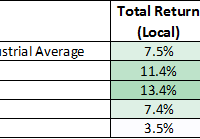
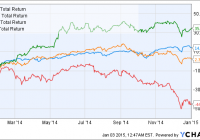
2014 Year in Review Well 2014 turned out to be another interesting year. It was a strong year for investment returns despite numerous issues going on around the world. China is clearly slowing down, Europe is facing deflation, and Russia annexed Crimea. As I said last year, uncertainties are always abound but capitalism continues to unleash human potential. Commodities and oil & gas in particular got slammed again in 2014, following up on steep losses in 2013. I have been recommending that investors avoid commodities for a couple years now ( Canada – Headed for a Crash & Canada: A Storm Brewing in China ). Also I have commented numerous times on how the high oil prices don’t make sense ( Saudi America & US Oil and Gas Drilling ). Before discussing what oil did in 2014 and last year’s market returns, I want to remind readers of what I said last year at this time ( Top Investments for 2014 ). I find it remarkable how oil prices have held up in 2013. US oil production has been off the charts, going up in a parabolic curve. US dependence on foreign oil fell to a 27 year low ( Click Here ). In 2005, the US imported 60.5% of their oil requirements and last year that fell to only 34%. This is a result of the shale oil revolution in the US where oil production is up 46.5% or 2.36 million barrels a day since 2007. If oil prices fall in 2014 that will be another significant headwind for the Canadian economy. Fellow Canadians could have benefited from the fall in commodities by not owning Canadian Dollars. Canadians who invested in the US not only realized out sized gains this year, they also realized foreign currency gains that contributed an additional 7% to their returns. I figured it was only a matter of time before oil fell and boy it did fall off a cliff in 2014. Similarly, the falling Canadian dollar was another theme that continued in 2014. As I have said before, this is a great way to be short commodities since the Canadian dollar is very closely tied to commodity prices. I will be returning to both of these themes throughout this post. 2014 Market Returns Market returns were strong again, making it the sixth straight year of solid gains. Just like 2013, Canadian investors could have benefited from the drop in commodity prices by owning US companies, realizing over a 9% gain from the falling Canadian Dollar. I would still recommend avoiding Canadian dollars as the loonie will likely fall further in 2015 as our economy stalls. Last year I included this chart from JP Morgan that puts market returns into context: (click to enlarge) Commodities As already mentioned commodities got slammed this year. Below is a list of the damage. Oil and natural gas were both down significantly in 2014. Metals also fell as well as agricultural commodities. The only bright spots were the 3Cs – Cattle, Cocoa, and Coffee. For those wondering why oil was down, the answer is shown below. (click to enlarge) Source: Carpe Diem Blog Now if anyone would have said back in 2005 to 2008 that US oil production would rise by over 4 million barrels per day by the end of 2014, everyone would have considered them crazy. Look at that graph again, US oil production has almost doubled in 4 years. Let me say that again, oil production went up 4 million barrels per day in 4 years. That is an economic miracle and we should be thankful for the entrepreneurs who made this happen. To me this is the fantastic part of capitalism, as we all enjoy the benefits of what these entrepreneurs have created. For investors, the above graph shows 4 million reasons to avoid oil investments going forward. Don’t get me wrong there is money to be made in the oil, but just like airlines, it is hard to pick the winners from the losers. We are in the top of the first innings of the shale oil revolution and if you don’t think this isn’t a paradigm shift, you need to look at that graph again. In the words of Henry David Thoreau, “It’s not what you look at that matters, it’s what you see.” 2014 Stock Recommendations So how did the stock recommendations for 2014 turn out? Total returns include dividends and I also included what the total returns were in Canadian dollars (CAD). Overall the results were decent with the exception of Lightstream Resources ( OTCPK:LSTMF ) [TSE: LTS]. I have more to say about Lightstream below. Here is what those yearly returns looked like throughout the year. (click to enlarge) Looking at the graph, Lightstream was up over 40% in May before going on an epic slide erasing nearly all of the equity value of the company. Of course, I pick these stocks for fun and use the year end as arbitrary start and end points but much higher gains can be had for those who sell once the facts change or when the company approaches its intrinsic value. As I said last year, Bank of America (NYSE: BAC ) has been like shooting fish in a barrel. After being up 110% in 2012, it returned 34% in 2013, and returned a respectable 15% in 2014 (with dividends). Like last year, Bank of America is recommended once again for 2015. It is still selling below its intrinsic value. The same can be said for Citigroup (NYSE: C ). Citigroup’s poor returns in 2014 are mostly attributable to failing the Federal reserve’s stress test. That likely won’t happen again this year. Like Bank of America, Citigroup is once again recommended for 2015. POSCO (NYSE: PKX ) and Ezcorp (NASDAQ: EZPW ) are both very cheap and again recommended for 2015. POSCO, a steel producer, is still profitable but struggling to earn decent returns. The steel industry is over-capitalized, iron ore prices have plummeted and the outlook is uncertain. With a book value of $140/share and the current quote of $63.81/share, the stock is cheap. They are a low cost producer so they will be fine. Comments on Lightstream Lightstream was recommended last year but as some readers know I subsequently changed my mind on the company after reading the year end reserve report released in late March (I have made comments elsewhere on an internet investment forum). At the time when I recommended LTS, it was selling for $5.88/share. Looking back at 2012 (the most recent reserve report) they had spent just over $320 million in capital, added 27 million barrels of reserves, and the cost looked very reasonable at around $12 per barrel. I also did a quick and dirty analysis of the company’s proved reserve value and came up with a rough Net Asset Value (NAV) of about $9/share. This has been their NAV for a while, ever since I said it was a poor company back in 2010. (There are several other posts on there about PBN & PBG, If you want some fun reading… do a search on my blog as I had some interesting debates on the company in the past. Click here for an example. ) Anyway, once the reserve report and annual financial statements were released in late March, it became clear LTS had deteriorated significantly. First of all, they spent $719 million in capital in 2013 and added 12.3 million barrels in reserves, This gave them a finding and development cost of over $70 per barrel. That was only the beginning. Obviously, they spent a pile of cash and generated NO value. This can clearly be seen in the annual report where they wrote off the $1.4 billion in goodwill they were carrying. The annual report also revealed to investors how they justified the carrying amount of their assets on their balance sheet. A careful read would have found this comment buried in the details. In addition to discounted cash flows, the Company also considered a range of market metrics in assessing fair value less cost to sell for certain CGUs. Market metric information was obtained from recent transactions involving similar assets.” Ok, so they used “market metrics” to justify the fair value, not the reserve report which is as close to reality as you can get given the assumptions. Anybody looking to acquire a property would do the same analysis and also adjust for drilling opportunities. Market metrics is exactly what most of the people who invest in oil and gas do to justify their overvalued holdings. The problem is every property has different costs and netbacks, so blanket metrics do not work well. Going back to their reserve report, they had a pile of technical revisions and it really makes you question if management was being candid with shareholders. I would also add that the NAV got a 5% boost due to higher commodity prices. They won’t be getting that boost this year. Given the fact that LTS has a very short reserve life, the reserve value will take a huge hit. I have calculated this for LTS and I estimate a 50% haircut to their reserve value. The last thing I determined from the reserve report was that the NAV was less than $2/share after taking into account other assets and all liabilities. This result was based on the over $90 per barrel oil price used in the reserve report. So basically the company destroyed 60-70% of their value with a terrible return on a huge amount of capital. The capital is gone and the equity investors have lost their capital. Anyways, that is what happened to LTS this year. I actually spent a decent amount of time this year analyzing the reserves and asset values for 68 of the 108 oil and gas companies listed on the Toronto Stock Exchange. I didn’t find a single company to invest in. 2014 Other Recommendations For 2014 I also recommended IBM (NYSE: IBM ) in the Safe & Very Cheap category. Here are the results. Clearly the market is still worried about future of IBM. Most of what I have read is concern over IBM’s falling revenue. I really don’t understand what all the fuss is about. IBM has had flat revenue for 10 years. Revenue per share is up 6.5% over the past 10 years and as an owner that is what counts. Also, IBM has been shedding divisions that generate billions in revenue and generate little-to-no profits. That’s right, some lose money. IBM is currently selling one division that generates $7 billion in revenue but loses $500 million per year. I’m looking forward to the higher earnings when that earnings drag isn’t getting in the way. This is a common situation at many companies when you dig into the details. IBM falling 11% does bother me in the least. Revenue and earnings were higher on a per share basis in 2014. It now offers outstanding value. Top Investments for 2015 IBM (NYSE – IBM, $160.44) Ezcorp (NASDAQ – EZPW, $11.75) Bank of America (NYSE – BAC, $17.89) Citigroup (NYSE – C, $54.11) POSCO (NYSE – PKX (ADR), $63.81) If you want investment commentary on these stocks, see what I wrote last year ( Click Here ). For Canadian investors, I believe owning US dollars will once again be advantageous in 2015. I’ll likely discuss a few interested tidbits from the Ezcorp annual report next year. I’ll leave them for you to find. As mentioned last year, be sure to do your homework on any investment. The markets are at all-time highs and while that shouldn’t alarm you, it should invite caution. All of these companies have wide appreciation potential but anything can happen in the short term. All of the recommended companies have short-term headwinds that will clear over time. Cheers to another great year! Disclosure: I own BAC common, BAC Class A warrants, EZPW, & IBM. Editor’s Note: This article discusses one or more securities that do not trade on a major exchange. Please be aware of the risks associated with these stocks.
Energy Funds Worst Performers In 2014 As Oil Price Crash

Energy mutual funds finished the year as the biggest loser after registering a 16.7% year-to-date loss. The other losers were Natural Resources, Equity Precious Metals and Miscellaneous Sector, which slumped 12.5%, 10% and 0.2%, respectively. For the energy sector, the slump was unavoidable given the nosedive that crude prices suffered in the second half of the year. Currently, oil is deeply entrenched into bearish territory and has fallen below the $60-a-barrel level following OPEC’s decision to hold production unchanged, the effects of booming shale supplies in North America and a stagnant European economy. Moreover, a stronger dollar has made the greenback-priced commodity more expensive for investors holding foreign currency. The cut in global crude demand growth by major energy consultative bodies has put the final nail in the coffin. The concerns have dealt severe blow to the energy sector, and as evident from the fact that energy mutual funds category was the biggest loser in 2014. Let’s look at the funds that were the biggest losers last year, and with unfavorable Zacks Mutual Fund Rank they continue to be funds that should be dropped from investors’ portfolios. The 2014 Crude Selloff The West Texas Intermediate (WTI) crude price lost momentum in June and has since then been showing weakness. This is primarily owing to plentiful North American shale supplies in the face of lackluster demand expectations, sluggish growth in China and the prevailing softness in the European economy. Strengthening of the U.S. dollar also impacted the demand for the greenback-priced crude as it is now expensive for importers to buy oil. Amid the soft oil pricing scenario, the international cartel of oil producers’ – Organization of the Petroleum Exporting Countries (OPEC) – stand against oil output cut on Thanksgiving Day added to the supply concern. We believe that the decision reflects the strategic move by Saudi Arabia − which holds the top spot in terms of total production among the 12 OPEC members − to get an advantage over U.S. shale producers. This is because shale oil, which has been witnessing large-scale production in the U.S over the last few years, is relatively expensive. Hence, in the environment of tumbling oil price, it will be difficult for U.S. shale producers to garner sufficient earnings to stay afloat in the industry. OPEC also cut its 2015 forecast consumption by 280,000 barrels per day from its previous expectation, walking in the same track as U.S. Energy Information Administration (EIA) which trimmed its demand outlook for next year by 240,000 barrels per day. Moreover, U.S investment bank Morgan Stanley has given a weak crude pricing projection as it does not expect prices to recover next year. All these acted as dampeners, which dragged down the oil price nearly 50% since mid June. WTI crude is now trading at $57.33 per barrel, a five-year low. In our view, crude prices in the next few months are likely to exhibit a sideways-to-bearish trend, mostly trading in the $55-$65 per barrel range. As North American supply remains strong and demand looks underwhelming, we are likely to experience further pressure in the price of a barrel of oil. 3 Worst Performing Energy Funds The following energy funds were the worst performers in 2014 based on year-to-date loss they suffered. These funds should be dropped from portfolio, as they carry unfavorable Zacks Mutual Fund Rank #4 (Sell) or Zacks Mutual Fund Rank #5 (Strong Sell) as we expect the funds to underperform its peers in the future. Remember, the goal of the Zacks Mutual Fund Rank is to guide investors to identify potential winners and losers. Unlike most of the fund-rating systems, the Zacks Mutual Fund Rank is not just focused on past performance, but the likely future success of the fund. These funds also have high expense ratios. Rydex Energy Services C (MUTF: RYVCX ) seeks growth of capital. The fund invests a majority of its assets in equities of small to mid-cap Energy Services Companies that are domestically traded. It also invests in derivatives. The fund may also buy American Depositary Receipts for exposure to non-Us energy companies. RYVCX currently holds a Zacks Mutual Fund Rank #4 (Sell) and has lost 29.4% year to date. It has lost 39.2% over the last six months. The fund carries an expense ratio of 2.37% as compared to category average of 1.53%. BlackRock Energy & Resources Investor B (MUTF: SSGPX ) invests a lion’s share of its assets in equities of global energy and natural resources companies. It also invests in companies belonging to utilities sector. The fund mostly focuses on small-cap firms. The non-diversified company invests without limit across the globe and usually in at least three countries. SSGPX currently holds a Zacks Mutual Fund Rank #4 (Sell) and has lost 26.2% year to date. It has lost 37.1% over the last six months. The fund carries an expense ratio of 2.1% as compared to category average of 1.53%. RS Global Natural Resources C (MUTF: RGNCX ) seeks growth of capital over the long term. The fund invests most of its assets in companies considered by the fund’s investment team to be primarily involved in natural resources industries. The fund invests in companies from a minimum of three countries. RGNCX currently holds a Zacks Mutual Fund Rank #5 (Strong Sell) and has lost 23.5% year to date. It has lost 36.5% over the last six months. The fund carries an expense ratio of 2.21% as compared to category average of 1.47%.

Emerging Markets Scorecard 2014 – Which Will Outperform In 2015?

Summary Emerging markets in general underperformed compared to US equities. The range of results is wide – with some managing better returns than SPY. The EM story is one of high risk/ high return, but exposure is a must for the long term investor. This article reviews the EM pack for 2014 – top long term value picks, and some tactical picks for 2015. Emerging Markets – 2014 in review. Emerging markets overall put in a lackluster performance in 2014, with Vanguard’s Asia ETF (NYSEARCA: VWO ) returning just over 2% including dividends, compared to an overall return for US equities (NYSEARCA: SPY ) of 14.29%. There was, however, a wide range of performance from various markets, with the top performer, India (NYSEARCA: EPI ) notching up an impressive return of 35%, doubling SPY, and Russia (NYSEARCA: RSX ), down a massive 44%. SPY Total Return Price data by YCharts My own pick for 2014 was Turkey (NYSEARCA: TUR ), which also beat SPY, with an overall return of 15.8% for the year, 4th overall (removing duplicates) behind Philippines (NYSEARCA: EPHE ) 22.1%, and Indonesia (NYSEARCA: EIDO ), which gained 21.8%. Joining Russia at the bottom of the heap are Colombia (NYSEARCA: GXG ), -26.9%, Poland (NYSEARCA: EPOL ), -16.3%, and Chile (NYSEARCA: ECH ), -14.7%. I was personally surprised to see Korea (NYSEARCA: EWY ) generating a negative investor return of -13.5% in 2014. Investors with a really strong stomach for volatility, and a long term view would look for opportunities in Frontier markets, (NYSEARCA: FM ) (NYSEARCA: FRN ). It is not simple to construct an ETF to track these indices, as by definition they are not homogenous, and the performance is highly volatile. This is reflected by the wide variation in performance between the two indices, with FRN down 11.8%, and FM up 3.2% for 2014. The following table has the full picture, with ex dividend data from ETFReplay.com Emerging market ETF total returns. Ticker Fund 2014 2013 2012 2011 EPI WisdomTree India Earnings Index 27.80% -9.20% 25.30% -40.40% EPHE iShares MSCI Phillipines 22.10% -7.70% 47.90% -4.50% EIDO iShares MSCI Indonesia Index 21.80% -23.30% 4.50% 1.90% INDA iShares MSCI India 21.70% -5.00% 0 0 IDX Market Vectors Indonesia 16.60% -23.20% 2.40% -0.60% TUR iShares MSCI Turkey 15.80% -27.30% 65.60% -36.60% THD iShares MSCI Thailand Index 15.50% -14.60% 40.20% -4.20% EGPT Market Vectors Egypt Index 13.60% 7.30% 44.70% -51.70% FXI iShares FTSE China 25 Index Fund 11.40% -2.20% 19.20% -17.60% EWT iShares MSCI Taiwan Index Fund 6.90% 7.80% 18.70% -21.90% GULF WisdomTree Middle East Dividend Index 6.90% 38.00% 7.30% -9.60% MCHI iShares MSCI China Index 6.80% 2.10% 23.30% 0 VNM Market Vectors Vietnam 5.10% 7.80% 26.30% -43.80% FM iShares MSCI Frontier Markets ETF 3.20% 23.70% 0 0 EZA iShares MSCI South Africa Index 2.70% -7.50% 21.10% -15.70% MES Market Vectors DJ Gulf States (NYSEARCA: GCC ) Titans 1.60% 35.90% 6.50% -14.50% GAF SPDR S&P E.M. Middle East & Africa 0.20% -4.70% 21.50% -18.40% EPU iShares MSCI Peru Index -3.60% -25.40% 24.20% -21.80% EWM iShares MSCI Malaysia Index Fund -11.60% 7.80% 14.80% -2.70% EWW iShares MSCI Mexico Index Fund -11.60% -1.60% 32.80% -12.00% FRN Guggenheim BNY Mellon Frontier Mkts -11.80% -14.60% 12.30% -22.40% EWY iShares MSCI South Korea Index Fund -13.50% 3.50% 21.90% -13.50% ECH iShares MSCI Chile Fund -14.70% -23.90% 11.30% -26.40% EPOL iShares MSCI Poland Index -16.30% 3.70% 41.60% -32.20% GXG Global X Interbolsa FTSE Colombia 20 -26.90% -15.00% 27.40% -15.20% RSX Market Vectors DAXglobal Russia -47.20% -0.90% 15.00% -28.20% Aggregate performance 2011-2014. Expanding the picture, the table below adds the performance for the period since 2011, and reorders the aggregate performance: Emerging market ETF total returns. Ticker Fund 2011-2014 2014 2013 2012 2011 EPHE iShares MSCI Phillipines 57.80% 22.10% -7.70% 47.90% -4.50% GULF WisdomTree Middle East Dividend Index 42.60% 6.90% 38.00% 7.30% -9.60% THD iShares MSCI Thailand Index 36.90% 15.50% -14.60% 40.20% -4.20% MCHI iShares MSCI China Index 32.20% 6.80% 2.10% 23.30% 0 MES Market Vectors DJ Gulf States Titans 29.50% 1.60% 35.90% 6.50% -14.50% FM iShares MSCI Frontier Markets ETF 26.90% 3.20% 23.70% 0 0 TUR iShares MSCI Turkey 17.50% 15.80% -27.30% 65.60% -36.60% INDA iShares MSCI India 16.70% 21.70% -5.00% 0 0 EGPT Market Vectors Egypt Index 13.90% 13.60% 7.30% 44.70% -51.70% EWT iShares MSCI Taiwan Index Fund 11.50% 6.90% 7.80% 18.70% -21.90% FXI iShares FTSE China 25 Index Fund 10.80% 11.40% -2.20% 19.20% -17.60% EWM iShares MSCI Malaysia Index Fund 8.30% -11.60% 7.80% 14.80% -2.70% EWW iShares MSCI Mexico Index Fund 7.60% -11.60% -1.60% 32.80% -12.00% EIDO iShares MSCI Indonesia Index 4.90% 21.80% -23.30% 4.50% 1.90% EPI WisdomTree India Earnings Index 3.50% 27.80% -9.20% 25.30% -40.40% EZA iShares MSCI South Africa Index 0.60% 2.70% -7.50% 21.10% -15.70% GAF SPDR S&P E.M. Middle East & Africa -1.40% 0.20% -4.70% 21.50% -18.40% EWY iShares MSCI South Korea Index Fund -1.60% -13.50% 3.50% 21.90% -13.50% EPOL iShares MSCI Poland Index -3.20% -16.30% 3.70% 41.60% -32.20% VNM Market Vectors Vietnam -4.60% 5.10% 7.80% 26.30% -43.80% IDX Market Vectors Indonesia -4.80% 16.60% -23.20% 2.40% -0.60% EPU iShares MSCI Peru Index -26.60% -3.60% -25.40% 24.20% -21.80% GXG Global X Interbolsa FTSE Colombia 20 -29.70% -26.90% -15.00% 27.40% -15.20% FRN Guggenheim BNY Mellon Frontier Mkts -36.50% -11.80% -14.60% 12.30% -22.40% ECH iShares MSCI Chile Fund -53.70% -14.70% -23.90% 11.30% -26.40% RSX Market Vectors DAXglobal Russia -61.30% -47.20% -0.90% 15.00% -28.20% Top of the leader board here is Philippines ( EPHE ), with a 58% return over the period, lagging the 75% return of US equities over the equivalent period. Next up are the Gulf states, whose economies have been booming in the years since the financial crisis, with a recent challenge arising from the slump in the oil price in the second half of 2014. Thailand (NYSEARCA: THD ) and China (NYSEARCA: FXI ) (NYSEARCA: MCHI ) have both been strong performers over the period, with China attracting keen but volatile investor interest, as growth there has slowed. The price of Chinese shares has been more muted, with the recent surge in China A shares driven more by changes to market access for foreign investors than fundamentals. Egypt (NYSEARCA: EGPT ) was a strong performer in 2014, in the aggregate suffering along with India and Vietnam (NYSEARCA: VNM ) from a catastrophic performance in 2011. Markets with a consistently poor track record at the bottom of the performance chart include Russia ( RSX ), Chile ( ECH ), Frontiers ( FRN ), Colombia ( GXG ) and Peru (NYSEARCA: EPU ). EM themes for 2015. The following key themes will dictate the outlook for emerging market attractiveness in the coming year: Commodity prices – especially oil. The recent drop in oil prices has a significant impact on emerging markets, with some markets, such as Russia, Brazil, and the Middle East already suffering in 2014. These markets can continue to underperform while oil prices remain low. OPEC, specifically Saudi Arabia, seem determined to keep oil production at current levels until higher cost marginal producers such as shale players are squeezed out – while forecasting commodity prices is not straightforward, EM investors should work with a baseline scenario of current price levels being maintained for much of 2015. Markets with a high net oil import as a percentage of GDP will benefit from lower oil prices. The top 50 importers are compiled here by Prominent EM’s include Thailand, China, Korea, India, Turkey and Indonesia. Currency risk. Investors in emerging markets recall the painful currency issues around the Asian crisis in the late 90s, when economies with high external debts in US dollars saw their currencies crushed. The greenback has shown strength through 2014, and the majority of currency strategists are tipping further gains in 2015. In this scenario, markets with relatively lower exposure to external debt should fare better. The following graphic shows the balance of debt burden as a percentage of GDP with the real growth rates to support that debt. Emerging market bulls also point to the increase of local currency debt, and local debt holders in many emerging markets as factors that have improved the risk profile for emerging markets. GDP growth, debt-to-GDP and borrowing costs (click to enlarge) Source: JP Morgan. ‘Guide to the Markets’ March.2014 Structural economic reforms. Several of the prominent EM’s are undergoing a process of structural economic reforms, as they position for the jump to mature status. These vary from country to country, but key themes are around corporate governance, access to international capital markets, the reduction of bureaucracy (or corruption), tax reform, unwinding of energy subsidies, and import substitution policies. International investors will be keenly watching the progress of several markets in enacting these reforms. Foreign direct investment, and equity investments will be pulled towards those economies which demonstrate progress to sustainable growth. New leadership in India and Indonesia will be under close scrutiny. In India, prime Minister Modi is the figurehead for a new business friendly leadership. The market’s dramatic rise in 2014 anticipates some significant changes, however, the Indian political process is complex, and Modi’s ability to make real progress is now under scrutiny. In Indonesia, President Joko Wibowo , popularly known as “Jokowi” is a potential game changer. His background as a small business owner, and track record in Indonesian politics, most recently as mayor of the capital, Jakarta, promise much. He takes a hard line on corruption and bureaucratic waste. Critics question his somewhat nationalistic policies, and his depth of experience in economic management at the national scale. China, under Ji Xinping, is shifting from a focus on absolute GDP growth to balanced and sustainable growth. This involves managing the key risks of an overheated asset market, which has been stimulated by poorly regulated lending, and the potential for enhanced inflationary pressures if the Yuan is not allowed to appreciate against other currencies. Private debt levels in China are not transparent, as there is a significant ‘shadow banking’ industry – however it is safe to say that the China economy is more highly leveraged than the official figures show. Current fundamental valuations. One obvious reason for investors to consider diversifying into emerging markets is to seek valuations that are more appealing than the current levels of the US markets, which are currently showing strong valuations on several metrics. I find the following data compiled by German analyst Star Capital to be a useful overview: This indicates China, Turkey, and Russia as the three top value markets from a balanced view of several valuation models. On this analysis, India and Indonesia appear among the emerging markets offering the poorest value. Outlook for 2015 Bringing these factors together, my outlook for emerging markets for 2015: Russia – suffered terribly in 2014 due to the oil price collapse and the economic sanctions combined. Rouble devaluation has added to the challenge. While representing cheap valuations, the story for Russia in 2015 is tied to Oil. A strong rebound in 2015 is possible, but only following a bottom in the oil price – expect RSX to underperform again this year. Eastern European satellites tend to follow Russia’s fortunes. China – ended 2014 well, and still has relatively good value metrics. With China, the risk of an asset bubble deflation and a hard landing could see the recent progress unwind. Low energy prices should help China in 2015. I am bullish in the long run, and at a single digit trailing p/e, with 7% growth expected, there is some risk buffer. I expect China to see some volatility in 2015, but do feel that I need to add China exposure to my portfolio during the year. India – despite the oil price tailwind, I see some challenges ahead in India meeting the expectations of exuberant investors. With prices at nearly 20 times earnings and just under 3 times book value, India looks a little spicy for me! I expect to see progress in 2015, but not to see India at the top of the 2015 performance charts. Latin America – typically exposed to oil prices, with high debt burdens, I see a further year of challenge ahead for most Latin markets. Mexico has some advantages in terms of proximity and exports to US, so should benefit from a US recovery – however valuations show less room for upside. My pick for 2015. I continue to see Turkey as a strong emerging market performer for 2015, backing up from a 4th place in 2014. As can be seen from this chart, TUR outperformed SPY by a wide margin for much of the year. SPY Total Return Price data by YCharts The stock price pattern for the year has followed the sentiment of SPY investors, correcting both to the upside and the downside. My thesis for continued strong performance for TUR is: Good long term economic and demographic outlook. Continued political progress by Erdogan – not smooth, but the situation has stabilised. Low oil prices continue during 2015. Debt burden under control. Current valuations are modest. To the downside, I see TUR could suffer in price if there is a major US correction – for me this would represent a buying opportunity. I do recommend stops or hedging for more volatile positions. Like most EM’s TUR can be suddenly impacted by domestic political or social issues. EM to accumulate for the long term. Vietnam is an unsung hero of South East Asia. Vietnam has a vibrant and dynamic demographic, and is shifting its economy from a commodity exporter to an industrial and manufacturing base. While still a net oil exporter of crude oil, Vietnam is becoming a favourite manufacturing alternative to China and Thailand for foreign high tech firms. In 2011, performance was impacted by a property bubble – this has now deflated, the currency has stabilised, and risk factors are now neutral. As can be seen from the chart below, VNM was another high performer out of EM’s for much of 2014. It proved resilient to the early decline in oil process, but as broad emerging markets (NYSEARCA: EEM ) started to decline, VNM followed the momentum down. SPY Total Return Price data by YCharts Lower oil prices will impact Vietnamese government tax revenues, and this might have some impact on fiscal stimulus in the short term. I see Vietnam as a natural successor to Thailand in the region, and will accumulate on any price weakness. With a p/e multiple of 13.5 at current pricing, I am accumulating VNM. Expect VNM to perform in line with EEM for 2015. In summary – I am convinced that it is important for long term growth investors to have exposure to emerging markets. Careful analysis of macro trends is needed to identify the markets that will add value to a portfolio. It is also important to consider valuation, as EM investors can sometimes overreach the fundamentals. I look for potential first, macro environment second, then value. TUR & VNM will be my focus for 2015. Disclaimer: The author is a private investor, and not an investment adviser. Analysis and opinions are shared for the interest of readers and are not, and should not be used as investment advice. Always consult a professional adviser.