Tag Archives: transactionname

PPL Corp. – Early Birds Catch The Worm

PPL has changed their business strategy to focus on a niche market. It is now a regulated utility focused on transmission and distribution assets. The company’s risk profile has been reduced. PPL could become a takeover target. PPL Corp. (NYSE: PPL ) is beginning to look attractive. In early June, PPL spun off their fleet of merchant power plants to a new company called Talen Energy (Pending: TLN ). By spinning off one part of their business, PPL changed its profile from a hybrid to a niche utility. The new PPL is a regulated utility. It is no longer exposed to the volatility associated with nation’s new deregulated power markets. It is no longer exposed to financial and political risks associated with U.S. Environmental Protection Agency or Nuclear Regulatory Commission actions. Instead, most of their revenues will be regulated and their earnings will become stable. PPL’s potential value is understood in the context of industry trends. Until recently, large utilities hedged their bets by spreading their positions along the utility value chain. Most wanted to diversify their portfolio of assets by owning power plants, transmission lines, pipelines, distribution wires, metering systems and energy service companies. They wanted to own regulated assets. They also wanted to own deregulated assets. For those utilities who tried owning everything, it did not work out well. Some were burned by the market. Others were overwhelmed with indirect expenses. A few saw their bond ratings limited as investors assessed their risks. Today, utilities are adopting a new strategy. One by one, the nation’s largest utilities are shifting their portfolios. One example is Duke Energy (NYSE: DUK ). Last April, Duke sold two deregulated businesses to Dynegy (NYSE: DYN ) for $2.8 billion in cash. One business was Duke’s fleet of deregulated power plants. The other was their deregulated energy services business. Today, most of Duke’s assets are regulated. Another example is Dominion Resources (NYSE: D ). Dominion sold a fleet of deregulated power plants and prematurely retired a nuclear plant. They also sold their deregulated energy services business to NRG Energy (NYSE: NRG ). While they still own a merchant nuclear facility, most of Dominion’s assets are regulated. Some utilities are unable to sell disaffected assets. Instead, they decided to do the next best thing. They decided to change the percentage of assets within their portfolio. To change their portfolio to more favorable emphases, they buy more of one asset and reduce numbers of other assets. Today, two large utilities are attempting to change their portfolios by acquiring distribution-only utilities. One example is NextEra Energy (NYSE: NEE ). NextEra is attempting to acquire Hawaiian Electric Industries’ (NYSE: HE ) utility. They are also attempting to acquire OnCore Electric Delivery (the Texas-based electric distribution utility owned by bankrupt Energy Future Holdings Corp.). By acquiring more distribution utilities, NextEra increases their footprint, reduces their reliance on one state’s regulator and de-emphasizes their generating profile. Another is example Exelon (NYSE: EXC ). They cannot easily sell their huge fleet of merchant power plants, which is mostly nuclear. They can adjust their profile by acquiring a wires-only utility, which is one reason why they are in the process of acquiring Pepco Holdings (NYSE: POM ). Pepco is mostly a regulated wires-only utility. If Exelon’s acquisition is successful, Exelon will become more of a regulated utility and less of a merchant utility. As a result, their access to capital is improved and their cost of capital is reduced. These examples are relevant to the new PPL. Now that PPL is mostly a wires-only utility, the company has become a niche player. This change in strategy should be attractive to investors. It could also be attractive to other utilities who might want to expand their footprint or alter their profiles. To be clear, the new PPL could be an attractive takeover target. If another utility attempts to buy PPL, shareholders could be rewarded. It may take time. It may not happen overnight. However, PPL is paying a stock dividend. That dividend could help buy shareholder patience. However, investors should be careful. There is a reason PPL’s dividend is attractive. It is possible PPL’s management could lower the dividend. The possibility seems remote. In their February conference call , PPL’s chairman and CEO addressed the complany’s dividend plans: But as we’ve said, post spin, our intent is to continue to maintain the same level of dividend prior to the spin. And we’ll look at opportunities where appropriate to grow it if we can. So that’s kind of still the game plan going forward. There appears to be equivocation. We can see why in their May conference call . In that call, PPL’s CFO addressed the dividend issue again: We recognize that the domestic payout ratio to fund our dividend was over 100% beginning in 2016. With our ability to dividend between $300 million and $500 million a year from WPD over the next few years, we would target to get the domestic payout ratio back under 100% for 2016 and continue to lower that domestic payout ratio in 2017 and 2018. Today, forward ratios appear to support PPL’s dividend goals. If everything goes as planned, the dividend should remain intact and possibly grow. However, PPL owns WPD utility system. WPD serves end-users in Wales and England. It has several subsidiaries operating in Wales and England. Over 40% of PPL’s assets are owned by their WPD subsidiaries. Approximately 33% of PPL’s forward revenues are derived from WPD subsidiaries. With billions of dollars in another country, PPL is exposed to United Kingdom’s economy and currency. They are also exposed to U.S. taxes on repatriated funds. If any unforeseen event takes place, there is risk PPL’s dividend may require adjustment. As a reminder, Exelon surprised their shareholders by cutting their dividend . Prior to acquiring Constellation Energy, Exelon’s management suggested dividends could be maintained. A few months after they completed their Constellation acquisition, Exelon’s dividends were cut. The stock tumbled. For PPL investors, the challenge is the company’s fundamentals. It is difficult to reference a baseline when the baseline suddenly shifts. In PPL’s case, when they spun off their generating company, it became difficult to reference past performance. As a result, it may take several quarters for investors to digest the full effects PPL’s spin-off. Nevertheless, speculators may want to accept management’s guidance and jump in. As uncertain as they may be, some ratios look attractive. PPL’s current yield is about 5%. Its price/earnings ratio is below 11, its forward earnings appear healthy, and its risk/reward suggests buying now — even if some critical facts are largely unknown. Fundamental investors may want to wait. PPL’s management has aggressive capex plans. They may attempt to buy a competitor and expand their wires business. There could be some dilution. Ratios could be adjusted. Then again, a hungry utility may want to jump in, pay a premium and buy PPL. In that case, ratios and earnings estimates are largely academic. Those who bought early may catch the worm. Disclosure: I/we have no positions in any stocks mentioned, and no plans to initiate any positions within the next 72 hours. (More…) I wrote this article myself, and it expresses my own opinions. I am not receiving compensation for it. I have no business relationship with any company whose stock is mentioned in this article.
When Should You Sell A Mutual Fund?

Lipper’s Jake Moeller examines some qualitative reasons to reconsider holding a mutual fund investment. Investors interested in this topic can also register to attend the Lipper UK Fund Selector & Fund of Funds Forum in London on July 14, 2015. As a former fund-of-funds manager, Lipper clients regularly ask me about sell triggers for mutual funds. This question is quite amorphous; there are many factors that could result in a fund no longer being “fit for purpose,” but that depends on how the fund is being used. When investors blend funds into a portfolio, they have different tolerances for a sell decision than when, for example, they hold a single fund in isolation. When I managed a guided-architecture platform from which I constructed a number of portfolios, I would often sell a fund out of my portfolios but still keep it on the guided-architecture platform. Such decisions are uniquely a factor of what fund selectors call “style bias.” A large-cap fund, for example, might underperform considerably in a sustained mid-cap rally, but that doesn’t mean it is a poorly managed fund. The following factors are some key reasons to consider letting a fund go: Fund manager departure Fund managers move house for myriad reasons: ambition, retirement, redundancy to name a few. If the departure is restricted to a single manager, this is generally a “hold and wait” situation. Many investors will follow the new fund manager, but a large fund house should have contingency protocols in place and the performance of the old fund shouldn’t necessarily head south. Where a fund house is very quiet about a key departure, there may be a legal covenant underpinning an unpalatable situation. A single fund manager departure can also signal the start of distracting team restructuring and destabilization. Respect the fund house that gets information out early. The less that is said, the stronger the sell signal. “Activeness” A fund manager who closely tracks an index may be doing so for perfectly legitimate reasons: a lack of conviction, a portfolio restructure, or staff changes can result in emergency indexing. It is the duration of this positioning that matters. An active equity fund manager’s maintaining an index position for over three months, for example, would certainly be a red flag. Marketing support Often overlooked in importance: when a fund house stops marketing a fund or has another flavour of the month, this can often be a bad sign. “Legacy” funds are often poorly managed, and with little inflow they potentially leave investors languishing at a disadvantage. The retrenchment of sales directors can often be another leading indicator that funds might switch to legacy footing or that they are expecting less supportive inflows into their business. Corporate activity A takeover, acquisition, or merger requires considerable analysis, but it can be reduced to a very fundamental issue: cultural compatibility. Not many strategic bond managers, for example, would take well to a new parent company’s investment committee favoring utilities at any cost “because that’s best for our balance sheet.” Capacity A fund that becomes too large to maintain a manageable number of securities in its portfolio is likely to become either an index hugger or to compromise the technical expertise of its manager. There are so many quality boutique funds in the market that there is no excuse for holding an active fund that has say 2,000 securities in it. Outflows Outflows in and of themselves are not always a concern. However, when they coincide with a falling share price (where the fund manager is listed) and poor performance, you have a pretty strong sell signal. You will want to get out before all the cabs have left the rank. Round peg, square hole Has your fund house recently appointed a head of U.K. equities for your U.S. portfolio? Fund management is a specialized task and is only rarely truly portable. An expertise in one area does not guarantee expertise in another. Such an appointment warrants critical review. Courage under fire If fund managers are underperforming when their style should be in favour, an investor needs to question the skill of the managers; most fund managers make bad calls in their career but restore faith by sticking to their guns. If poor stock selection results in a fund manager “tweaking” the process or compromising philosophies, this should act as a warning flag. Poor performance Differentiate symptom and cause. Poor performance needs to be understood, not reacted to blindly. Where poor performance is a result of style biases or out-of-favor portfolio selection, one may likely end up selling just as the fund turns around. Where poor performance coincides with any of the qualitative factors outlined above, it is unlikely to be coincidence. Furthermore, these factors may occur before performance starts to be affected. Such factors warrant serious consideration to saying adieu to a fund.

EWM: Does This Former Tiger Economy Merit A Closer Look?

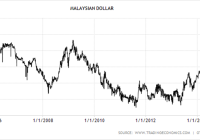
Summary Malaysia has steadily weaned itself off oil revenues and reduced the budget deficit by introducing new taxes and reducing subsidies. Despite high growth, 2.3% inflation and strong foreign currency reserves, the Malaysian dollar has weakened and is close to global financial-crisis lows. Expensive valuations, meager earnings growth and political instability do not provide many incentives to invest in EWM. With a GDP per capita of $12,127, Malaysia is the richest nation state in Southeast Asia. Many investors have avoided Malaysia due to political uncertainties and an over reliance on oil for government revenues. On March 2014, the judiciary found the opposition leader, Anwar Ibrahim, guilty of sodomy and jailed him for five years. While the political situation has not calmed since the verdict, Prime Minister Najib Razak has continued to liberalize the economy. Reforms As of 2015, Malaysia is the 14th most competitive economy in the world, ranked higher than countries like Australia, United Kingdom, South Korea and Japan. Subsidy reforms have not only improved competitiveness but have also bolstered the government’s balance sheet. In December 2014, the government ended all fuel subsidies, saving $5.97 billion annually . The minimum quota for Malay ownership in publicly traded companies has been lowered from 30 percent to 12.5 percent. Changing Economy Economic growth comes with problems as Malaysia’s attractiveness for lower-wage manufacturing has diminished as average wage levels have increased, making Malaysia an upper middle-income country. The government has championed efforts to become the world’s center of Islamic Finance, promoting an appreciation of the currency, even at the cost of exporters. As a result, Malaysia is the global leader in the sukuk (Islamic bond) market, issuing US$17.74 billion worth of sukuk in 2014 – over 66.7% of the global total of US$26.6 billion. Government Budget The Government is hugely reliant on Oil-based revenues from Petronas but has managed to diversify its income sources. While 30% of the government’s total revenue in 2014 still came from oil-based sources, the proportion is lower than 40% in 2009. To further reduce dependence on oil, the government implemented a 6% goods and services tax in April 2015. Due to such measures and a reduction in subsidies, the government debt to GDP ratio has returned to 2010 levels of 52.8%. Currency The Malaysian Dollar (also known as the Ringgit) has been subject to capital controls since September 1998, a consequence of the 1997 Asian financial crisis. The currency was pegged to the dollar at 3.80 from 1998 to 2005. Malaysia ended the peg on July 2005, but the currency is still a managed float, trading within ranges deemed acceptable by the national bank. The currency steady strengthened against the U.S. dollar until the 2013 taper tantrum. (click to enlarge) Despite the weaker currency, the economy has not been stronger since the financial crisis. The economy posted 6.0% GDP growth in 2014 and has averaged 2.3% inflation in the past five years. The benchmark interest rate of 3.25 is unchanged since September 2014, with only one rate hike in the past four years. However, the Current Account to GDP % has decreased from above 15% pre-financial crisis to just 5.7% in the past few years. This decline is unlikely to reverse course as Malaysians utilize their higher incomes to purchase imported goods. Still, the economy is likely to withstand a Fed tightening cycle with over $97 billion in foreign currency reserves . iShares MSCI Malaysia ETF ( EWM) Holdings (click to enlarge) The table above contains the top 16 components of EWM by weight. It should be noted that the numbers presented here, differs from data provided by iShares. While the discrepancy is partially due to the 28.4% weight I did not consider, I believe other factors are at play. For example, the WSJ and iShares disagree on the S&P P/E and dividend yield. The data in the above table was collected from malaysiastock.biz Financial stocks have the highest weight in the ETF at 31% and account for 3 of the top 4 holdings. There is also a divergence in growth between Public Bank ( OTC:PBLOF ) & Malayan Banking ( OTCPK:MLYBY ) vs CIMB ( OTCPK:CIMDF ) & AMMB ( OTC:AMMHF ). The former has enjoyed double digit revenue growth compared the latter at single digits and therefore commands a P/B premium. The utilities are not dividend paying income stocks; rather they are positioned for growth. Both Tenaga Nasional ( OTCPK:TNABY ) and Petronas Gas ( OTC:PNADF ) have dividend yields of 2%, below the 3% yield for the whole ETF. They tend to invest more of their earnings into projects which supply growing electricity demand. Tenaga appears to be the cheapest stock in the ETF but it is merely enjoying the drop in commodity prices last year. The telecoms and financial stocks pay the highest dividends and are the cheapest on a Price/Cash Flow basis. The only consumer staples stock and the only materials stock in the top 16 have negative revenue growth, showing how these sectors are struggling in every market. The stocks with the highest growth rates, the healthcare stock IHH ( OTCPK:IHHHF ) and the consumer discretionary stocks of Genting ( OTC:GEBEY ) also have higher P/E ratios than average. The ETF does not present a bargain in individual stocks or as a whole. The dividend yield is only 1% than yields on developed market stocks. 5yr CAGR growth rates at single digits suggests that there is not much growth to be had by investing in Malaysia. While the P/B and P/Cash Flow ratios seem cheap, it’s only due to the high weighting of financials in the ETF. Conclusion Investing in EWM over the iShares MSCI Emerging Markets ETF (NYSEARCA: EEM ) is not a value, growth or income proposition. While the reforms taken by Prime Minister Najib Razak are encouraging, the political scene remains frothy. An internal power struggle between the PM and his mentor has erupted and respected business leaders are openly criticizing government policies. A possible Fitch downgrade over the $11.5 Billion debt of 1Malaysia Development Berhad (1MDB), a state-owned investment company should also concern current EWM investors. While moves taken to reduce the budget deficit and reliance on oil are encouraging, it would be wiser to revisit the ETF after the Fed raises rates and the political situation improves. Editor’s Note: This article discusses one or more securities that do not trade on a major U.S. exchange. Please be aware of the risks associated with these stocks. Disclosure: I/we have no positions in any stocks mentioned, and no plans to initiate any positions within the next 72 hours. (More…) I wrote this article myself, and it expresses my own opinions. I am not receiving compensation for it (other than from Seeking Alpha). I have no business relationship with any company whose stock is mentioned in this article.