Tag Archives: setpageviewname

2 Sectors Gaining On Steady Labor Market

Recently released economic data indicated that the labor market is witnessing robust recovery. A significant decline in the initial claims figure released Thursday further reaffirmed the strong improvement. Several sectoral data published lately showed that the retail and housing sectors are gaining the most from this improving labor market trend. Steady Labor Market The U.S. Department of Labor reported that jobless claims declined from the prior week’s level of 279,000 to 267,000 for the week ending June 13, significantly below the consensus estimate of 276,500. This marked the fifteenth consecutive week of initial claims tally remaining below 300,000, marking its lengthiest stretch below this level in nearly 15 years. Meanwhile, according to nonfarm payroll data released earlier this month, the economy created a total of 280,000 jobs in May, witnessing the largest job addition since Dec 2014. Also, except for March, the labor market witnessed healthy job additions throughout the year after creating nearly 2.95 million jobs in 2014 – its highest in 15 years. Though the unemployment rate marginally rose to 5.5% in May, the rate is expected to decline gradually to Fed’s target this year. Average hourly wages also saw an impressive year-on-year gain of 2.3%, indicating a strong recovery in labor market conditions. Trending Sectors Retail Retail is one of the main sectors to benefit significantly from the steady labor market this quarter. Last week, the U.S. Department of Commerce reported that retail sales increased 1.2% in May from the previous month to $444.9 billion, significantly higher than April’s revised gain of 0.2%. It was also reported that retail sales rose 2.1% year over year through the March to May period. Meanwhile, March’s gain was revised upward to 1.5%, marking the highest monthly gain in almost five years. Separately, the University of Michigan and Thomson Reuters’ preliminary reading of consumer sentiment was at 94.6 in June. This was more than the consensus forecast of an increase to 91.2 as well last month’s figure of 90.7. Another report released this month also revealed that consumer credit increased at a seasonally adjusted annual rate of 7.25% in April. All of these data go to show that the economy is on a solid footing. Impressive recovery in this sector is likely to have a positive impact on retail ETFs including the Market Vectors Retail ETF (NYSEARCA: RTH ) and the SPDR S&P Retail ETF (NYSEARCA: XRT ) . While RTH carries a Zacks ETF Rank #1 (Strong Buy), XRT holds a Zacks ETF Rank #2 (Buy). Hence, investors may bet on these two ETFs to gain from the improving retail environment. Housing This is another sector that has rebounded strongly in the second quarter overcoming the negative impact of a harsh winter in the first banking largely on strong labor market conditions. The National Association of Home Builders (NAHB)/Wells Fargo housing market index rose five points from May to 59 in June, in line with the September 2014 reading. September’s reading was, by the way, the highest since Nov 2005. This was also the highest reading in the last nine months. Despite a decline in housing starts, most of the housing data released recently reveals that the housing sector is ready to make considerable gains. While building permits have hit a near six-year high in May, U.S. construction spending touched its highest level in more than six years in April. Separately, a significant rise in home prices also signaled an increase in demand in the housing market. Housing market recovery in the second quarter boosted homebuilder ETFs like the PowerShares Dynamic Building and Construction Portfolio ETF (NYSEARCA: PKB ) and the SPDR Homebuilders ETF (NYSEARCA: XHB ) . In the past three months, PKB and XHB gained around 5.2% and 2.3%, respectively. Both these ETFs carry a Zacks ETF Rank #3 (Hold). These ETFs are likely to gain further on a brighter outlook on housing and are thus likely to remain on investors’ radar. Originally posted on Zacks.com
3 Funds To Buy As Consumer Sector Trends Up

The consumer sector is currently experiencing a robust run. Among the S&P 500 industry groups, the Consumer Discretionary (NYSEARCA: XLY ) has the best gains in the past 6 months and the second best gains year to date. The consumer sector’s strong performance comes at a time when many others are finding it tough to fight market volatility. For example, Utilities, Energy and Industrials are down for the year so far. The consumer sector is having a good run on the back of moderate economic recovery, better job prospects, improved business and renewed optimism. Rising wages and cheaper fuel are the other positives. Commodity costs have in many cases stabilized. Consumers are also expecting lower inflation primarily due to lower gas prices. A decline in commodity prices may improve profit margins for certain staples companies. To help the momentum, recent consumer data including retail sales and consumer sentiment have been very encouraging. Amid the positives, let’s look into some mutual funds that are focused on the retail or consumer sector. Consumer Sentiment Improves The University of Michigan and Thomson Reuters’ preliminary reading of consumer sentiment was at 94.6 in June. This was more than the consensus forecast of an increase to 91.2 as well last month’s figure of 90.7. This encouraging report comes despite an increase in petroleum prices. Higher petroleum prices in turn fueled an increase in PPI for the month of May. PPI gained 0.5% in May, more than the consensus estimate of an increase by 0.4%. This was the highest increase recorded in more than 36 months. Retail Sales, Consumer Credit Rise Retail sales increased 1.2% in May from the previous month to $444.9 billion. This rate of growth was significantly higher than April’s revised gain of 0.2%. The auto sector, which accounts for around 20% of retail sales, was one of the main catalysts behind the surge. May’s figure increased 2.7% from the year-ago level. Meanwhile, March’s gain was revised upward to 1.5%, marking the highest monthly gain in almost five years. Sales in the auto sector also played an important role in boosting sales in May. Sales at motor vehicle & parts dealers rose 2% from the previous month, compared to 0.7% rise in April. It surged 8.2% from year-ago level. The auto industry witnessed its best May ever in terms of light vehicle sales. Strong demand for light trucks along with crossovers and SUVs boosted auto sales in May. Low level of oil prices and a low-rate environment helped the auto sector to register strong gains. Additionally, another report revealed consumer credit increased at a seasonally adjusted annual rate of 7.25% in April. Non-revolving credit increased at an annual rate of 5.75%. Revolving credit also increased at an annual rate of 11.5%. 3 Mutual Funds to Buy Below we present 4 mutual funds focused on retail or consumer sector that either a Zacks Mutual Fund Rank #1 (Strong Buy) or Zacks Mutual Fund Rank #2 (Buy) as we expect the funds to outperform its peers in the future. Remember, the goal of the Zacks Mutual Fund Rank is to guide investors to identify potential winners and losers. Unlike most of the fund-rating systems, the Zacks Mutual Fund Rank is not just focused on past performance, but the likely future success of the fund. They also have encouraging year-to-date and 3 and 5-year annualized returns. The minimum initial investment is within $5000 and they carry no sales load. The Fidelity Select Retailing Portfolio (MUTF: FSRPX ) invests a minimum of 80% of its assets in securities of firms involved in merchandising finished goods and services to consumers. FSRPX currently carries a Zacks Mutual Fund Rank #1 and has year-to-date and 1-year gains of 6.6% and 23.7%. The 3 and 5 year annualized gains stand at 22.5% and 21.1%. The annual expense ratio of 0.81% is lower than category average of 1.48%. The Rydex Retailing Fund (MUTF: RYRAX ) seeks growth of capital. RYRAX invests almost all its assets in equities of US-traded retail companies. Apart from investing in small to mid-cap retailing companies, RYRAX may also buy ADRs to get exposure to foreign retailers. RYRAX may also invest in derivatives and US government securities. RYRAX currently carries a Zacks Mutual Fund Rank #2 and has year-to-date and 1-year gains of 6% and 17.9%. The 3 and 5 year annualized gains stand at 18% and 17.7%. The annual expense ratio of 1.83% is however higher than category average of 1.48%. The Fidelity Select Consumer Discretionary Portfolio ‘s (MUTF: FSCPX ) objective is capital appreciation. FSCPX normally invests at least 80% of its assets in companies mostly involved in the manufacture and distribution of consumer discretionary products and services. FSCPX currently carries a Zacks Mutual Fund Rank #1 and has a year-to-date and 1-year gains of 5.3% and 15.3%. The 3 and 5 year annualized gains stand at 20.5% and 18.2%. The annual expense ratio of 0.79% is lower than category average of 1.48%. Separately, investors may also focus on Putnam Global Consumer Fund A (MUTF: PGCOX ) and ICON Consumer Staples Fund A (MUTF: ICRAX ), both carrying a Zacks Mutual Fund Rank #3 (Hold). PGCOX has gained 8.8% over the last one year and its 3 and 5 year annualized gains stand at 17.4% and 15.2%. ICRAX’s 1-year gain is 11.5%, whereas the 3 and 5 year annualized gains stand at 12.8% and 7.4%. Originally published on Zacks.com

GTAA Is For Real (Part 3): Why VBINX Is The Wrong Benchmark

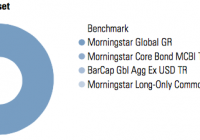
To judge a strategy, it is critically important to identify an appropriate benchmark. For several reasons, comparing tactical strategies to “balanced portfolios” like VBINX is inappropriate. The Global Market Portfolio meets all the criteria for a proper benchmark, making it is the most appropriate baseline for assessing GTAA strategies. At our research blog, we recently posted an article discussing how many noteworthy investment commentators either misunderstand or misconstrue the salient qualities of Tactical Asset Allocation strategies. We encourage you to read the entire piece, but today’s post will be limited to the topic of benchmarking. One of the most common failings of the investment industry is the prevalence of poorly specified benchmarks. This is of critical importance because it’s easy for a knowledgeable but disingenuous professional to manipulate the facts in order to make any point they want. Want a simple way to boost results? Choose an easy benchmark for comparison. Want to dismiss performance? Choose a challenging benchmark. Recall that at root, a well specified benchmark should meet the following criteria: It is passive; It is investible, and; It reflects the investing opportunity set of the manager. While all of these criteria are individually valid, they are unified by a simple and profound benchmarking philosophy: The best benchmark for a tactical manager is the one they would own if everyone were forced to invest all their assets in a single, passive portfolio. Axiomatically, this portfolio would represent the average positions of all market participants, and would hold each asset in a percentage equal to its proportion of total market capitalization. This is not a new concept; U.S. large cap equity managers are typically benchmarked against a market cap weighted index of large-cap U.S. stocks. U.S. Investment Grade bond managers are benchmarked against a market cap weighted index of U.S. listed investment grade bonds. Cap weighted indexes are common and intuitive when they are constructed within a major asset class. But it is not immediately intuitive how to extend the concept to multi-asset universes like those employed by GTAA managers. As a result, GTAA strategy benchmarks often seriously misrepresent the risks and opportunities of the underlying strategies. Investment commentators who dismiss TAA often compare the results of GTAA strategies to a U.S. 60/40 balanced fund like the Vanguard Balanced Index Fund (MUTF: VBINX ). And this benchmark does have one thing going for it, especially if a commentator’s goal is to malign GTAA strategies: it is a very tough benchmark to beat over the past one, three and five years – perhaps the toughest in the world in USD terms. Unfortunately, it’s hard to see how this portfolio represents an appropriate bogey for GTAA strategies over the long-term. For one, this portfolio is insulated from global currency effects, which have been especially pronounced in the past few years with global QE programs in effect. Second, it ignores non-U.S. equity beta; while a focus on U.S. equities at the expense of international stocks has been a lucky bet for the past few years, it ignores the broader scope of GTAA strategies. Also, since the goal of GTAA strategies is to harvest premia from as many liquid global sources as possible, the strategies often incorporate alternative investments, like REIT and commodity ETFs, into their investible universe. These are not represented in a U.S. balanced fund benchmark. Fortunately, some analysts take a more enlightened view. In their quarterly ” ETF Managed Portfolios Landscape Summary ” report, Morningstar proposes a much more globally diversified benchmark. The report’s Global All Asset benchmark, copied below, is composed of 55% global stocks, presumably distributed geographically by market cap; 35% global bonds, split evenly between U.S. and international; and 10% commodities. Source: Morningstar Clearly the folks at Morningstar are trying to be more representative of the GTAA space, and their mix is certainly in the right ballpark. But it is also still rather arbitrary – how did they arrive at their weights? Have they weighted toward historical GTAA holdings? If so, is there any guarantee that historical holdings will be representative of future holdings? These are dynamic strategies after all. Do commodities deserve a 10% strategic weighting or is this informed by recency bias? In addition, the Morningstar benchmark is over 80% weighted to U.S. dollars. Does this represent a neutral currency policy? We stated above that it isn’t immediately obvious how to extend the market cap weighted benchmarks applied to traditional single-asset portfolios, such as equity or bond funds, to a multi-asset context. This isn’t strictly true. In a multi-asset situation, we would expect a passive portfolio to hold all asset classes in proportion to their respective market capitalizations. Consider a simple example where the aggregate global market has a value of $100 trillion, where $50 trillion is stocks and $50 trillion is bonds. In this case, a passive investor would hold 50% of their portfolio in bonds and 50% in stocks. Every participant in the markets could hold this exact portfolio without changing the overall composition of the market, so it is the only passive, neutral portfolio. As discussed in prior posts (see here and here ) Doeswijk et. al. determined the actual market value of every global financial asset (as of year-end 2012) and published their relative market capitalization weights in a 2014 paper. These weights describe the most passive global portfolio possible: the global market cap weighted portfolio (GMP). This portfolio reflects the average portfolio positions of all investors globally. Fortunately, an investible version of this portfolio can be very closely replicated with low-cost, U.S. listed ETFs (see Figure 5.) This portfolio uniquely meets all the criteria for an appropriate benchmark: it is definitionally the only passive portfolio; it is definitionally investible; and it covers the investible opportunity set for GTAA mandates because it includes all global investible assets. Figure 5. Investible Global Market Portfolio. (click to enlarge) Source: Interpreted from Doeswijk et. al. We would note that the global market cap weighted portfolio definitionally holds all assets in their native currency, and therefore reflects currency fluctuations in non-domestic asset classes. Over 50% of both global equity and bond sleeves in our proposed global market portfolio is impacted by non-U.S. currency exposure (the foreign equity exposure is hidden inside our global equity ETF). We believe this is the most appropriate benchmark for GTAA strategies. In the next and final chapter of our series on GTAA, we will examine the performance of a robust cross-section of live strategies, and show how GTAA strategies have delivered measurable alpha against well specified benchmarks, even over this most difficult phase of the market cycle. Disclosure: I/we have no positions in any stocks mentioned, and no plans to initiate any positions within the next 72 hours. (More…) I wrote this article myself, and it expresses my own opinions. I am not receiving compensation for it. I have no business relationship with any company whose stock is mentioned in this article.