Tag Archives: setpageviewname

How To Select Securities

In earlier steps, you should have defined top level asset classes that have a lack of correlation to one another and a timeless strategy. Then, you should have selected underlying sectors that strategically boost returns and take advantage of leading indicators. Lastly, you determined a system to categorize future holdings to implement your investment strategy . The next step is to select specific securities you will purchase to implement this strategy. We call this list of securities our “Buy List,” because it is what we would ideally purchase if a client came to us all in cash. We regularly review our Buy List as we are always looking for even better securities to implement our investment strategy. We use three criteria to judge securities. First, the investment should be diversified within its sector. Diversification is the means of achieving a rebalancing bonus , a boost in returns and decrease in volatility due to moving between low correlation stocks. This bonus is highest when the correlation is lowest, but even correlated assets which often move in sync over the long run experience different volatility and returns over any given year. For this reason, your Buy List investment selections should be as diversified as possible within the targeted sector. Such diversification is not easily achieved with individual company stocks. To use U.S. large cap stocks as an example, you would need over 60 individual stocks to achieve only 86% of the diversification . Diversification via individual stocks is even more difficult for small and mid-cap stocks and impossible to accomplish for foreign stock categories using US stock exchanges. For this reason, your buy list should be funds – exchange traded funds (ETFs) or mutual funds – rather than individual securities. There are two methods of seeing how well diversified a fund is within its category. First, favor funds with a large number of holdings. There is no such thing as “over-diversification.” A fund with 200 small cap value stocks is better diversified than one with only 75. Second, favor funds where the top ten holdings represent a smaller percentage of the fund. A small cap value fund whose top ten holdings represent 75% of the fund is less diversified than one where the top ten holdings only represents 25% of the fund. Second, the expense ratio should be low. The most important selection criterion is expense ratio. Morningstar did a study to see what was a better indicator of a fund having better returns in the future: having a low expense ratio or having more Morningstar stars. They determined that having a low expense ratio was a better indicator than Morningstar stars . Low expense ratios help you earn more when markets go up and lose less when they go down. Over time, this can significantly affect the value of your portfolio. The return of an index fund is simply the return of the index plus or minus tracking error minus fund expenses. This is why having a low expense ratio gives you the best chance of having higher returns. Currently the average asset weighted expense ratio for a stock mutual fund is 0.74%. This cost has been dropping over the past decade as funds have to lower costs in order to compete for market share. In most cases, a good investment advisor can significantly reduce the cost of the funds used to diversify your portfolio. We regularly build portfolios with low expense ratios, and many of the revisions we make to our Buy List are moving towards lower cost funds. Our online gone fishing portfolio has an expense ratio of just 0.32% . Finally, we look for low trading costs. Trading costs, like expense ratios, can hurt returns. While expense ratios hurt fund returns, trading costs hurt the rebalancing bonus by putting a drag on moving in and out of investments. Trading costs are tied to your custodian. For this reason, selection of your custodian is extremely important to your investment philosophy. At Schwab, there are four different types of investments, each with their own type of trading cost. Most stock and ETF trades are made at Schwab’s $8.95 per trade brokerage fee. There are some ETFs on the Schwab platform for which they wave the brokerage fee and allow you to trade them for no cost. This can be deceptive. Some of the no-transaction fee ETFs are Schwab funds with higher expense ratios or larger trading spreads either of which could be more costly than a trading fee. For mutual funds, there is a fee between $25 and $50 depending on how much is being traded and how you have negotiated fees for your clients. Although you should hunt for low trading costs, you should also change your purchasing habits based upon the cost. First, because of compound interest, larger amounts of money can overcome a small trading cost faster than smaller amounts of money. So, if you have a trading cost, assess the how long different initial investments takes to earn back the fee. We do this by measuring the trading cost as a percentage of the purchase amount. If you are purchasing $30,000 of an investment, a $30 trading fee is only 0.1%, which could be earned back in a week. However, if you are only investing $600 in the same investment, the same trading fee would be 5% of your investment, which may take 1 year to earn back. Second, we use a simple technique we call “Rocks and Sand” to keep total expenses low without losing the flexibility of diversifying and rebalancing. Rocks are higher trading cost but lower expense ratio investments. They have a fee when you purchase them as well as a fee when you break them apart but they are cheaper to hold once you have purchased them because of their lower expense ratio. Meanwhile, sand has a lower trading cost but a higher expense ratio. Sand is easy to move from one investment to another but is not ideal for long-term holding. Our transaction fee ETFs or mutual funds are Rocks while no-transaction-fee funds are Sand. We fill each asset class with Rocks. Then when smaller monthly deposits come in, we fill in the asset class with Sand around the Rocks. When a significant amount of Sand collects in an asset class, we sell the sand to purchase a Rock in its place. In this manner, you can identify ideal securities for your Buy List as well as trade them efficiently. Although it is not easily appraised, we believe a curated list of funds is extremely valuable. Our investment committee meets regularly to reevaluate and adjust our Buy List. Even if all you use to select funds is expense ratio, the value might be as high as 0.42%. We can only imagine the value of fund selection also based on strategic fit, diversification, index followed, and trading costs. Your investment strategy is critically important but the implementation requires wise fund selection.
Ameren Corporation: Creating Stable Income Streams At Less Risk Than The Market

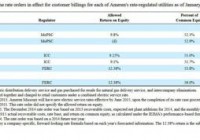
Summary The public utility sector is going through a challenging period. Experts are mixed on the long-term prospects of the stock, but median estimates give a 12.55% upside at current levels. Ameren has only reduced its dividends once, during the 2008-09 crash. Ameren Corporation (NYSE: AEE ) is a natural gas and electric utility company that operates in Illinois and Missouri. It is operating in a challenging business environment with evolving environmental regulation. The experts are mixed regarding Ameren’s future stock value; however, the median estimate provides an upside of 12.55% at current price levels. Ameren produces a stable and predictable dividend which mitigates a small amount of market risk when holding the stock. The Company is a buy for risk-averse investors who are looking for an income stream that is relatively unlinked to general market risk. Major trends in common to the electric and natural gas utility industry ( F rom the 10-K ) Political, regulatory, and customer resistance to higher rates. Tax law changes that accelerate depreciation deductions, which reduce current tax payments but also result in rate base reductions and limit the ability to claim other deductions and use carry-forward tax benefits. Cybersecurity risks, including loss of operational control of energy centers, and electric and natural gas transmission and distribution systems and/or loss of customer data. Increased competition in supply, generation, and distribution. Pressure to grow customer base in light of economic conditions and energy efficiency initiatives. The availability of fuel and fluctuations in fuel prices. Higher levels of infrastructure investments could result in decreased free cash flows. Company Positioning Ameren’s primary assets are its subsidiaries including Ameren Missouri and Ameren Illinois. Both of these subsidiaries are rate-regulated electric generation, transmission and distribution businesses as well as rate-regulated natural gas transmission and distribution businesses. Ameren’s other subsidiaries are responsible for activities such as the provision of shared services. Another of Ameren’s subsidiaries, ATXI, operates a FERC rate-regulated electric transmission business. (click to enlarge) Ameren’s profits and subsequent dividend payouts are dependent upon these regulated revenue streams. Growth Strategy ( F rom the 10-K) Renewable Mandate: Ameren is expected to increase its renewable energy resources to 10% of its total portfolio by 2015 and 25% by 2025. It is achieving these goals through IPA agreements and long-term contracts with renewable energy suppliers. Transmission and Distribution: AEE is involved in multiple transmission generation products which should alleviate congestion and bring access to new economic zones. Energy Efficiency: Ameren Missouri and Ameren Illinois have implemented energy efficiency programs. In Missouri, the MEEIA established a regulatory framework that allows electric utilities to recover costs related to customer energy efficiency programs. A MEEIA rider allows AEE to collect from or refund to customers any annual difference in the actual amounts incurred and the amounts collected from customers for the MEEIA program costs and lost revenues. Risk Management ( From the 10-K) Regulatory and Environmental Matters: Ameren is subject to a complex legal environment. The EPA is developing and implementing environmental regulations that will have a large impact on the electricity industry. Its coal-fired plants may incur significant costs to comply with these regulations. Natural Gas Price Fluctuation: AEE’s natural gas procurement strategy is designed to ensure immediate delivery of natural gas. The strategy is accomplished by optimizing storage options and various supply and price-hedging agreements that allow for diversification of supply source. Grid Reliability: Significant investment is going into making the grid more reliable. The increased use of distributed generation and the uneven output of renewable generation have complicated grid management, so the Company must invest in more sophisticated grid management systems. Dividends (click to enlarge) From dividend.com (click to enlarge) From dividend.com AEE has a very consistent dividend performance. The Company has only lowered its dividends once, and has maintained stable payouts. Since the dividend payout is stable, the dividend yield moves inversely to the price performance of the underlying stock and mitigates some of the market risk of holding the AEE stock. Expert Opinion (click to enlarge) From Yahoo Finance The expert opinion on AEE is mixed. Most analysts recommend holding the stock and not expanding positions at the current time. The median expert estimate on AEE’s stock price is $42.5, which gives the Company a 12.55% upside at the current price of $37.76 per share. AEE’s beta is 0.21. From Yahoo Finance AEE has been positively surprising the experts with its quarterly EPS releases; this usually means that analysts are undervaluing some portion of the Company. Recent News: Ameren Illinois continuing major upgrades to strengthen the region’s energy delivery network DiversityInc Ranks Ameren First in the Nation Ameren Missouri’s Callaway Energy Center Receives Extended Operating License From the Nuclear Regulatory Commission Retired Chairman and CEO of Unisys (NYSE: UIS ) Elected to Ameren Board of Directors Conclusion Ameren is a straight forward public utility play with exposure in Illinois and Missouri. Its revenues depend upon rate-making policy decisions, environmental policy and natural gas price levels. An investor who is looking for a company that produces stable dividends and has low market risk, would feel right at home with AEE. While the experts are uncertain about the future stock price levels, the median estimate does provide a 12.55% upside at current levels. If you are a risk-averse investor who wants to create a stable income stream with little market risk, Ameren is for you. Disclosure: I/we have no positions in any stocks mentioned, and no plans to initiate any positions within the next 72 hours. (More…) I wrote this article myself, and it expresses my own opinions. I am not receiving compensation for it (other than from Seeking Alpha). I have no business relationship with any company whose stock is mentioned in this article.

Best And Worst: Small Cap Blend ETFs, Mutual Funds And Key Holdings

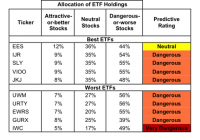
Summary Small Cap Blend style ranks last in Q2’15. Based on an aggregation of ratings of 29 ETFs and 678 mutual funds. EES is our top rated Small Cap Blend ETF and PXQSX is our top rated Small Cap Blend mutual fund. The Small Cap Blend style ranks 12th out of the 12 fund styles as detailed in our Q2’15 Style Rankings report . It gets our Dangerous rating, which is based on an aggregation of ratings of 29 ETFs and 678 mutual funds in the Small Cap Blend style. Figures 1 and 2 show the five best and worst rated ETFs and mutual funds in the style. Not all Small Cap Blend style ETFs and mutual funds are created the same. The number of holdings varies widely (from 24 to 2544). This variation creates drastically different investment implications and, therefore, ratings. Investors seeking exposure to the Small Cap Blend style should buy one of the Attractive-or-better rated ETFs or mutual funds from Figures 1 and 2. Figure 1: ETFs with the Best & Worst Ratings – Top 5 (click to enlarge) * Best ETFs exclude ETFs with TNAs less than $100 million for inadequate liquidity. A total of six ETFs are excluded from Figure 1 because their total net assets are below $100 million and do not meet our liquidity minimums. Figure 2: Mutual Funds with the Best & Worst Ratings – Top 5 (click to enlarge) * Best mutual funds exclude funds with TNAs less than $100 million for inadequate liquidity. A total of five mutual funds are excluded from Figure 1 because their total net assets (TNA) are below $100 million and do not meet our liquidity minimums. The WisdomTree SmallCap Earnings ETF (NYSEARCA: EES ) is our top-rated Small Cap Blend Style ETF and the Virtus Quality Small-Cap Fund (MUTF: PXQSX ) is our top-rated Small Cap Blend Style mutual fund. EES earns a Neutral rating and PXQSX earns an Attractive rating. One of our favorite stocks held by Small Cap Blend funds is The Buckle Inc. (NYSE: BKE ). Buckle is a casual apparel, footwear and accessories retailer. As a retailer, the company has achieved very consistent financial performance. Over the last decade Buckle has grown after-tax operating profit ( NOPAT ) by 17% compounded annually. Buckle’s return on invested capital ( ROIC ) in 2014 was 32%, placing it in the top quintile of all companies we cover. Over the past seven years ROIC has never fallen below 28% indicating a very resilient business franchise. Given its strong fundamentals, The Buckle is currently undervalued. At its current price of ~$47/share, BKE has a price to economic book value ( PEBV ) ratio of 1.0. This ratio implies the market expects Buckle’s NOPAT to never grow from current levels. However if the company is able to grow NOPAT by just 6% compounded annually for the next 10 years the stock is worth $73/share today – a 55% upside. The iShares Micro-Cap ETF (NYSEARCA: IWC ) is our worst-rated Small Cap Blend style ETF and the Chartwell Small Cap Value Fund (MUTF: CWSVX ) is our worst-rated Small Cap Blend style mutual fund. Both earn our Very Dangerous rating. One of our least favorite stocks held by Small Cap Blend funds is Mobile Mini (NASDAQ: MINI ). Since 2009, Mobile Mini’s NOPAT has not grown at all, and in fact has declined by $2 million. The company’s ROIC has not risen either, and at only 4% in 2014, ranks in the bottom quintile of all companies we cover. To top it off, Mobile Mini has not generated positive economic earnings in any year for the last 16 years. However, to justify its current price of ~$43/share, Mobile Mini must grow NOPAT by 13% compounded annually for the next 18 years . A history of stagnant NOPAT coupled with poor profitability make Mobile Mini an overvalued stock. The expectations implied by the current price are just too high given the actual economics of the business. Figures 3 and 4 show the rating landscape of all Small Cap Blend ETFs and mutual funds. Figure 3: Separating the Best ETFs From the Worst ETFs (click to enlarge) Figure 4: Separating the Best Mutual Funds From the Worst Funds (click to enlarge) Sources Figures 1-4: New Constructs, LLC and company filings D isclosure: David Trainer owns BKE. David Trainer and Allen L. Jackson receive no compensation to write about any specific stock, style, style or theme. Disclosure: I am/we are long BKE. (More…) I wrote this article myself, and it expresses my own opinions. I am not receiving compensation for it. I have no business relationship with any company whose stock is mentioned in this article.