Tag Archives: seeking

The U.S. Economy Recovers – GLD Comes Down
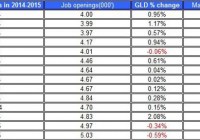
The non-farm payroll brought down GLD. Rising long-term treasury yields are keeping down GLD. It’s still uncertain where the demand for gold in China and India is heading. The recovery of the SPDR Gold Trust (NYSEARCA: GLD ) came to a halt in recent weeks as the recent economic indicators, mainly in the U.S. labor market, were better than anticipated. Let’s review the latest from the U.S. economy and its relation to the progress of GLD. The two major labor reports are the non-farm payroll and JOLTS. The non-farm payroll presented better-than-expected results. The JOLTS report was in line with market expectations. These reports suggest the U.S. economy is progressing with higher number of jobs, more job openings, and improved wages. The recent JOLTS report presented another positive gain in the number of job openings as it passed 5 million. Quit rate hasn’t changed at 1.9%, but the number of quits continues to slowly pick up, which is another positive indication for the progress in the U.S. labor force. In the past, the price of GLD tended to react strongly to the non-farm payroll report and to a lesser degree to the JOLTS report, as presented in the table below. (click to enlarge) Source of data taken from Google Finance and U.S. Bureau of Labor Statistics But the recovery in the labor market is likely to enable the FOMC, down the line, to raise rates. Higher rates in the coming months aren’t likely to do well for the price of GLD. One important issue related to the non-farm payroll report was the gain in wages – which also implies higher core inflation. After all, wages have risen by 2.2% year over year and by 0.5% compared to the previous month. (click to enlarge) Source of chart: FRED Is the current rate of gain in wages good enough for the FOMC? The chart above presents the year-over-year percent changes in U.S. wages over the past few years. The FOMC aims to reach a core inflation target of 2%, which isn’t far off the current gain in wages. Nonetheless, the growth in wages is still well below the levels recorded before the 2008 recession. So even though wages have gone up, they still have a long way to go before reaching their high levels of 2007. The other side of equation related to the labor market is the unemployment rate, which is currently at 5.7%. Back in 2007, the rate of unemployment was around 4.5%, but the FOMC’s long-term rate is around 5.3%. So the current level isn’t far off the FOMC’s long-term target, and thus, shouldn’t be among the factors holding back the FOMC from raising rates, right? (click to enlarge) Source of chart: FRED It depends on who you ask. According to a recent article by Krugman , the natural rate of unemployment is actually below 5%. Even if the rate of unemployment and wages are still off the “healthy levels”, for now, it seems a bit of stretch to consider they will be enough to impede the FOMC from raising rates in the middle of the year. One factor that has changed course in recent weeks is the rise in interest rates: The 10-year U.S. treasury yields have gone up and reached 2%. Source of data taken from U.S. Treasury and Google Finance The relation between the changes in yields and the price of GLD remains mid-strong and robust – it currently stands at -0.365. This negative relation suggests that if U.S. treasury were to keep picking up, this trend could also coincide with the drop in shares of GLD. Despite the recent fall in the price of GLD, the demand for the ETF has picked up – the ETF’s gold holdings continue to rise, as indicated in the chart below. Source of data taken from GLD’s website Keep in mind that the recent developments in Europe, including the ECB’s QE program and the higher chances (the market gives) of a Greek exit from the EU weigh on the euro. The higher uncertainty is likely to do well for the U.S. dollar, which isn’t something good for the price of GLD, but could also raise the demand for gold as an investment. Besides the changes in the demand for gold as an investment, the physical demand for gold is another, albeit secondary, factor to consider for the progress of gold prices. On this front, the leading country in consuming gold is China – the country has taken the reign from India as the leading importer of gold. In 2014, however, China’s gold consumption dropped by 25% compared to 2013. But since the beginning of the year , the demand for gold in China has started to pick up. Bear in mind, however, that China’s economy is expected to grow at a slower pace than in previous years, which may also translate to slower growth in demand for gold. India may also see a rise in gold imports if government officials were to follow through and reduce the import tax on the yellow metal. It’s still unclear where the chips will fall for gold consumption in China and India, but if these countries do surprise and show higher consumption, this could play a secondary role in raising gold prices. The rise in U.S. treasury yields and the improved U.S. labor market don’t vote well for the price of GLD. But there are also other factors to consider that could curb down the descent of gold. The uncertainty around Europe’s future and the demand for gold in China and India are question marks that could play in favor of gold. For more see: Gold and Inflation – Is there a relation? Disclosure: The author has no positions in any stocks mentioned, and no plans to initiate any positions within the next 72 hours. (More…) The author wrote this article themselves, and it expresses their own opinions. The author is not receiving compensation for it (other than from Seeking Alpha). The author has no business relationship with any company whose stock is mentioned in this article.
Third Avenue Focused Credit Tackles Distressed Debt

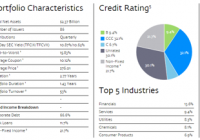
Summary TFCVX targets stressed and distressed securities, with more than half of the portfolio classified as “special situation”. Active management is a must in this area. The fund currently yields more than 10%. Third Avenue Focused Credit (MUTF: TFCVX ) is an aggressive high-yield bond fund with a focus on stressed and distressed securities. The fund seeks to deliver total return, not current yield. Strategy TFCVX’s strategy rests on what the firm calls the “Fulcrum Security…the most senior security that will likely convert into equity ownership in a restructuring.” Managers look for discounted debt securities that stand a good chance of being paid at par value in cases where the firm’s fortunes turn around, or stand a good chance of being converted to equity in a restructuring. They shy away from holding the highest-yielding debt in a company, since that debt could expire worthless, but they will also shy away from the lowest-yielding senior debt, since it doesn’t offer as attractive a yield. The fund’s sweet spot are the securities that turn into equity in a restructuring. Profit mainly comes from one of two paths: collect hefty coupon payments and see some gain on the principal, or get a controlling interest in a company as it emerges from bankruptcy or restructuring, with the opportunity for even larger upside. The big risks inherent in the strategy comes from the fact that it’s impossible to know which security will be the “Fulcrum Security” ahead of time, along with the difficulty in estimating the future value of a firm post-restructuring. Additionally, the fund is dealing in sometimes illiquid securities or opaque situations, such as a bankruptcy fight in court. Lead manager Tom Lapointe was named a 2014 Rising Star of Mutual Funds by Institutional Investor. He previously served as co-head of High-Yield Investments for Columbia Management. Portfolio As of December 31, TFCVX had $2.37 billion under management. The fund is fairly concentrated for a bond fund, with only 86 holdings. The top ten holdings accounted for 38.3 percent of assets . (click to enlarge) One of the portfolio statistics that sticks out is the $76.01 average price of securities in the fund versus the par value of $100, highlighting the fund’s ownership of distressed securities. Only 18.9 percent of the portfolio was in performing securities, with 51.7 percent classified as special situations. While TFCVX has a high yield today, the fund’s mandate and stated strategy targets total returns, which could involve holding non-income paying equities received as part of a restructuring. There is no guarantee of income, and income could decline substantially if bankruptcies increased and the fund converts debt to equity. Payouts have been in a general uptrend since inception in 2009, but this a period when the market for high-yield debt improved, allowing firms to restructure debt without declaring bankruptcy. Were there to be a period of economic stress or a deep recession, more of the fund’s holdings may become special situations, with debt converting into equity, lowering income payments. The fund’s mandate requires it to hold 80 percent of assets in credit instruments. Under the guidelines of this mandate, equity and convertible bonds acquired as part of a restructuring will be classified as credit instruments. Equities are currently only 13.7 percent of assets, but this could rise substantially under the funds mandate, materially impacting the fund’s yield. In a period of relative tranquility for high-yield debt, TFCVX has a 3-year standard deviation of 7.40 versus 4.83 for the iShares iBoxx $ High Yield Corporate Bond ETF (NYSEARCA: HYG ) and 2.85 for the Barclays U.S. Aggregate Bond Index. TFCVX has a 3-year beta of 0.01 versus the Barclays U.S. Aggregate Bond Index. HYG has a beta of 0.57 versus the same index. Compared to the Credit Suisse High-Yield Index, TFCVX has a beta of 1.16. The fund is volatile and correlated with high-yield bonds, but is less correlated to the overall bond market than other high-yield bond funds. TFCVX In A Nutshell This bit from the October 2014 shareholder letter shows why investors interested in the distressed debt market would do well to invest with capable managers (emphasis mine): We initiated a position in Ideal Standard in December 2013 at a 70% discount to where Bain had invested. We were able to accumulate 25% of the notes that we believed would be (and in the end were) the fulcrum (11.75% EUR Senior Secured Notes), buying from investors selling off the company on liquidity concerns. Up until this point this was a fairly routine investment. Complications started when the company went into reorganization and initiated an exchange offer that did not allow minority note holders, such as Third Avenue, to participate in the equity, and intended to leave us with a high-yielding fixed income instrument only. We contested this exchange offer and threatened a legal action in the US. This gave us leverage; we were able to negotiate revisions to the exchange offer that allowed us to get a 20% stake in the equity. The restructuring was completed in spring 2014. The recapitalization values the company at $500 million today. We believe this investment, a 2.1% position in the Fund as of October 31, 2014, has significant upside and limited downside. Investing in distressed debt requires a lot of homework, but even if an investor finds an undervalued security, courts and lawyers may change the facts on the ground. Small investors are unable to influence this process, but fund managers can and do influence these situations in favor of their investors. Managers are also able to grab opportunities that small investors cannot access. In another example from the shareholder letter , the fund made a bridge loan to a firm in distress, an investment opportunity that small investors cannot access on their own. Performance Warren Buffett famously said that the market was a voting machine in the short term, but a weighing machine in the long term. Third Avenue Focused Credit is a perfect illustration of this maxim at work because managers of TFCVX are engaged in long-term investments in distressed credit, but the securities they hold are subject to daily pricing. Since the outcome of distressed credit is highly volatile, with a high probability of bankruptcy, pricing of securities will be volatile. Even if investors have a high risk tolerance, they also need a long-term outlook in order to profit from the strategy employed by TFCVX because managers need time to unlock the fundamental value in these securities. As the case of Ideal Standard shows, it was not timing or even fundamental analysis that ultimately turned the position into a winner, but the threat of legal action. The value of securities held by TFCVX may be in “limbo” at times due to outstanding court cases and legal claims, leading to wild price fluctuations. Market prices for the debt held in TFCVX may deviate substantially from the underlying value, particularly when the resolution is unclear and the broader market is experiencing a bout of fear. The high-yield debt market is currently experiencing some risk aversion and the recent drop in TFCVX has led it to underperform the iShares iBoxx $ High Yield Corporate Bond ETF. (click to enlarge) The underperformance is due to the past seven months of turmoil in the high-yield debt market, influenced by the plunge in oil prices. To give a little clearer picture, in this chart, the red line represents the price ratio between HYG and the iShares iBoxx $ Investment Grade Corporate Bond ETF (NYSEARCA: LQD ). A rising line indicates HYG is outperforming. (click to enlarge) TFCVX is more sensitive to changes in investors’ risk appetites. Investors have gravitated towards investment-grade bonds and U.S. Treasuries over the past seven months, and the riskier TFCVX has suffered as a result. Fees And Expenses TFCVX has an expense ratio of 1.16 percent, which includes a management fee of 0.75 percent and a 12b-1 fee of 0.25 percent. This is a high fee relative to the high-yield bond category, but is not excessive considering the specialized nature of the fund. There is also a 2 percent short-term redemption fee on shares held less than 60 days. Conclusion TFCVX is a high-risk, high-potential reward fund. The fund opens a part of the debt market that is largely closed to small investors, one that can deliver attractive returns over the long term and add some diversification to an already well-diversified portfolio. Investors interested in TFCVX must be ready to sit through volatility. Many funds have short-term trading fees in order to reduce volatility, and TFCVX is no exception, but the negative effect from share redemptions would be amplified during a liquidity crunch in the high-yield bond market. Investors who are not comfortable with a long-term buy-and-hold approach would be better off in a more liquid high-yield bond fund. For those investors looking for total return and capital gains, TFCVX is a unique fund worth considering. The recent drop in price presents a good entry point for long-term investors. TFCVX has suffered due to risk aversion in the bond market, but the fund will rebound when demand for high-yield credit recovers. (click to enlarge) Disclosure: The author has no positions in any stocks mentioned, and no plans to initiate any positions within the next 72 hours. (More…) The author wrote this article themselves, and it expresses their own opinions. The author is not receiving compensation for it (other than from Seeking Alpha). The author has no business relationship with any company whose stock is mentioned in this article.

PIMCO Total Return Gets Its Mojo Back

PIMCO has been in the news for all the wrong reasons lately, after more than $100 billion of clients money followed Bill Gross out of the door. But come early February there are signs the bond giant is getting its act together. While former CEO Bill Gross has moved down the street to run a new (much smaller) bond fund at Janus Capital Group Inc (NYSE: JNS ), his old fund – PIMCO Total Return Fund (MUTF: PTTRX ) – is doing just fine without him. The fund is performing so well in fact, that Morningstar has reinstated PTTRX with its coveted five star rating – the highest rating possible. PTTRX lost its fifth star at the end of 2013 following a long period of underperformance, caused by Gross betting the house against Treasuries in 2011. Gross was so sure Treasuries would fall he sold the entirety of PTTRX’s holdings, while using derivatives to bet against them. His bet was way-off, Treasuries went on to become one of the best-performing asset classes of the year. The result was PTTRX rankings plummeted to No. 87 in its category for 2011. They recovered in 2012 when PTTRX placed 12 – but the recovery didn’t last long. Gross’s mistimed call on equities meant PTTRX came in at Nos. 60 and 71 for 2013 and 2014, respectively. That patchy performance caused investors to start abandoning the fund long before Gross decided to quit. By September 2014 (Gross’s last month in charge.) PTTRX had suffered 16 consecutive months of outflows. At its peak in May 2013, PTTRX had assets of $290 billion. By the time Gross left, assets had fallen to $220 billion. In the wake of Gross’s departure, investors withdrew another $85 billion. But far from being the end of PTTRX, its trio of new managers have returned the fund back to winning ways. So far this year PTTRX has returned 1.45%, beating the Barclays U.S. Aggregate benchmark by 0.38 percentage points. While Morningstar ranks it at No. 6 in its category, beating 95% of its competitors. Despite the turnaround, investors are still abandoning the fund, with a reported $11.6 billion of outflows in January, leaving it with assets of $134.6 billion at month’s end. Sarah Bush, a Morningstar analyst, predicts the fund will continue shrinking through the first half of 2015. She believes that some institutional investors didn’t pull out of Total Return right away because they wanted to take some time to research comparable funds. Gross’s new fund on the other hand is still finding his footing, his new Janus Global Unconstrained Bond Fund (MUTF: JUCIX ) – ranks 80th in its category with a year-to-date return of -0.08. Indeed, JUCIX is lagging the bond benchmark by 1.15 percentage points. With the WSJ reporting that inflows into his new fund fell to about $86 in January, the lowest amount since Gross took over running the fund in early October. JUCIX has net assets of $1.5 billion, of which approximately $700 million comes from Bill Gross’s own account.