Tag Archives: seeking

The 7 Deadliest Words Of Investing And Why You Are Not Smarter Than The Average Bear
Summary Stay away from these 7 deadly words that we tell ourselves. See how investors can be classified into three types of lemmings. Discover a simple concept of what valuation really is to an investor. I’m a valuation nut. The methods I choose are not perfect because valuation involves art and science. But then again, what is the perfect valuation method? There’s no such thing. And that’s difficult for many people to grasp because we are taught to do things the “right” way, a “certain” way. One of the most difficult things with investing and any form of valuation is that there is no step by step guide. In any other industry there’s a clear process that you can follow from start to finish to accomplish a task Ikea furniture assembly instructions Photography tutorials How to tie a tie Learning to hang glide and so on But investing is like a choose your own adventure book that I loved to read growing up. A choose your own adventure book is one where you come to a section of the book and then get to choose which adventure you want to take. Depending on your choices, the ending is different. When it comes to investing, there is no clear single method of doing things and it can overwhelm, and frankly, freaks out some people. Instead of a straight path from A to B, the waves of decisions and new information you have to take in requires lots of work. And it’s too much for many people. That’s why you always see people asking strangers what their thoughts are on a stock they hold. But the truth is that people can invest successfully. People can value stocks properly. You’re just led to believe you can’t. It’s just that there are a ton of blogs, news and articles that discuss complex ideas, causing people to simply walk by obvious low risk ideas. I call these low hanging fruits. Bloggers, news reporters, financial analysts all want to write about the hard stuff to get recognized. The complex deals. Who wants to write about how a small, well run, industrial niche company in Nashville, with a 70 year long heritage that continues to gain business and generate cash when less than 400 people on the Internet will read it? Instead they could be writing about how Tesla (NASDAQ: TSLA ) is reinventing the auto industry and revolutionizing a new energy era, poring over PHD words and speculating about what the future could bring. It could go viral and look good on their writing stats. But… You’re led to believe that they must know something that you don’t. The 7 Most Deadly Words in Investing This is a video that I refer to now and then when I need to clear my head or when I start second guessing myself. I’ve marked the video to start from 1:57. Watch the next 2 minutes to around the 3:50 mark. Did you catch those 7 deadly words? They must know something that you don’t. If seasoned professionals fall into this trap, how much easier is it for regular investors to tell themselves the same thing? Especially when they read or hear people they regard as more intelligent as themselves disagreeing with their analysis and valuations. If you didn’t or can’t watch the video above, Prof Aswath Damodaran lays out a simple example that I certainly relate to. You value a company. Say you come up with a value of $50 per share. Let’s say the company is Amazon. Stock is trading at $278. One of the great stocks of the last decade. Your rational side is saying, “don’t buy that stock, it’s expensive”. But then you hear a voice at the back of your head. “They must know something that you don’t”. And when you hear that voice, magical things happen to your valuation. Your cash flows increase, your growth rates go up, your discount rates go down, $50 becomes $100, $100 becomes $150, and before you know it, guess what? You’re at $275, $300, justifying your need to buy. 3 Types of Lemmings Damodaran continues on to group investors into 3 groups of lemmings. After all, we are all lemmings to some degree. There is no such thing as a pure contrarian, because that just means you are a contrarian just for the sake of being a contrarian. Lemming #1: The Proud Lemming These are just momentum investors who are proud of following what’s hot. They don’t care what the company is or does. They look for a crowd and buy and sell whatever is being bought or sold. Lemming #2: The Yogi Bear Lemming Yogi Bear’s tagline is “smarter than the average bear” and it refers to the investors who like to think that they are able to pull out of a stock just before it crashes. The problem is that most people claim they are smarter than the average bear, but rarely are they able to jump ship of a momentum train before it crashes. If Isaac Newton, the father of advanced mathematics and mechanics couldn’t handle the charts, market and lemming fever, I have serious doubts about most of us. Isaac Newton Became a Lemming ( Photo Credit: Safal Niveshak ) Lemming #3: The Lemming with a Life Vest Valuation is simply a life vest. A compass. It’s something for you to hang onto when everyone else is doing something else. Buffett knew that dot com stocks were at stupid valuations in 2000 and held onto his life vest when Barron’s basically called him “old”. After more than 30 years of unrivaled investment success, Warren Buffett may be losing his magic touch. … To be blunt, Buffett, who turns 70 in 2000, is viewed by an increasing number of investors as too conservative, even passe. Buffett, Berkshire’s chairman and chief executive, may be the world’s greatest investor, but he hasn’t anticipated or capitalized on the boom in technology stocks in the past few years. Indeed, Buffett has even started taking flak on Internet message boards. One contributor called Berkshire a “middlebrow insurance company studded with a bizarre melange of assets, including candy stores, hamburger stands, jewelry shops, a shoemaker and a third-rate encyclopedia company [the World Book].” – Barrons I just love how Damodaran puts it because it’s exactly how I process it. Valuation slows the process down, gives your rational side a chance to mount an argument. Valuation is Simple. Don’t Complicate It. When you value stocks, you miss out on hundreds of opportunities. Most growth stocks go out the window. Forget about Tesla. Most investors don’t want to hear about valuation because it challenges their desire to hear what they want. But I love valuation and it’s the reason why the OSV Analyzer came to life in the first place. I love it and over 800 members have made great use of it because when facts and numbers over the past 5 years or 10 years are smack in front on your face, it’s difficult to trick yourself. Unless I can find a reason for why I have to increase my valuation from $50 to $300 without solid evidence, it’s easy to recognize I’m fooling myself. I could go into 101 reasons why everyone should use the analysis tool, but the more important thing is to start building a habit of valuing stocks. Investing is a game where you don’t win by making all the right calls. You can be right only 40% of the time. But if your conviction and position sizing is good, you can easily beat anyone out there. When I start chasing complicated stories, structures, deals, industries that I know nothing about, I’ve lost money every time. When I focus on valuation and follow it up with patiently waiting until the stock hits my margin of safety price, I’ve been rewarded more times than I’ve been wrong. You Can Win the Fight As a freebie, I have free valuation spreadsheets you can start with. It’s combined with an easy to digest mini valuation courses over email if you are a new subscriber. Just easy guides on how to value and analyze stocks using several different methods. Charlie Munger said that if he knew where he was going to die, he’d never go there. Well, you’ve just found the 7 deadliest words in investing. They must know something that you don’t. Let’s not go there. Disclosure: The author has no positions in any stocks mentioned, and no plans to initiate any positions within the next 72 hours. (More…) The author wrote this article themselves, and it expresses their own opinions. The author is not receiving compensation for it. The author has no business relationship with any company whose stock is mentioned in this article.
‘The Wisdom Of Insecurity’ In The Stock Market

Over the past few years, the idea of “passive investing” has increasingly resonated with the general public. Money has rushed out of actively-managed mutual funds and into index funds at a rapid rate. Most recently, the passive investing ethos has grown so strong it now reminds me of some hard-core religions that take an unwaveringly literal interpretation of their founding texts. In the case of passive investing, these founding texts are the “efficient-market hypothesis” (EMH) and “modern portfolio theory” (MPT). Created and developed by ingenious men with noble intentions, these theories put forth wonderful arguments for the wisdom of the crowd and the incredible value of diversification, among others. Like most religious texts, however, the main problems arise in their interpretation and implementation. As Alan W. Watts explains in The Wisdom Of Insecurity , “the common error of ordinary religious practice is to mistake the symbol for reality, to look at the finger pointing the way and then to suck it for comfort rather than follow it.” Investors, too, must think critically about the effectiveness of these theories when it comes to practical application rather than take them literally on blind faith. It pays to remember that blind faith in these sorts of mathematical models leads even nobel prize winners to disastrous results. As my friend Todd Harrison likes to say, ” respect the price action but never defer to it .” Clearly, there is value in understanding and incorporating the ideals of these theories. There is also danger in simply deferring to them because the costs of their shortcomings can, at times, overwhelm the benefits of their wisdom. Like the Long-Term Capital boys learned, as soon as you really need to lean on them they vanish like a cheap magic trick. Where these theories go wrong in their practical application is that they both assume there are only rational participants in the markets. While the crowd may be right most of the time, there are clearly times when the crowd is not rational (note the preponderance of manias throughout the history of finance). In fact, the proprietors of these models have acknowledged this Achilles’ heel themselves. The most successful professional investors like Warren Buffett, Paul Tudor Jones, John Templeton, George Soros and Jim Rogers, know this well. Their methodologies are even built upon the idea that an intelligent investor can get ahead by taking advantage of those times the crowd becomes irrational, the antithesis of the EMH and MPT. So saying you believe in passive investing is fine and, in fact, I’ll grant it’s better than most of the alternatives. It will work great most of the time. But know that, just like some fanatics deny evidence that disproves the idea that cavemen and dinosaurs coexisted, you are denying the overwhelming evidence that suggests its foundations are simply not to be relied upon during those rare times when market participants abandon rational thought for panic or euphoria. Make no mistake, those selling this idea of passive investing are selling a very good product. I firmly believe it’s a large step above most of the alternatives out there, more so in the case of those selling it at a minimal cost . But I fear investors are also being sold a false sense of security today. I believe investors passively buying equities today are doing so under one of two false assumptions. They either believe that future returns will look something like they have over the past 40 years or that because the market is totally efficient it’s currently priced to deliver risk-adjusted returns that are acceptable given the current low-yield environment. The first assumption is something I have called the ” single greatest mistake investors make ” and it’s a trap even the Federal Reserve admits it regularly falls into. The second assumption runs into the problem of the evidence which suggests there is a very good likelihood returns from current prices will be sub-par , if not sub-zero over the next decade. And the reason returns are likely to be poor going forward is investors have pushed prices to levels that nearly guarantee it. In my view, passive investors have irrationally relied upon the idea that the market is rational, and therefore attractively priced, in pouring money into equity index funds, sending equity values to heights never before seen (on median valuations) virtually guaranteeing themselves they’ll be disappointed. Just because the future of the stock market is bleak doesn’t mean investors should ignore these facts or have them withheld from them. Ignorance may be bliss but it is not a valid investment methodology. Those with a religious sort of belief in passive investing and its main tenets need not abandon it to acknowledge its limitations. In fact, a little insecurity would go a long way for the growing hoard of passive investors in today’s market.

3 Timeless Pieces Of Investing Wisdom

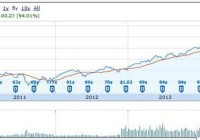
Professionals refuse to lose money. They pay attention to the downside far more than the upside. What they make in the markets – they usually keep. Professionals are always looking for extra leverage. Leverage is when you have the possibility of making a lot of money by investing very little. Professionals never stop learning and analyzing data. There is no such thing as a “sure thing”. Professionals outwork individual investors and in the process gain the “edge” in their investments. I have written before that success in investing is 80% psychology and 20% mechanics. This is why it is so important that you are a mentally strong investor. Investing will test you. Do you have the staying power? Can you keep your emotions in check? How do you feel about large draw downs? Mentally strong investors stick to their strategies when the going gets tough. If you want above average returns, do your utmost to stick to the 3 points below. The first rule that professional investors swear by is “Don’t lose Money”. Average investors look at what they can make. Professional investors look at what they could lose. Defense for the professionals is far more important than offence. Professionals are always ultra focused on the downside. Here is why. If you don’t use stop losses in your portfolio and you lose 50% of its value, you need to make 100% (double your money) to get back to where you started. Professionals never allow this to happen. Apart from the money lost, valuable time is lost – time that could have been used for compounding. When you look at the following chart of SPDR S&P 500 ETF Trust (NYSEARCA: SPY ) over the last 5 years, its obvious that professionals are lightening up by rebalancing into other sectors. The more the market rises, the more the professionals will sell their holdings. Try and adopt the same mind-set no matter how difficult it is to sell your holdings. (click to enlarge) The second rule that professionals stick to is “Risk a little to make a lot”. While most investors look for safe solid returns year after year, professionals aim to hit home runs but by taking very little risk. So how does the individual investor invest like this? Well one has to take more risk but more calculated risk. Paul Tudor Jones for example aims to make $5 for every $1 he risks! Therefore he only needs to be right one time out of five and still break even. So where can investor find such opportunities? I believe they are all around us but we just have to look for them. For example, Let’s take Silver Standard Resources Inc. (NYSE: USA ) (NASDAQ: SSRI ). This stock is currently trading under $6 a share. When Silver was trading at $49 a shares back in April 2011, this stock traded at $35 which is around 6 times its current trade price (see chart). (click to enlarge) This in my opinion would qualify for this type of investment (Risk $1 to potentially make $5). Another would be FALCON OIL & GAS LTD(OTCMKTS: FOLGF ). (click to enlarge) This company is trading at multi-year lows but farmed out a $200 million deal last year to two oil companies for their acreage in Australia. Moreover the stock has traded at over $4 a share in the past when Australia wasn’t even in the picture. Drilling is about to commence in Australia so this stock could easily go up 500% from here. The benefit of this mind-set is that you really need to research your stocks . You need to be at least 20% correct or otherwise you go out of business. On the flip side, good stock pickers who use this method can easily outperform the market over the long term as long as they are diversified across all asset classes. The final rule that professionals swear by is “Relentless Continuous Improvement In Themselves”. Nowadays we live in an extremely fast paced society. Information is money so professionals constantly seek out new information, new strategies, new company’s, etc. The “edge” in investing comes when you know information that the masses don’t. A true professional investor essentially has a company or product dissected before the masses. The money is made when they buy. Always remember that the price you pay for an investment is far more important than the investment itself. Professionals know this so they position themselves accordingly when opportunities arise. Editor’s Note: This article covers one or more stocks trading at less than $1 per share and/or with less than a $100 million market cap. Please be aware of the risks associated with these stocks. Disclosure: The author has no positions in any stocks mentioned, and no plans to initiate any positions within the next 72 hours. (More…) The author wrote this article themselves, and it expresses their own opinions. The author is not receiving compensation for it (other than from Seeking Alpha). The author has no business relationship with any company whose stock is mentioned in this article. Are you Bullish or Bearish on ? Bullish Bearish Neutral Results for ( ) Thanks for sharing your thoughts. Submit & View Results Skip to results » Share this article with a colleague