Tag Archives: seeking

Energy ETFs: Short Interest In Oil Stocks Surges
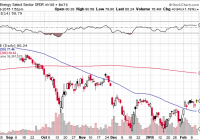
Summary Investors are turning increasingly bearish on energy sector stocks. Short interest in energy companies is rising. Energy ETFs may be a good contrarian play to capture any potential upside. In the coming days ahead, short-term swings could make or break the energy sector-related exchange-traded funds, as short interest on oil stocks rise to a seven-year high. The Energy Select Sector SPDR ETF (NYSEArca: XLE ) , which tracks energy companies from the S&P 500 index, has declined 8.6% over the past three months, but is slightly up 0.2% year-to-date. As of the end of January, the average energy sector stock had 9.88% of its floating shares sold short, the highest level of short interest for energy stocks since at least 2008, according to Bespoke Investment Group . The close to double-digit short interest reflects growing concern for the energy sector. To put the percentage of short interest into perspective, the only time the markets saw double-digit levels of short interest for any sector was during the global financial crisis. Short interest reflects the percentage of shares outstanding that investors have sold short, but not yet covered or closed out. It provides a gauge of market sentiment, revealing investors’ bearish outlook on the market. However, given the high amount of shorts, a positive turnaround in oil prices could easily fuel a quick rally. For instance, a contrarian investor would benefit from a sudden short squeeze as pessimistic traders rush out of bearish bets if the market turns bullish. “By the way, according to our contacts on the Street, there is an inordinate amount of ‘Street Buzz’ going around that there is so much short selling in energy stocks being done by hedge funds that some stocks are becoming hard to borrow,” NYSE floor governor Rich Barry told Business Insider . “It is a hugely crowded trade at the moment.” West Texas Intermediate crude oil futures rose 4.9% to $51.2 per barrel on Thursday, while Brent crude oil futures increased 5.0% to $57.4 per barrel. XLE was up 1.2% Thursday. Energy Select Sector SPDR Fund (click to enlarge) Max Chen contributed to this article . Disclosure: The author has no positions in any stocks mentioned, and no plans to initiate any positions within the next 72 hours. (More…) The author wrote this article themselves, and it expresses their own opinions. The author is not receiving compensation for it. The author has no business relationship with any company whose stock is mentioned in this article.
SKYY: Tech ETF Investors Look Up To The Cloud

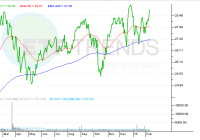
Summary Investors are turning to the cloud computing space. Focus on the First Trust ISE Cloud Computing Index fund. Cloud computing explained and industry overview. Investors are piling into the cloud computing industry and sector-related exchange-traded funds to capture a quickly growing segment of the digital age. The First Trust ISE Cloud Computing Index ETF (NasdaqGM: SKYY ) , which tracks a modified equally weighted index of companies engaged in the business activity of supporting or utilizing cloud computing services, now has $408.5 million in assets under management. SKYY has seen its AUM burgeon twofold over the past year, attracting $214.9 million in net inflows since January 2014, according to ETF.com data. Cloud computing refers to a mode of accessing digital information from the internet through web-based tools and applications, instead of directly connecting to a server. The desired data and software packages are stored in servers where a consumer can access them from anywhere as long as one has access to the internet. Investors are anticipating a significant shift in technology, as old packaged and desktop software are pushed aside, while consumers and businesses shift into simpler web- and mobile phone-based services, reports Ari Levy for CNBC . The global cloud computing market is expected to expand 30% per year and hit $270 billion by 2020. SKYY breaks down its component holdings into several sub-sectors. Pure play cloud computing companies are comprised of direct service providers for the cloud, which include network hardware/software, storage and cloud computing services. Non-pure play cloud computing companies are those that provide goods and services in support of the cloud computing space. And lastly, are the technology conglomerate cloud computing companies that directly utilize or support the use of cloud computing. SKYY includes one of the largest tilts toward Netflix (NASDAQGS: NFLX ) at 4.4% of the ETF’s underlying portfolio, along with other companies that utilize cloud computing services, like Amazon (NASDAQGS: AMZN ) at 3.9%. The broad ETF, which includes 39 companies involved with cloud computing, provides a diversified way for investors to access the sector, as valuing individual companies could be unorthodox. While the cloud computing space has attracted more investment dollars, observers are unsure how to properly value the companies For example, of the 26 index members to recently go public, 21 are losing money on generally accepted accounting principle basis, with a combined $388.7 million in the red last quarter – many of the companies opt to incur large expenditures upfront and amortize costs later through revenue streams. Consequently, traditional price-to-earnings ratios may not properly reflect valuations. Instead, most of these cloud computing-related business models rely on churn and retention – it takes about a year for a customer to become profitable due to costs of sales and market, so the companies rely on renewal rates, which is why subscriber rates are so important for companies like Netflix as witnessed in its last earnings report. First Trust ISE Cloud Computing Index Fund (click to enlarge) Disclosure: The author is long AMZN. (More…) The author wrote this article themselves, and it expresses their own opinions. The author is not receiving compensation for it. The author has no business relationship with any company whose stock is mentioned in this article.

TECO Energy: Exiting TECO Coal To Drive The Stock Significantly Higher

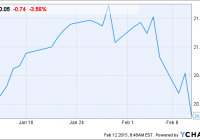
Summary TECO Energy is strategically exiting its TECO Coal business in order to boost earnings. We believe the stock should trade at a premium valuation compared to its peers post TECO Coal divestiture. Investors should buy the stock at the current price in order to maximize gains. The shares of TECO Energy (NYSE: TE ), an energy-related holding company with regulated electric and gas utilities in Florida and New Mexico, have fallen significantly post its unimpressive fourth-quarter 2014 earnings few days ago. Furthermore, reduction in sale price of its TECO Coal subsidiary to Cambrian Coal by $30 million was also responsible for the correction in the stock. However, we believe the correction offers a decent entry point to long-term investors as TECO Energy is expected to be an interesting growth story post the TECO Coal divestiture. TE data by YCharts Investment Thesis The investment thesis is primarily based on TECO Energy’s future growth in net income following the divestiture of TECO Coal that is seeing operating losses with coal markets continuing to weaken. The company’s other three subsidiaries, such as Tampa Electric, Peoples Gas System and New Mexico Gas Co. or NMGC, are growing impressively. Exiting TECO Coal will boost the company’s overall bottom-line significantly. TECO Energy’s electricity sales for 2015 by Tampa Electric, one of its key subsidiaries, should rise modestly as a result of thriving Florida economy, particularly the Hillsborough County, Tampa Electric’s primary service territory. The electricity sales pattern in the Tampa area is bouncing back to the pre-economic downturn level, which is positive for TECO shareholders since most of the company’s earnings come from Tampa Electric. In addition to the electricity business, the stronger Florida economy is also responsible for sales growth of TECO’s Peoples Gas System unit by around 2-3% yearly driven by stronger commercial and industrial customer growth. Further, TECO Energy’s acquisition of NMGC in September is also expected to drive earnings due to healthy customer growth supported by large presence of oil and gas industries in New Mexico. Fundamental Analysis We believe TECO should trade at a premium in terms of EV/EBITDA compared to its peers, such as Southern Company (NYSE: SO ), American Electric Power (NYSE: AEP ), Exelon (NYSE: EXC ), and Edison International (NYSE: EIX ) as a result of favorable economic conditions in the states it operates. Dominion Resources (NYSE: D ), which operates in Virginia and North Carolina, is trading at a significant premium compared to the peer group due to its favorable jurisdiction, and TECO can also trade closer to such valuation post its TECO Coal exit. TE EV to EBITDA (Forward) data by YCharts Assuming normal weather in 2015, TECO’s 2015 EBITDA is expected to see around 15% year-over-year growth, and should be around $1 billion. As a result, enterprise value should be around 13 billion at 13x forward EV/EBITDA, the valuation at which Dominion Resources is trading. However, 13x forward EV/EBITDA might be too optimistic and we feel 10x is a more reasonable valuation, at which TECO’s enterprise value should be around 10 billion, and market cap should be close to $6.5 billion. We believe the stock is heading toward $27.70 based on 10x forward EV/EBITDA. Potential Risks If Florida’s economic conditions and housing markets see any weakening going ahead, Tampa Electric’s or Peoples Gas System’s earnings could be negatively impacted, resulting in negative returns for TECO shareholders. Since Florida is exposed to extreme weather conditions including hurricanes, investors should be prepared for volatility in the share price due to temporary reduction in the company’s earnings as a result of any damage to the company’s facilities. Since the company operates in a highly regulated environment, if it earns return on equity above allowed ranges, earnings could be subject to regulatory review and eventually might be reduced. Conclusion The current year is going to be TECO’s first full-year of ownership of NMGC, and the company expects it to be EPS-accretive in the first full-year. However, we believe NMGC will be a sustainable growth driver for the company. NMGC’s bottom-line growth coupled with TECO’s strategic exiting of the TECO Coal business should be considered long-term positive for the stock. Investors are advised to buy the stock at the current price. Business relationship disclosure: The article has been written by a BB Research stock analyst. BB Research is not receiving compensation for it (other than from Seeking Alpha). BB Research has no business relationship with any company whose stock is mentioned in this article. Disclosure: The author has no positions in any stocks mentioned, and no plans to initiate any positions within the next 72 hours. (More…) The author wrote this article themselves, and it expresses their own opinions. The author is not receiving compensation for it (other than from Seeking Alpha). The author has no business relationship with any company whose stock is mentioned in this article.