Tag Archives: seeking-alpha

Clean Energy Fuels: Weighing The Pros Against The Cons
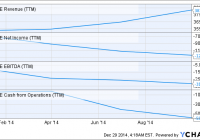
Summary Except for revenue, Clean Energy Fuels saw a decline in other key metrics in 2014. Clean Energy is burning through cash as it invests in infrastructure to tap the natural gas fueling market. Since natural gas-powered vehicles are expected to grow over 20 times in the next six years, it is important for Clean Energy to invest in infrastructure. Clean Energy, however, needs to make a quick turnaround in order to arrest a rapidly rising debt/equity ratio and a declining profit margin. It can be easily concluded that 2014 has been a year to forget for Clean Energy Fuels (NASDAQ: CLNE ), with the stock having depreciated almost 60%. This doesn’t come across as a surprise, because the company’s revenue growth hasn’t led to an improvement in its profitability. In addition, the company is burning through cash. The following chart will give us a bird’s eye view of Clean Energy Fuels’ problematic 2014. CLNE Revenue (NYSE: TTM ) data by YCharts But, the decline in Clean Energy’s net income, EBITDA, and cash from operations isn’t surprising at all as the company operates in an industry that’s making gains at a fast pace. According to Navigant Research , the global market for natural gas vehicles (NGVs) will reach 35 million units by the end of the decade, an impressive increase over 1.5 million units this year. Now, Clean Energy provides fueling infrastructure for these trucks. Considering the rapid pace at which the usage of NGVs is expected to grow in the future, Clean Energy needs to build up its infrastructure. This is the reason why the company’s financial performance has not been up to the mark this year, as it has aggressively invested in its infrastructure. But, the good thing is that it has positioned itself nicely for growth in the future. In fact, in 2015, its loss is expected to drop to $0.83 per share from the expected 2014 loss of $1.07 per share, translating into an improvement of 22.4%. Additionally, its revenue is slated to improve 15%. Moreover, for the next five years, Clean Energy’s bottom line is expected to continue improving at an annual rate of 25%. Factors Driving the Bullish Case The question is: Can Clean Energy actually achieve the expected growth rates? I think it can. The company recently closed two key strategic transactions with Mansfield and NG Advantage , and both these will allow it to tap key growth markets. NG Advantage has a robust compression infrastructure in place. As a result, it can provide cheaper natural gas for the facilities and vehicles of Clean Energy’s customers. Mansfield Energy, meanwhile, is a key behind-the-gate fuel provider in the U.S. It has partnerships with more than 900 petroleum hauling carriers countrywide. Through this venture, Clean Energy will operate closely with Mansfield’s haulers for transitioning their fleets to natural gas. Now, the addressable market opportunity that this joint venture has opened up is worth 3 billion gallons of diesel a year. In comparison, Clean Energy delivered 159 million gallons of natural gas in fiscal 2013. Hence, there is a big market that Clean Energy can tap as a result of the Mansfield deal. Apart from these partnerships, Clean Energy is also spending on the growth of its organic infrastructure. So far this year, Clean Energy has closed 49 station projects, and it has another 28 station projects under development. Driven by these infrastructure improvements, Clean Energy has been able to increase its customer count on the back of improved capacity. For instance, Clean Energy has signed a deal with Dillon Transport, and plans to open three truck-friendly public CNG stations to maintain Dillon’s expanding fleet of 200 natural gas trucks. Once fully deployed, these are expected to use 2.5 million gallons of fuel per year. The Bearish Case However, not everything is rosy about Clean Energy, as the following chart shows: CLNE Profit Margin ( TTM ) data by YCharts Clean Energy’s profit margin has been declining at a very fast pace, while its debt is rising at the same time. Presently, the company has total cash of $248 million, while its debt stands at $619 million. Also, as mentioned earlier in the article, it is burning through cash. The company’s operating cash flow is a negative $58 million in the past one year, while levered free cash flow is also negative at $121 million. Thus, if Clean Energy is unable to make a quick turnaround, its position might deteriorate further. This is a risk that investors need to be aware of. Conclusion As I mentioned in my bullish case, Clean Energy’s bottom line is expected to improve at an impressive pace. Given the prospects in the natural gas fueling market and Clean Energy’s own investments, there is a good probability that the company will be able to make a comeback in the future.
2 High-Yield Utility Stocks To Buy For 2015

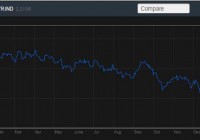
Summary DUK and AEP are set to deliver healthy performances in the coming year. Efforts to increase regulated operations will fuel future growths of both companies. DUK and AEP offer safe dividend yields. Utility stocks have been an admired investment choice for dividend-seeking investors, as they offer high dividend yields. In 2014, the utility sector delivered healthy results and performed better than the S&P 500. The healthy performance of the utility sector can be mainly attributed to a low treasury yield environment. Going forward, I believe utilities will perform well in 2015 due to the prevalent low treasury yield environment, the measures taken by utility companies to improve operational productivity, and continuous efforts by utilities to reduce competitive power operations. As I believe utility sector will deliver a healthy performance next year, I recommend investors to buy two utility stocks, namely American Electric Power (NYSE: AEP ) and Duke Energy (NYSE: DUK ), in 2015. AEP and DUK are positioned well in the industry to deliver a healthy performance in 2015. Also, both stocks offer attractive and safe dividend yields. The following graph shows the declining trend for 10-Year Treasury Yield. Source: Bloomberg.com 2 Stocks for 2015 The utility sector has performed better than the S&P 500 in 2014. And as we head into 2015, I believe the utility sector will deliver a healthy performance next year as well. The low treasury rate environment, efforts to improve operational efficiencies, and lower competitive power operations across the industry will support the utility sector’s performance in 2015. The following table shows the performance of the S&P 500, the utility sector, DUK, and AEP in 2014 year-to-date. S&P 500 Utility Sector ETF (NYSEARCA: XLU ) DUK AEP 2014 – Year-to-date Performance 13% 29% 26% 34.5% Source: Bloomberg.com As the competitive business operations of U.S. utility companies have remained challenging, due to weak capacity revenues and commodity prices, companies have been making efforts to lower their competitive operations. Efforts to lower competitive operations will portend well for companies’ bottom-line numbers and cash flows in future. Many utility companies, including AEP, DUK, PPL Corp. (NYSE: PPL ), Exelon (NYSE: EXC ), have been making efforts to lower their competitive operations. DUK will benefit in the coming year from an increase in its capital expenditures. Also, the company has been addressing the challenges in competitive business operations by selling its unregulated assets. The company, in 4Q’14, sold its competitive power assets in the Midwest for $2.8 billion. The transaction will positively affect the bottom-line numbers of the company in future, as the Midwest assets were posting weak results and were weighing on the company’s total EPS. The company intends to use the cash from the assets sale to expand its regulated operations. The company plans to make capital expenditures of $18 billion (midpoint) from 2014-2018, which includes $7 billion (midpoint) for new generation facilities. The capital expenditures that DUK has planned will help it expand its regulated operations and fuel its top and bottom-line growth. Analysts are anticipating a healthy next five-year growth rate of 4.8% for DUK. Along with healthy growth prospects, the stock offers a high dividend yield of 3.90% . DUK has consistently increased dividends over the years, and the healthy future growth prospects promises further increases in dividends. Also, the dividends offered by DUK are backed by its cash flows, evident from its healthy dividend coverage ratio. Moreover, the company has been successfully increasing its ROE in recent years. The following table shows the increase in dividends per share and ROE over the years, the dividend payout ratio, and the dividend coverage ratio for DUK. (Note * Dividend coverage ratio = operating cash flow/annual dividends, and 2014 figures below are based on estimates). Dividend Per Share ($) Dividend Payout Ratio Dividend Coverage* ROE 2012 $3.03 70% 3x 9.5% 2013 3.12 71% 2.9x 10.7% 2014 * 3.15 70% 3.1x 11.5% Source: Company Reports and Calculations AEP is among the leading utility companies in the U.S. As the competitive business operations remain challenging, AEP has been making efforts to decrease its competitive operations and expand regulated operations. The increase in regulated operations will provide EPS strength for the company. Also, the capital expenditure that AEP has been making will help it fuel its top and bottom-line numbers growth through rate case hikes. The company, in efforts to increase its regulated business, is expected to make capital expenditures of $12 billion from 2015-2017. Also, AEP is focusing on increasing its regulated transmission business in the coming years, and as a result, its transmission segment’s EPS is expected to grow to $0.67 in 2017, up from $0.30 in 2014. Capital expenditures by AEP to expand regulated operations will fuel its future growth. Due to the company’s healthy growth efforts, analysts are anticipating a healthy next five-year earnings growth rate of 4.95% for AEP. The following chart shows the capital expenditure forecast for AEP from 2015-2017. Source: Company Reports Other than attractive growth opportunities, the company offers a safe dividend yield of 3.6% . Dividends offered by the company have increased consistently over the years, and have been backed by its strong cash flows. In the future, dividends are expected to grow consistently due to the company’s growth efforts. The following table shows the increase in dividends per share over the years, dividend payout ratio and dividend coverage ratio for AEP. (Note * Dividend coverage ratio = operating cash flow/annual dividends, and 2014 figures below are based on estimates). Dividend Per Share ($) Dividend Payout Ratio Dividend Coverage* 2012 1.88 60% 4.1x 2013 1.95 60% 4.5x 2014 * 2.02 55% 4x Source: Company Reports and Calculations Conclusion I believe the utility sector will continue to perform well in 2015. I recommend investors to buy DUK and AEP for 2015, as both stocks are set to deliver healthy performances in the coming year. Both companies are expected to enjoy healthy growth in the next five years, and efforts to increase regulated operations will fuel future growths. Also, DUK and AEP offer safe dividend yields, which make both stocks attractive investment options for dividend-seeking investors. The following table shows the dividend yields and next five-year growth rates for DUK and AEP. Dividend Yield Next 5 Year Growth Rate DUK 3.9% 4.8% AEP 3.6% 4.95% Source: Yahoo Finance and nasdaq.com

ACIM Appears To Have Incredibly Low Risk, But That’s Inaccurate

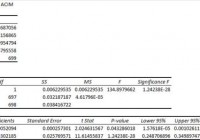
Summary I’m taking a look at ACIM as a candidate for inclusion in my ETF portfolio. The correlation appears to be very low, but the low liquidity caused days with no trades. The same liquidity issues might have improved the standard deviation of returns. The premium to NAV makes it look like a potential short candidate. I’m not assessing any tax impacts. Investors should check their own situation for tax exposure. Investors should be seeking to improve their risk adjusted returns. I’m a big fan of using ETFs to achieve the risk adjusted returns relative to the portfolios that a normal investor can generate for themselves after trading costs. I’m working on building a new portfolio and I’m going to be analyzing several of the ETFs that I am considering for my personal portfolio. One of the funds that I’m considering is the SPDR® MSCI ACWI IMI ETF (NYSEARCA: ACIM ). I’ll be performing a substantial portion of my analysis along the lines of modern portfolio theory, so my goal is to find ways to minimize costs while achieving diversification to reduce my risk level. What does ACIM do? ACIM attempts to track the total return of the MSCI ACWI IMI Index. At least 80% of funds are invested in companies that are part of the index, or in ADRs (American Depositary Receipts). ACIM falls under the category of “World Stock”. Does ACIM provide diversification benefits to a portfolio? Each investor may hold a different portfolio, but I use (NYSEARCA: SPY ) as the basis for my analysis. I believe SPY, or another large cap U.S. fund with similar properties, represents the reasonable first step for many investors designing an ETF portfolio. Therefore, I start my diversification analysis by seeing how it works with SPY. I start with an ANOVA table: (click to enlarge) The correlation is an absurdly low 40%. If an investor stopped here, they would be dramatically misinformed about the risks of ACIM. The correlation is very low as a statistical measure, but the metric is being substantially enhanced by a lack of liquidity in the stock which caused several days to report no change in the price of securities. Standard deviation of daily returns (dividend adjusted, measured since March 2012) The standard deviation is excellent for the international exposure. For ACIM it is .9981%. For SPY, it is 0.7419% for the same period. SPY usually beats other ETFs in this regard, so having a lower standard deviation is excellent. Frequent readers should be aware that I have measured returns from March 2012 instead of my normal starting point of January 2012. I can’t measure values until the ETF is trading and Yahoo is tracking the dividend adjusted close values. Unfortunately, the standard deviation may appear substantially smaller than it should because several days (especially in 2012) reported no change in price. When no sales are reported, the price is not changed and it looks like a low standard deviation of returns. Investors should be aware that there is substantial liquidity risk. The average volume for the last 10 days is only 6,837. Mixing it with SPY I also run comparisons on the standard deviation of daily returns for the portfolio assuming that the portfolio is combined with the S&P 500. For research, I assume daily rebalancing because it dramatically simplifies the math. With a 50/50 weighting in a portfolio holding only SPY and ACIM, the standard deviation of daily returns across the entire portfolio is 0.7320%. If an investor wanted to use ACIM as a supplement to their portfolio, the standard deviation across the portfolio with 95% in SPY and 5% in ACIM would have been .7263%. However, due to the very low correlation, a position of 80% SPY combined with 20% ACIM results in a standard deviation for the portfolio of only .6982%. Investors hoping to capitalize on this low standard deviation of returns would need to have a relatively low need for liquidity since the price stability only works if no large sell orders are being introduced. Why I use standard deviation of daily returns I don’t believe historical returns have predictive power for future returns, but I do believe historical values for standard deviations of returns relative to other ETFs have some predictive power on future risks and correlations. Yield & Taxes The distribution yield is 1.84%. The yield is almost high enough for a retiring investor, in my opinion. Generally, I want to see yields over 2% when considering an ETF for retirement planning. This is close enough that I could still consider it from the perspective of a retiree, but only if the retiree was certain they did not have liquidity needs. I’m not a CPA or CFP, so I’m not assessing any tax impacts. Expense Ratio The ETF is posting .25% for an expense ratio. I want diversification, I want stability, and I don’t want to pay for them. The expense ratio on this fund is higher than I want to pay, but isn’t unbearable for the incredible diversification. Market to NAV The ETF is at a 1.85% premium to NAV currently. Premiums or discounts to NAV can change very quickly so investors should check prior to putting in an order. I wouldn’t want to pay a premium greater than .1% when investing in an ETF. There might be some situations where I would pay .2%, but you won’t see me agreeing to pay that premium. Not happening. If I took a position in this ETF it would be with a carefully monitored limit buy order that adjusted for the premium. If sell orders dropped it to my price, great, if not, I’d rather avoid the ETF entirely than pay that premium. Largest Holdings ACIM has great diversification when you look at the percent in each asset, but the top of the portfolio still has a huge tilt towards the U.S. economy. (click to enlarge) These aren’t bad stocks to hold, but I can get them by holding any of several major ETFs that hold major U.S. companies. The appeal of a world portfolio is having substantial exposure to other markets to help balance out the geographic risks of a U.S. based portfolio. This collection of top holdings supports my belief that the correlation is understated because favorable impacts from days where reported closing price did not change. If ACIM drops to trade at a discount to NAV, I may become very interested in it. Otherwise, regardless of the statistics, I’m not interested in paying a premium for an ETF that holds several of the same companies I can acquire without the premium. Conclusion I’m currently screening a large volume of ETFs for my own portfolio. The portfolio I’m building is through Schwab, so I’m able to trade ACIM with no commissions. I have a strong preference for researching ETFs that are free to trade in my account, so most of my research will be on ETFs that fall under the “ETF OneSource” program. I think the statistics for the ETF are misleading and premium to NAV looks like a poor bet for future returns. When this ETF trades near NAV, it may have some value to investors. I may take a deeper look at it in the future, but for now I think the low liquidity and premium NAV present a real challenge to including it in my portfolio. Due to low liquidity and the potential need to execute a trade over multiple days to create or sell a reasonable position, I would not consider this ETF at all from any account that was required to pay trading commissions on the ETF. If I can short ETFs that are overpriced (without commission), it might become appealing to initiate shorts on the ETF when it is trading over book value if I can own substantially the same securities through other ETFs without paying a premium to acquire them. Additional disclosure: Information in this article represents the opinion of the analyst. All statements are represented as opinions, rather than facts, and should not be construed as advice to buy or sell a security. Ratings of “outperform” and “underperform” reflect the analyst’s estimation of a divergence between the market value for a security and the price that would be appropriate given the potential for risks and returns relative to other securities. The analyst does not know your particular objectives for returns or constraints upon investing. All investors are encouraged to do their own research before making any investment decision. Information is regularly obtained from Yahoo Finance, Google Finance, and SEC Database. If Yahoo, Google, or the SEC database contained faulty or old information it could be incorporated into my analysis. The analyst holds a diversified portfolio including mutual funds or index funds which may include a small long exposure to the stock.