Tag Archives: seeking-alpha

Time To Consider Tortoise Energy Infrastructure Corporation?
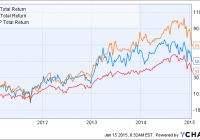
Summary Energy stocks have fallen in the past several months due to volatility in the price of oil. Midstream MLPs involved with the transportation or storage of fuels offer lower, but more stable distributions. This article presents a number of reasons why investors should consider TYG for exposure to the midstream MLP space. Introduction What will the price of oil be in three months time? If you think I know the answer to that question, I have a prime real estate in the Bahamas to sell you. What is known is that energy MLPs have done rather poorly recently. As a readers of my ” Buy-the-Dip High-Yield ” portfolio would know, buying on the dips allows you to lock in higher yields and grasp the potential for capital appreciation. Upstream (also known as E&P) MLPs have fallen the hardest in recent months, with bellwethers such as Line Energy (NASDAQ: LINE ) plunging by about two-thirds. While their yields are the highest, upstream MLPs also carry more risk due to their acute sensitivity to the price of oil. I considered buying upstream-containing MLP funds (see my previous articles on YMLP , MLPJ and MLPY ) to mitigate this risk, but ultimately decided that the entire sector was too volatile at this time. In comparison, midstream MLPs, which are involved with the transportation (via pipeline, rail, barge, oil tanker or truck) and storage of crude or refined petroleum products, tend to offer lower but more stable distributions. Tortoise Energy Infrastructure Corporation Upon consideration of the various midstream MLP ETFs, ETNs and CEFs on the market, I ultimately decided on purchasing Tortoise Energy Infrastructure Corporation (NYSE: TYG ). My reasons for buying TYG can be broken down into three reasons: 1. Long track record of (out)performance As described in my recent article , TYG has over 10 years of track record performance. Among MLP CEFs, only Kayne Anderson MLP Investment Company (NYSE: KYN ) has a similarly long history. Over the last three years, when the benchmark Alerian MLP ETF (NYSEARCA: AMLP ) became available, TYG has returned 17.83% annualized (by NAV), compared to 14.51% for KYN and 8.87% for AMLP. After accounting for its 25.29% leverage, TYG returned 14.23%, which is still higher than AMLP. The following graph shows the total return percentages of TYG, KYN and AMLP over the past few years. Note that the graph shows price return rather than NAV return. TYG Total Return Price data by YCharts As mentioned in the previous article, KYN actually had a better price return compared to TYG over the last few years, whereas TYG had a better NAV return. I believe that NAV return is a better reflection of performance compared to price return, since the value of a CEF is ultimately based on its NAV. Unfortunately YCharts does not have a ability to chart NAV total return. 2. Historically large discount As mentioned many times in my previous articles, mean reversion of premium/discount values is an effective strategy to add an extra bit of performance to your CEF holdings. Basically, the strategy entails buying CEFs when their discount exceeds their historical average, allowing you to profit from mean reversion as the discount narrows. TYG currently trades at a discount of -5.80%. The following chart shows the premium/discount for TYG (graph constructed from data supplied by Tortoise Capital Advisors ). (click to enlarge) We can see that for most of its 10-year history, apart from a brief spurt in 2008 and during the last year, TYG has traded at a persistent premium. The following table shows the average premium/discount values for TYG over various time periods (premium/discount data are from CEFConnect except for the 10-year time period which was manually calculated). Time Premium/discount Current -5.80% 1-year -4.97% 3-year 5.99% 5-year 9.02% 10-year 8.48% Therefore, we can see that TYG has a very large discount relative to its 3-year, 5-year and 10-year averages, indicating that now would be a good time to consider buying this fund for midstream MLP exposure. We also note that TYG had recently fallen to as low as -10% discount in September of last year, which would have been an even better time to buy the fund. 3. Reasonable expense ratio TYG charges a management fee of 1.62%* (according to CEFConnect). This seems high, but once you factor in the benchmark AMLP’s 0.85% expense ratio and the 25.29% leverage of the fund, you are really only paying 0.44% more for the active management of TYG. This compares favorably to KYN, which charges 1.12% for “active expense” (see my previous article for how this was calculated). *Excludes interest expenses and deferred tax liabilities. Given the significant outperformance of TYG vis-a-vis the benchmark over the last few years, I consider the management fee well worth it. 4. Possible downside protection Note: I’m not a tax expert so please take the following with a grain of salt. MLP CEFs (or ETFs) structured as corporations accrue deferred tax liabilities over the years, which will act as a drag on NAV (compared to an ETN) when the underlying constituents are advancing. Conversely, in a falling market an MLP CEF/ETF should fall less than an MLP ETN because the CEF/ETF will be able to accrue a deferred tax asset, or to decrease its deferred tax liability. George Spritzer’s [CFA] excellent article explains the benefit of a deferred tax liability: Another interesting feature of deferred tax liabilities is that they provide some cushion on the downside if there were a major correction in the MLP sector. This would cause a decrease in the deferred tax liabilities, which translates into less of a penalty when the regular unadjusted NAV is computed. Moreover, Mr. Spritzer estimates that the true discount for TYG is even higher (around 36%) once the deferred tax liabilities are accounted for. Indeed, if the CEF managers are using tax minimization strategies to boost the NAV return of the CEF over the benchmark AMLP, which is subject to the same tax drag as the CEFs but is passively managed, then that is even more the reason to pay for active management. To see the deferred tax liability in action, consider the price action of AMLP (an ETF) relative to JP Morgan Alerian MLP (NYSEARCA: AMJ ) (an ETN) over the last five days, a period where oil-related stocks took another punch to the stomach. AMLP and AMJ are both passive benchmarks that track similar indices but the outperformance of AMLP on the downside is probably due to its accrued deferred tax liabilities. TYG did even better, though part of this could have been due to fluctuations in premium/discount values. TYG Price data by YCharts Therefore, my investing in an MLP CEF (or ETF) over ETN that has accrued deferred tax liabilities, you gain some downside protection. Summary This article presents several reasons why investors looking to gain exposure to the midstream MLP space should consider TYG. Due to overall volatility in the energy sector, I would recommend that investors slowly dollar-cost average their way into this fund instead of buying the whole amount in one go.

Junior Gold Miners Outperforming Other Asset Classes In 2015

Precious Metals and Junior Miners May Be Bottoming. Gold is breaking above critical 200 day moving average. Positive Trend Change in Gold? Oil and Copper Collapsing unable to deter gold rally. Stick to high quality gold mining assets in stable mining jurisdictions. For weeks I have been predicting that precious metals and the junior gold miners would bottom and outperform in January. Now gold (NYSEARCA: GLD ) is breathtakingly breaking above the key 200 day moving average and breaking four month highs as the World looks to gold as a safe haven. The intermediate to long term trend may be turning positive for gold and silver (NYSEARCA: SLV ) and unfortunately the amateur investor has already panicked out or may be covering their shorts. (click to enlarge) This breakout in gold could end the lower high pattern or downtrend. Sentiment is changing from negative to positive. Already for weeks , I highlighted the positive momentum in the junior gold miners (NYSEARCA: GDXJ ) despite the new low in December. This divergence usually signals an interim bottom and turning point. A few weeks ago precious metals and the shares were hitting new lows. The amateur investor panicked out. I told my subscribers to hang on and buy more at the bottom. Now the Junior Gold Miners are up over 14% since the beginning of the year outperforming the S&P500 (NYSEARCA: SPY ) and US dollar (NYSEARCA: UUP ). Despite oil and copper (NYSEARCA: JJC ) collapsing along with equities, precious metals and mining stocks (NYSEARCA: GDX ) appear to be bottoming and showing great relative strength. Right now, gold as a safe haven may be where the action is greatest. The US dollar may peak as investors realize that the US economy is still far from recovered. The oil and copper collapse is giving a loud shout to investors that the global economy is nowhere near recovery and looks more like the 2008 Financial Armageddon. One of the few things that can maintain its purchasing power in this sort of market is gold. Believe it or not another yellow metal which has held up well despite the 50% correction in oil is uranium. I told my subscribers at the end of 2014 that smart investors should be defensive against the overbought equities with inverse S&P500 ETFs such as Proshares Short S&P 500 (NYSEARCA: SH ) or a short financial fund (NYSEARCA: SEF ) and go long gold and junior gold miners in this sort of chaotic environment. The banks are sitting on major energy losses, while the S&P500 is made up largely of energy stocks and companies who profit off of emerging economies. It is way overbought and we could witness a powerful crash in equities that mirror the oil crash. I believe mining assets with real potential could come back into favor. I am accumulating hoping that within the next decade we could see a major run higher in this sector. Eventually, the trillions of debt will be paid back with devalued US dollars. Rising interest rates and inflation could pick up in 2015 especially in the US benefiting our beaten down wealth in the earth sector. Real gold mining assets in stable jurisdictions will go up in value. It is only a matter of time and patience. I like the junior gold miners especially the explorers now in Nevada and Quebec. Governments can print another trillion dollars by pressing a button at the printing press. This can’t be done in the gold exploration business. It takes years and a lot of divine blessing to find a million ounces of gold. Investors may now be able to believe this as gold breaks above the 200 day moving average. Now that you’ve read this, are you Bullish or Bearish on ? Bullish Bearish Sentiment on ( ) Thanks for sharing your thoughts. Why are you ? Submit & View Results Skip to results » Share this article with a colleague

Are Housing Stocks Ready To Rock Or Roll Over?

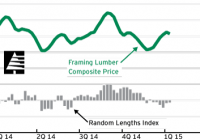
Housing stocks have begun to recover from the bubble and crash of last decade. Some individual homebuilders have attractive fundamentals, but none of the stocks are cheap. Some difficult portents from industry leaders make me wary of the sector for the short term. Longer term, positive factors may come together to make the sectors lead the market once more. Background : With the declining trend in interest rates reasserting itself, this is a good time to discuss a highly rate-sensitive industry, housing. Housing stocks consist of homebuilders (NYSEARCA: ITB ) and also related companies such as lumber stocks, home improvement chains, furniture companies. These are included along with home builders in another large ETF (NYSEARCA: XHB ). ITB and XHB tend to move together; the latter has been stronger since inception and for the past five years. This article reviews several identifiable factors that can be used to make an informed decision about the housing sector, and discusses individual companies within it. Introduction : Since the way houses are built change gradually rather than through breakthroughs such as the GUI and iPhone introduced over the years by Apple (NASDAQ: AAPL ), and because houses are core to human life, they can be great businesses. These stable characteristics have attracted Warren Buffett’s Berkshire Hathaway (NYSE: BRK.A ) (NYSE: BRK.B ) into the business of building and selling homes, manufacturing carpet, and other related businesses. That said, housing is subject to many cycles of different duration, and it used to be said that all housing was local and was not likely to allow the growth of large, geographically-diversified homebuilding companies. Thus, housing stocks go in and out of favor with some regularity. In 1999 and 2000, I used to exclaim to Mrs. DoctoRx that the housing stocks were in such disfavor, trading at such low valuations, that there was no way that the stock market was a valid discounting mechanism – not with Cisco (NASDAQ: CSCO ) at 150X P/E and Yahoo! (NASDAQ: YHOO ) at 100X sales per share at the peak. And so it was that Mr. Market changed his tune, got tired of the techs, and pumped up the housing stocks. I then did very well buying homebuilders in the up-cycle beginning in or around 2002, often for tangible book value – which had started to rise rapidly as the housing bubble inflated. So the stocks did well for us. In the spring of 2005, I was lucky enough to be watching CNBC one morning when an official from the Office of the Comptroller of the Currency came on and warned the public that certain mortgage practices had gotten dangerous. I sold my homebuilder stocks promptly, shortly before they all peaked that summer, and now own just one. My view is that if America is to keep on succeeding, housing must be a big part of that success, so it’s important for a diversified investor to be there when the sector really returns to strength. Let’s look into some of the straws in the wind that could tell us whether now is a good time to find alpha in ITB, XHB or any individual name in or related to those indices. We’ll start by looking to see if lumber products are in uptrends or not. Lumber and panel prices – the trends : An industry weekly, Random Lengths , lets us see yoy trends. This is the latest data: Framing lumber: And structural panels (composites): Not bad. Framing prices are down modestly yoy, but panels are up several per cent. Lumber is also traded on futures exchanges. FINVIZ tracks it: (click to enlarge) This looks less inspiring; there are of course different grades of lumber, and the Random Lengths data is probably more representative. Therefore, my impression is so far, so good. Wood products looked at on a one-year time frame look OK, certainly much better than the average commodity, but since those crashing commodities have a great deal to do with China’s and Europe’s problems, and wood is largely related to domestic demand, it’s hard to be enthusiastic. A longer-term look at lumber prices is more troubling. It looks to me like a classic convex downward topping pattern following the stimulation of the market during 2013’s QE 3 and then a failing set of rallies as the Taper went to its end. Here’s a multi-year look, from the “weekly” setting on the same FINVIZ link: (click to enlarge) Everyone’s eyes will see this differently, but I see it as tracking the recent cycle of stimulus being applied (QE 3 in 2013) and then being withdrawn (the Taper of QE 3 in 2014). So my guess here is toward the negative for what lumber’s chart may be portending. It’s just a guess, though. Let’s look at other data to see how the builders are faring. Homebuilders – recent results : There is actually a fairly consistent pattern here that suggests that demand has been pulled forward a bit, that prices have exceeded the buying power of those who would buy if they could, and that the stocks may therefore be in some trouble. Note I’m going to focus on the builders, as they tend to set the pace for the rest of the XHB. KB Home (NYSE: KBH ), the old Kaufman & Broad, created a contretemps this week. They reported a strong quarter but then on the conference call had some negative comments about the current quarter. The stock simply tanked. It peaked along with lumber prices in the spring of 2013 and now is down close to 50% from that peak. It is down roughly 80% from its mid-2005 peak. Hovnanian Enterprises, Inc. (NYSE: HOV ), which threatened to go bankrupt in last decade’s crash, survived to have a decent October. Nonetheless, its EPS prospects have darkened and it trades at nearly 20X current year EPS estimates given how much they have been cut. With negative book value, HOV could be in trouble. This is what one typically sees after a bubble bursts, and that companies survive on the edge like Hovnanian makes life more difficult for the healthier ones. Toll Brothers (NYSE: TOL ), which is the builder I own a bit of, also reported recently. TOL has a book value of $3.8 B, all of which is tangible book. Because of its exclusive only on higher-end homes and its long history as a market leader in that higher-margined niche, I believe that TOL has substantial intangible value. It ought to be a potential acquisition candidate for Berkshire Hathaway. Nonetheless, despite reporting a “beat” for the October quarter, TOL has seen EPS estimates for its FY ending Oct. 2015 drop about 10%. The stock is off its 12-month high but is much closer than KBH or HOV to its all-time high near $60. I take this as a sign of strength. TOL is selling at about 17X forward 12-month estimates, which are not set in stone. But at about 1.6X book value, it is solidly within a long-term buy-and-hold range, given that apart from the nonsense of 2004-5, it typically trades between 1X and 2X book value. I like TOL for the long haul. Lennar (NYSE: LEN ) reports Thursday (I am writing this Wednesday night). Like TOL, it has a relatively strong chart and could be a differentiated star in the next up-cycle. One other large builder that I like, which has had a little bit of mismanagement in at least one region, but has a stock that has uniquely lifted into all-time high territory is NVR (NYSE: NVR ). That it is in ATH ground is by itself reason to follow this name. NVR’s price:book is distorted by massive shrinkage of its float before the Great Recession. Periodically, NVR sees nice insider buying, and every once in a while, I trade it – but I don’t love its valuation enough to make it a core holding. Other larger builders, such as MDC Holdings (NYSE: MDC ) have declining EPS and declining estimates. So the sector has mixed prospects without any clear uptrend despite the interest rate downtrend the entire last twelve months. This situation does not merit a high, or necessarily any, allocation from smaller investors and usually does not encourage large investors to overweight the sector. Interest rates and general valuation issues : The periods of dropping interest rates which followed the ends of QE 1(mid-2010) and QE 2 (Q3 2011) were not good periods for ITB or XHB. We are here again and something similar looks to be happening; this pattern merits close attention to see if it in fact evolves similarly. This is another reason that I am cautious about the stocks right here. Given how low mortgage rates already are, there is no reason that they should have to drop any further to stimulate boom times for the housing sector. Unfortunately, through no special fault of the builders, the first-time home buyer is too often living in his/her parent’s home or else is renting, unable to scrape together even a 3% down payment for a new home. These are some of the well-known but not easily-solved problems for the homebuilder and related stocks. Both ITB and XHB have no special allure on a valuation basis. They trade at high-teen’s P/E’s and above 1.5X book. Dividend yields are low, EPS trends are difficult for analysts to predict more than a year out, and most companies in each index have modest if any moats. So I’d like cheaper valuations before committing much money to the sector. Toll is a partial exception as it has a decent moat; Lowe’s (NYSE: LOW ), which is a member of XHB, is a category-killer. So is Home Depot (NYSE: HD ), which is too much of a mega-cap to be included in XHB. Again, aside from those giants, which I offer no opinion of in this article, the components of these ETFs should in my view trade at lower valuations before they become really attractive. Concluding thoughts – the importance of burst bubbles : There’s a lot to be said for industries that are important and glamorous enough to be the subject of bubbles. America itself was the subject of a bubble via stocks in 1929, and while the bubble broke very badly, the market had it right: the future was bright indeed for the United States. Certainly, investors had it right about home-based and laptop computing, plus mobile communications, in the 1990s, but of course they overpriced many stocks for a number of years. Then the Great Recession came, and lo and behold, tech did not suffer badly in the market; it then became the market leader since it bottomed before the overall market during the post-Lehman crash period. Assuming there will be another bear market in the next few years (not necessarily anything as severe as the 2008 period), homebuilders might act the way tech did then. There are good reasons to hypothesize this outcome. Interest rates have come down for reasons much of which have little to do with domestic issues and a lot to do with what might be a bursting bubble in China, plus what used to be called Eurosclerosis. Millenials have obvious unfilled demand for housing, and the housing stock in this country is getting a mite aged. So, while there may be a period of further indigestion ahead as the malinvestments of the housing bubble work themselves out, I’m optimistic that at some point, ITB and XHB will be market leaders in a future bull market just as tech has been in the current one. For now, focusing on the homebuilders, the only reasonably valued stock that is differentiated enough to keep as a long term hold in my view is TOL. Should it prove to be doing something really right based on Thursday’s upcoming earnings report, perhaps LEN could join it. Longer term, NVR has been a quite impressive outperformer, and thus might merit attention as an individual stock to own, especially on a general market or sector pullback. Looking at the XHB for non-homebuilder stocks, I do not see any special bargains. An old rule of thumb which was thrown away during the housing bubble was that homebuilders should in fact trade around 1.5X book value, because there was not much of a moat behind their business models. I think that as the bubble recedes into memory, this is a sensible approach to investing in the sector that helps to smooth out the often-violent earnings cycles. To answer the question in the title, my guess is that the housing stocks are, in the short run, more likely to roll over than rock on after a strong several years. That’s not a high conviction opinion, though. But I’m positive on a longer term basis, especially if Mr. Market allows a less expensive purchase price. Neither ITB nor XHB is a fund for the faint of heart. Neither is TOL, which has never paid a dividend and which typically sees substantial insider selling. As usual for non-blue chip companies, market, company and sector risks are non-trivial here. To summarize my views on the sector, there are several positives that combine to make for an attractive set-up even as the debris of the bubble makes the immediate future perhaps bumpy and dangerous for these stocks. These positives include demographic pressure, low interest rates and large areas of land suitable for development. It appears likely that this concatenation of favorable factors will allow ITB and XHB to shine again. Thus I think that investors should keep these funds and high-performing individual names in the sector in their sights, though I am not bullish on these stocks right now.