Tag Archives: seeking-alpha

New ETF Takes The Yield Approach To Infrastructure
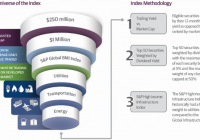
Summary Investors play the boom in infrastructure with sector-related ETFs. Guggenheim Investments recently launched a new yield-weighted infrastructure ETF. A closer look on the infrastructure industry. By Todd Shriber & Tom Lydon Due to an expected boom in global infrastructure, investors can choose from multiple infrastructure exchange-traded funds, several of which also offer compelling dividend yields. The new Guggenheim High Income Infrastructure ETF (NYSEArca: GHII ) , which debuts today, takes a different, unique approach to infrastructure. Eschewing traditional market capitalization weighting, GHII looks to solidify its status as an option for income investors by weighing its components on the basis of trailing 12-month yield. “GHII is the first yield-weighted infrastructure ETF to come to market. The new ETF tracks the S&P High Income Infrastructure Index, which is composed of the 50 highest-dividend-paying companies within the S&P Global BMI that operate in the energy, transportation, and utilities sectors,” according to S&P Dow Jones Indices . The index is home to 50 companies, including three firms listed outside the U.S. in the top 10 holdings. Names familiar to U.S. investors found in GHII’s underlying index include Williams Companies (NYSE: WMB ) and Kinder Morgan (NYSE: KMI ), which have an average dividend yield of 4.6%. GHII’s index allocates just over half its weight to utilities stocks, a third of its weight to the industrial sector, and 16.3% to energy names. Some new ETFs are afflicted with poor timing, particularly thematic funds, but that does not appear to be the case with GHII as the fund debuts at a time when governments all over the world are talking about boosting infrastructure spending. “Governments are increasing fiscal expenditures to update and expand infrastructure projects. For instance, The Obama administration has proposed $478 billion in spending on roads, bridges, ports and other key transportation nodes,” reports Jeffrey Sparshott for the Wall Street Journal . “While infrastructure investment will continue to be needed even after the economy reaches full employment, time is running out to make these needed investments under ideal economic conditions,” the White House budget said. “Oxford Economics and PwC project global infrastructure spending will top nearly $78 trillion between 2014 and 2015, with about 60% of that coming out of the Asia Pacific,” the Wall Street Journal reports. As Guggenheim notes, demand for infrastructure assets remains durable regardless of economic conditions and market factors. “The infrastructure asset class offers investors the opportunity to realize enhanced return and capital appreciation. Offering strong cash flow potential, assets with typically long lifespans, as well as relatively low volatility and significant barriers to entry, infrastructure provides investors with access to an emerging segment of the market aligned with the global recovery,” said the issuer. GHII Index Information (click to enlarge) Chart Courtesy: Guggenheim ETF Trends editorial team contributed to this post. Disclosure: The author has no positions in any stocks mentioned, and no plans to initiate any positions within the next 72 hours. (More…) The author wrote this article themselves, and it expresses their own opinions. The author is not receiving compensation for it. The author has no business relationship with any company whose stock is mentioned in this article. Additional disclosure: Mr. Lydon serves as an independent trustee of certain mutual funds and ETFs that are managed by Guggenheim Investments; however, any opinions or forecasts expressed herein are solely those of Mr. Lydon and not those of Guggenheim Funds, Guggenheim Investments, Guggenheim Specialized Products, LLC or any of their affiliates.

Hawaiian Electric Industries (HE) Q4 2014 Results – Earnings Call Webcast

The following audio is from a conference call that will begin on February 12, 2015 at 17:00 PM ET. The audio will stream live while the call is active, and can be replayed upon its completion. Are you Bullish or Bearish on ? Bullish Bearish Neutral Results for ( ) Thanks for sharing your thoughts. Submit & View Results Skip to results » Share this article with a colleague

OIL – Buy It Here Post EIA Release

Summary I have noticed a trend in oil trading around the EIA Petroleum Status Report release. The data showing an ongoing build in inventory to record high crude oil levels reassures energy bears and resets energy prices lower this time each of the last two weeks. Longer term investors are looking forward to an eventual end of oil inventory build, and are setting a floor for oil prices. I would use this weakness to buy into the iPath S&P GSCI Crude Oil ETN and other relative investments for the long-term. Over the last two weeks I have noted a trend in oil prices that can be exploited by investors and traders alike. Oil prices have slipped each of the last two weeks heading into the EIA’s Petroleum Status Report, on fear that the inventory data might show large inventory builds. However, once the report is released, despite it’s showing of inventory build, oil prices have found some support likely from long-term investors looking to forward developments. As a result, there’s an opportunity for entry in the iPath S&P GSCI Crude Oil ETN (NYSE: OIL ) here. 1-Month Chart of the OIL at Seeking Alpha The one-month chart of the iPath S&P GSCI Crude Oil ETN shows a recent double-dip. For each of the last two weeks, oil prices and the shares of the OIL ETN have dipped ahead of and into the EIA Petroleum Status Report . The reason for concern is a greater than expected build in oil inventory, which strengthens the glut argument and forces oil prices lower. This week’s data followed trend. The EIA Report Just like last week, this week’s data for the period ending February 6 showed another build in oil inventory. The EIA Report shows that crude oil refinery inputs averaged 15.6 million barrels per day, which was 20K more than the prior week. Crude oil inventory increased by 4.9 million barrels through the week. Importantly, at 417.9 million barrels, crude oil inventory stands now at its highest point in at least 80 years and likely its highest level in history. This news again reinforced the argument about an oil glut, and it gives reason for lower oil prices and lower distillate prices, like gasoline. Thus, once again, fear of this news and the realization of this news drove a dip in the price of oil. Just after the report was released, WTI Crude futures were down 2.5% and Brent Crude was down 3.0%. The iPath S&P GSCI Crude Oil ETN was off 2.8%, but had come up off its lows. The United States Oil ETF (NYSE: USO ) was down 2.5%. Last week, oil prices moved higher off the lows set around the data release and they appear to want to do the same this week. Already crude oil futures have hemmed in their losses. Why is that? It’s because energy experts see this crude oil build ending eventually, at which point inventory can begin to see draws instead of builds, and the level of inventory can come off its high. It will eventually happen, because the rig count is coming off as we flirt with the level of oil prices where drilling is no longer profitable for the average driller. The least efficient of drillers are being squeezed out of the market as well, and so supply should come off. Even the largest of energy sector players are now reducing workforce (see my report on Halliburton ). So as producers of oil cut back, the flow of crude into inventory must come off to meet demand levels. This makes a long-term argument for the purchase of energy sector issues, especially those tracking the commodity here like the OIL ETF. The oil stocks have already enjoyed a significant burst higher, but they are now dealing with news of layoffs and earnings estimate reductions, and eventually disappointing earnings results. The OIL ETF gives investors a vehicle now to avoid all that noise and still benefit from the long-term recovery of oil prices on continuing global growth and a lesser supply environment to meet demand. In conclusion, I think you can use this bad news event as an opportunity for best entry to buy the OIL ETF security and other relative investment securities for the long-term. I am following energy closely now and so my column might prove valuable to relative interests. Disclosure: The author has no positions in any stocks mentioned, but may initiate a long position in OIL over the next 72 hours. (More…) The author wrote this article themselves, and it expresses their own opinions. The author is not receiving compensation for it (other than from Seeking Alpha). The author has no business relationship with any company whose stock is mentioned in this article.