Tag Archives: seeking-alpha

Flows To Liquid Alts Drop In December, End 2014 Up 10%
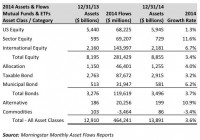
The growth of liquid alternative funds dominated all other asset classes in 2014 with a growth rate 3 times that of equity and bond funds. Based on Morningstar’s classification, and including both mutual funds and ETFs, liquid alternatives grew 10.9% in 2014, while equity funds grew at 3.4% and bond funds at a 3.7% rate. Of all the major asset classes reported by Morningstar, commodities was the only category that saw outflows, amounting to a 3.4% decline for the category. Shifting Allocations While the actual dollar amount of flows to equity and bond funds is still quite larger than that of liquid alternatives, the growth rates tell a story of shifting allocations. The growth rates highlight the fact that investors are shifting assets to liquid alternatives in favor of other asset classes as a way of diversifying their portfolios. However, with only 1.4% of the total mutual fund and ETF asset pie allocated to liquid alternatives, investors are clearly under-allocated relative to institutional investors who typically allocate 15-20% of their portfolio to alternatives. Many industry experts expect to see that 1.4% number increase to the likes of 10-15% over the coming decade, and for good reasons. The table below summarizes Morningstar’s 2014 asset flow data for mutual funds and ETFs combined: Now, let’s take a more detailed look at the winning and losing categories within the alternatives bucket. At DailyAlts, we take a slightly different view of what is alternative and what is not, and break down the categories into Alternative Strategies and Alternative Asset Classes (discussed further in this article ). Our classification process removes Trading Strategies from Mornignstar’s alternative category, and adds in Non-Traditional Bonds and Commodities. Morningstar currently classifies non-traditional bonds in the Taxable Bond category. In total, we arrive at a 9.8% growth rate for liquid alts, and total assets of $398 billion. The breakdown of 2014 flows based on this classification is below: (click to enlarge) The dominant category over the year was Morningstar’s non-traditional bond category, which took in $22.8 billion. Going into 2014, investors held the view that interest rates would rise and, thus, they looked to reduce interest rate risk and/or increase income with the more flexible non-traditional bond funds. This all came to a halt as interest rates actually declined and flows to the category nearly dried up in the second half. This also impacted market neutral strategies which are often used as a substitute for fixed income portfolios. Multi-Alternative Funds Dominate Inflows On a growth rate perspective, multi-alternative funds grew at a nearly 34% rate in 2014 and outpaced all other categories, except for volatility funds. In addition, they increased their flows in the second half over the first half, and never had a month of negative flows during the year – the only category to do so. Multi-alternative funds allocate to a wide range of alternative investment strategies, all in one fund. As a result, they serve as a one-stop shop for allocations to alternative investments. In fact, they serve the same purpose as fund-of-hedge funds serve for institutional investors, but for a much lower cost! That’s great news for retail investors. The Tale of Two Halves Finally, what is most striking is that the asset flows to alternatives all came in the first half of the year: $36.2 billion of inflows in the first half and only $622 million in the second half. Much of the second half slowdown can be attributed to two factors: A complete halt in flows to non-traditional bonds in reaction to falling rates, and billions in outflows from the MainStay Marketfield Fund (MUTF: MFLDX ), which had an abysmal 2014. The good news is that multi-alternative funds held steady from the first half to the second – a good sign that advisors and investors are maintaining a steady allocation to broad based alternative funds. The only other category to actually increase asset flows in the second half over the first was managed futures. Aside from May, every month in 2014 saw positive flows to managed futures. This consistency of flows over the year provides an indication that investors were clearly looking to diversify their portfolios with a strategy that generally has very little correlation with equity and bond markets. For many, this turned out to be a good move as a range of funds in this category performed quite well over the year. 2015 Outlook For 2015, expect to see multi-alternative funds continue to gather assets at a steady clip. The managed futures category, which grew at a healthy 19.5% in 2014 on the back of multiple difficult years, should see continued action as global markets and economies continue to diverge, thus creating a more favorable environment for these funds. Market neutral funds should also see more interest as they are designed to be immune to most of the market’s ups and downs, while long/short equity funds are positioned to take in flows from investors looking to take some equity risk off the table, but still want to participate in some upside. We will soon have a recap of January flows to see how investors behaved as the new year got kicked off.
UBS Rolls Out Leveraged US Small Cap Dividend ETN

Concerns related to dividend ETFs are evident, given higher chances of the Fed hiking interest rates sooner than expected in the U.S. Yet, income ETFs draw enough attention thanks to persistent global turmoil (read: 3 ETFs Yielding Over 6% to Watch as Market Speculates Rising Rates ). There are plenty of options in this space too, as a number of providers launched new dividend ETFs over the past few months. While the space is definitely jam-packed, UBS – a leader in exchange-traded notes – discovered room for yet another play in the leveraged dividend ETF space. Consequently, the company rolled out a new income fund namely ETRACS Monthly Pay 2xleveraged US Small Cap High Dividend ETN (NYSEARCA: SMHD ) targeting the U.S. small-cap space. Inside SMHD This ETN looks to follow two times the monthly performance of the Solactive US Small Cap High Dividend Index. This benchmark consists of 100 high dividend yielding small cap U.S. firms. Top holdings for the ETN’s underlying index include LinnCo LLC (NASDAQ: LNCO ) (5.98%), Denbury Resources (NYSE: DNR ) (5.75%) and Peabody Energy (NYSE: BTU ) (5.22%), all of which account for over 15% of the note. In terms of yield, the index pays about 17% per annum (as of February 3, 2015) to investors, a pretty solid level. And for such a smart exposure, the cost does not seem steep as the product charges 85 bps in fees, which is lower than the average expense ratio charged by the leveraged equity ETFs. As far as country exposure is concerned, the product puts about 93.6% of assets in the U.S. followed by Bermuda (5.3%) and United Kingdom (1.1%). Investors should note that the product carries the credit risk of UBS AG (NYSE: UBS ) attached to it, though the issuer is considered a high-rated and sought after financial institution. How Does it Fit in a Portfolio? This ETF is an intriguing choice for investors seeking a new take on income investing. It could also be appropriate for investors seeking to ride out the U.S. growth momentum amid global meltdown and earn substantial yield as the domestic economy seems set to hike the key interest rates this year. Notably, given the currency concerns and global turmoil, small-caps appear better bets than large caps when it comes to investing in the domestic arena. After all, these pint-sized equities revolve around the domestic economy more than the large caps, which normally have a wider foothold abroad (read: Investor Guide to Small-Cap Value ETFs ). On the other hand, the ETN does not look to be a pricier option giving investors another reason to bend towards it. Plus, a monthly rebalancing strategy is a winning criterion in the leveraged space as many other products rebalance on a daily basis, enhancing the risk quotient in the product (read: UBS Launches New Monthly Resetting Leveraged ETF ). Meet the Competitors The leveraged high yield space is still not chockablock. Among the trendy and coveted ones, UBS itself operates two products namely UBS ETRACS Monthly Pay 2x leveraged Dow Jones Select Dividend Index ETN (NYSEARCA: DVYL ) and UBS ETRACS Monthly Pay 2x leveraged S&P Dividend ETN (NYSEARCA: SDYL ) . While SDYL targets a monthly 2x version of the 50 highest dividend yielding firms in the S&P Composite 1500 Index and DVYL focuses on the Dow Jones U.S. Select Dividend Index which screens by the dividend per share growth rate, dividend payout percentages, and average dollar trading volume, and then selects on the basis of dividend yield. SDYL has an asset base of $21.9 million and charges 30 bps in fees while DVYL has so far amassed about $33 million in assets and charges about 35 bps in fees. SDYL yields 4.45% in dividends annually (as of February 13, 2015) and DVYL yields 6.50%. Considering these options, the small-cap concept is fresh in the leveraged equities ETF space and should not face much problem in hoarding investors’ money. Though the product is priced higher than the issuers’ older offerings, a novel theme and a substantially higher yield opportunity should more than compensate for increased costs.

BIK: Diversified Emerging Markets Means China, Right?

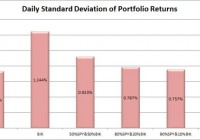
Summary The top 7 holdings are all Chinese, despite the ETF being labeled as diversified emerging markets. The standard deviation is pretty high and makes it difficult to try to use the ETF to lower risk across the total portfolio. On the positive side, the correlation is fairly low and the liquidity was solid which makes the statistics more reliable. I like investing in ETFs, and one of the ETFs I was looking at recently is the SPDR S&P BRIC 40 ETF (NYSEARCA: BIK ). It tracks the S&P BRIC 40 Index, and allocates at least 80% of the funds to the assets in the index. The Morningstar Category is “Diversified Emerging Markets”. However, after looking into it for a while I felt like it would be more representative to say the ETF is heavily invested in China. 67% of the ETF’s investments are in China. The only other markets included are Brazil, India, and Russia. I believe there are two methods for investing. Either you should know more than the other people performing analysis so you can make better decisions, or use extensive diversification and math to outperform most investors. Under CAPM (Capital Asset Pricing Model), it is assumed every investor would hold the same optimal portfolio and combine it with the risk free asset to reach their preferred spot on the risk and return curve. Do you know anyone that is holding the exact same portfolio you are? I don’t know of anyone else with exactly my exposure, though I do believe there are some investors that are holding nothing but the SPDR S&P 500 Trust ETF (NYSEARCA: SPY ). In general, I believe most investors hold a portfolio that has dramatically more risk than required to reach their expected (under economics, disregarding their personal expectations) level of returns. In my opinion, every rational investor should be seeking the optimal combination of risk and reward. For any given level of expected reward, there is no economically justifiable reason to take on more risk than is required. However, risk and return can be difficult to explain. I’ve been approximating risk by using the standard deviation of daily returns. Yields BIK has a 3.45% Distribution Yield and 2.65% SEC Yield. I believe a portfolio with a stronger yield is superior to one with a weaker yield if the expected total return and risk is the same. I like strong yields on portfolios because it protects investors from human error. One of the greatest risks to an otherwise intelligent investor is being caught up in the mood of the market and selling low or buying high. When an investor has to manually manage their portfolio, they are putting themselves in the dangerous situation of responding to sensationalistic stories. I believe this is especially true for retiring investors that need money to live on. By having a strong yield on the portfolio it is possible for investors to live off the income as needed without selling any security. This makes it much easier to stick to an intelligently designed plan rather than allowing emotions to dictate poor choices. In the recent crash, investors that sold at the bottom suffered dramatic losses and missed out on substantial gains. Investors that were simply taking the yield on their portfolio were just fine. Investors with automatic rebalancing and an intelligent asset allocation plan were in place to make some attractive gains. Expense Ratios The expense ratio for BIK is .50% for both gross and net expense ratios. Some analysts are heavily opposed to focusing on expense ratios. I don’t think investors should make decisions simply on the expense ratio, but the economic research I have covered supports the premise that overall higher expense ratios within a given category do not result in higher returns and may correlate to lower returns. The required level of statistical proof is fairly significant to determine if the higher ratios are actually causing lower returns. I believe the underlying assets, and thus Net Asset Value, should drive the price of the ETF. However, attempting to predict the price movements of every stock within an ETF would be a very difficult and time consuming job. By the time we want to compare several ETFs, one full time analyst would be unable to adequately cover every company. On the other hand, the expense ratio is the only thing I believe investors can truly be certain of prior to buying the ETF. I ran some historical numbers on the ETF and compared them to SPY to get a feel for how volatile the ETF was. My starting point was January 2012 and I ran the comparisons over a 3 year sample period. (click to enlarge) The portfolio had a 72.12% correlation to SPY when using daily values, which suggests a fairly significant connection. However, while SPY moved up substantially during the 3 year period, BIK had a fairly weak total return of only a few percentage points. In my opinion, it’s reasonable to think the daily correlation just reflects large amounts of money pouring in and out of the market. The returns over a long time period seem to be substantially less correlated to SPY. While SPY had a total return of 71.4% during that three year period, BIK returned only 4.95%. The liquidity looks solid with around 90,000 shares per day changing hands and 0 days in the last 3 years where the trading volume was 0. What are the holdings? Investors should at least glance at the holdings, even if they intend to buy an ETF on the premise that markets are efficient. By looking at the individual holdings the investors can check if the ETF will have a substantial overlap with other positions that they hold. In the case of BIK, investors should be aware of potential overlap with any other large holdings they have in China. (click to enlarge) Tencent Holdings Ltd. ( OTCPK:TCEHY ) is a Chinese investment holding company and Baidu Inc. ADR (NASDAQ: BIDU ) is a Chinese-language internet search provider. Outside of those 2, everything in the top 6 has China in its name. I assume most people are familiar with Alibaba (NYSE: BABA ). The first holding that isn’t in China is the 8th holding on the list. Conclusion BIK is an interesting ETF. At first it seems like it would be heavily diversified, but China is a fairly major position within the ETF. Therefore, when I am comparing BIK I may focus on comparing it to other Chinese focused ETF as much as I compare to other broadly diversified international ETFs. The standard deviation is very high, but I expect that for emerging markets. The total return for the sample period is quite sad, but the intent of diversification is to ensure a larger sample size that can reduce the overall level of deviations. However, the ETF does have fairly solid liquidity represented in both the average trading volume and the lack of days with shares changing hands. The yields are strong, which is a slight positive, but with the volatility of the ETF a retiring investor using it for yield would still be increasing the volatility of their portfolio. It’s a difficult call on which way to go in that regard and each investor would have to look at their personal tolerances. The ETF was at a significant premium to NAV when I looked. The expense ratio is not unreasonable for the exposure (emerging markets), but it did surprise that the emerging markets included so many major positions related to China. Disclosure: The author has no positions in any stocks mentioned, and no plans to initiate any positions within the next 72 hours. (More…) The author wrote this article themselves, and it expresses their own opinions. The author is not receiving compensation for it (other than from Seeking Alpha). The author has no business relationship with any company whose stock is mentioned in this article. Additional disclosure: Information in this article represents the opinion of the analyst. All statements are represented as opinions, rather than facts, and should not be construed as advice to buy or sell a security. Ratings of “outperform” and “underperform” reflect the analyst’s estimation of a divergence between the market value for a security and the price that would be appropriate given the potential for risks and returns relative to other securities. The analyst does not know your particular objectives for returns or constraints upon investing. All investors are encouraged to do their own research before making any investment decision. Information is regularly obtained from Yahoo Finance, Google Finance, and SEC Database. If Yahoo, Google, or the SEC database contained faulty or old information it could be incorporated into my analysis. The analyst holds a diversified portfolio including mutual funds or index funds which may include a small long exposure to the stock.