Tag Archives: seeking-alpha

Stocks Or Bonds?

I was writing to potential clients when I realized that I don’t have as much to write about my bond track record as I do my track record with stocks. I jotted down a note to formalize what I say about my bond portfolios. One person I was writing to asked some detailed questions, and I told him that the stock market was likely to return about 4.5%/year (not adjusted for inflation) over the next ten years. The model I use is the same one as this one used by pseudonymous Philosophical Economist . I don’t always agree with him, but he’s a bright guy, what can I say? That’s not a very high return – the historical average is around 9.5%. The market is in the 85th-90th percentiles of valuation, which is pretty high. That said, I am not taking any defensive action yet. Yet. But then it hit me. The yield on my bond portfolio is also around 4.5%. Now, it’s not a riskless bond portfolio, as you can tell from the yield. I’m no longer running the portfolio described in Fire and Ice . I sold the long Treasuries about 30 basis points ago. Right now, I am only running the credit-sensitive portion of the portfolio, with a bit of foreign bonds mixed in. Why am I doing this? I think it has a good balance of risks. Remember that there is no such thing as generic risk . There are many risks. At this point, this portfolio has a decent amount of credit risk, some foreign exchange risk, and is low in interest rate risk. The duration of the portfolio is less than 2, so I am not concerned about rising rates, should the FOMC ever do such a thing as raise rates. (Who knows! The economy might actually grow faster if they did that. Savers will eventually spend more.) But 10 years is a long time for a bond portfolio with a duration of less than 2 years. I’m clipping coupons in the short run, running credit risk while I don’t see any major credit risks on the horizon aside from weak sovereigns (think the PIIGS), student loans, and weak junk (ratings starting with a “C”). The risks on bank loans are possibly overdone here, even with weakened covenants. Aside from that, if we really do see a lot of credit risk crop up, stocks will get hit a lot harder than this portfolio. Dollar weakness and US inflation (should we see any) would also not be a risk. I’ve set a kind of a mental stop loss at losing 5% of portfolio value. Bad credit is the only significant factor that could harm the portfolio. If credit problems got that bad, it would be time to exit, because credit problems come in bundles, not dribs and drabs. I’m not doing it yet, but it is tempting to reposition some of my IRA assets presently in stocks into the bond strategy. I’m not sure I would lose that much in terms of profit potential, and it would increase the overall safety of the portfolio. I’ll keep you posted. That is, after I would tell my clients what I am doing and give them a chance to act, should they want to. Finally, do you have a different opinion? You can email me, or you can share it with all of the readers in the comments. Please do. Disclosure: None.

Michael Kors: An Unfashionable Portfolio Accessory

Summary Management needs to act to regain investor confidence and improve the stock’s performance. Shares were hammered with a massive 24% drop on recent earnings release. Stock valuation is difficult to rationalize even when comparing to struggling luxury retailer Coach. Introduction It’s been about a month since I decided to start covering a new portfolio here on Seeking Alpha that uses cash secured put options to invest in the market. This article provides an update on portfolio performance along with some thoughts and analysis on one particular holding that has proved to be a frustratingly poor stock of late, Michael Kors (NYSE: KORS ). The portfolio concentrates on companies that exhibit strong cash flow and reasonable valuations. I don’t necessarily need a stock’s price to increase dramatically to make money, I just need it to not drop dramatically in price to make money. Portfolio Performance Overall portfolio performance is on pace for a potential 16.74% annualized return (returns calculated based on current moneyness of options) and a total of $8,556.08 in option premium has been received with a total capital requirement of $81,650. Current portfolio positions are outlined in the following tables. Cash Secured Puts STOCK CURRENT PRICE PUT SELL DATE PUT EXPIRY PUT STRIKE PREMIUM RECEIVED PREMIUM % OF STRIKE CURRENT ANNUALIZED RETURN DAYS TO EXPIRY REQUIRED CAPITAL AAPL 12660 01/29/15 10/16/15 $125.00 $1,088.00 8.70% 12.99% 119 $12,500.00 EMC 2707 02/06/15 07/17/15 $27.00 $152.00 5.63% 13.61% 28 $5,400.00 2 POSITIONS KORS 4660 01/29/15 08/21/15 $72.50 $714.00 9.85% -37.08% 63 $7,250.00 LVS 5306 01/29/15 09/18/15 $55.00 $589.00 10.71% 11.96% 91 $5,500.00 QCOM 6688 03/10/15 10/16/15 $72.50 $496.00 6.84% -1.50% 119 $7,250.00 DFS 5875 05/11/15 10/16/15 $60.00 $337.34 5.62% 8.52% 119 $6,000.00 WDR 4931 05/01/15 09/18/15 $50.00 $344.00 6.88% 15.42% 91 $5,000.00 IVZ 3890 05/20/15 10/16/15 $41.00 $214.34 5.23% 0.26% 119 $4,100.00 UAL 5325 05/21/15 09/18/15 $55.00 $484.34 8.81% 18.65% 91 $5,500.00 F 1511 05/23/15 12/18/15 $16.00 $150.65 9.42% 6.96% 182 $4,800.00 3 POSITIONS GLW 2094 05/01/15 11/20/15 $21.00 $160.00 7.62% 14.09% 154 $4,200.00 2 POSITIONS MO 4932 06/10/15 09/18/15 $49.00 $220.34 4.50% 17.83% 91 $4,900.00 Put Spreads STOCK CURRENT PRICE PUT SELL DATE SHORT PUT STRIKE LONG PUT STRIKE PUT EXPIRY SHORT PUT PREMIUM LONG PUT PREMIUM PAID CURRENT ANNUALIZED RETURN DAYS TO EXPIRY REQUIRED CAPITAL QCOM 6688 01/29/15 $62.50 $50.00 07/17/15 $424.35 $27.63 98.34% -42112 $1,250.00 FB 8251 01/29/15 $75.00 $45.00 10/16/15 $689.34 $22.68 36.59% -42099 $3,000.00 AAPL 12660 01/29/15 $115.00 $75.00 10/16/15 $1,039.33 $43.63 41.81% -42059 $4,000.00 GILD 11980 02/18/15 $105.00 $95.00 08/21/15 $979.34 $46.64 533.14% -42069 $1,000.00 The Gilead position was converted to a put spread given strong momentum in share price. Added positions include cash secured puts sold on shares of Ford, Invesco, Discover Financial, United Continental, and Altria. More information regarding Discover and Altria can be found here and here . Michael Kors My position in Michael Kors has been a disaster so far and my worst performing stock by a mile. The company was punished severely during the last earnings release. Comparable same store sales went negative in the US market and that was not well received…at all. Shares were hammered with a massive 24% drop. While certainly disappointing, I thought the reaction was a little overdone. I knew that poor results could lead to a large drop in share price but never imagined a 24% move. It’s practically a given now that I’ll be put shares of KORS come August, which I am fine with for now. My current thoughts on KORS are that management needs to do something significant to regain investor confidence and improve the stock’s performance. Failure to show a concerted effort regarding these issues will only further support the growing belief among investors that KORS is a value trap. The company’s management already has a black eye from the head scratching deal struck with Michael Kors Far East Holdings (MKFEH) that gave away the retail market in China through 2041. That was a very bad deal for investors…well, except for the two former Michael Kors board members and a couple of others who own the Far East Holdings company. Despite all of the negativity surrounding Michael Kors right now, I am willing to take and wait and see approach and give management a chance to redeem themselves and the stock. The company isn’t losing money or on the verge of bankruptcy. Quite the contrary, it continues to deliver solid top and bottom line double digit growth. While the 24% drop on earnings was terrible, it also took a lot of risk out of the stock in my opinion and the valuation is difficult to rationalize, especially when compared with Coach (NYSE: COH ). The Coach Argument Many have made the argument that Michael Kors will go the way of Coach and that may very well be the case. However, evaluating the multiples applied to both companies suggests the market believes Michael Kors’ future prospects are much dimmer than Coach. Coach currently trades at a forward P/E multiple of 19.14 and PEG ratio of 2.30. That’s for a company with a five year EPS growth forecast of 8.33%. Michael Kors, on the other hand, has a five year growth forecast of 19.89% and trades at a forward P/E of 14.12 and PEG ratio of 0.71. How can the market’s view of Kors’ future potential be any more bleak right now? Coach’s suffering has been accompanied by a loss in perception of its status as a “luxury” retailer through discounting and also by a shift in consumer preferences, which can change as quickly as the wind changes direction. Even if Michael Kors is to suffer the same fate, I would gladly have Coach’s valuation applied to Kors which would currently make it an $80+ stock based on 2016 EPS estimates. Summary Despite the poor performance of Michael Kors, the portfolio is performing well overall. I will be looking to open additional positions once the current Greek debt situation becomes a little more clear. Also, I will be keeping a very close eye on the bond market as the Fed comes ever closer to increasing rates. I would expect to see long term rates begin to rise as an expected Fed rate hike nears, otherwise a flattening yield curve poses a major risk. As evidenced by the last two market crashes, flattening and inverted yield curves served as a warning of danger ahead. Disclosure: I am/we are long KORS. (More…) I wrote this article myself, and it expresses my own opinions. I am not receiving compensation for it (other than from Seeking Alpha). I have no business relationship with any company whose stock is mentioned in this article.

Solid Growth Outlook Is One Reason Among Many To Buy PPL Corp.

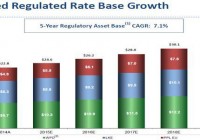
Summary Growth investments directed at becoming a regulated utility company and recent competitive business spin-off will ensure earnings growth in the years ahead. Transformation into 100% regulated utility will ensure cash flow stability and strengthen EPS. PPL currently offers an attractive dividend yield of 4.90%, and remains on track to consistently increase dividends in years ahead. I reiterate my bullish stance on PPL Corporation (NYSE: PPL ); the company is moving ahead with its long-term growth generating investments in order to better its operational performance and keep its financial growth momentum healthy. Moreover, with the completion of its competitive business unit spin off, PPL has increased its focus on regulated utilities, which will mean more upside for its future earnings growth. Considering the fact that the company has been improving its regulated operations and is continuing with growth investments to expand them further, I believe PPL’s cash flows will remain strong in the years ahead, which will ensure the sustainability of its future dividend payments. Furthermore, the company’s future dividend growth is expected to improve. Growth Initiatives Remain On Track In the recent past, utility companies have been making infrastructure development spending to expand their operational bases. As per EIA reports, utility companies’ growth investments will help increase electricity generation in the U.S. by 1.1% and 0.9% in 2015 and 2016, respectively. Moreover, EIA reports have predicted that the increased generation capacity will help utilities raise retail residential prices in 2015 by 1.1% and in 2016 by 1.8%. Given this constructive utility sector’s rate outlook, I believe that utility companies will continue with their infrastructure development projects, which will portend well for earnings and cash flow growth of the industry in the years ahead. As far as PPL is concerned, under its robust strategic growth efforts, the company has been making growth investments towards the development of its transmission and distribution networks in order to capitalize on the available growth potentials. In the past decade, PPL had invested almost $4.7 billion for network rebuilding and up-gradation and it expects to make an additional $5.7 billion of investment over the next five years. As part of its growth investment plan, the company had previously invested in the Susquehanna-Roseland power project, which will strengthen its regulated transmission operations in the region. Moreover, the $1.4 billion power-line construction project will benefit the customers by delivering them power without putting an extra burden on other regional power lines. Moreover, PPL’s $563 million worth Kentucky-based combined natural gas cycle plant Cane Run 7 will be operational soon. These ongoing investments in construction projects will serve as an important means of regulated rate base growth in the years ahead, which will benefit the company’s top-line and will strengthen its cash flows. The following chart shows that PPL’s management expects healthy, regulated rate base growth over the next five years. Source: Company’s Earnings Presentation Making its moves towards generating regulated rate base growth, PPL has filed a rate base increase case with the Pennsylvania Utility Commission (PUC) on an estimated ROE of 10.95%; if approved, the rate hike will add revenues of almost $167.5 million per year, after coming into effect on 1st January 2016. I believe that the rate increase will in fact improve its cash flows, which will back its ongoing growth investments. Moreover, the company, combined with other parties of LG&E and KU generation stations, has reached a settlement agreement of raising electric and gas rates by $132 million. Effective from 1st July 2015, the new rate hike will help it recover the cost of constructing Cane Run natural gas plant and will better its long-term earnings growth prospects. Furthermore, as part of its plan to focus on a broader regulated asset base, PPL recently completed the spinoff of its competitive energy business by combining with River Stone Holdings, and formed a separate entity named Talen Energy Corporation. I believe that after the spinoff, PPL being solely focused on regulated asset base, will strengthen its top-line and bottom-line numbers, and its cash flow certainty will improve, which will support its dividend growth. Safe & Sustainable Dividends PPL has been making attractive cash returns to its shareholders by regularly returning cash flows in the form of dividends. During 1Q’15, dividend payments made by the company were $250 million, up 6.8%, year-over-year. Moreover, PPL had recently announced its quarterly dividend payment of $0.3725 per share , which translates into a healthy dividend yield of 4.90% . Moving ahead, AEP’s cash flow will improve, which will help PPL make regular dividend payments. Owing to the company’s correct growth measures, I believe the company’s future cash flows will remain strong, which will allow the company to consistently increase dividends. Guidance Due to the company’s strong financial performance and due to its attractive, planned infrastructure development projects, the management’s confidence in PPL’s earnings growth prospects have been restored, due to which they have reiterated their previously earnings guidance. The company continues to believe that its EPS for full year 2015 will remain in a range of $2.05-to-$2.25 . Moreover, PPL’s management remains confident about achieving its long-term annual earnings growth rate 4%-to-6%. Risks The company’s future financial performance remains exposed to a risk of increase in regulatory restrictions. Moreover, any laxness shown by the management during the execution of its well thought-out capital expenditure plan will hurt PPL’s long-term earnings growth potentials. In addition, unforeseen negative economic changes, currency headwinds and unfavorable weather changes are key risks that might hamper the company’s future stock price performance. Conclusion I am bullish on PPL; the company has an attractive growth outlook. PPL’s growth investments directed at becoming a regulated utility company, and the recent competitive business spin-off have directed it in the direction of earning better revenues and experiencing earnings growth in the years ahead. In fact, transformation into a 100% regulated utility will ensure cash flow stability and strengthen its EPS, which makes it attractive for dividend-seeking investors. The company currently offers an attractive dividend yield of 4.90%, and remains on track to consistently increase dividends in the years ahead. Disclosure: I/we have no positions in any stocks mentioned, and no plans to initiate any positions within the next 72 hours. (More…) I wrote this article myself, and it expresses my own opinions. I am not receiving compensation for it (other than from Seeking Alpha). I have no business relationship with any company whose stock is mentioned in this article.