Tag Archives: seeking-alpha

CenterPoint Energy’s 5% Yield Looks Pretty Good Right Now

Summary The company has a very stable business model. Decreasing operating income is not reflective of its core operations. Operating cash flow is sufficient to cover distributions. CenterPoint Energy (NYSE: CNP ) is an utility company in the U.S. It primarily operates electric and natural gas infrastructure used for transmission or distribution. The business model is just perfect for a dividend stock, as consumer demand for energy is fairly inelastic. People will use electricity regardless of the price or economic environment. Despite the stability of the underlying business, the company is currently yielding 5%. Let’s examine how the company measures up to our expectations. The company does not engage in direct retail or wholesale sales of electric energy nor does it have any electricity generation activity, meaning that it is mostly shielded from price fluctuations. The company’s natural gas distribution business on the other hand does sell the commodity to residential and commercial consumers. There is a lag between when the company purchases natural gas from suppliers and when the sales to consumers happen. However, the exposure is hedged with derivative instruments, dramatically lowering the impact of commodity fluctuations on the company’s profitability. Given the above factors, you may be surprised to learn that the company’s operating profit actually decreased from 2012, from $1 billion to $935 million in 2014. However, this is due a reclassification of income related to the subsidiary Enable, which operates various midstream assets for crude and natural gas. This provided an extra $421 million in 2012, which led to the inflation of operating income. If we look at the company’s core operations (Electric Transmission & Distribution and Natural Gas Distribution), we’ll find that the profits have been very stable. The combined operating profit for the two main segments were $865 million in 2012, $870 million in 2013, and $882 million in 2014. These metrics reflect our earlier opinion about the company’s stability. The company has a history of positive operating cash flow. After accounting for working capital changes, the company’s operating cash flow did not change significantly from two year ago ($1.76 billion in 2014 vs $1.79 billion in 2012). This is much higher than the annual dividend payment of around $400 million. Operating cash flow generated in the first quarter amply covers the quarterly distribution as well ($666 million vs $106 million). I talk about capital expenditure a lot in my articles because it is critical to dividend investors. If a company invests too much and can’t (or doesn’t want to) take on more equity or debt, the management often resorts to decreasing dividends. But you have to distinguish between growth capital expenditure and maintenance capital expenditure. For CenterPoint, the capital expenditure on the surface is very high ($1.4 billion in 2014), but it far exceeds the company’s depreciation expense, which was only $521 million in 2014). This means that the company is growing the asset base to generate more profits in the future. If the company decides to stop expanding, it would only need to spend enough money to cover the depreciation expense to maintain the assets’ productive capacity. This means that it could potentially cut capital expenditure by $900 million and still maintain the current level of profits and distribution. Conclusion CenterPoint Energy is a good company with a business model that will provide steady cash flows. Its electricity segment is shielded from commodity fluctuations while its exposure to natural gas is hedged using derivatives, preserving the overall stability of the business. If you are looking for a safe investment with a 5% yield, then CenterPoint Energy is definitely something to think about. Disclosure: I/we have no positions in any stocks mentioned, and no plans to initiate any positions within the next 72 hours. (More…) I wrote this article myself, and it expresses my own opinions. I am not receiving compensation for it (other than from Seeking Alpha). I have no business relationship with any company whose stock is mentioned in this article.
The Emerald Economy

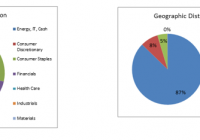
Ireland has the top growth rate in the EU. Ireland has an extraordinarily friendly business environment. EIRL one of the few ways to invest the Irish economy. The approval of the referendums in Northern Ireland and the Republic of Ireland on May 22, 1998 was the culmination of a long and arduous peace process, putting an end to the troubles which had plagued the region for countless decades. Once free of strife, Ireland began to restructure and develop a modern economy. Ireland has been an EU member since 1973 and Eurozone member since 1999. Ireland focused on building a ‘knowledge economy’, attracting foreign investment in technology, services and trade earning it the name ‘Celtic Tiger’. Unfortunately, and not unlike most advanced economies, Ireland suffered a severe banking crisis after the collapse of inflated property and credit markets in 2008. It became necessary for Ireland to apply for over $70 billion in IMF and ECB bailout loans. After years of austerity and restructuring, Ireland became the first Eurozone nation to exit the EU-IMF rescue program in 2013. The Emerald Island’s economy has since recovered to become the fastest growing economies in the EU, measuring a 4.8% pace in 2014 after a mere 0.2% in 2013. To put this in perspective the EU as a whole managed 0.8% GDP growth in 2014. It seems then that there exists a unique opportunity here, for an investor seeking to diversify a portfolio by careful selection of regional economies. Of over 70 ETFs filtered from using the Global/International Equities/Europe filter of the Seeking Alpha ETF Hub , only one specifically focuses on Ireland: the iShares MSCI Ireland Capped ETF (NYSEARCA: EIRL ) . According to the prospectus , its objective is to track the investment results of a broad based index, the MSCI 25/50 Ireland Capped Index, composed of mid, small and large cap Irish equities. The fund is passively managed. The MSCI 25/50 index capping methodology requires that no more than 25% of the fund’s assets are invested in a single issuer and that the sum of the weights of all issuers representing more than 5% of the fund should not exceed 50% of total assets. The fund itself is not large with 25 companies plus a cash position. The largest sector holdings are in Materials and Consumer Staples followed by Industrials and Financials and lastly Health Care and Consumer Discretionary. The combined Energy, IT and cash positions account for only 0.2816% of holdings. The fund is biased towards growth with over 65% of the portfolio invested in cyclic or cyclically sensitive sectors. (click to enlarge) (Data from iShares) Of fund’s ten heaviest weighted sectors, Materials account for about 36%; Industrials for 17%; Financials for 14% and Consumer Discretionary for 6%. This is somewhat offset defensively having Consumer Staples account for 21% and Health Care for 6%. Hence the fund has a strong cyclically sensitive bias among its heaviest weighted components, as well. (Data from iShares) Ireland’s consecutive yearly trade surplus demonstrates the importance of trade to the Emerald economy. Hence, the investor should take note of the major exports as well as major export partners. Ireland is global leader as a supplier of pharmaceuticals. In fact, over 50% of Ireland’s exports are pharmaceuticals, compounds, medical supplies or medical instruments. Ireland’s top trading partners are EU members, with the exception of Switzerland, Japan and the United States. (click to enlarge) In 2013, Forbes ranked Ireland number one in its list of best countries to establish business in out of 145 nations. Ireland’s main global attraction is its 12.5% corporate tax rate, pulling in major US high tech firm such as Google (NASDAQ: GOOG ), Amazon (NASDAQ: AMZN ), eBay (NASDAQ: EBAY ), LinkedIn (NYSE: LNKD ) and Facebook (NASDAQ: FB ). The list is just as impressive for the Pharmaceutical and Bio Tech giants such as Abbot Labs (NYSE: ABT ), Pfizer (NYSE: PFE ), Boston Scientific (NYSE: BSX ), Glaxo-Smith-Kline (NYSE: GSK ) and Allergan (NYSE: AGN ). (click to enlarge) (Data from iShares) The point of the matter is, Ireland’s success in transitioning from a strife torn agricultural economy into a globally leading knowledge economy was the result of sacrifice, compromise and a healthy dose of extremely innovative thinking. The investor should note that Ireland is a small economy, but nimble, thus maintains the ability to adjust, adapt and grow rapidly, as it has already proven with a 4.8% growth rate while global super-economies struggle with quantitative easing, high taxes and ‘new-normal’ growth rates. Hence, it is not unreasonable to conclude that as the US, and EU economies continue to recover over the next several years, it will bode well for the Irish economy. As mentioned, the fund has 25 holdings with net assets totaling $110,957,731 and trades on the NYSE under the symbol EIRL. The fund was launched in May of 2010. Some key facts are summarized in the table of the top ten holdings below: Key Facts: Number of Holdings Outstanding Shares Net Assets 20 Day Average Volume P/E Beta 12 Month Trailing Yield Premium/Discount Expense Ratio 25 2.8 million $110, 957,731 12,463 21.92 1.22 1.59% 1.12% 0.47% Top Ten Holding Summary: Company Sector Dividend Payout Ratio Beta EPS (Est.) P/E (NYSE: TTM ) Price/Cash Flow Market Cap (NYSE: MILL ) CRH ( OTCPK:CRHCF ) Materials 2.32% 79.04 1.46 0.79 34.17 17.63 $24,315 Kerry Group ( OTCPK:KRYAY ) Consumer Staples 0.65% 4.96 0.57 2.73 25.57 20.05 $13,486 Bank of Ireland (NYSE: IRE ) Financial 0.00% 0.00 2.97 0.02 18.56 15.79 $13,251 KingSpan Group ( OTC:KGSPY ) Materials 0.73% 26.03 0.90 0.61 36.52 25.97 $4,347 Glanbia ( OTCPK:GLAPY ) Consumer Staples 0.57% 22.21 0.64 0.49 38.86 28.10 $6,241 Icon (NASDAQ: ICLR ) Health Care 0.00 0.00 0.84 3.07 22.22 16.53 $4,539 Paddy Power ( OTCPK:PDYPD ) Consumer Discretionary 2.06% 51.41 0.35 2.97 27.58 18.72 $3,972 SMURFIT KAPPA GRP ( OTCPK:SMFKY ) Materials 1.98% 37.51 2.01 1.06 26.33 10.53 $7201 RYANAIR (NASDAQ: RYAAY ) Industrials 0.00% 0.00 0.96 3.38 21.74 13.73 $18,496 Grafton Group ( OTCPK:GROUY ) Industrials 1.17% 31.23 1.63 0.34 21.61 15.24 $1886 Averages 0.948% 25.239 0.579 1.233 27.316 18.229 $9773.4 (Data from Reuters) To be sure, there is a risk involved when investing in a smaller country focused ETF which is closely tied in with superpower economies. However, Ireland seems to have been extraordinarily successful at attracting fixed capital investment particularly of global corporate giants. (click to enlarge) (Data from iShares) Lastly, this is a lightly traded ETF, averaging fewer than 12,500 shares per trading session over 20 days. Below is a price chart with dividends. Hence, the iShares MSCI Ireland Capped ETF offers investors one of the few, if not the only way to invest in Ireland’s surprisingly fast growing economy, through a mostly unnoticed ETF. Disclosure: I/we have no positions in any stocks mentioned, and no plans to initiate any positions within the next 72 hours. (More…) I wrote this article myself, and it expresses my own opinions. I am not receiving compensation for it (other than from Seeking Alpha). I have no business relationship with any company whose stock is mentioned in this article. Additional disclosure: CFDs, spreadbetting and FX can result in losses exceeding your initial deposit. They are not suitable for everyone, so please ensure you understand the risks. Seek independent financial advice if necessary. Nothing in this article should be considered a personal recommendation. It does not account for your personal circumstances or appetite for risk.

India Emerges As An Attractive Option As Lower Chinese PMI And Steel Output Support The Bears

Summary Continued weakness in China makes India an attractive investment destination for investors looking to allocate funds to their emerging market portfolio. The benchmark Shanghai Composite index was absolutely crushed on Monday, falling 8.48%, or 345 points. The decline was the largest in percentage terms since February 2007. Besides, the recent number for the Chinese preliminary Purchasing Managers’ Index (PMI) in July surprised many on the downside, as it stood at 48.2 versus the Bloomberg consensus estimates (49.4). The World Steel Association posted a 1.3% decline in Chinese crude steel output for H1 FY15. The global economy is at a greater risk from the slowing China. As a counter move, investors may find the Indian stock market more attractive and a less volatile option. The recent number for the Chinese preliminary Purchasing Managers’ Index (PMI) surprised on the downside and stood at 48.2 vs. the Bloomberg consensus estimates of 49.4. The PMI from Caixin Media and Markit Economics indicates a contraction below the value of 50. Growth concerns spurred by the low PMI number also find support in a lower crude steel output. In its latest release on 22 July, the WorldSteel Association posted a 1.3% decline in Chinese crude steel output for H1 FY15. WorldSteel represents approximately 170 steel producers (including 9 of the world’s 10 largest steel companies), national and regional steel industry associations, and steel research institutes. China continues to see lower steel output due to a slump in the housing market, persisting credit crunch and weak infrastructure investments. This negatively impacts the steel demand in the region that accounts for 50% of global steel consumption. It is being argued by the market participants that the Chinese Steel Industry may have peaked in 2014 and now the days of record high steel consumption are over. This is also a result of the fact that China has been trying to move from an investment lead to a consumer driven economy. The recent stock crash may have greater negative implications than perceived by the market We argued in our recent post ” China’s moves to counter its stock market freefall riskier than perceived ” that the recent stock crash on July 8 and the ensuing reaction by the authorities may have greater negative implications than perceived by the market. The concerns are being shared by the government, corporates and investors alike. The Chinese stock markets had recovered about 15% from their early July debacle, before the Shanghai Composite Index experienced its biggest one-day drop since 2007. It lost a further 8.5% on July 27th. This is being attributed largely to the drastic steps the officials took from halting trading of more than 1,400 companies, to banning major shareholders from selling stakes, to restricting short selling and to suspending IPOs. The limited stock price recovery since 8 July followed by the biggest drop of the index in the last 8 years, the weak PMI and the steel data indicates the precarious situation that China finds itself in. The international investors have found India as an attractive option On the other hand, a direct beneficiary of the Chinese stock rout has been the Indian stock market . International investors are pulling out of China and have found India as an attractive option. The Shanghai-Hong Kong exchange saw record outflows amidst the $2.8 trillion plunge in the same mainland equity values since June 12th. According to Bloomberg, the international investors have ploughed $705 million in India over the same period, resulting in a world-beating 7% gain in the benchmark S&P BSE Sensex index . Slowing China, which was the driver of the previous commodity super-cycle, has also had a direct impact on commodity prices that are on a downward trend. Lower commodity prices have not only helped the Indian government in tackling the Balance of Payments situation, but also reduced the raw material cost for Indian organizations. The global economy is at a greater risk from the Orient than from the “new” sick man of Europe The impact of the Chinese wealth erosion may have much larger global implications. Majority of participants in China’s local equity markets are retail investors. If the free fall worsens, a significant drop in their portfolio asset values could trigger a widespread economic crisis that could impact consumption, imports and eventually investments. The global economy, it seems, could be at a greater risk from the ‘Orient’ than from the unfolding ‘ Greek tragedy ‘. Investors, watch out for India’s economic growth Investors may find the Indian stock market more attractive and a less volatile option. India, as a net importer of goods and exporter of services, benefits from falling commodity prices. Weakness in China makes India an attractive investment destination for investors looking to allocate funds to their emerging market portfolio. Moreover, recent domestic buying in India indicates continued hopes in the strength in the growth story as the majority government strives to reform various sectors, though at a slower than expected pace. Investors could use the current weakness in earnings to hunt for value in Indian stocks. In terms of positioning, the banking and industrials sectors have been punished due to high NPAs and a slow pickup in the investment cycle, respectively. We could see a re-rating there towards year-end. Disclosure: I/we have no positions in any stocks mentioned, and no plans to initiate any positions within the next 72 hours. (More…) I wrote this article myself, and it expresses my own opinions. I am not receiving compensation for it. I have no business relationship with any company whose stock is mentioned in this article. Additional disclosure: I have co-written this article with Himanshu Yadav Assistant Manager – Investment Research at Aranca