Tag Archives: seeking-alpha

Money Managers Hate Me For This One Weird Trick…
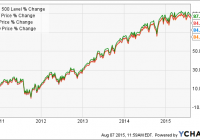
Summary An S&P 500 ETF should be the cornerstone of a well-diversified long term portfolio. I will compare the most widely known S&P 500 ETF SPY against two viable alternatives IVV and VOO. The metrics I will use are as follows: expense, historical performance, portfolio composition, total assets, volume, yield, NAV, standard deviation, and correlation. … Which is recommending that you buy the index and call it day. Boring? Perhaps. Sexy? Nope. You know what is nice though? Not having to work until you die because you were unable to save enough money for retirement. Having money to send your children to college. What else? Not getting ripped off by some “savvy money manager” that charges predatory fees. Sure you can Seek Alpha all your life, but who do you listen to? Why pay exorbitant fees for hit or miss advice? There is an optimal investment opportunity out there, and best of all, you only need access to a brokerage account to buy into it. It is called a low-cost S&P 500 ETF. Premise I firmly believe an index fund like the S&P 500 ETF (NYSEARCA: SPY ) should be a core part of a balanced long-term portfolio. The S&P 500 is comprised of 500 of the healthiest, strongest, and most widely traded stocks on the market. Investing in an S&P 500 ETF gives the investor diversified exposure to this valuable class of equities while mitigating single stock risk. I mentioned in another article that the S&P 500’s historical long term annual returns (assuming a 20-year time frame) have ranged from 5.5% to 18% . S&P averages roughly 10% returns year over year. Holding a long term-position in an ETF like SPY is intuitively the best investing decision you could ever make (I will likely write several additional articles on this subject). However, in this particular article I will focus solely on cross-analyzing and comparing the 3 primary S&P 500 ETFs available. I personally hold a long position in SPY, but I think it’s valuable to consider two alternatives iShares Core S&P 500 ETF (NYSEARCA: IVV ) and Vanguard S&P 500 ETF (NYSEARCA: VOO ). Correlation The first thing I look for in an ETF is a strong correlation to its underlying index. SPY, IVV, and VOO all display a direct and positive correlation to the S&P 500, so thankfully tracking error is not going to be a major issue. Historical Performance & My Biggest Concern Comparable returns have always grouped closely together. Interestingly, each ETF has tended to marginally outperform the S&P 500 index in the short and long run. In the last five years the index and each ETF saw around 14.75% returns annually. However, I believe this percentage is uncharacteristically high due to persistently and artificially low interest rates. This phenomenon is mostly guided by Fed backed programs which I believe have produced inflationary upward pressure on stock prices. My biggest concern for this ETF is that the stock market as a whole appears overvalued, and a market correction does not seem unfeasible (at least in the short term). As a long term investor, I am maintaining my position, but do not be surprised if these ETFs do not have future returns on par with the last five years. Comparing Key Metrics As I mentioned, I own SPY . However, I love this class of ETF, so I will not be offended if you choose to buy VOO or IVV instead. I do unequivocally recommend a long position in at least one of these. Key Metrics SPY IVV VOO NAV 208.46 209.72 191.13 Total Assets 175.95 Bil 69.8 Bil 34.33 Bil Average Volume 115.9 Mil 4.1 Mil 1.6 Mil 12-Mo. Yield 1.92% 1.99% 1.96% Expense Ratio 0.09% 0.07% 0.05% Standard Deviation 8.55% 8.56% 8.56% At first glance, SPY is the most expensive choice and offers the lowest 12-Month yield. Additionally, if you reexamine the charts I included above, you will see that VOO outperforms both IVV and SPY in the long term. However, I believe SPY derives additional value from its high liquidity. This liquidity attracts institutional investors which in turn works to lower expense. After extensive research I found that SPY is more cumbersome than IVV and VOO. Each ETF is valuable in its own way which I will soon discuss. Portfolio Composition I wanted to compare each fund’s portfolio composition by sector weighting. I found that VOO, then IVV, and finally SPY (ranked best to worst) held different sector weightings. I created an excel sheet using Morningstar data to compare and contrast each. SPY SPY Portfolio Weightings Sector Weightings % Stocks Benchmark Category Avg. Basic Materials 2.76 2.99 3.26 Consumer Cyclical 11.16 12.04 11.88 Financial Services 15.63 15.21 16.26 Real Estate 2.18 3.26 2 Sensitive Communication Services 3.94 3.73 3.62 Energy 6.91 6.82 7.62 Industrials 10.73 11.31 11.57 Technology 17.9 17.36 17.05 Defensive Consumer Defensive 9.67 8.77 8.87 Healthcare 16.26 15.63 15.59 Utilities 2.87 2.87 2.29 Critics of SPY claim it is clunky and inefficiently weighted. That claim seems overly bombastic, but there is some truth to it. SPY is underweight in: Basic Materials Consumer Cyclical Real Estate Industrials Overweight in: Financial Services Communication Services Energy Technology Consumer Defensive Healthcare Equally Weighted: IVV IVV Portfolio Weightings Sector Weightings % Stocks Benchmark Category Avg. Basic Materials 2.76 2.99 3.26 Consumer Cyclical 11.16 12.04 11.88 Financial Services 15.63 15.21 16.26 Real Estate 2.19 3.26 2 Sensitive Communication Services 3.94 3.73 3.62 Energy 6.92 6.82 7.62 Industrials 10.72 11.31 11.57 Technology 17.9 17.36 17.05 Defensive Consumer Defensive 9.66 8.77 8.87 Healthcare 16.26 15.63 15.59 Utilities 2.88 2.87 2.29 IVV has portfolio allocations identical to SPY. In regards to its benchmark (S&P 500), IVV is: Underweight in: Basic Materials Consumer Cyclical Real Estate Industrials Overweight in: Financial Services Communication Services Energy Technology Consumer Defensive Healthcare Equally Weighted: VOO VOO Portfolio Weightings Sector Weightings % Stocks Benchmark Category Avg. Basic Materials 2.98 2.99 3.26 Consumer Cyclical 11 12.04 11.88 Financial Services 15.15 15.21 16.26 Real Estate 2.11 3.26 2 Sensitive Communication Services 4.02 3.73 3.62 Energy 7.85 6.82 7.62 Industrials 10.91 11.31 11.57 Technology 17.84 17.36 17.05 Defensive Consumer Defensive 9.34 8.77 8.87 Healthcare 15.97 15.63 15.59 Utilities 2.83 2.87 2.2 VOO, in my opinion, has a better allocated portfolio and more attractive weightings. Underweight in: Consumer Cyclical Real Estate Industrials Overweight in: Communication Services Energy Technology Consumer Defensive Healthcare Equally Weighted: Basic Materials Utilities (mostly) Financial Services Investment Strategy Recommendations Whichever ETF you choose, my overall recommendation will remain the same. For this reason I will mention my overall strategy before jumping into an analysis of each ETF. Buy and hold a long position and establish a DRIP ( Dividend Reinvestment Plan ). Try to make monthly contributions to increase the compounding effect over time. Do not worry or hyper focus on short term price fluctuations. It’s difficult (if not impossible) to predict what the market is going to do. In the long term, however, you should expect attractive positive returns. Additionally, you will be able to sleep better knowing you were able to mitigate single stock risk by owning a diversified ETF. SPY SPY is structurally inefficient (compared to its alternatives), but it is cheap, well-covered, and highly liquid. You really can’t go wrong with a long buy and hold position in SPY. I would recommend SPY for beginners and institutional investors. IVV IVV is cheaper than SPY and offers the highest dividend yields (marginally). IVV is also more liquid than VOO. I would recommend IVV for high net worth individuals. VOO VOO is the cheapest and most efficiently weighted option. This Vanguard ETF historically has performed the highest of the three. While, VOO is less liquid than IVV and SPY, it is still adequately liquid. VOO does a better job of tracking the underlying index. VOO is arguably the best choice of the three. I would recommend VOO for those with some investing knowledge looking to graduate from SPY. Why Bother with an S&P 500 ETF? I could talk endlessly on this subject. I’ve already written a little bit about it, but the short answer boils down to this. Seeking alpha is a difficult, risky, and sometimes perilous journey fraught with misunderstanding, bad advice, and cognitive bias . There are a few intelligent individuals out there (and on this site) that have been able to beat the market. For the most part, however, most investors do not beat the S&P 500 . So why not just buy into it? Money managers generally do not beat the S&P 500, and they will charge you a management fee that significantly bites into your returns over time. To illustrate this, let me include one of my favorite graphs. It is easy to fall into the arms of professional money managers because we are intimidated by their financial expertise and “insider knowledge.” Often they will rationalize their exorbitant and predatory fees with backwards logic. Just invest in the index. I promise you’ll be better off. Conclusion Buy and hold a long term position in either SPY, IVV, or VOO. It could be the best investment decision you will ever make. If you don’t want to fruitlessly waste time trying to beat the market; if you don’t want to fall prey to faulty investment advice or get gouged by fees; if you want to manage risk and make money with minimal financial knowledge – invest in the index. I’m really not leading you astray here. I’m not the first person to make this recommendation and I hope I’m not the last. Don’t believe me? Listen to what Warren Buffett has to say. In regards to instructions Buffett laid out in his will, “My advice to the trustee could not be more simple: Put 10% of cash in short-term government bonds and 90% in a very low-cost S&P 500 index fund” Side note: He recommended Vanguard Afterwards : Follow me down the rabbit hole as I cover a variety of Index ETFs (Vanguard or otherwise) to perfect your portfolio. In spite of Buffett’s advice, there is a whole world of high performing, highly diversified, low cost ETFs that deserve some attention. Disclosure: I am/we are long SPY. (More…) I wrote this article myself, and it expresses my own opinions. I am not receiving compensation for it (other than from Seeking Alpha). I have no business relationship with any company whose stock is mentioned in this article.

Playing The Field With Your Investments

For some, casually dating can be fun and exciting. The same goes for trading and speculating – the freedom to make free-wheeling, non-committal purchases can be exhilarating. Unfortunately the costs (fiscally and emotionally) of short-term dating/investing often outweigh the benefits. Fortunately, in the investment world, you can get to know an investment pretty well through fundamental research that is widely available (e.g., 10Ks, 10Qs, press releases, analyst days, quarterly conference calls, management interviews, trade rags, research reports). Unlike dating, researching stocks can be very cheap, and you do not need to worry about being rejected. Dating is important early in adulthood because we make many mistakes choosing whom we date, but in the process we learn from our misjudgments and discover the important qualities we value in relationships. The same goes for stocks. Nothing beats experience, and in my long investment career, I can honestly say I’ve dated/traded a lot of pigs and gained valuable lessons that have improved my investing capabilities. Now, however, I don’t just casually date my investments – I factor in a rigorous, disciplined process that requires a serious commitment. I no longer enter positions lightly. One of my investment heroes, Peter Lynch, appropriately stated, “In stocks as in romance, ease of divorce is not a sound basis for commitment. If you’ve chosen wisely to begin with, you won’t want a divorce.” Charles Ellis shared these thoughts on relationships with mutual funds: “If you invest in mutual funds and make mutual funds investment changes in less than 10 years…you’re really just ‘dating.’ Investing in mutual funds should be marital – for richer, for poorer, and so on; mutual fund decisions should be entered into soberly and advisedly and for the truly long term.” No relationship comes without wild swings, and stocks are no different. If you want to survive the volatile ups and downs of a relationship (or stock ownership), you better do your homework before blindly jumping into bed. The consequences can be punishing. Buy and Hold is Dead…Unless Stocks Go Up If you are serious about your investments, I believe you must be mentally willing to commit to a relationship with your stock, not for a day, not for a week, or not for a month, but rather for years. Now, I know this is blasphemy in the age when “buy-and-hold” investing is considered dead, but I refute that basic premise whole-heartedly…with a few caveats. Sure, buy-and-hold is a stupid strategy when stocks do nothing for a decade – like they have done in the 2000s, but buying and holding was an absolutely brilliant strategy in the 1980s and 1990s. Moreover, even in the miserable 2000s, there have been many buy-and-hold investments that have made owners a fortune (see Questioning Buy & Hold ). So, the moral of the story for me is “buy-and-hold” is good for stocks that go up in price, and bad for stocks that go flat or down in price. Wow, how deeply profound! To measure my personal commitment to an investment prospect, a bachelorette investment I am courting must pass another test…a test from another one of my investment idols, Phil Fisher, called the three-year rule. This is what the late Mr. Fisher had to say about this topic: “While I realized thoroughly that if I were to make the kinds of profits that are made possible by [my] process … it was vital that I have some sort of quantitative check… With this in mind, I established what I called my three-year rule.” Fisher adds, “I have repeated again and again to my clients that when I purchase something for them, not to judge the results in a matter of a month or a year, but allow me a three-year period.” Certainly, there will be situations where an investment thesis is wrong, valuation explodes, or there are superior investment opportunities that will trigger a sale before the three-year minimum expires. Nonetheless, I follow Fisher’s rule in principle in hopes of setting the bar high enough to only let the best ideas into both my client and personal portfolios. As I have written in the past, there are always reasons of why you should not invest for the long term and instead sell your position, such as: 1) new competition; 2) cost pressures; 3) slowing growth; 4) management change; 5) valuation; 6) change in industry regulation; 7) slowing economy; 8) loss of market share; 9) product obsolescence; 10) etc, etc, etc. You get the idea. Don Hays summed it up best: “Long term is not a popular time-horizon for today’s hedge fund short-term mentality. Every wiggle is interpreted as a new secular trend.” Peter Lynch shares similar sympathies when it comes to noise in the marketplace: “Whatever method you use to pick stocks or stock mutual funds, your ultimate success or failure will depend on your ability to ignore the worries of the world long enough to allow your investments to succeed.” Every once in a while there is validity to some of the concerns, but more often than not, the scare campaigns are merely Chicken Little calling for the world to come to an end. Patience is a Virtue In the instant gratification society we live in, patience is difficult to come by, and for many people ignoring the constant chatter of fear is challenging. Pundits spend every waking hour trying to explain each blip in the market, but in the short run, prices often move up or down irrespective of the daily headlines. Explaining this randomness, Peter Lynch said the following: “Often, there is no correlation between the success of a company’s operations and the success of its stock over a few months or even a few years. In the long term, there is a 100% correlation between the success of a company and the success of its stock. It pays to be patient, and to own successful companies.” Long-term investing, like long-term relationships, is not a new concept. Investment time horizons have been shortening for decades, so talking about the long-term is generally considered heresy. Rather than casually date a stock position, perhaps you should commit to a long-term relationship and divorce your field-playing habits. Now that sounds like a sweet kiss of success. Disclosure: Sidoxia Capital Management (SCM) and some of its clients hold positions in certain exchange traded funds (ETFs), but at the time of publishing, SCM had no direct position in any other security referenced in this article. No information accessed through the Investing Caffeine (IC) website constitutes investment, financial, legal, tax or other advice nor is to be relied on in making an investment or other decision. Please read disclosure language on IC Contact page .

What If I Had Stayed Away From The ‘Sell’ Button?

Summary Does it pay off to sit on one’s hands and do nothing? I wanted to know and carried out a brief review of my past sell decisions. Holding clearly outperformed selling, but selling seems to have lowered both, returns and risk. Never look back? With regards to closed positions I used to follow a strict ‘never look back’ policy, because I considered it unhelpful to spend time thinking about what could have been. Recently, I broke with this paradigm. Not because I like to kick myself, but rather to test which of the following competing concepts would work better for me: Monitoring all holdings closely and trying to optimize capital gains and portfolio structure by selling when the time has come (whenever that may be) Sitting on my hands and doing nothing while accumulating shares. It may not have been a conscious decision, but I happened to follow the former approach in the past. I felt not looking after the portfolio might be irresponsible. However, when looking after the portfolio I found there were always reasons to worry. Typical reasons to sell were: Concerns about the respective company’s business model Immediate issues with unclear outcome (e.g. accounting issues, legal disputes) Perceived lofty valuations Then I wondered: What are the worst losses that I managed to avoid through trading and what are best opportunities that I missed out on? Would I be better off if I stayed hands-off? Looking back Past sell decisions can help to find answers to these questions. If you are happy to gain valuable, but potentially painful insights, you might want to carry out a review as follows: Put together the data on all positions that you ever closed. Establish the respective cost base of these positions and the profit/loss that you realized when you closed the positions. Look up the current prices of the securities you sold. Calculate what your former holdings would have been worth today. Compare with the realized profit/loss. Results This is what I did and here is what I found as I went through the 32 trades that are on my records of the past four years: I made a profit on 29 positions. The average gain was 16% with the largest gain being 58% (these are total, not annualized gains in local currencies, including all trading fees, but no dividends). I made a loss on three positions. The average loss was -19% with the biggest loss being -33%. The average profit across these 32 trades was 13%. Comparing the realized profits and losses with current prices, I figured out that I made 15 good exit decisions (=current prices are below the prices at which I sold) and 17 poor exit decisions (=current prices are above the prices at which I sold). All three stocks that I sold at a loss were among the good exits. Also, pulling the plug on my long-term government bonds in late January this year turned out to be a good move. A further pattern is that it was mostly a good idea to get rid of the more speculative plays (special situations, turnarounds). The biggest loss that I managed to avoid was -56 percentage points (=my realized profit was 9% and I would be under water by -47% now had I kept the stock). The poorest exit decisions were taken more than two years ago. Today, I find it difficult to understand what made me sell, since I cannot remember any red flags. The best explanation I can offer is that the share prices did not go up as I expected and I lost patience assuming that I missed something in my assessment. In that situation I was almost looking for black cats in dark alleyways. The biggest gain that I missed by selling was 300% percentage points (=my realized profit was 1%, but the stock has gained a further 299% since I have sold). Had I kept all the positions that I sold the total gain would have been 37% rather than 13%. Conclusions The interpretation of the results is not straight forward. Given the overall bull market for stocks and bonds in recent years, it had to be expected that keeping would win over selling on average. My brief review did only compare selling against keeping. It did not compare keeping against reinvesting of realized proceeds. Also, of course, I did not consider time frames in that I only looked at overall returns not at annualized ones. Still, there are some conclusions that I find useful: When I sold it was due to concerns (or fear if you like). The ‘never look back’ policy implied already that I could miss out on opportunities by selling, but I never realized by how much missed opportunities can outweigh risks in total even when some of the risks do eventually materialize. Being lazy, I was actually hoping to find evidence that a complete hands-off approach would be superior to my trading activity. Things turned out to be a bit more complicated, though. It feels reassuring that I proved to be right whenever I closed a position at a loss. The best and worst performers in my current portfolio have returned +191% and -17% respectively so far which compares against +300% and -57% among my past holdings. Although it was not an outspoken goal, I do feel more comfortable in the current range that seems to offer a more limited downside. Apparently, I could not expect the portfolio to be low maintenance, when (some of) the stock picks were not. Now that I have eliminated the stocks that were a bit too exciting for me, it may have become easier to stay away from the sell button. Stocks In order to keep the focus on method and results, I decided not to mention specific stocks above. If you are curious about the stocks behind the numbers, here is a small list: Largest realized gain: Novartis (NYSE: NVS ) Biggest realized loss: Finavera ( OTC:FNVRF ) Biggest avoided loss: Power REIT (NYSEMKT: PW ) Biggest opportunity I missed: Royal Wessanen ( OTC:KJWNF ) Best performer in my current portfolio: I.A.R. Systems ( OTC:IARSD ) Worst performer in my current portfolio: HCP (NYSE: HCP ). Disclosure: I am/we are long IARSD, HCP. (More…) I wrote this article myself, and it expresses my own opinions. I am not receiving compensation for it (other than from Seeking Alpha). I have no business relationship with any company whose stock is mentioned in this article.