Tag Archives: power

Great Plains Energy Incorporated’s (GXP) CEO Terry Bassham on Q4 2014 Results – Earnings Call Transcript

Great Plains Energy Incorporated (NYSE: GXP ) Q4 2014 Earnings Call February 26, 2015 9:00 am ET Executives Lori A. Wright – Vice President of Investor Relations and Treasurer Terry D. Bassham – Chairman, Chief Executive Officer, President, Chairman of Executive Committee, Chairman of GMO, Chairman of KCP&L, Chief Executive Officer of GMO, Chief Executive Officer of KCP&L, President of GMO and President of KCP&L James C. Shay – Chief Financial Officer and Senior Vice President of Finance Analysts Andrew Levi Michael Goldenberg – Luminus Management, LLC Michael J. Lapides – Goldman Sachs Group Inc., Research Division David A. Paz – Wolfe Research, LLC Charles J. Fishman – Morningstar Inc., Research Division Paul T. Ridzon – KeyBanc Capital Markets Inc., Research Division Operator Good day, ladies and gentlemen, and welcome to the Great Plains Energy Fourth Quarter Year-End 2014 Earnings Conference Call. [Operator Instructions] As a reminder, this call is being recorded. I would now like to introduce your host for today’s conference, Lori Wright, Vice President, Investor Relations and Treasurer. Please go ahead. Lori A. Wright Thank you, Danielle, and good morning. Welcome to Great Plains Energy’s Year-End 2014 Earnings Conference Call. Let me begin by introducing Terry Bassham, Chairman, President and Chief Executive Officer; and Jim Shay, Senior Vice President, Finance, and Chief Financial Officer, who will provide an overview of our 2014 results and 2015 earnings guidance. Scott Heidtbrink, Executive Vice President and Chief Operating Officer of KCP&L, is also with us this morning, as our other members of our management team who will be available during the question-and-answer portion of today’s call. I must remind you of the inherent uncertainties in any forward-looking statements in our discussion this morning. Slide 2 and the disclosure in our SEC filings contain a list of some of the factors that could cause future results to differ materially from our expectations. I also want to remind everyone that we issued our earnings release and 2014 10-K after the market close yesterday. These items are available, along with today’s webcast, slides and supplemental financial information regarding the fourth quarter and full year 2014, on the main page of our website at greatplainsenergy.com. With that, I’ll now hand the call to Terry. Terry D. Bassham Thanks, Lori, and good morning, everyone. Appreciate you joining us here. On our call this morning, we’ll discuss our 2014 earnings results and give an update on our environmental upgrade at La Cygne and KCP&L’s rate cases at Kansas and Missouri. We’ll also discuss our 2015 earnings per share guidance range and drivers for 2016 and 2017. I’ll ask you now to turn to Slide 4 of the presentation. We entered 2014 focused on our company’s long-term success. We completed major construction on our La Cygne environmental upgrade, expanded energy efficiency programs to all our Missouri customers and aggressively managed operations and maintenance expense while continuing to provide affordable and reliable service. In fact, for the eighth year in a row, we were recognized in the Plains region for providing the most reliable service to our customers. We also strengthened our credit profile with ratings upgrades at both Standard & Poor’s and Moody’s Investors Service. We increased our common stock dividends for the fourth consecutive year and raised it by more than 6% in 2014. This increase contributed to a total shareholder return of 21%. Earnings for the year were $1.57 per share. Although we did see positive demand growth for the second consecutive year, our earnings continued to be impacted by regulatory lag from property taxes and transmission costs in our Missouri jurisdictions. Our efforts to mitigate this lag through legislative and regulatory processes were unsuccessful. As a result, we accelerated the filing of KCP&L’s general rate case in Missouri. Turning to Slide 5. Our 2015 earnings per share guidance range is $1.35 to $1.60. While our service territory is strong and we have worked aggressively to manage costs, we continue to be adversely impacted by increasing lag. The impact from property taxes and transmission lag was more than $50 million in our Missouri jurisdictions in 2014 and will continue to grow until new rates are in effect. We will also be impacted by increasing depreciation expense from capital investments in 2015. As reflected in our KCP&L rate cases prior to our true-up dates, we will place into service more than $1.1 billion of environmental upgrades and infrastructure investments to ensure reliability, security and dependable service to our customers. To mitigate lag going forward, KCP&L has requested a fuel adjustment clause inclusive of transmission costs similar to other utilities in Missouri and a property tax tracker. You can find summaries of the rate cases in the appendix of this presentation. Straightforward composition of our rate cases and our track record of achieving constructive regulatory outcomes gives us confidence in our current proceedings and reinforces our commitment to deliver 4% to 6% earnings growth from 2014 to 2016. Dividend growth also remains a key component of our total shareholder return value proposition. Our dividend has grown at an annual rate of nearly 5% since 2011, and we continue to target compound annual growth of 4% to 6% through 2016. We expect increasing cash flow flexibility post-2016 and remain committed to a longer-term dividend payout ratio of 60% to 70%. A key operational priority for the year is the completion of the La Cygne upgrade that is on schedule for completion before June and within budget. Upon completion, more than 70% of our coal fleet will have emission-reducing scrubbers installed, and all of our large-baseload coal-fired units will be in compliance with existing environmental rules and regulations. Since 2005, we’ve invested more than $1.5 billion in our generation fleet and have reduced sulfur and nitrogen oxide emissions by 66% and 68%, respectively. These investments have us well positioned to make longer-term decisions about our generation fleet. As you may have seen last month, we announced plans to cease burning coal in the coming years at 3 of our smaller older power plants. In the coming years, we will operate Lake Road using natural gas and make final decisions on the Montrose and Sibley units regarding whether to retire or convert them to an alternative fuel source. This decision furthers our commitment to a sustainable energy future and balanced energy portfolio and, for these units, represents the most cost-effective means to comply with environmental regulations, including Environmental Protection Agency’s Clean Power Plan. I’ll wrap up with a few comments on Transource. Both Transource Missouri transmission projects are progressing well, with significant milestones met. Iatan-Nashua line is expected to be in service this year with the Sibley to Nebraska City line expected to be in service in 2017. While the market is emerging and immature, we believe our joint venture with AEP is well positioned to compete in the competitive transmission market. Transource’s success with the 2 Missouri projects demonstrates the capabilities of the combined Great Plains Energy-AEP partnership. Bids have been submitted on a number of competitive projects, and we believe Transource is positioned for long-term success. I’ll now turn the call over to Jim to discuss our 2014 financial performance and earnings guidance for 2015 and considerations for 2016 and 2017. James C. Shay Thank you, Terry, and good morning, everyone. I’ll begin with Slide 7, which provides a comparison of 2014 to 2013. As Terry indicated, our full year earnings were $1.57 per share compared to $1.62 last year. For the fourth quarter 2014, earnings were $0.12 per share compared to $0.11 last year. Earnings for 2014 were favorably impacted by new retail rates, the release of uncertain tax positions and lower interest expense. These factors were more than offset by increases in depreciation expense driven by capital additions and operations and maintenance expense, including Wolf Creek. O&M for the year was in line with our plan as we continue to aggressively manage cost. Our plan included reducing O&M in the second half of the year, exclusive of energy efficiency expenses that have direct revenue offsets, by $15 million compared to the same period in 2013. We overdelivered on this target by reducing O&M approximately $20 million during this period. Through cost control measures that we’ve undertaken over the past several years, O&M expense, exclusive of regulatory amortizations and items that have direct revenue offsets, has increased by approximately 1% since 2011, which is less than the rate of inflation over the same period. We begin 2015 with the same diligent approach to managing costs. Driven by our industrial segment, actual demand in 2014 was up 0.4%. The industrial segment increased 2.3% 2014, primarily driven by Ford Motor Company’s Kansas City Assembly Plant, which produces the F-150 and Transit van. The F-150 production line was recently retooled to build the new trucks using military-grade aluminum alloy. Combined with the General Motors plant near our service territory and auto suppliers moving into our region, Kansas City is the largest auto manufacturing center in the United States outside of Detroit. The residential segment was up 0.2%, and the commercial segment was flat for the year. During 2014, we experienced an increase in the number of customers in both residential and commercial segments. However, the use per customer declined partially due to the impact of our energy efficiency programs for which we recover a throughput disincentive. The housing recovery in our region remains strong, with single and multifamily permits up approximately 17% compared to 2013 and are at their highest level since 2006. Through December, the region’s unemployment rate was 5% compared to the national rate of 5.4%. Turning to Slide 8. As Terry mentioned, our 2015 earnings per share guidance range is $1.35 to $1.60, and we remain confident in our 4% to 6% earnings growth target through 2016. As you can see by the summary of our request on the slide, we have significant earnings power in the rate cases. With a combined rate base increase of $750 million since the conclusion of KCP&L’s most recent cases, we are on track to deliver our $6.5 billion rate base target in 2016. We continue to be impacted by significant lag from property taxes, transmission expense and depreciation. And we are requesting increases associated with these items totaling approximately $75 million. Slide 9 reflects drivers and assumptions for 2015, including weather-normalized sales growth of flat to 0.5%, which includes the estimated impacts from our Missouri Energy Efficiency Act programs that were expanded to all Missouri customers in 2014. These investments, the impacts of which we recovered through a throughput disincentive, allow us to invest in our customers by providing long-term energy solutions and the ability to generate shareholders’ return. We project demand growth before the impact of energy efficiency programs at 0.5% to 1%. We will have approximately 7 months of new retail rates from the Kansas abbreviated rate case that became effective in July 2014 and new KCP&L retail rates expected to be effective in October 2015. AFUDC, that was 17% — $0.17 per share in 2014, will decrease with La Cygne and other projects included in the rate cases, moving from CWIP to in-service. We will be impacted by increasing property tax and transmission costs in our Missouri jurisdictions. The lag from these items was $0.21 per share in 2014, and we expect this to continue increasing in 2015. Depreciation expense driven by capital additions will also increase in 2015. Net plant in service increased over $350 million in 2014, resulting in $0.10 per share of lag. This lag will increase in 2015 as we will place additional plants in service prior to the rate case true-up dates. As a reminder, our cost structure, including property tax, transmission cost and depreciation, will be trued up in the case — in KCP&L’s current cases. In addition, as Terry mentioned earlier, we requested a fuel adjustment clause that includes recovery of transmission costs and a property tax tracker to defer tax property expense between rate cases. We expect to request similar rate treatment for these items and GMO’s next general rate case. Finally, we will continue to aggressively manage O&M. The Missouri Public Service Commission authorized construction accounting treatment for La Cygne that will allow for the deferral of depreciation expense and procuring cost treatments between the time the environmental upgrade goes into service and the effective date of new rates. In Kansas, we will defer depreciation expense on La Cygne between the time the upgrade goes into service and when new rates are effective. On the financing front, we expect to issue long-term debt at KCP&L in the second half of 2015 with no plans to issue equity. On Slide 10, we have provided considerations for 2016 and 2017. From an earnings trajectory standpoint, in 2016, we will have a full year of new retail rates at KCP&L. We are on track to deliver earnings per share growth of 4% to 6% from 2014 to 2016 off our initial 2014 guidance range of $1.60 to $1.75 per share. We are assuming weather-normalized sales growth of flat to 0.5% net of energy efficiency. We will maintain our focus on cost management and plan to continue aggressively managing O&M. We expect lag from transmission costs and property tax will continue at GMO, with certain transmission costs not recovered through its fuel adjustment clause and the lack of a property tax tracker. We anticipate to have new retail rates effective at GMO in 2017. Our projected 5-year CapEx schedule has been updated and is in the appendix of this presentation. And on the financing front, we have no plans to issue equity. And in 2017, we expect to refinance some long-term debt. We have a strengthening credit profile with increasing cash flow flexibility post-2016. I’ll now turn it back to Terry for some final thoughts. Terry D. Bassham Thanks, Jim. As you can see, our strategy for long-term consistent shareholder returns is very straightforward. After several years of large complicated construction projects, our generation fleet is positioned to produce low-cost, reliable power to our customers while meeting the demands of the EPA and other regulatory requirements. This positioning of the generation fleet and completion of our current rate cases also allow for increased cash flow available for ongoing investment and dividend growth. The implementation of a fuel factor in KCP&L Missouri and ongoing recovery of transmission expenses through the factor serve to reduce the risk and volatility of our ongoing returns. Thanks for your time this morning. Scott, Jim and I are now happy to answer questions if you have any. Question-and-Answer Session Operator [Operator Instructions] And your first question comes from Andy Levi from Avon Capital. Andrew Levi Okay. So what gets you to the high end and the low end of your guidance for 2015? Terry D. Bassham Well, we’re not talking necessarily about a particular element. I would say the factors that would drive us up and down the range are obviously our ability to get the rate cases completed on time. Again, we talked about having the rate cases in place in October, and that’s the statutory deadline, but case is dependent on finalizing the La Cygne work. So that would be a downside driver, if you will. We’ve talked about before that 2015 has less upside than downside simply because of the drag of the different pieces. So up and down that risk would be our ability to manage our business, which is something we’ve done very well, and manage our costs, which was also done very well. Growth obviously would be another piece in our service territory. We’ve given kind of our growth estimates around that. Higher growth would push us up. Lower growth would push us down. Those are a few of the elements. Andrew Levi Yes. I’m just more interested on the low end. The high end, the $1.50, $1.60, I guess, is no surprise to me. It’s — and again, I guess you kind of did this on the — in the third quarter, too, where you gave an extreme low end. So can we just talk about the low end, I mean, the $1.35? How do you get that low? Terry D. Bassham Well, again, a couple of things could happen. We could have a rate case which extended a little bit longer because of tower work on La Cygne, which causes rates to be effective on a lesser time frame. We could have lower growth in the service territory. We could have other growth within our territory that’s less than we expect. And I would say I think we’re conservative on the range. Obviously, it’s a little wider than we traditionally provide. Andrew Levi So is this — the $1.35, $1.40, I guess it’s similar to a call I was on yesterday for El Paso. Is that kind of more the perfect storm-type number? Is that kind of the way to look at it? And then if we can kind of go forward. Terry D. Bassham Andy, I wouldn’t — yes, I don’t know that I’d characterize it one way or another. I mean, again, as the year goes on, we’ve done a good job of managing our costs, and we’ve had things go negative on us. We’ve managed our costs to a greater extent. In a year where we’ve got rate cases going on, we’ve managed our costs very low. There’s less flexibility there. So things could affect that more dramatically than it has in the past. But certainly, it’s a number that we would work hard to be at the midpoint and above, as we always do. Andrew Levi All right. Then on the 3% to 4% O&M growth for this year, why is it so high? James C. Shay Andy, embedded within the 3% to 4% is we have our O&M level that is exclusive of the regulatory amortizations and items like energy efficiency that we have direct revenue offsets. So that core O&M growth is only going to be 1% to 2%, which is consistent with our past trend. We’ll have a full year of our energy efficiency program for Kansas City Power & Light Missouri, for which we recover a throughput disincentive. So when you add those items for which we have direct revenue offsets, that’s what drives the total O&M increase to that 3% to 4% level. Andrew Levi I understand. So it’s 1% to 2% on non-tracker type stuff. Is that correct? James C. Shay Correct, that is correct. Andrew Levi Okay. So to move on from this year, so just to understand what you’re saying about ’16, you’re taking your midpoint of original ’14 guidance, which would be, what, like $1.65 or something like that? James C. Shay No. What we’re doing, Andy, is we’re taking that $1.40 to $1.60 — that original $1.60 to $1.75 range and growing 4% to 6% off that range. It was… Andrew Levi Right, right, right. So that’s a $1.67, excuse me, okay. So you take the $1.67 is what you’re saying, right? And even though it’s not going to happen this year, you multiply that by the midpoint, which is 5% for 2 years. Is that what you’re saying? James C. Shay Yes. What you would do is actually you take the $1.60 and compound that at 4% for 2 years. And then you take the top end and compound that at the higher end of the range. That creates your range. Andrew Levi Okay. So if you take the $1.60 x 1.04 — excuse me, 1.04, so the low end of your range, again, I know you haven’t given guidance — would be in the $1.70-ish type range. And then on the high end, so $1.70 to $1.90, with a $1.80 midpoint, which is kind of where I was thinking. So that’s kind of what you’re saying, just to understand, for ’16? James C. Shay That’s the math. Andrew Levi Right. Okay, got it. And this is the last question, and you can answer it anyway you want. But you see several deals being made over the last year. Most companies that have had difficulty kind of growing. And I understand you are going to grow in ’16. But whether it’s Hawaiian, UNS, now UIL and Potomac, all had issues as far as under-earning and then combined with other companies or create shareholder value that way by kind of raising their hand and saying, “We’re ready.” I guess you’re in a similar situation where you perennially under-earn, no fault of yours. And so I just kind of — was just kind of — I don’t want to say new landscape but the landscape that we’re in, kind of what your thinking is there. Terry D. Bassham Well, I wouldn’t argue that we perennially under-earn. I would argue that it’s a bit more up and down given the need to file rate cases. Obviously, in ’13, we had an outstanding year based on post-rate case performance, which is the same kind of thing we’re talking about in ’16. M&A in general, which everybody gets this question in the industry, I mean, we are very confident and excited about our growth opportunities as a stand-alone basis. But I think through our partnership with AEP and our purchase of Aquila when it was opportunistic, we’ve shown our ability to strategically be aware of opportunities, as well. And as we move out of the rate cases, we’ll continue to do the same thing moving forward. Andrew Levi Okay. And your interest in M&A? I guess that was the main question. Terry D. Bassham I think I answered that. But yes, I mean, we’ll look at all strategic opportunities as we always do. And we’ve shown our ability to execute on those when we do. But we’re very confident in our ability to grow the business independently as well. Operator And your next question comes from Michael Goldenberg from Luminus Management. Michael Goldenberg – Luminus Management, LLC I wanted to continue with Andy’s discussion about guidance from ’14 to ’16. And I want to run through some math, and tell me if I’m wrong somewhere. So the midpoint of ’14 was $1.60 to $1.75, which is $1.68. The midpoint of this guidance is — actually before we get to that, so $1.68. If we grow that at midpoint of 4% to 6% at 5%, that means you expect roughly midpoint of $1.85 in ’16? 2015 midpoint is $1.48, of which assumes, I guess, some or probably no rate case. When I look at that in terms of net income, I’m seeing $284 million that corresponds to $1.85 and $227 million that corresponds to $1.48. That’s a difference of $57 million in net income, which in pretax revenue is like $90 million. Is that basically the math that you need to get in net revenue increase in your rate cases to get to where you want to be, if we base it on net revenue that doesn’t just cover the expenses that are going up? James C. Shay Yes. We’ll continue to aggressively manage cost. In my talking points, I talked about the $75 million worth of recovery tied to property taxes, transmission and depreciation lag. So just the true-up of those costs will — that combined with the $750 billion of rate ask, should create some significant earnings power for us. Terry D. Bassham Yes. Michael, I think your math is right. And if you look at what we’ve produced in terms of our rate case filings, that math, that discussion and that filing match up. Michael Goldenberg – Luminus Management, LLC What about from ’15 to ’16? Do you expect overall COGS? If I take all depreciation and some transmission and, well, fuel — let’s leave fuel aside, O&M, ’15 to ’16, is that roughly flat? Terry D. Bassham Is it roughly what? Michael Goldenberg – Luminus Management, LLC Would that roughly be flat? Would you expect growth from ’15 to ’16 in all your costs of goods sold? Terry D. Bassham So we would expect that the cost associated with those numbers we’ve talked about to be recovered in rates, and we would expect the first year out of a rate case to have some lag. We had about 50 bps of a lag in ’13 after the rate case. But it’s manageable, and everything would be trued up at that point. Does that answer your question? Michael Goldenberg – Luminus Management, LLC Not entirely because the math that I’m running, it seems that for you to get to where you want to be in ’16, you need to get $88 million of pretax revenue increase, assuming nothing changes in cost from ’15 to ’16, plus recover all of your cost increases from ’15 to ’16 in the rate case to get to where you want to be in ’16, midpoint? That’s why — so if your COGS go up $10, then you need to get $98 million rate increase. If they go up $15, then you need to get $103 million rate increase. Terry D. Bassham Well, your math on the front end in the ’14 to ’15 is absolutely right, and that’s included in the rate case. Increases that would be in ’15 and not included in the rate case, although we do true up the rate case for many items, would cause some lag, and it would be our job to manage those costs, exclusive of transmission, I would say, because remember, transmission increases get included in the fuel factor we’re asking for. Property tax increases that might occur post-test year, post-rate case, whether it be late ’15 or ’16, would be part of an overall cost structure we would have to manage going forward. Michael Goldenberg – Luminus Management, LLC But fuel costs or no fuel costs, at the end of the day, when Missouri Commission sits down and says — and Kansas Commission sit down and say, how much will customer rates go up? They have to go up by this amount of $90 million plus, whatever expenses, and they have to sign off on that size of rate increase. Terry D. Bassham Yes, yes, and again, these are the kinds of increases based upon both expenses and assets that are traditionally recovered. It’s not as if we’re asking for unusual adjustments. These are things that we’ve under-earned on a couple of years and should be trued up. Operator And your next question comes from Michael Lapides from Goldman Sachs. Michael J. Lapides – Goldman Sachs Group Inc., Research Division Couple of questions. I think you’ve had a bunch of the guidance ones, so I’ll actually take a little bit of a step back. I want to focus on something else. Your capital spending guidance changes a good bit, meaning the numbers are higher versus the last disclosure. And they are higher on things given that you don’t have a whole lot of trackers in transmission as a small part of the business. They are higher on things that traditionally create regulatory lag for you. So I guess my question is, a, what drove those — the CapEx change? B, how kind of set in stone or rate case-dependent are those CapEx changes? And c, does that impact the time line for a potential follow-on KCP&L rate case after this one? James C. Shay Yes. Michael, you’re referring to about $145 million increase. And what’s really driving that is we’ve got some growth CapEx in T&D. We’ve got some hardening of the system, some other investments. We’ve got some investments in IT that we’re looking to make, and these will certainly be factors and follow on, on rate cases. Michael J. Lapides – Goldman Sachs Group Inc., Research Division Do you anticipate filing a follow-on rate case in Missouri or Kansas for KCP&L in the next year or 2 after this one? Terry D. Bassham The current — this is Terry. The current plan isn’t to follow within 1 year or 2 yet. I would say that we will be responsive to this case’s outcome and regulatory lag. So we’ll be managing that from both sides. We’ll be managing our CapEx based on how we see the response, if you will, in these cases, number one, and the effect it has on customers and growth. And then number two, we’ll be looking at our ability to process a case, and we prefer not to be within 1 year or 2. But if the lag is created and that’s what’s required, we will certainly file it. Michael J. Lapides – Goldman Sachs Group Inc., Research Division Got it. The other thing is one of the other Missouri utilities made a comment this week regarding a potential kind of another effort to get legislation done in the state in terms of trying to reduce the lag, whether it’s ISRS or something like that. Can you give an update on that, whether it’s a coordinated effort, what you guys are seeking and how you think about it from a time line and process standpoint? Terry D. Bassham Yes. I mean, from a coordination perspective, I think we’re very well coordinated. We work well with our other utilities in the state, and we do believe that over time, our education efforts so far will lead to some changes in Missouri that allow for a reduction in lag for things that create jobs, provide additional reliability on the system and things that we all know that customers need and want. Time line’s pretty hard to predict. I’d say this year, the environment looks a lot like last year. I don’t know that I’ve got an ability this early in the session to predict outcomes this year. But long term, I think we have had a receptive Jefferson City to those kinds of conversations. And I think we still feel hopeful over time we’ll be able to achieve that — some of that. Operator And your next question comes from David Paz from Wolfe Research. David A. Paz – Wolfe Research, LLC Just going back to the rate base, you — I believe you said the $6.5 billion rate base for 2016 is still intact. Now I was just curious, where there no impacts from the extension of bonus depreciation or any other tax items? Were you be able to backfill any impact? James C. Shay Yes, though we did take some bonus depreciation in 2014. But with our current tax position, we had some tax offsets. So it was a manageable impact on our overall rate base, so we feel good about the $6.5 billion. David A. Paz – Wolfe Research, LLC Got it, okay. And this is similar to Michael’s question earlier, but just which items will contribute to lag post your rate cases? Can you just itemize those and, to the extent possible, kind of give a rough basis point for lags for each of those items? James C. Shay Yes. We will be truing up the lag for property tax and transmission costs for KCP&L. We won’t have those trued up for GMO until we have new rates in effect. But we also have growth in GMO, which is helping to offset that and help manage the impact to the lag. But of the $0.20, a little bit more than 1/2 is GMO-related, and that’ll continue to grow. And consistent with KCP&L, we’ll be looking to get the transmission piece addressed in the fuel factor as part of that follow-on rate case. Terry D. Bassham And recall that we do have a property tax rider, and we do collect fuel and transmission in Kansas. So this is a KCP&L MO-specific piece to that. And so post-rate case, post-true-up, post-test year, if you will, true-up, some degree of lag traditionally happens as our system spin continues into ’16. And again, I would — I’d refer you, in general, to ranges, to what we saw in ’13, first year out of the rate case, which at the year-end turned out to be about 50 basis points in total. David A. Paz – Wolfe Research, LLC I see. So 50 basis points of structural lag, it’s kind of safe to model for the year after the rate case. But after that, it will be a factor — it will be a function of property taxes if you don’t — if you’re not successful with the tracker proposal in Missouri. And I guess, that’s the big one, I guess. Correct? Terry D. Bassham Yes. We — what we’ve talked about all along is that we believe 50 to 100 basis points is kind of typical for a healthy growing utility in between cases. First year out ought to be even tighter. But as we continue to spend the capital we’ve been talking about, that will generate depreciation that’s not collected and will generate some lag there. Back in ’13, we were able to do all of that and deliver on about 50. Fifty to 100’s pretty typical from a structural perspective given, in Missouri and Kansas, the timing of test years and filings that we go through. David A. Paz – Wolfe Research, LLC Got it, okay. And then this is a just technical question. But just so I understand, the rate cases generally have a set timeframe in each, Missouri and Kansas, I believe. But I think in your prepared remarks, you mentioned completing the rate cases on time as a variable. This may have been a response to a question, but is that — that’s a variable for guidance? Just can you explain why the rate cases wouldn’t be completed on time? Terry D. Bassham So first of all, we absolutely expect them to be completed given the legal time line. So if we don’t do anything, we would expect for everything to be completed and rates effective in October. This case, like some prior cases, does include the completion of construction on La Cygne, back ends testing and in service of those units. And so if for some reason that testing doesn’t finish on time, we might want to push back the completion of the true-up a little bit to make sure that ’16 is a complete year. So that’s why I was referencing. We’ve not had issues like that in the past. Construction is on time and on budget. We don’t expect them here, but certainly, in — rates effective in October versus rates effective in December would have an impact if that kind of extension was needed. David A. Paz – Wolfe Research, LLC Okay. Actually, then just one last thing. Is construction — the completion of La Cygne a gating factor in any — like potential settlement discussions in the state for — in other words, does that have to be completed for any settlement to be reached in either Missouri or Kansas? Terry D. Bassham No. I mean, certainly, I could see that if we wanted to extend the time or if we wanted to accelerate a settlement that those units can’t go into service until they’ve completed all their testing criteria. Other than that, we are on schedule, and we are below budget at this point. And remember, even in Kansas, we have a predetermination on those units. So there is really not any — if you’re talking about settlement around a potential disallowance, there is nothing like that, that would be in play here. We expect to fully recover the cost of the work. Does that answer your question? David A. Paz – Wolfe Research, LLC Yes. I mean, like just in the past, there have been some settlements in Kansas in particular, and obviously, there have been some discussions in rate cases in Missouri. So I was just curious whether La Cygne had any kind of — the completion of La Cygne had any kind of an impact on settlement discussion. Terry D. Bassham I don’t — other than what I just discussed, I don’t believe so. Operator [Operator Instructions] And your next question comes from Charles Fishman from Morningstar. Charles J. Fishman – Morningstar Inc., Research Division Based on your comments on the regulatory lag on a previous question, as an analyst, and I look at the KCP&L Missouri rate case, just want to focus on the right things. If you get a decent decision on the ROE, you — and I’m going to assume you get the fuel cost adjustment. You get the property tax tracker. You get the CIPS tracker. You get the vegetation tracker. It seems to me then at that point, you’d be at the upper end of your 4% to 6% EPS growth target for ’16 — or for — yes, for ’16 and ’17. Would be that be a good way of looking at it or a correct way of looking at it? Terry D. Bassham Well, let me sure and break it out. I would suggest that if we’ve got a good result on our ROE, we recovered all those costs that were all trued up, and we didn’t have a lot of lag in those areas you talked about, yes, that’s a fair way to look at that. I want to — the reason I’d say that is our range, though, going forward is not dependent on trackers. We’ve asked for those things you mentioned, and that would certainly help to prevent additional lag growing. But if we didn’t get the vegetation tracker, the CIPS tracker or the property tax tracker, all those costs would, though, be currently trued up. And so it would, in that first year, create a little additional lag, and trackers would help prevent that, going forward. Charles J. Fishman – Morningstar Inc., Research Division Okay. So what the tracker would do — I’m sorry. Terry D. Bassham But we didn’t have those kind of trackers in ’13 when we delivered. And that’s my only point. Charles J. Fishman – Morningstar Inc., Research Division Okay. So maybe the way I correctly look at it is, you’re okay for, let’s say, ’16 and — ’16. But as we go forward, if you don’t get the trackers, then we could start — it would be tougher to fall in the higher end of that 4% to 6%? Terry D. Bassham Yes. I mean, well, yes, that’s the straight answer. Obviously, we don’t manage those costs individually. We manage all our costs together, and so there might be things that move back and forth there. Taken as individual elements, without trackers, if those costs continue to grow as they have in the past few years, that would cause us then to have to file another rate case, which would be based on some lag we’re beginning to see if that occurred. Operator And your next question comes from Paul Ridzon from KeyBanc. Paul T. Ridzon – KeyBanc Capital Markets Inc., Research Division Your load has kind of been a little volatile. What drives that volatility? And can you give us an EPS sensitivity to 100 basis points of load swing? James C. Shay Yes. We kind of think about our demand — kind of think about our percent of demand depending on the time of the year kind of having a $0.05 to $0.10 total year impact. And the 0.4% that we delivered for the year is really in line with what we were expecting. We had the impact of our Missouri energy efficiency programs kick in a little bit. The quarter-to-quarter movements that you see, you’ve got the weather normalization process, which has some level of variability to it, and we had some decent growth in the fourth quarter of last year that we were matching up to. So all of those drivers, when you kind of put them all together, we feel pretty good about our flat to 0.5% moving into next year exclusive of energy efficiency. But the weather normalization process and year-over-year comparisons on a quarter basis can create a little bit of volatility. Paul T. Ridzon – KeyBanc Capital Markets Inc., Research Division The 4Q ’13 was abnormally strong. James C. Shay Yes, it was. We had some growth. We had some nice growth we were comparing to. Operator And you have a follow-up from Michael Lapides from Goldman Sachs. Michael J. Lapides – Goldman Sachs Group Inc., Research Division Want to focus on cash flow a little bit, kind of more follow-up from the capital spending question, but this may be a little more focused on 2015. How do you — do you expect to — on a — just a — cash from ops minus the cash from investing activities, do you expect to be cash flow-positive this year? James C. Shay Not in ’15. Michael J. Lapides – Goldman Sachs Group Inc., Research Division But you expect that to turn in 2016 once new rates go into effect? James C. Shay Yes, ’16 and beyond. We get closer to cash flow-positive, kind of plus or minus, depending on the timing of individual CapEx, but we’re going to have a lot more flexibility ’16 and beyond. Michael J. Lapides – Goldman Sachs Group Inc., Research Division Okay. And how much should we think about the — what’s the best way to think about how much the NOL cash benefit is in a year like 2015? And maybe even given some of the — the guidance ranges you’ve put out there for 2016, how we should think about what the cash contribution of that is annually. James C. Shay Yes. It’ll — we will not be a cash taxpayer so you really get the full benefit of those deferred taxes rolling through your cash flow model. Michael J. Lapides – Goldman Sachs Group Inc., Research Division Meaning so for the next — at least 2015, ’16, ’17, your cash tag, your deferred income tax line on the cash flow statement is basically equal to kind of what your statutory GAAP taxes would be on the income statement. James C. Shay Correct. And we’ve — actually, in the appendix, we note that’ll go beyond 2020. So we’ve got significant NOLs and deferred tax assets that will provide quite a bit of value for us for the years to come. Michael J. Lapides – Goldman Sachs Group Inc., Research Division Got it. And so when I think about what happens post-rate case, cash from ops, cash from — minus new cash from investing activities, kind of largely in line with each other, up or minus a little bit here and there, but then you can issue first mortgage bonds or senior secured-type debt, and that provides a lot of cash flow flexibility. And in the meantime, you’re maintaining your capital structure. James C. Shay Exactly. Operator And you have a follow-up from Andy Levi from Avon Capital. Andrew Levi I just want to push this. It’s more, I guess, just a strong thought that I have. Basically, if you’re going to continue to run into the — again, absent getting any of these trackers, this continued regulatory lag post-’16, it seems to me that you’d be much better off in a bigger entity that can, in a sense, allow you to cut costs and — as a larger entity and be able to earn a better return considering the lag. So I mean — and again, what would be the aversion of doing something like that? Terry D. Bassham Well, first of all, I didn’t suggest there was any aversion. But secondly, cutting costs ultimately flows back to rate payers. So there’s a benefit there potentially for customers, but ultimately, those costs go back, and the lag is structural. Our focus will be on through the rate case ask and through legislation and other places, finding ways, number one, to collect those costs on an ongoing basis and, other than that, manage those costs. And we believe we’ve got ability to do that on a stand-alone business. So we’ll continue to be strategic in our thinking. But in the meantime, we’ve gotten very good outcomes on our rate cases, and we think we’ll continue to get that in both our jurisdictions, and we feel good about our growth profile. Operator You have a follow-up from Michael Goldenberg from Luminus Management. Michael Goldenberg – Luminus Management, LLC I just want to follow up on Michael Lapides’ call about — question about deferred taxes. So you pay no cash taxes through 2020. I — the 2 things that I just want to confirm. One, that benefit reduces rate base; and two, because you’re getting this cash and rate base is smaller, this reduces the lag. Are both of those statements correct? Terry D. Bassham Well, first of all, NOLs don’t reduce rate base. Michael Goldenberg – Luminus Management, LLC When you collect, when you collect the taxes, when you pay out less in cash taxes, does that impact the rate base or not? Terry D. Bassham No. These things are… Michael Goldenberg – Luminus Management, LLC Okay, got it. Terry D. Bassham Remember, the NOLs came from the Aquila acquisition, which were non-regulatory. Michael Goldenberg – Luminus Management, LLC Okay. So it’s all collected at the parent? Terry D. Bassham On NOLs. Michael Goldenberg – Luminus Management, LLC Got it, okay. And then what about the lag? Does it reduce the lag collecting those? Terry D. Bassham Does collecting the cash taxes reduce lag on other costs? Michael Goldenberg – Luminus Management, LLC Right. Terry D. Bassham Well, it helps cash flow, but other than that, no. Michael Goldenberg – Luminus Management, LLC Okay, Got it. I guess, yes, I was thinking about it being collected on the — at the utility level, not at the parent. I got it. Terry D. Bassham No, it’s a non-reg asset. Operator I’m not showing any further questions at this time. I would now like to turn the call back to Terry Bassham for any further remarks. Terry D. Bassham Thank you, everybody. We appreciate you being on the call. I appreciate your questions, and we look forward to talking to you moving forward as the year goes on. Thank you, and have a good day. Operator Ladies and gentlemen, thank you for participating in today’s conference. This does conclude today’s program. You may all disconnect. Everyone, have a great day.
Low Volatility Stocks And Maximum Drawdowns

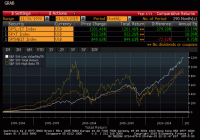
Low volatility equity strategies have been shown to have historically produced higher risk-adjusted returns, a violation of models that expect higher risk to be compensated with higher returns. Low volatility strategies have produced higher returns because they have outperformed in falling markets. This article details the lower maximum drawdowns of a low volatility strategy, showing the worst returns for the strategy over various time intervals versus the broader market. I have written a number of articles about the Low Volatility Anomaly , and how lower beta stocks have produced higher absolute and risk-adjusted returns than high beta stocks over time. The returns of the S&P Low Volatility Index, the S&P 500, and the S&P 500 High Beta Index since 1990 are compared below: (click to enlarge) Source: Bloomberg, Standard and Poor’s A tilt towards lower volatility stocks was one of my five strategies for outperformance for buy-and-hold investors . Low volatility strategies outperform because they suffer lower drawdowns in tough market environments, but capture most of the upside in bull markets , which is demonstrable in the graph above. In comments on a recent article, a reader queried about what the maximum drawdowns have been for low volatility equity strategies. Using data from the S&P Low Volatility Index (replicated by SPLV ), which measures the performance of the one-hundred least volatile components of the S&P 500, I have captured maximum drawdowns over various time horizons and compared these drawdowns to those of the S&P 500 Index (NYSEARCA: SPY ). (click to enlarge) Unsurprisingly, the worst drawdowns for the Low Volatility strategy and the broader equity market overlapped during the financial crisis. On average, the drawdown for the Low Volatility Index was only two-thirds to three-quarters of the broader market. Over ten year periods, the Low Volatility strategy have always produced positive returns, but this is an admittedly short dataset (1990-current), covering just three business cycle troughs. Disclaimer: My articles may contain statements and projections that are forward-looking in nature, and therefore inherently subject to numerous risks, uncertainties and assumptions. While my articles focus on generating long-term risk-adjusted returns, investment decisions necessarily involve the risk of loss of principal. Individual investor circumstances vary significantly, and information gleaned from my articles should be applied to your own unique investment situation, objectives, risk tolerance, and investment horizon. Disclosure: The author is long SPLV, SPY. (More…) The author wrote this article themselves, and it expresses their own opinions. The author is not receiving compensation for it (other than from Seeking Alpha). The author has no business relationship with any company whose stock is mentioned in this article.

Public Service Enterprise Group (PEG) Ralph Izzo on Q4 2014 Results – Earnings Call Transcript

Public Service Enterprise Group, Inc. (NYSE: PEG ) Q4 2014 Earnings Call February 20, 2015 11:00 am ET Executives Kathleen A. Lally – Vice President-Investor Relations Ralph Izzo – Chairman, President & Chief Executive Officer Caroline D. Dorsa – Chief Financial Officer & Executive Vice President Analysts Julien Dumoulin-Smith – UBS Securities LLC Dan L. Eggers – Credit Suisse Securities (NYSE: USA ) LLC (Broker) Paul Patterson – Glenrock Associates LLC Stephen Calder Byrd – Morgan Stanley & Co. LLC Travis Miller – Morningstar Research Jonathan Philip Arnold – Deutsche Bank Securities, Inc. Operator Ladies and gentlemen, thank you for standing by. My name is Brandy, and I am your event operator today. I would like to welcome everyone to today’s conference, Public Service Enterprise Group Fourth Quarter Earnings Conference Call and Webcast. At this time, all participants are in a listen-only mode. Later, we will conduct a question-and-answer session for members of the financial community. As a reminder, this conference is being recorded today, February 20, 2015, and will be available for telephone replay beginning at 1 PM Eastern Time today until 11:30 PM Eastern Time on February 27, 2015. It will also be available as an audio webcast on PSEG’s corporate website at www.pseg.com. I would now like to turn the conference over to Kathleen Lally. Please go ahead. Kathleen A. Lally – Vice President-Investor Relations Thank you, Brandy. Good morning, everyone. Thank you for participating in our call today. As you are aware, we released our fourth quarter and full year 2014 earnings results earlier this morning. The release and attachments, as mentioned, are posted on our website, www.pseg.com, under the Investors section. We have also posted a series of slides that detail operating results by company for the quarter. Our 10-K for the period ended December 31, 2014 is expected to be filed shortly. I don’t typically read the full disclaimer statement or the comments we have on the difference between operating earnings and GAAP results, but I do ask that you read those comments contained in our slides and on our website. The disclaimer regards forward-looking statements, detailing a number of risks and uncertainties that could cause the actual results to differ materially from forward-looking statements made therein. And although we may elect to update forward-looking statements from time-to-time, we specifically disclaim any obligation to do so, even if our estimates change unless, of course, we are required to do so by applicable securities laws. We also provide commentary with regard to the difference between operating earnings and net income reported in accordance with Generally Accepted Accounting Principles in the United States. PSEG believes that the non-GAAP financial measure of operating earnings provides a consistent and comparable measure of performance to help shareholders understand trends. But I would now like to turn the call over to Ralph Izzo, Chairman, President, and Chief Executive Officer of Public Service Enterprise Group. And joining Ralph on the call is Caroline Dorsa, Executive Vice President and Chief Financial Officer. At the conclusion of their remarks, there will be time for your questions. Ralph? Ralph Izzo – Chairman, President & Chief Executive Officer Thanks, Kathleen. And thanks, everyone, for joining us today. This morning, we reported operating earnings for the full year 2014. I’m pleased to report – actually I’m more than pleased to report that 2014 was a year in which we continued to make progress on our plans to deliver for our customers and shareholders. Operating earnings for the fourth quarter were $0.49 per share, which equaled the $0.49 per share earned in 2013’s fourth quarter, bringing results for the full year to $2.76 per share or 7% greater than 2013’s operating earnings of $2.58 per share. And it was above our guidance of $2.60 to $2.75 per share. Our results are benefiting from disciplined capital allocation. PSE&G, our utility, achieved double-digit growth in earnings, adding to our track record of five years of 18% compound annual growth. As a result of an expanded capital program, earnings from our regulated company grew to represent 52% of our consolidated operating earnings, as PSE&G’s investment in transmission has grown to represent 39% of its $11.4 billion rate base. PSEG Power’s successful management of its operations, including its gas supply arrangements, supported earnings in excess of guidance for the full year and delivered substantial savings to PSE&G’s customers. In addition to being a successful year for delivering on earnings, we achieved success in many areas that will provide a lasting foundation for customer satisfaction and shareholder value. By way of a reminder, we received approval to invest $1.2 billion in Energy Strong, a program that will improve the resiliency of our electric and gas distribution systems. We have begun the work on replacing and modernizing 250 miles of gas pipe and have begun the engineering and scheduling associated with upgrading and enhancing our electric substation. The investments under the Energy Strong program, as you’ll recall, will take place over a period of three years to five years. We’re also executing well on our transmission investment program. We completed construction of two 230 kilovolt transmission lines during the year, as well as the New Jersey portion of the 500 kV Susquehanna-Roseland line. We expect the full Susquehanna-Roseland line to go into service this year, when the Pennsylvania portion of S-R is completed. The investment in transmission will support the reliable service our customers have come to expect and provide an important boost to New Jersey’s economy, as it also adds to PSE&G’s growth. PSE&G once again was named the Mid-Atlantic regions’ Most Reliable Electric Utility. This is the 13th consecutive year that PSE&G’s capabilities have been recognized. In addition to that, for the first time in its history, PSE&G received J.D. Power’s award for highest customer satisfaction for both electric and gas business service among large utilities in the region. This recognition, while important in itself, we think recognizes that PSE&G has always kept the needs of its customers uppermost as we pursue our major growth initiatives. But 2014 was not just a year of PSE&G accomplishment. PSEG Power’s combined cycle fleet produced at record levels as Power’s fossil fleet achieved the safety performance in a tough 10% of the industry. We successfully grew PSEG solar sources portfolio. In 2014, we added projects in three states that expanded solar sources portfolio to 123 megawatts of clean renewable energy. And we had a successful first year of operating the electric system of the Long Island Power Authority. I’m particularly pleased with the efforts of our PSEG Long Island team. We’re rewarded with the major improvement in customer satisfaction scores. But let me be clear, this is only the beginning of a multiyear journey for us on Long Island. Our core strategy focused on operational excellence, financial strength, and disciplined investment is anticipated to yield a third year of growth in operating earnings over the coming year. For 2015, we are initiating operating earnings guidance of $2.75 to $2.95 per share. PSE&G’s expanded investment in transmission is expected to support continued growth in operating earnings in 2015, as PSE&G’s results for the full year are expected to represent more than 50% of consolidated earnings. PSEG Power is expected to report operating earnings in line with its strong 2014 results. The investments made by PSEG Power are expected to enhance the competitiveness of its environmentally well-positioned fleet, capacity upgrades at our gas-fired combined cycle fleet, and that our nuclear units will increase the fleets output as Power’s investment in the PennEast pipeline enhances its already strong access to low cost gas from the Marcellus region. PSEG Power fleet has the characteristics envisioned by PGM’s proposed standards for capacity performance. Its diversity in dispatch and fuel mix as well as the alternative fuel capability mitigates operating risk. Power’s investment program will be focused on improving its reliability during periods of stress on the system. We also look to expand the fleet when it’s financially attractive. We were disappointed that our bid to construct the new 475 megawatt combined-cycle plant at our Bridgeport Harbor site in Connecticut didn’t clear the New England ISO’s recent capacity auction. However, we haven’t abandoned this work and we’ll invest when the markets support its development. The strategy we implemented has yielded growth. We have a robust pipeline of investment opportunities that will support further expansion of our capital program over the next five years. The program is expected to yield double-digit growth in PSE&G’s rate base, as we maintain the operating strength of Power’s generating assets. We will update you on our capital spending plans on March 2. Our financial position remained strong. An acknowledgment of our success and the strength of our platform going forward was the recent decision by our board of directors to meaningfully increase the common dividend by 5.4% to the indicative annual level of $1.56 per share. We see the potential for consistent and sustainable growth in the dividend given our business mix. Our continued positive cash flow from our generation business and our strong financial position, all supports this dividend philosophy. We’ve made significant strides in meeting our objectives for growth, as we also satisfy customer requirements and we’re not done. Of course, none of this would be possible without the contribution made by PSEG’s dedicated employees to our continued success. I look forward to discussing our investment outlook in greater detail with you at our March 2 Annual Financial Conference. I will now turn the call over to Caroline for more details on our results and we’ll be available to answer your questions after her remarks. Caroline D. Dorsa – Chief Financial Officer & Executive Vice President Thank you, Ralph and good morning, everyone. As Ralph said, PSEG reported operating earnings for the fourth quarter of $0.49 per share equal to operating earnings of $0.49 per share in last year’s fourth quarter. Our earnings for the fourth quarter brought operating earnings for the full year to $2.76 per share versus operating earnings for 2013 of $2.58 per share, or 7% growth. On slide 4, we have provided you with a reconciliation of operating earnings to net income for the quarter. And as you can see on slide 10, PSE&G provided largest contribution to earnings for the quarter. PSE&G reported operated earnings of $0.32 per share compared to $0.29 per share last year. For the quarter, Power reported operating earnings of $0.18 per share, compared with $0.23 per share last year. Enterprise/Other reported a small loss in operating earnings for the fourth quarter of a penny per share versus the operating loss of $0.03 per share reported in the fourth quarter of 2013. We’ve provided you with waterfall charts on slides 11 and 13 to take you through the net changes in quarter-over-quarter and year-over-year operating earnings by major business. So now, I will review each company in a bit more detail, starting with PSE&G. As I mentioned, PSE&G reported operating earnings for the fourth quarter of 2014 of $0.32 per share, compared with $0.29 per share for the fourth quarter of 2013 as we show on slide 15. PSE&G’s full year 2014 operating earnings were $725 million or $1.43 per share, compared with operating earnings of $612 million or $1.21 per share for 2013 for growth of 18%. PSE&G’s earnings in the fourth quarter benefited from lower operating expenses including pension and a return on its expanded capital infrastructure program, which more than offset the impact of mild weather on sales. PSE&G’s investment in transmission infrastructure increased this quarter-over-quarter earnings by $0.02 per share. The earnings improvement related to the investment in transmission in the fourth quarter was less than the earnings increases you’ve seen during each of the first three quarters of the year, and this reflects a reduction in PSE&G’s rate base at year-end associated with the deferred tax impact of the expansion of bonus depreciation. PSE&G’s tight control of its operating expenses, including lower pension expense, resulted in a quarter-over-quarter increase in earnings of $0.04 per share. The continued improvement in weather normalized gas volume and demand, which improved quarter-over-quarter earnings by a penny per share, was offset by a similar decline in electric volume and demand. And although you wouldn’t think it on a day like today, weather was actually mild relative to normal and relative to the prior year on the net reduced earnings comparisons by about a penny per share. Earnings comparisons were also affected by the absence of $0.02 per share to tax related change which benefited earnings in the prior year. Economic conditions continued to exhibit signs of an improvement in the service area, which is good news. On a weather normalized basis, gas deliveries are estimated to have increased 1% in the quarter and 3.1% for the year. Demand continues to benefit from a decline in the cost of gas, which is passed on to our residential customers and an improvement in economic growth. PSE&G announced earlier this month that it would extend through March of 2015 the credits against gas bills that it had already provided to residential customers for the months of November, December and January. A typical residential customer with these credits would experience savings on their total bill over the five months of approximately 31% or $210. Electric sales on a weather normalized basis are estimated to have declined 2.3% in the fourth quarter. The decline in the quarter reflects a number of winter storms at the end of 2013, the increased residential consumption in that year, as well as decreases in demand this quarter from some large industrial customers. By the way, weather normalization is generally good for temperature, but unfortunately there is not really a good way to adjust for storms. Overall, there was a 0.3% increase in weather normalized electric demand for the year, which we think is indicative of improving economic conditions, partially offset by continued customer conservation. PSE&G implemented an increase in transmission revenue of $182 million effective on January 1 of this year. The increase in revenue under PSE&G’s transmission formula rate will provide PSE&G with recovery off and a return on its forecast of transmission-related capital expenditures through the year. PSE&G’s investment in transmission grew to $4.5 billion at the end of 2014 or 39% of the company’s consolidated rate base of $11.4 billion, and transmission is forecasted to be well over 40% of rate base as we go forward. Let me just mention the impact of bonus depreciation. The expansion of bonus depreciation has the effect of reducing PSE&G’s transmission-related rate base with an increase in deferred taxes. We estimate PSE&G’s transmission related rate base was reduced by approximately $150 million to $200 million from prior forecast levels, and this is reflected in PSE&G’s yearend rate base of $11.4 billon. The impact of this change on 2015 revenues is not reflected in the formula rate increase that I just went through, as that filing took place prior to the enactment of the extension of bonus depreciation. But our guidance for PSE&G reflects the impact on revenue associated with the extension of bonus depreciation and we estimate that impact to be approximately $21 million. As you know, this is really a timing related issue. We get the benefit of an increase in cash over the short-term and see a decrease in the deferred tax balance over the long term. PSE&G’s operating earnings for 2015 are forecasted to grow to $735 million to $775 million. Our forecast for 2015 reflects the continued growth in PSE&G’s transmission-related rate base and the expansion of PSE&G’s investment and distribution through the Energy Strong program. Earnings for the full year will also be affected by a forecast increase in pension expense that will affect O&M. And I’ll go into a little more detail on that shortly. We expect PSE&G’s rate of earnings growth to improve beyond 2015, as the impact of bonus depreciation will annualize and pension expense is expected to be lower under long-term return and interest rate assumptions. PSE&G invested approximately $2.2 billion in 2014 on capital projects that improve the systems’ resilience and maintenance its reliability. We currently forecast an increase in PSE&G’s average capital spending for the next three years to about $2.4 billion per year. PSE&G’s investment in transmission will represent more than 50% of this new spending. We will be providing you with an updated forecast of PSE&G’s capital expenditures by year for the five-year period ending 2019 at our Annual Financial Conference on March 2 of this year, and I can tell you that spending plan remains robust. Now let’s turn to PSEG Power. As shown on slide 19, Power reported operating earnings for the fourth quarter, as I mentioned, of $0.18 per share, compared with $0.23 per share a year ago. The results for the quarter brought Power’s full year operating earnings to $642 million or $1.27 per share, compared to 2013’s operating earnings of $710 million, or $1.40 per share. The earnings release as well as slides 11 and 13 provide you with detailed analysis of the impact on Power’s operating earnings quarter-over-quarter and year-over-year from changes in revenue and costs. We’ve also provided you with more detail on generation in the quarter and for the year on slides 21 and 22. Power’s operating earnings for the fourth quarter were influenced by the known declining capacity revenues that we’ve discussed in prior calls. The monetization of Power’s gas supply position, and a reduction in operating and maintenance expense helped mitigate the effects of lower market prices for energy. As you recall, the average price for our PJM capacity declined to $166 per megawatt day from $244 per megawatt day on June 1 of 2014. The decline in price reduced Power’s quarter-over-quarter earnings by $0.09 per share. A decline in the average hedge price for energy that Power realized during the quarter relative to year-ago levels and lower market prices on Power’s open position were more than offset by Power’s ability to monetize its gas supply position. These items together led to an improvement in quarter-over-quarter earnings of $0.01 per share. The decline in Power’s O&M expenditures during the quarter improved quarter-over-quarter earnings by $0.05 per share and the decline in expense for the quarter was greater than what we’ve been forecasting at the end of the third quarter. Power’s management of maintenance outages at fossil stations coupled with the absence of outage related expenditures in the prior year resulted in a better than forecast reduction in O&M expense for the fourth quarter and led overall to lower O&M expense in 2014 versus the full year of 2013. Now let’s turn to the operations. Power’s output increased 3.1% in the quarter from year ago levels. For the year, output increased 1.3% to 54.2 terawatt hours. The fleet’s flexibility in response to volatile market conditions was demonstrated in the quarter and throughout the year. The level of production achieved by the fleet in 2014 represented the third highest level of output in the fleet’s history as our merchant generator. The nuclear fleet produced 29.1 terawatt hours or 54% of generation, operating at an average capacity factor of 89.3%. Hope Creek experienced its second best year, operating at 97.9% annual capacity factor, which helped to offset the impact of the extending refueling outage at Salem 2 earlier in 2014. The market is clearly rewarding efficient combined-cycle gas units, and Power’s combined-cycle fleet set a generation record during the year. The fleet produced 16.5 terawatt hours or 30% of our generation during the year with record levels of output from the Bergen Station and Linden Unit 1. The coal fleet produces 7.4 terawatt hours or 14% of generation and the peaking fleet’s responsiveness to market conditions particularly the abnormally cold weather experienced at the start of 2014 led to full year production of 1.2 terawatt hours. Power’s gas-fired combined-cycle fleet continues to benefit from its access to lower price gas supplies in then Marcellus Basin. For the year, gas from the Marcellus Utica region supplied approximately 60% of the PJM assets fuel requirements. This represents the larger percentage of fleet’s gas supply than was available in the past. Power’s ability to step up its acquisition of gas from the Western Marcellus and Utica Basin in addition to the use of backhaul arrangements on existing pipe in the Eastern Marcellus improved its access to this low cost resource. This supply supports higher spark spreads than implied by market pricing and allowed Power to enjoy fuel cost savings similar to the levels it enjoyed in 2013 despite the decline in energy prices. Overall Power’s gross margin per megawatt hour in the fourth quarter was $37.40 versus $45.90 last year which was driven by the capacity price reset. For the year, gross margin amounted to $42.41 per megawatt hour versus $47.10 per megawatt hour last year. And slide 24 provides detail on Power’s gross margin for the quarter and the year. Power is forecasting a further improvement in output in 2015 to 55 terawatt hours to 57 terawatt hours. The increase is primarily the result of investments we have made to expand the capacity of our nuclear and combined cycle fleet. Following the completion of the Basic Generation Service auction in New Jersey earlier this month, Power has hedged 100% of its base flow generation in 2015 and has hedged approximately 75% to 80% of anticipated total production for 2015 at an average price $52 per megawatt hour which compares favorably to the average hedge prices in 2014 of $48 per megawatt hour. Power has hedged approximately 50% to 55% of its forecast generation in 2016 estimated at 55 terawatt hours to 57 terawatt hours also at an average price of $52 per megawatt hour. And for 2017 Power has hedged 25% to 30% of forecast production of 55 terawatt hours to 57 terawatt hours at an average price of $52 per megawatt hour. The hedge data for 2015 and 2016 assumes BGS volumes represent approximately 11.5 terawatt hours of deliveries, about comparable to the 11.5 terawatt hours we delivered in 2014 under BGS. Based on our current hedge position for 2015, each $2 change in spark spreads would impact earnings by only $0.04 per share. This modest impact on earnings is a result of a higher percentage of output from a intermediate and peaking fleet that is hedged at this time about 40% to 45% than we had hedged a year ago, when it was really about 35% to 40% of forecasted output for the intermediate and peaking fleet. For 2016, a $1 change in natural gas pricing would impact earnings by $0.06 per share. And just for your reference, if we were fully open, the $1 change in natural gas pricing would impact earnings by about $0.24 per share. The BGS auction for PSE&G customers for the three-year period beginning June 1 of 2015 and ending on May 31, 2018 was priced at $99.54 per megawatt hour. This contract for one third of the load will replace the contract for $83.88 per megawatt hour, which expires on May 31 of this year. This latest auction is based on an average price for energy at the PJM West Hub of about $37 per megawatt hour to $38 per megawatt hour, which is similar to the base price for energy seen in the last two auctions. The BGS auction continues to represent the key means for Power to hedge basis associated with baseload output. Power’s hedging strategy is consistent with what you’ve seen in the past. Power maintains open positions on a portion of its intermediate and load following assets and this allows Power to capture any benefits associated with weather-related demand in the summer months and contain the risks associated with fuller requirements contracts like BGS. Power took advantage of market strengths earlier in 2014 to hedge its output. And given favorable pricing, Power is also committed to serve a larger percentage of load under the BGS contract in this latest auction, which, of course, will have its proportional impact across the upcoming three years. Power’s operating earnings for 2015 are forecast at $620 million to $680 million. We’re very pleased that our anticipated results are essentially in line with 2014’s operating results. Comparative results for the full year will be affected by a decline in capacity revenues which will essentially be fully offset an increase in the average price received on energy hedges and a modest increase in O&M. Turning to Enterprise and Other, PSEG Enterprise/Other reported an operating earnings loss for the fourth quarter of $4 million or about $0.01 per share, which compares to a loss in operating earnings of $11 million or $0.03 per share for the fourth quarter of 2013. The results for the fourth quarter brought full-year 2014 operating earnings to $33 million or $0.06 per share, compared with 2013’s operating loss of $13 million or $0.03 per share. The difference in operating results quarter-over-quarter reflects primarily the absence of tax payments and other items which contributed $0.03 per share relative to the fourth quarter of 2013. For 2015, operating earnings are forecasted to fall within the range of $40 million to $45 million and results will be influenced by the contractual payments associated with the operation of PSEG Long Island, income on the lease portfolio including the benefit from the renegotiation and extension of our lease on the Grand Gulf Nuclear Generating facility. Let me now just add a word about pension expense. Last year, as you recall, we saw total pension income of about $0.02 per share as the success of our investments strategy created that pension income. In 2015, our funding level remains greater than 90%, but a lower discount rate and changes to mortality tables, offset the continued strong return we generated on the Trust resulting in net pension expense of slightly less than $0.07 per share, which is split about evenly between PSE&G and Power. Keep in mind, these are non-cash charges, and we anticipate to move back to pension income over the next two-year to three-year period given our solid funding on our long-term investment strategy. These impacts that I just mentioned are embedded in our financial plan and our guidance for growth at PSE&G and consistent performance in 2015 at Power. We still see a low-single digit growth in O&M across the company over the three-year horizon and we will talk more about that in greater detail on March 2. Lastly, just a word on our financial position. We’re in great shape to finance our capital program. At the end of 2014, we had $402 million of cash on hand and debt represented about 42% of our consolidated capital position, with debt at Power approximating 31% of its capital base and no parent debt. We’ll be updating you on our capital program at our annual financial conference but the message is the same. We can finance our robust long-term capital program and pursue a very healthy amount of growth opportunities without the need to issue equity, as we also provide our shareholders with a meaningful increase in the growth of the common dividend on sustainable basis. We’re pleased to be guiding to another year of anticipated growth in earnings for 2015 of $2.75 to $2.95 per share. Our forecast continues to reflect the benefits from PSE&G’s expanded capital program and the dynamics of Power’s fleet and access to low cost gas supplies. As you know, the common dividend was recently increased 5.4% to the indicative annual level of a $1.56 per share, and we believe we can provide shareholders with consistent and sustainable growth in the dividend going forward. With that, Brandy, I’ll turn it back to you and we’re now ready for your questions. Question-and-Answer Session Operator Ladies and gentlemen, we will now begin the question and answer session for members of the financial community. Your first question comes from the line of Julien Dumoulin-Smith with UBS. Julien Dumoulin-Smith – UBS Securities LLC Hi. Good morning. Ralph Izzo – Chairman, President & Chief Executive Officer Good morning, Julien. Caroline D. Dorsa – Chief Financial Officer & Executive Vice President Good morning, Julien. Julien Dumoulin-Smith – UBS Securities LLC Hey. First quick question. Following the Bridgeport sort of back of clearing that asset, what’s your thought about building out Power at present? I mean, are we going to look towards clearing potentially new assets in different markets or what’s your overall thought about capital deployment at this point in time in Power or back at Public Service Utility? Ralph Izzo – Chairman, President & Chief Executive Officer So, Julien, our thinking on this hasn’t changed. Our Power markets that we’re interested in are PJM, New York and New England. We look for asset acquisitions, we look for opportunities to repower sites, we look for opportunities to extend or increase the output of our plants. As you all know, we’ve been much more successful on the later and not as successful on the former. So Peach Bottom uprate, advanced gas path improvements, a couple of peakers here and there have not been able to see the same price justification as others on asset acquisitions and similar thing happened in New England. In general, we like the New England markets from the point of view of newbuild because of the seven year. That’s a bigger hurdle to overcome in PJM because of the one-year price. On the regulated utility side, we’ll give you more detail on March 2, but there is still very much a robust capital program that we’ll be showing you for the five years, and not just in terms of transmission which has been our number one. But as we’ve talked about in the past, opportunities to accelerate the replacement of our cast iron mains system in the gas business, as well as some of the components of the Energy Master Plan that relate to energy efficiency and renewables. You may recall, it’s only been 10 months or so. So, I’m not suggesting we’re done by any means but Energy Strong was a much bigger program than what was ultimately approved, so there will be more of that, but it’s a little bit longer term than the next coming months. So there is no shortage of opportunities to deploy the capital. We are disappointed at Bridgeport Harbor, I’m not going to deny that but we’ve reefed up things we can do. Julien Dumoulin-Smith – UBS Securities LLC Great. And then perhaps moving on with what about the bidding inquiry? Any update there you can elaborate by chance where we stand? Ralph Izzo – Chairman, President & Chief Executive Officer We’re not giving any more detail on that than we have already, Julien. We don’t have any new information to update our financials and we are actively involved which FERC. We meet with them on a regular basis in terms of their questions and giving them feedback. But right now we’d rather make sure that FERC has all the information before talking much more about that on our earnings call. Julien Dumoulin-Smith – UBS Securities LLC Great. And then, if you will, I noticed PJM East just generally or specifically Public Service Zone, saw sort of a negative basis versus PJM West on a spot basis in the back half of the year. Could you talk about what dynamics you saw day-to-day in the market that would drive that and what your expectations are for forward basis East versus West hedging that specifically? Ralph Izzo – Chairman, President & Chief Executive Officer Sure. So, Julien, as we said, the Power markets at least for the foreseeable future have been turned 180 degrees. The winter is where most of the volatility and earnings potential for Power is coming from and that hasn’t changed since we started talking about that now almost two seasons ago. So when you look at basis for the year, that’s a little bit of a misleading view of the world. It’s a combination of moderate basis in the summer, very strong basis in the winter and weak basis, in fact, negative basis in the shoulder periods. But the flexibility of our fleet and the way in which we hedge it takes all that into account. Over the longer term, I think what you are going to see is the market dynamic that’s going to driven by significant infrastructure build of gas pipes from the Marcellus region to the Southeast and significant replacement of aging power plants that aren’t able to meet environmental standards in the Southeast with highly efficient natural gas combined cycle. So we don’t run the business saying that we are smarter than the market but to the extent that the market is viewed as an extend to that three-year to five-year timeframe, we still have lots of reasons to feel pretty confident in the location and quality of our asset base. Julien Dumoulin-Smith – UBS Securities LLC Great. Thank you all very much. Kathleen A. Lally – Vice President-Investor Relations Next question. Operator Your next question comes from the line of Dan Eggers with Credit Suisse. Dan L. Eggers – Credit Suisse Securities ( USA ) LLC (Broker) Hey, good morning, guys. Ralph Izzo – Chairman, President & Chief Executive Officer Good morning, Dan. Dan L. Eggers – Credit Suisse Securities ( USA ) LLC (Broker) Just kind of on the Power side of the outlook for Power, can you just walk through or remind us all the hedging strategies you guys are using? Obviously, you got the nice price uplift in the hedge percentages going from 100% hedged to a 100% hedged. So can you just remind us how you got that upside? Caroline D. Dorsa – Chief Financial Officer & Executive Vice President Sure. Dan, it’s Caroline. Sure. Thanks. Yeah, I cited the baseload and the total and, keep in mind, that intermediate and peaking, right? So if you look at what we told you on the third quarter call, we were still a 100% hedged on the baseload. But the differences really occurred as we’ve added hedges in that intermediate and peaking which was 5% to 10% for 2015 on the last call and is now 40% to 45%. Now, of course, piece of that would be BGS, but if you do the math on that, you’d see that’s a little less than half of the total on an estimated basis. And really what’s going on, Dan, and if you look at the curves, just look at the forward price curve, you see this there were opportunities where the prices moved up during the last quarter before they came down right at the very end, and spark spreads have been pretty robust. And so, we took advantage of those opportunities to layer on incremental hedges. And by having that incremental flexibility and putting on a little bit more and capturing those price in spark spread opportunities, that’s what’s really increased the numbers. Now, if you are asking about the change in the price of baseload, you know that we actually give one consistent price across. So even though baseload was 100%, the average price of the entirety of the book, we put that across all the hedges, but we give you the granularity of where we’re hedged between baseload and intermediate and peaking. So we like the impact that we had in the fourth quarter by adding on hedges. You know that BGS, of course, being full requirements also has some pass-through costs. But even if you strip that out you’d find that the hedges are really higher than they were from our last report. Dan L. Eggers – Credit Suisse Securities ( USA ) LLC (Broker) Okay. And then – thank you for that answer. On the outlook for the utility this year, kind of if you look at the bridge or you think about mental bridge from 2014 to 2015, maybe not as much of an increase year-on-year as we would have previously modeled. Can I think of it as basically there is going to be a drag of $0.035 or $0.04 because of pension year-on-year maybe in nickel because you had some gains in 2014. And then you get a step down from what you would have expected at transmission because of the bonus depreciation. Is that the right way to think about the step year-to-year in simple terms? Caroline D. Dorsa – Chief Financial Officer & Executive Vice President That’s exactly right, Dan. So you’re exactly on the right math, because when you look at those key things which, of course, if you think about interest rate, actuarial tables and bonus depreciation really aren’t in our control. But you’ve got your finger on the right things that take the utility growth rate perhaps lower than the expectation, but a nice growth rate nonetheless because the things that we do control, the things we’re doing to put capital to work obviously continue. And as I said, when you think about going out beyond 2015, you’d see the annualization of bonus deprecation in terms of the base versus a subsequent year effect, and then pension obviously we think being more of a one-time and then going back to normal. So you’re exactly right on how you’re thinking about it. Dan L. Eggers – Credit Suisse Securities ( USA ) LLC (Broker) And I guess this is the last question. You talked about $2.4 billion of utility CapEx. Is that just for 2015? Or are you guys thinking that’s going to be the new repeated number kind of for the five-year plan? Caroline D. Dorsa – Chief Financial Officer & Executive Vice President So we haven’t given the five-year number, but the three-year number and you’ll see this in our 10-K when we file it, the three-year number averages about $2.4 billion per year in total for PSE&G, so I’m talking 2015, 2016 and 2017. And when you do that and you look at that, keep in mind that, as I said, transmission will be more than half of that. So you’re going to see transmission really carrying the weight of that growth. So we’re really pleased to see that on average for the next three years, and then we’ll talk more about the five years on March 2. Dan L. Eggers – Credit Suisse Securities ( USA ) LLC (Broker) Great. Thank you, guys. Caroline D. Dorsa – Chief Financial Officer & Executive Vice President Sure. Next question? Operator Your next question comes from the line of Ashar Khan (42:04) with Visium. Operator Good morning and congratulations. Ralph Izzo – Chairman, President & Chief Executive Officer Thank you, Ashar Khan (42:10). Good morning. Operator Well, I’ve been kind of attacking (42:14) this I guess, Ralph, it’s like – year-after-year it’s like the best integrated company, and I hope we start getting discernible premium this year as we go forward. Ralph Izzo – Chairman, President & Chief Executive Officer Thanks. Operator But I wanted to go over a point that Caroline graced is that because of the all pension and all that and the hefty CapEx that you’ve mentioned, if I heard correctly Caroline, you expect the utility to then go back to somewhat closer to a 9% or 10% growth rate going forward if I do my math correctly based on the CapEx and everything for the next couple of years. Is that a fair thing which you referred to a little bit in your remarks because the growth got a little bit dampened this year from 2014 to 2015 from the pension and other things. But it should re-grow at a faster rate coming out of the blocks 2015 going forward, based on the CapEx and things which you have indicated. Am I on the right track? Caroline D. Dorsa – Chief Financial Officer & Executive Vice President Yeah. So, Ashar Khan (43:20), you are on the right track. I won’t validate a particular number that you cited there. But, yes, think about one-time effects, when you have a year-on-year effect of something like bonus depreciation which you remember, was passed at the very, very end of 2014, that has its one-year effect and then it becomes part of the base. Pension same thing, right, lower interest rates and then mortality table, which as you probably know is once in about 10-year effect, those things come in. And so, we would expect utility growth to be higher as we go on a 2015 to 2016 basis and on a 2014 to 2015 basis for exactly the reasons you cite overlaid on the backdrop of what I just mentioned, which is a continued robust investment program averaging a little bit more on an annual basis than we actually spent last year. So the fundamentals are there to provide the driver for that opportunity and we’ve got these sort of one-year effects from the two items. That’s the right way to think about it. Operator And then, if I could just then if I’m thinking through it on an investment proposition, so it’s now utility earnings with the LIPA contract and all that makeup like 55% of the earnings. And say, this is my number, if we’re growing at around 9% or 10%, on the utility that would imply a consolidated growth rate of about 5% or so. And with the dividend now growing at 5%, I mean I think so we have a value proposition, which is equal to any utility or even better than the rest of the group. Caroline D. Dorsa – Chief Financial Officer & Executive Vice President So we certainly think we have a good value proposition, no doubt about that – and thank you for mentioning the dividend as well. Obviously, we don’t give guidance beyond the current year, as you know, because of Power, although I think we’re pretty pleased with what we’ve been able to deliver and the guidance we’re giving for Power for this year. And frankly, going forward, expect us to do the same things we’ve been doing with Power for the past few years and I think relatively successfully layering in hedging, taking advantage of opportunities when we see them, and continuing to just take advantage of a well-positioned fleet. So we do think we have a good value proposition. I just mentioned and I think you were just doing the math separately. As you know, PSEG Long Island and our operating arrangement on Long Island is not part of PSE&G’s results. It’s part of the Enterprise, but you may have been just adding that back in your calculation. Operator Okay. And if I can just end up, Ralph, we’re happy on the dividend, but do you have a payout goal in mind for the consolidated entity earnings or on the utility earnings? I just wanted to get a sense. If not the board has a payout or no? Ralph Izzo – Chairman, President & Chief Executive Officer Sure. No, we don’t, Ashar (46:21). You may recall, a few years ago, maybe about five or so, we did have a number, and we found it too limiting. The dividend is something that we discuss all the time with the board, but we have a very robust conversation. We talk about where are the earnings coming from, what is the cash being generated, where are we in the power cycle – the power price cycle, what are the cash needs of the business, what are our competitors doing, competitors for capital, that is. So it’s a very fulsome discussion and not one that lends itself to simply saying x% is the payout ratio. But we do try to guide you qualitatively recognizing that the dividend decisions are the purview of the board on a quarterly basis. But the number we put forth this time we believe is consistent with that view that we can provide a sustainable growth in the dividend. Operator Thank you so much. Cracking results. Ralph Izzo – Chairman, President & Chief Executive Officer Okay. Caroline D. Dorsa – Chief Financial Officer & Executive Vice President Next question? Operator Your next question comes from the line of Paul Patterson with Glenrock Associates. Paul Patterson – Glenrock Associates LLC Good morning, guys. Caroline D. Dorsa – Chief Financial Officer & Executive Vice President Good morning. Ralph Izzo – Chairman, President & Chief Executive Officer Good morning, Paul. Paul Patterson – Glenrock Associates LLC Just really quick, I’m sorry if I missed it. The gas monetization in Q4, could you quantify that? And is there any sort of outlook of what the opportunity might be for stuff like that going forward? Caroline D. Dorsa – Chief Financial Officer & Executive Vice President Yeah. So I didn’t quantify that specifically, Paul, in terms of a number on the quarter. What I did mention was that the gas monetization benefit was essentially similar to what we saw in 2013. So you may recall in 2013 – and I’m talking about this (47:51) differential base in our supply. 2013, it was about $0.05 and in 2014 it was just about the same level. In terms of thinking about it going forward, obviously, we don’t control that differential, but two things good to keep in mind. If you look at forward curves, you still see that differential. And so that’s valuable and we model everything on the forward curve, including thinking about that differential. What, of course, you can always think about for us that does sustain is that access. Right? So we have the access this year, given what the team has been able to accomplish in terms of providing even more access to (48:33) Marcellus and Utica gas, we’ve been able to step-up that percentage to a total of about 60%. And so, when you have the differential and we’ve got this long-term access, that’s going to stay with us, can’t say exactly what percentage every year, but long-term significant access. When that differential is there, you’d expect us to get it. Paul Patterson – Glenrock Associates LLC Okay. And then the polar vortex? It looks like we have some similar conditions out there to what we saw on January 7 of last year and the performance of plant seems to be better. And I’m wondering whether or not you think that might impact the capacity performance proceedings going on right now at FERC? Or, just in general, what do you guys see or what are you hearing out of FERC or anywhere else with respect to how that process is going or your expectations with respect to it? Ralph Izzo – Chairman, President & Chief Executive Officer So Paul, you’re right. I mean, temperatures have been averaging about 16 degrees below average the last few days and plants are operating. But I think I know for us and I suspect for others, there were some operational changes we’re able to make to reduce the amount of forced outages. Just in light of the forecast, we moved our coal piles around a little bit more so that we make sure that we didn’t face them freezing up. But what hasn’t changed for us and I suspect for others, the amount of capital investment that’s being made in the older units, which basically never run until you get six days averaging 16 degrees below zero. And I think FERC is very cognizant of that. So there’s only so much you can get out of improved performance by doing some operational prep work and eventually frictional forces that these temperatures overcome, whatever you might do in terms of preparation and those capital improvements are needed. And so, I think FERC will be supportive. I don’t want to predict any outcome. I don’t want to guarantee an outcome. But suffice it to say that there’s really two issues that are involved in making sure a power plant runs. It’s what you physically have put into the asset and what you do to ready it. And in terms of physical preparation, it’s not leaving coal piles exposed, putting buildings around them, so that they are protected from the elements, that’s a capital investment and you’re not going to do that unless you know that you’re going to get paid in the capacity market, because those typically – in our case at least, aren’t units that capture energy margin. So we’re still cautiously optimistic about what FERC will do. And we are very confident that whatever FERC does, we do have the type of fleet that will benefit from it. Paul Patterson – Glenrock Associates LLC Okay, great. I appreciate it. Kathleen A. Lally – Vice President-Investor Relations Thank you. Next question? Operator Your next question comes from the line of Stephen Byrd with Morgan Stanley. Stephen Calder Byrd – Morgan Stanley & Co. LLC Good morning. Ralph Izzo – Chairman, President & Chief Executive Officer Good morning, Steve. Caroline D. Dorsa – Chief Financial Officer & Executive Vice President Good morning. Stephen Calder Byrd – Morgan Stanley & Co. LLC Wanted to start on the utility. For 2014 and I guess going into 2015, what was the earned ROE at the utility in 2014 and what’s the assumption going into 2015 that defines the guidance? Ralph Izzo – Chairman, President & Chief Executive Officer We earned our allowed returns, Stephen, just you may recall that we have 11.68% return at transmission, and a blend of 10.3% at the utility for the most – at the distribution level a blend of 10.3% and some of the more recent program are at 9.75%. Stephen Calder Byrd – Morgan Stanley & Co. LLC Okay. So the actual results of 2015 were right at your earned level or were they in excess of the earned level? Ralph Izzo – Chairman, President & Chief Executive Officer They were right at the earned level. Stephen Calder Byrd – Morgan Stanley & Co. LLC Okay. And… Ralph Izzo – Chairman, President & Chief Executive Officer We’re investing heavily in the utility to make sure that’s the case. Stephen Calder Byrd – Morgan Stanley & Co. LLC Okay. Understood. And what’s the timing for the likely filing of the rate case? Ralph Izzo – Chairman, President & Chief Executive Officer November of 2017. Stephen Calder Byrd – Morgan Stanley & Co. LLC Is when you would file? Ralph Izzo – Chairman, President & Chief Executive Officer Is when we would file for a test year that is three months to start and nine years prospective. Typically, we may seek to push it out even further. Stephen Calder Byrd – Morgan Stanley & Co. LLC Okay. And then, looking over in terms of gas infrastructure, major theme we’ve seen is more investment in pipelines and we saw your investment there at the Power side. Do you see other potential need for gas infrastructure that looks interesting for you in your service territories, as you look at the growth of gas infrastructure? Ralph Izzo – Chairman, President & Chief Executive Officer No, not in our service territory. It seems to me that most of the gas pipeline build that’s been proposed nowadays for a variety of reasons is going from Marcellus and Utica to the Southeast and to the South. That’s a much longer conversation that we can have. There is some very good economic fundamental reasons why that’s taking place. I think we’re ready for the next question, operator. Operator Your next question comes from the line from Travis Miller with the Morningstar. Travis Miller – Morningstar Research Good morning. Thank you. Ralph Izzo – Chairman, President & Chief Executive Officer Hi, Travis. Caroline D. Dorsa – Chief Financial Officer & Executive Vice President Hi, Travis. Travis Miller – Morningstar Research Hi. One of you could talk about a little more of the incremental investments that you’ve discussed here over the last few months about Energy Strong where that stands, what filings we might see in the next three to six months opportunities, the incremental stuff, that’s not been approved for Energy Strong? Ralph Izzo – Chairman, President & Chief Executive Officer Sure, Travis. The pure Energy Strong filing, if you will, had multiple components to it. There were a series of substations, for example, that were a center piece of, I think there were 29 of them that have to be upgraded and there where we are is we’re in the engineering and design phase of that work. So that work is probably going to be the longest dated one, and when we do file for additional help in that area that’s likely to not be off for at least another year. Another big part of Energy Strong though was the $350 million program to replace some of the cast iron main system. And I think we’ve done over 200 miles of that already and that is one that is scheduled to pretty much wind down by the end of 2015. So we’ll talk more in detail about that on March 2, but that is a filing that we will be making in very, very short order to continue that program. That’s important for a whole host of reasons, not the least of which is number one. You don’t want to keep mobilizing and then de-mobilizing your workforce to do that. And as I said that’s winding down at the end of the year. But probably equally if not more important is the fact that we’ve continued to be able to pass these gas credits on to our customers. So this is the time to make the investment in infrastructure while the supply part of the bill is actually coming down, because it’s something that the customer can afford to do right now. We’re always mindful of the burden that we are putting on the customers. But there are some other parts of Energy Strong that are smaller in magnitude, but those being the two biggest ones. Some of the other things we’ve talked about in terms of potential investments that we’re still waiting to here on are the Utility 2.0 program out on Long Island. Candidly we thought that would be resolved by now, but that looks like it’s going to go out a couple more quarters into this year. We had thought we were the winner of the FERC 1000 project at Artificial Island. As you know, PJM is reconsidering that, and I don’t know exactly when a decision will be forthcoming there. We thought it would be Q1. But Q1 is now halfway gone and that decision isn’t done. The PennEast Pipeline investment we’ve made is still underway. The energy efficiency filing that we made is still having very constructive dialogue with the staff on that. So, there are things in all manners, all different stages from disappointment in terms of Bridgeport Harbor, optimism in terms of energy efficiency and a whole bunch of stuff in between. Travis Miller – Morningstar Research Okay. How much of all those programs that either haven’t been approved or at development process are included in that $2.4 billion CapEx number? Caroline D. Dorsa – Chief Financial Officer & Executive Vice President None. Ralph Izzo – Chairman, President & Chief Executive Officer Zero, zero. Travis Miller – Morningstar Research Okay. So that’s upside. Okay. Thank you very much. Caroline D. Dorsa – Chief Financial Officer & Executive Vice President Thanks, Travis. Next question? Operator Your next question comes from the line of Jonathan Arnold with Deutsche Bank. Jonathan Philip Arnold – Deutsche Bank Securities, Inc. Good morning guys. Ralph Izzo – Chairman, President & Chief Executive Officer Good morning, Jon. Caroline D. Dorsa – Chief Financial Officer & Executive Vice President Good morning. Jonathan Philip Arnold – Deutsche Bank Securities, Inc. Quick question on what you’ve said about the dividend, Ralph. You’ve been very clear you wanted to be, to grow consistently and sustainably. Does that mean we should anticipate similar percentage growth going forward to what you’ve just done or similar kind of share growth or how consistent are we talking? Ralph Izzo – Chairman, President & Chief Executive Officer So, let’s just put it this way, Jonathan, about 40 years ago or maybe, I think it was about then, we put a big increase into the dividend, I think it was about an $0.08 or $0.10 increase in the dividend. $0.12. Thank you, Jon. And we went out of our way to tell people that that was a significant resetting of the dividend and not to be expected as an ongoing change in the dividend. And we haven’t used those words this time. So I really don’t want to be tied to a specific number either from a cents per share or a percentage point of view, except to say that, we think this dividend increase is supportable and sustainable. Jonathan Philip Arnold – Deutsche Bank Securities, Inc. It seems you’re growing it roughly in line with how you expect the utility earnings to grow this year, I mean, is that kind of the status policy (57:40)? Ralph Izzo – Chairman, President & Chief Executive Officer Yeah. And again – that’s a fair question, Jonathan. And I did say earlier that we look to see where the earnings in the company are coming from because, quite candidly, Power is more cyclical and the utility is more steady. But we don’t have a – it’s not formulaic. It’s not 0.9 Utility plus 0.1 Power or 1.1 Utility plus 0.2 Power. It’s clearly the fact that the utility will be well over 50% this year for the second year in a row. It depends on how you define well over. It’ll be over 15% for the second year in a row, gives us more confidence in the size of the increase and the sustainability of the increase. But we absolutely know how important it is to the shareholders. We hear about it all the time. Jonathan Philip Arnold – Deutsche Bank Securities, Inc. Okay. And then on the credit metrics, I think you mentioned that Power’s FFO-to-debt was 59% (58:33) at the end of the year. Is there anything about (58:38) you’re forecasting flattish earnings for 2015 in Power at the middle of the range. Is there any reason why FFO-to-debt wouldn’t be similar in 2015 as in 2014? Caroline D. Dorsa – Chief Financial Officer & Executive Vice President No. So, good question, Jonathan. If you look at, you’re right, where we landed the year. Power is going to continue to be in very good shape. So I think the way to think about it is FFO-to-debt will continue to be well in excess of our floor of 30% just continuing to provide a lot of investment capacity of Power for the things that Ralph has just been talking about and of course as you know we don’t have any parent debt and so that provides us even more opportunity for regulated investments. So yeah, I continue to see Power a very robust and what I like about is it allows us to have that conversation of where else can we make incremental investments, because there is just a lot of room there and that’s a nice way to start the conversation about extra capital investment, not talking about issuing equity. Jonathan Philip Arnold – Deutsche Bank Securities, Inc. So unless 2016 (59:39) is going to step down very significantly, it seems like mathematically there’s no way you can be sub 50% for the 2014, 2015 average, which is I think what your EEI (59:52) slide showed. Could those numbers be up by that much higher? Is that — are we on the right track there? Caroline D. Dorsa – Chief Financial Officer & Executive Vice President Yeah. So, I won’t give the specific numbers now on the call and we’ll talk more about the long-term view of things on March 2, but I think the right takeaway is that balance sheet is in terrific shape and we look for as Ralph said lots of ways to deploy it. The numbers are in really, really good shape. Jonathan Philip Arnold – Deutsche Bank Securities, Inc. Did you come close on Bridgeport Harbor or was it…? Ralph Izzo – Chairman, President & Chief Executive Officer Nice try, Jon. Jonathan Philip Arnold – Deutsche Bank Securities, Inc. All right. Ralph Izzo – Chairman, President & Chief Executive Officer We’re not going to reveal close or not close, because as soon as I give you a qualitative answer, you’ll try to narrow me further. Jonathan Philip Arnold – Deutsche Bank Securities, Inc. Thank you. Ralph Izzo – Chairman, President & Chief Executive Officer Thank you. Operator Ralph is going to have some closing remarks and then we’ll complete the call. Thank you. Ralph Izzo – Chairman, President & Chief Executive Officer Thanks, Kathleen. So something just a little bit out of character. As many of you know – as all of you know, there is probably no bigger fan of our employees than yours truly here. There is one that I just want to make special mention of that, many of you probably have never met before, but after 40 years of service in the industry and 10 years with us, eight years as our chief nuclear officer. We did announce the retirement of Tom Joyce. Tom is just the quintessential professional, not only did he just create tremendous value for our customers and our shareholders, but he did what’s expected of every strong leader and that is he leaves behind an incredibly solid team and groomed a talented successor. But I just can’t thank Tom enough. And I thanked him yesterday in front of employees. So I want to make sure, I thank him today in front of our investors. As for the rest of my comments, it’s simply this, for those of you in the Northeast, I hope you stay warm, hang in there. Our plants are running, our gas pressures on the system are good if not only even Northeast but you are in our service territory. And I hope to see all of you a week from Monday at our annual meeting. So I hope you’re as pleased as we are with that result, and the outlook for 2015 looks even stronger. See you soon. Thank you. Kathleen A. Lally – Vice President-Investor Relations Thank you, operator. Operator Ladies and gentlemen, that does conclude your conference call for today. You may now disconnect. And thank you for your participation.