Tag Archives: power

5 Ways To Beat The Market: Part-3 Revisited
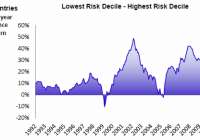
In a series of articles in December 2014, I highlighted five buy-and-hold strategies that have historically outperformed the S&P 500 (SPY). Stock ownership by U.S. households is low and falling even as the barriers to entering the market have been greatly reduced. Investors should understand simple and easy to implement strategies that have been shown to outperform the market over long time intervals. The third of five strategies I will revisit in this series of articles is the “low volatility anomaly” which has seen lower volatility stocks produce higher risk-adjusted returns over time. In a series of articles in December 2014, I demonstrated five buy-and-hold strategies – size, value, low volatility, dividend growth, and equal weighting, that have historically outperformed the S&P 500 (NYSEARCA: SPY ). I covered an update to the size factor published on Wednesday , and posted an update to the value factor on Thursday. In that series, I demonstrated that while technological barriers and costs to market access have been falling, the number of households that own stocks in non-retirement accounts has been falling as well. Less that 14% of U.S. households directly own stocks, which is less than half of the amount of households that own dogs or cats , and less than half of the proportion of households that own guns . The percentage of households that directly own stocks is even less than the percentage of households that have Netflix or Hulu . The strategies I discussed in this series are low cost ways of getting broadly diversified domestic equity exposure with factor tilts that have generated long-run structural alpha. I want to keep these investor topics in front of the Seeking Alpha readership, so I will re-visit these principles with a discussion of the first half returns of these strategies in a series of five articles over the next five days. Reprisals of these articles will allow me to continually update the long-run returns of these strategies for the readership. Without further ado, one of my favorite and most oft discussed strategies on Seeking Alpha… Low Volatility Since the groundwork behind the Modern Portfolio Theory was laid fifty years ago, it has been axiomatic that riskier portfolios should expect to be compensated with higher returns. More recent academic research has shown that this assumption holds less well at the extremes – the least risky stocks tend to outperform the most risky stocks on both a risk-adjusted and an absolute basis. In a 2012 paper by Nardin L. Baker of Guggenheim Investments and Robert A. Haugen of Haugen Custom Financial Systems entitled: ” Low Risk Stocks Outperform Within All Observable Markets of the World “, the pair demonstrated that in their thirty-three country sample the highest risk decile of stocks, rebalanced monthly, underperformed the lowest risk decile of stocks in each locale. Source: Nardin & Baker (2012) In 2013, Andrea Frazzini, David Kabiller, and Lasse Pedersen, each affiliated with hedge fund AQR Capital Management, published ” Buffett’s Alpha “, which deconstructed the return profile of Berkshire Hathaway ( BRK.A , BRK.B ). In “Buffett’s Alpha”, the authors determined that the public stocks owned by Buffett in 13F filings had only a market beta of 0.77 from 1980-2011. Over that thirty-one year period, Buffett outperformed the market while owning in the public portion of his portfolio securities which on average had only three-quarters of the market beta. At the 1999 Berkshire Hathaway Annual Meeting, Buffett, during the rising crescendo of the tech bubble stated: “We’re more comfortable in that kind of (traditional) business. It means we miss a lot of very big winners. But we wouldn’t know how to pick them out anyway. It also means we have very few big losers – and that’s quite helpful over time. We’re perfectly willing to trade away a big payoff for a certain payoff.” From the chart above by Haugen and Baker, the end of the 1990s was the period when the most volatile stocks were actually outperforming the least volatile stocks as earnings multiples for start-ups in the tech space reached stratospheric heights. Buffett, as his 1999 quote illustrates, chose to pass and his relative performance in the short-run faltered, but over the long run he avoided the tech bubble-fueled market meltdown. Missing these major market corrections has been a predominant source of Buffett’s sustainable alpha. This is consistent with the return profile for the low volatility strategy as seen in the cumulative graph of the S&P 500 Low Volatility Index versus the S&P 500 below. Low volatility stocks underperformed during the run-up to the tech bubble, but strongly outperformed in the aftermath and through the financial crisis. (click to enlarge) Source: Standard and Poor’s; Bloomberg Buffett has historically been called a “value investor”, but as we saw in my second article in this series, while value investing produces higher long-run returns, it also has higher variability of returns. The AQR researchers saw low volatility investing and leverage as key to Buffett’s success, and I have chosen to discuss them in this series as separate, but related strategies. From an analytic standpoint, the correlation coefficient of the S&P Pure Value Index and the S&P Low Volatility Index has been roughly equivalent to the correlation between the S&P 600 Smallcap Index ( covered in my first article in this series ) and low volatility stocks, and few would argue that the latter pair has exposure to similar risk factors. Certainly, Buffett’s ability to miss the bursting of the tech bubble was highly correlated with the return series for low volatility stocks above. If we can take a subset of the broader market, low volatility stocks, and demonstrate that they have outperformed, then another segment of the market must be underperforming. Over the twenty-year plus time period we are examining, high beta stocks have fit that mold, and that underperformance is captured in the graph of the cumulative returns of low volatility stocks and high beta stocks below: (click to enlarge) Source: Standard and Poor’s; Bloomberg Two of the three authors of “Buffett’s Alpha”, Andrea Frazzini and Lasse Heje Pederson also collaborated on ” Betting Against Beta ” where the researchers demonstrate that since leverage constrained investors bid up high-beta assets, that high beta is necessarily associated with lower alpha. The articles demonstrates the underperformance of high beta across more than 20 global equity markets and several fixed income markets. This analysis makes intuitive sense. Long-only active managers who are benchmarked against an index naturally seek higher beta assets as a means to outperformance, but the cumulative effect of this preference for riskier assets lowers their expected forward returns as compared to disfavored lower beta stocks. Behavioral explanations including lottery preferences, representativeness, and overconfidence have also been suggested for the relative underperformance of high volatility stocks. The S&P 500 Low Volatility Index is replicated through the exchange traded fund, Powershares S&P 500 Low Volatility Portfolio (NYSEARCA: SPLV ), which carries a 0.25% expense ratio. The raw beta of this fund over the trailing 1-year is just 0.84, which compares reasonably to the historical beta that Buffett had realized in the aforementioned study. My favorite part of this low volatility strategy for buy-and-hold investors with a long-term horizon is that the strategy has outperformed when the stock market has been falling, besting the broader market in 2000-2002 and 2008. The low volatility strategy underperformed the most in 1998 and 1999 as tech multiples ballooned and Buffett was forced to defend his underperformance, but the strategy far outpaced the broader market in the 2000-2002 correction. While low volatility stocks have historically outperformed the broader market, they lagged in the first half of 2015. Part of this underperformance mirrors the weak relative performance by low volatility stocks during the rate-related selloff in 1994 (see first half returns below). As the rate selloff in 2015 has reversed in the very early days of the second half of the year, low volatility stocks have outperformed the broader market by nearly 2%, quickly erasing over half of their year-to-date deficit. While the Low Volatility Index will be more sensitive to higher interest rates than other segments of the equity market, I continue to expect that low volatility stocks will continue to offer attractive risk-adjusted returns over the business cycle. As I wrote in my 10 Themes Shaping Markets in the Back Half of 2015 , stretched equity multiples domestically will necessitate that valuations be driven by changes in earnings, tempering further price gains. As equity prices rise, investors may look to opportunistically rotate into underperforming rate-sensitive assets and lower volatility assets. Given the tendency for lower volatility assets to outperform in falling markets, investors may desire to rotate to lower volatility stocks which have underperformed in 2015. I will be publishing updated results for two additional proven buy-and-hold strategies that can be replicated through low cost indices over the next couple of days. Disclaimer My articles may contain statements and projections that are forward-looking in nature, and therefore inherently subject to numerous risks, uncertainties and assumptions. While my articles focus on generating long-term risk-adjusted returns, investment decisions necessarily involve the risk of loss of principal. Individual investor circumstances vary significantly, and information gleaned from my articles should be applied to your own unique investment situation, objectives, risk tolerance, and investment horizon. Disclosure: I am/we are long SPY, SPLV. (More…) I wrote this article myself, and it expresses my own opinions. I am not receiving compensation for it (other than from Seeking Alpha). I have no business relationship with any company whose stock is mentioned in this article.
The PowerShares S&P 500 Low Volatility Portfolio ETF: Taming The Shrew?

An S&P tracking fund that ‘filters out’ volatile S&P issuers and tempers overall volatility. The fund has proven itself with consistent dividends and share appreciation. Incepted in May 2011, the fund has yet to be proven in a bear market. In the dialogue of ” The Taming of the Shrew” , Gremio famously asks , ” But will you woo this wild-cat? ” Gremio must have surely understood investing! You see, trying to tame portfolio volatility is like wooing a wildcat. However, as many an investor has discovered, there’s no attaining above average returns without taking higher volatility risks. According to Investopedia, “Alpha is one of five technical risk ratios; the others are beta, standard deviation, R-squared and Sharpe ratio” and that Alpha is, ” the excess return of the fund relative to the return of the benchmark index. ” Every passionate investor seeks Alpha through ” a course of learning and ingenious studies,… though time seem so adverse and means unfit .” Another technical risk ratio, ” Beta “, is the measure of volatility relative to the market. In brief, it’s a statistical relationship measuring the volatility of an asset relative to the market as a whole; i.e., to a benchmark. The benchmark is assigned a beta of 1. A beta of less than 1 means that the asset is less volatile than the market and a beta greater than 1 means that the asset is more volatile than the market. Beta is best thought of as the expected percentile change of an asset’s value relative to a benchmark change. After a little thought a prudent investor is certain to ask whether it’s possible, through careful selection of low volatility stocks, to produce above average results. In other words, can low beta produce high alpha? A passionate retail investor might even attempt to construct such a portfolio but generally speaking it would be quite a task. So it begs the question, whether there are ETF products available to satisfy this requirement. There are at least 20 volatility focused ETFs. These include those focused on the Russell 2000 and Russell 1000, S&P 500 enhanced volatility, rate-sensitive low volatility, Japanese, European, International Developed Market, Emerging Market and Global volatility focused funds. There’s one plain vanilla ETF that seems to focus simply S&P 500 low volatility. That is the PowerShares S&P 500 Low Volatility Portfolio ETF (NYSEARCA: SPLV ). According to Invesco: The PowerShares S&P 500 ® Low Volatility Portfolio is based on the S&P 500 ® Low Volatility Index… …The Index is compiled, maintained and calculated by Standard & Poor’s and consists of the 100 stocks from the S&P 500 ® Index with the lowest realized volatility over the past 12 months… The fund remains at least 90% invested at all times. Since the fund’s objective is to track low volatility, it’s a good idea to see how volatility is distributed throughout the fund. It’s said that a picture is worth a thousand words so the following table tells quite a story. The question becomes just how to describe the volatility by sector. To this end, a simplified version of beta is constructed by determining a simple average beta of the fund and it’s sectors and then comparing it with the entire S&P 500. This may be accomplished through the use of the corresponding individual Select Sector SPDR S&P ETFs. Average Beta Per Sector Sector Average Beta Consumer Discretionary 0.990 Sonsumer Staples 0.878 Financials 0.864 Health Care 0.858 Industrials 0.761 Technology* 0.670 Materials 0.893 Utilities 0.220 Energy 0.000 Average 0.682 According to Select Sector SPDR; … Each Select Sector Index is calculated using a modified “market capitalization” methodology. This formula ensures that each of the component stocks within a Select Sector Index is represented in a proportion consistent with its percentage of the total market cap of that particular index. However, all nine Select Sector SPDRs are diversified mutual funds with respect to the Internal Revenue Code. As a result, each Sector Index will be modified so that an individual security does not comprise more than 25% of the index… According to the Select Sector prospectus these are actively managed funds and are focused on tracking the entire sector regardless of volatility . It’s then becomes a simple matter to table and compare each sector’s beta. The S&P 500 is divided into 9 sectors. The fund is also divided into nine sectors but in a different way. The companies in the fund’s IT and Telecom sectors are included under the single heading of the S&P ‘technology sector’. Also, SPLV omits the energy sector completely. Hence, in order to create a 1-1 correspondence, the IT and Telecom sectors are combined and an entry of 0.00 is assigned to the energy sector. Beta Comparison Table Sector SPLV Weight SPLV Beta SPDR Beta Consumer Discretionary 6.504% 0.990 1.050 Consumer Staples 21.028% 0.878 0.610 Financials 35.413% 0.864 1.270 Health Care 11.195% 0.858 0.690 Industrials 14.083% 0.761 1.200 Technology* 6.355% 0.670 1.000 Materials 2.832% 0.893 1.290 Utilities 2.596% 0.220 0.250 Energy 0.000% 0.000 1.340 Average SPLV Beta 0.682 It is plain to see from the table that in some cases, the SPDR Sector Fund actually has a lower beta than does the SPLV sector. It is important to observe also, the Select Sector SPDR funds have far more holdings in each portfolio. For example, the SPLV financial sector includes 35 holdings and a beta of 0.864. On the other hand, the Select Sector SPDR Financial Sector fund, XLF has 88 holdings, essentially the entire S&P financial sector, with a beta of 1.27. What about SPLV’s performance when compared to the entire S&P 500? This is accomplished through the use of the SPDR S&P 500 Trust ETF (NYSEARCA: SPY ) which tracks the performance of the S&P 500. ETF Shares 1 Month YTD 1 Year 3 Year From 5-5-2011 SPY -2.17% 0.87% 5.09% 53.20% 54.86% SPLV -0.72% -2.19% 4.86% 34.53% 46.69% In the volatile month of June, SPLV did prove its mettle, losing a mere -0.72% versus a -2.17% loss for the unrestricted S&P tracking SPY. Year to date SPY was virtually unchanged with a 0.87% gain whereas the more defensive SPLV was down; -2.19%. This is more than should have been expected. Having an average 68% of the volatility of the S&P, SPLV should have returned at least a positive 0.59%. Over one year, it was nearly even with the unrestricted S&P tracking ETF. Over three years, the SPLV low volatility shares returned 34.53%, which works out to about 64.90% of the 53.20% return of the market tracking SPY shares. Hence, in the expectation ballpark. Lastly, from the inception date of May 11, 2011, SPLV outperformed its expectations with a 46.69 return vs. the unrestricted SPY’s 54.86%. Having an average of 68% of the S&P volatility, a 37.30% returned would have been expected. These are market price comparisons which do not include the $3.5381 total dividends distributed since the May 5, 2011 inception date. (click to enlarge) The question then becomes whether holding a low volatility S&P fund is worth the sacrifice of some of the upside gains vs. the unrestricted S&P 500? This is difficult to answer since SPLV came to market, as mentioned, in May of 2011 and has yet to prove itself in a real bear market. However, if the correlation of the fund to date is any indication, SPLV may well serve as an excellent ‘ defensive tool ‘ for an investor already in the market. There are many important questions the investor must consider. For example, is it worth the commission cost of reallocating? How much of the investor’s portfolio is really at risk? What will be the short or long term capital gains tax risk? Is there enough free capital at hand to ‘average down’ portfolio holdings in the event of a bear market? There are numerous good reasons to invest in the fund. For example, an investor might be too close to retirement to risk the full volatility of the equities market, but still has several years before the funds are needed, may consider it. Another is too use the fund to protect profits accumulated over the past several years and still participate in the market. It’s also important to note that the fund is marginable and that there are listed options for SPLV. Hence an experienced option investor may use SPLV as an underlying asset in combination with various options strategies. According to the summary prospectus the fund carries 100 holdings, matching the number of holdings in the S&P Low Volatility index and has 127.4 million shares outstanding adding up to a $4.742 billion market cap. However, it should be noted that the fund’s most recent P/E at 19.37% is higher than the unrestricted SPY P/E at 17.46. The fund is currently selling at a very low premium to its underlying NAV at 0.08%. SPLV has paid 43 dividends since inception totaling $3.5381 per share. That works out to 14.1978% of the fund’s closing price on its first day of trading 5/5/2011. Management fees are 0.25%. In summary, it seems that volatility can be indeed be tamed but it is done so at the expense of alpha. However, for those willing to devote themselves to a low volatility S&P fund, nested in a carefully diversified portfolio for the long term, well else can be said other than all’s well that ends well. Disclosure: I/we have no positions in any stocks mentioned, and no plans to initiate any positions within the next 72 hours. (More…) I wrote this article myself, and it expresses my own opinions. I am not receiving compensation for it (other than from Seeking Alpha). I have no business relationship with any company whose stock is mentioned in this article. Additional disclosure: CFDs, spread betting and FX can result in losses exceeding your initial deposit. They are not suitable for everyone, so please ensure you understand the risks. Seek independent financial advice if necessary. Nothing in this article should be considered a personal recommendation. It does not account for your personal circumstances or appetite for risk.

Downside Protection: The Changing Methods And Mindset Of Investment Research

The analysis of intelligence shortcomings from the events of 9/11 reveals some important lessons for investment research. Trends in technology are vastly increasing the amount of information that is publicly available which is decreasing the value of “secrets”. At the same time, sharing information and “connecting the dots” is proving to be of more value in understanding the landscape. While times of low volatility can increase complacency, a primary goal of research should always be to protect against catastrophic losses. Conducting the best research is an ongoing challenge for even the most organized investment firms with the most resources. For individuals and small institutions, however, it can be frustrating and outright overwhelming. Fortunately, there is a useful analogue with the intelligence community that provides instructive lessons on how to approach the task. Certainly parallels exist. In both investment research and intelligence efforts, masses of information flooding in need to evaluated. In both efforts, information and themes need to be prioritized such that the most important receive the most attention. In both efforts, the possibilities of very significant, non-linear events also exist. One silver lining resulting from the events of 9/11 was that we also learned a lot about what not to do when conducting research – and these lessons apply to the financial crashes of 2000 and 2008. In the New York Times Magazine article, “Open-Source Spying” [here], Clive Thompson quickly identifies the paradox of U.S intelligence systems. According to the chief information officer for the office of the director of national intelligence at the time, “The 16 intelligence organizations of the U.S. are without peer. They are the best in the world.” The question he raises, however, is “Are they collectively the best?” In hindsight, they quite clearly were not. Closer inspection revealed all kinds of obstacles that emerged from the interrelationships of the various intelligence agencies and that prevented useful insights from being made. Unfortunately, “None of the agents knew about the existence of the other evidence. The report concluded that the agencies failed to ‘connect the dots’.” Further, some of the obstacles were structural: “If an analyst requested information from another agency, that request traveled through elaborate formal channels.” Worse, “In the past, each agency chose its own outside contractor to build customized software – creating proprietary systems, each of which stored data in totally different file formats.” While ideally any effort to increase knowledge ought to revolve around sharing information, in practice, the intelligence agencies kept information in silos. For those involved in investment research many of these issues will sound familiar. Individual excellence is lauded for many participants such as industry analysts and subject matter experts such as economists. While much of the information gathered by such experts may be very good, too often structures and incentives prevent the complete assimilation of insights. For one, the aggregation of narrowly focused expertise creates many “cracks” through which important information can fall. The bigger problem, however, is often cultural. When the ethos of “need to know” is more important than the mandate of “need to share”, assimilation will suffer. These are not the only costs of siloed and proprietary information though. In such a system, holders of unique knowledge also often hold the power to create a narrative around that knowledge. Not surprisingly, that narrative can be created partly or wholly out of self-interest and it can be extremely difficult to effectively challenge that narrative or to detect potential flaws. Indeed this is increasingly recognized as a problem at the highest levels of corporate decision making. As Ann Mule and Charles Elson point out in “A new kind of captured board” [ here ], having sufficient representation by independent directors with industry expertise is essential in preventing the board from being “captured” by the knowledge of management. While it became increasingly clear what didn’t work, it still wasn’t clear how best to resolve the primary challenge: “What the agencies needed was a way to take the thousands of disparate, unorganized pieces of intel they generate every day and somehow divine which are the most important.” To this end, the success of the internet in helping people find information proved a guiding insight. The hypothesis that, “the real power of the Internet comes from the boom in self-publishing: everyday people surging online to impart their thoughts and views,” further focused where improvements could be made. Whereas the boom in self-publishing has certainly opened a window to the world that didn’t exist before, the near ubiquity of smartphones and other connected devices has pushed that window even much further open. The consequences for research are quite meaningful. On one hand, “Top-secret information is becoming less useful than it used to be,” because so many people now have good access to what is going on all over the world. On the other, “more value can be generated by analysts sharing bits of ‘open source’ information – the nonclassified material in the broad world, like foreign newspapers, newsletters, and blogs.” One key lesson from the analysis is that the nexus of value for research is evolving and this has very significant implications for investors and investment committees. As technology is gradually eroding the value of “secrets,” it is also increasing the value of assimilating, curating, and synthesizing information. As a result, it is no longer sufficient to have individually excellent, but collectively deficient research sources and research organizations will need to adapt to this reality. A more dramatic lesson is that for many the entire mindset towards research will need to change. The overarching purpose of any research effort is to understand what is going on such that you can benefit from the landscape. In times of low volatility and complacency, it’s not surprising that many focus on incremental gains. As the events of 9/11 reveal all too clearly, however, the avoidance of catastrophic losses is also an important “benefit” of truly understanding one’s environment. Further, the avoidance of losses requires a constant and ongoing effort, regardless of whether those losses materialize or not. This applies to investment portfolios just as much as it does in real life. Many of the lessons from 9/11 have been learned and applied in the intelligence community; it’s not so clear the same has happened in regards to the financial crashes of 2000 and 2008. Disclosure: The author has no positions in any stocks mentioned, and no plans to initiate any positions within the next 72 hours. (More…) The author wrote this article themselves, and it expresses their own opinions. The author is not receiving compensation for it. The author has no business relationship with any company whose stock is mentioned in this article.