Tag Archives: nreum

HEDJ Seeks To Provide EU Exposure While Hedged, Will It Continue To Outperform?

Summary With over $5 billion in assets, can it withstand the headwinds of a stronger dollar? With major firms that export from Europe in this ETF, is it a good place to invest as a hedged vehicle in 2015? We answer these questions and analyze one of the largest hedged Euro ETFs in the marketplace. The WisdomTree Europe Hedged Equity ETF (NYSEARCA: HEDJ ) is a $5.5 billion fund that seeks to track the price and yield performance, before fees and expenses, of the WisdomTree Europe Hedged Equity Index, with a symbol of (WTEHIP). According to WisdomTree, The underlying Index and Fund are designed to have higher returns than an equivalent non-currency hedged investment when the value of the U.S. dollar is increasing relative to the value of the euro, and lower returns when the U.S. dollar declines against the euro. The Fund will invest in stocks of European companies with significant revenue from exports. In terms of the criteria to determine what is significant revenue from exports, we reviewed the index selection process from WisdomTree. According to WisdomTree, the universe is composed of the largest-dividend paying companies from the WisdomTree DEFA Index (broad developed world ex-U.S.) that are traded in euros, with a minimum capitalization of $1 billion and at least 50% of revenues derived from outside Europe. The fund hedges its currency exposure by entering into one-month forward contracts and rebalancing at month-end. What we find very attractive is the revenue being derived elsewhere in the world for these euro region based firms and a hedge that is rebalanced every month. Currently, the fund has 126 holdings, plus 23 (22 short and 1 long) currency contracts, while the index has 129 holdings. In order to properly analyze this ETF, we analyzed the market cap of the components, style breakdown, the various country exposures, sector and industries, and credit risks. The market cap of the components is quite simplistic and represents the export nature of the companies in the ETF. HEDJ Market Capitalization Market Cap Weight Large 83.50% Mid 11.60% Small 4.100% Micro 0.80% The market cap is indicative of large export driven companies and would be a natural fit for an ETF of this magnitude. As we mentioned in our recent article on the SPDR Dow Jones REIT ETF (NYSEARCA: RWR ), Morningstar uses a slightly different weighting for their categories and breaks this ETF down as follows: Giant 59.11%, Large 29.34%, Medium 10.46%, and Small at 1.09%. It is interesting that there is over 11% in mid-cap firms that can fulfill the minimum capitalization and export requirement of the index and fund. In terms of style characteristics of the portfolio, it is also a rather simple breakdown as follows: HEDJ Style Style Weight Growth 44.60% Value 33.80% Blend 19.60% As noted, many of the large companies in the portfolio continue to have growth characteristics in spite of the sluggish and recessionary growth in the euro region. Combining them with the large value companies in the ETF, along with blended firms, produces an attractive style mix for this ETF. In terms of the currency exposure, it is 100% euro with no U.K. pound sterling or other eurozone currencies. One of our websites we use for data, xtf.com states that is it is 100% U.S. dollar and does not factor in any currency exposure. We will discuss this later in our analysis. In terms of the country exposure, it has quite an interesting mix as follows: HEDJ Country Exposure Country Weight Germany 25.82% France 25.41% Spain 18.71% Netherlands 9.21% Belgium 8.54% United Kingdom 5.54% Italy 1.11% Luxembourg 0.81% Austria 0.74% Switzerland 0.60% Portugal 0.34% United States 0.09% Ireland 0.08% With over 50% in Germany and France alone, and almost 19% in Spain, it is readily apparent that large manufacturers and well-known exporters are prevalent in the ETF. We will examine these holdings shortly. It is interesting, but not unexpected that there is little or no exposure to Eastern Europe or to extremely fragile economies such as Greece or Portugal. It is obvious that there is a dearth of companies in those countries that would qualify for the index and the ETF. In any event, it is euro denominated and hedged to mitigate exposure of a weakening euro/strengthening dollar. In terms of the sector exposure, we found it as expected, but informative. For information purposes here is the sector breakdown: HEDJ Sectors Sector Weight Consumer Staples 22.88% Industrials 18.42% Consumer Discretionary 17.89% Financials 12.13% Health Care 10.89% Telecommunication Services 5.84% Materials 5.59% Information Technology 4.82% Utilities 2.35% Energy 0.95% The sectors as noted, with over 71% in the top four indicates a strong consumer focus, along with industrials and financials. The luxury brands, European autos, and other consumer brands have maintained and grown significantly over the past five years thanks to the Asian and greater China region. Sales are expected to slow slightly, but remain strong into 2015. Financials will maintain their market share in spite of the numerous regulatory and legal issues over the past few years. Though not considered a diversified ETF, the remaining sectors are a welcome addition to the larger sector weights. In terms of the industry breakdown within the sector, we decided to analyze further the overall industry breakdown. For information purposes here is HEDJ’s industry breakdown: HEDJ Industry Exposure Industry Sector Weight Industry Sector Cont’d Weight Banks 9.66% Auto Components 1.23% Beverages 9.43% Health Care Providers & Services 0.95% Pharmaceuticals 9.35% Commercial Services & Suppliers 0.88% Automobiles 7.49% Construction Materials 0.82% Food Products 6.92% Energy Equipment & Services 0.62% Industrial Conglomerates 6.35% Household Products 0.55% Textiles,Apparel & Luxury Goods 6.20% Hotels, Restaurants & Leisure 0.52% Diversified Telecommunication Services 5.84% Health Care Equipment & Supplies 0.47% Chemicals 4.18% Metals & Mining 0.43% Machinery 3.57% Professional Services 0.41% Personal Products 3.19% Oil, Gas & Consumable Fuels 0.33% Food & Staples Retailing 2.79% Trading Companies & Distributors 0.24% Software 2.68% Containers & Packaging 0.16% Electrical Equipment 2.50% Leisure Products 0.14% Insurance 2.39% Gas Utilities 0.13% Aerospace & Defense 2.36% Biotechnology 0.12% Multi-Utilities 2.22% Household Durables 0.11% Media 2.20% Technology Hardware, Storage & Peripherals 0.11% Construction & Engineering 2.11% Electronic Equipment Instruments & Components 0.11% Semiconductors & Semiconductor Equipment 1.92% Thifts & Mortgage Finance 0.08% As noted above in our comments on sectors, the industry breakdown provides a clearer picture of the overall holdings. As we mentioned, in spite of the large broad base of industries here, this is not a diversified ETF. It does have a broad range of constituents in various industries that export products worldwide. The breakdown, unfortunately, would be considered too narrow in scope to be considered a “properly diversified” ETF. In any event, we do consider this “mix” of industries attractive for both institutional and retail investors. Before we review the all-important fees and returns, we analyzed the top 15 holdings. For information purposes here are the top 15 holdings, their underlying symbol, credit ratings and fund and index weight. Security Name Symbol Credit Ratings Fund/Index Weights Anheuser-Busch InBev NV BUD A2/A 6.67326%/6.68% Telefonica SA TEF Baa2/BBB 5.70949%/5.68% Banco Santander SA SAN Baa1/BBB+ 4.90776%/5.54% Banco Bilbao Vizcaya Argentaria SA BBVA Baa2/BBB 4.53209%/4.20% Unilever NV UN A1/A+ 4.50265%/4.57% Daimler AG OTCPK:DDAIY A3/A- 4.46096%/4.40% Sanofi-Aventis SA SNY A1/AA 4.25258%/4.33% Siemens AG OTCPK:SIEGY Aa3 /A+ 4.24605%/4.17% Bayer AG OTCPK:BAYRY A3/A- 3.46796%/3.49% L’Oreal SA OTCPK:LRLCY P1/A1+ 3.11318%/3.12% Bayerische Motoren Werke AG OTCPK:BAMXY A2/A+ 2.90227%/NA LVMH Moet Hennessy Louis Vuitton OTCPK:LVMUY NA/A+ 2.77273%/NA SAP AG SAP A2/A 2.29128%/NA E.ON SE OTCQX:EONGY A3/A- 2.17989%/NA Koninklijke Philips Electronic PHG A3/A- 1.97202%/NA The top 15 companies represent 57.984% of the ETF, while the remaining 111 constituents represent 42.015%. This is a very large concentration as compared to other ETFs we have analyzed. It is informative and indicates the large concentration of these major firms in the top 15. We are very comfortable with these major consumer and “household” names. With beverages, pharmaceutical, luxury brands, autos, cosmetics, etc., we have no issues whatsoever with this concentration. It is also indicative of the large institutional ownership of this ETF. We researched the credit ratings of the top 15 simply to verify what we surmised. That hypothesis was that the companies listed have strong balance sheets and have weathered the recession in Europe and the EU zone relatively unscathed thanks to their large export driven business model. It should be noted, that though the EU zone and Europe in general has sluggish growth (to put it mildly), there are consumers and businesses that are currently and continually purchasing, though at a significant reduced manner. One other note, the index components obviously don’t match exactly with the fund, represented in a current tracking error of .54%. We will touch upon the EU exposure, and a few opinions from others for 2015 shortly. Expenses, Returns and Recommendation Category HEDJ WTEHIP{Index} Expense Ratio .58% – Turnover Ratio (03/31/14) 28.00% – Distribution Yield Annual Dividend Yield 16.90% 2.17% 2.57% SEC 30 Day Yield 0.93{fund} 2.44%{Fidelity} – YTD Return(12/26/14)/(11/30/14) 2.89%/7.53% 3.12%/7.93% (estimates) 12 Month Return 3.81% 11.56% Share Beta/Holdings Beta .93/.60 .68 (compared to the MSCI EAFE index) With an inception date of December 31, 2009, the fund has an attractive track record since inception. Its expenses of .58% are near an industry average of .42%. WisdomTree states their returns as average annual since inception as well, which is 9.75% over the last year. We had a little difficulty in verifying the performance of the shares. After analyzing the numbers ourselves, we concurred with the figures provided by Morningstar and their analysis. In terms of the confusing dividend returns, as a quarterly dividend payer, the fund recently paid a distribution on December 26. This distribution included ordinary income and year-end short-term capital gains, along with long-term capital gains. This “bumped” the returns, hence the higher number reported by fidelity.com under the category of SEC 30-day yield. The distribution yield quoted by the fund takes into consideration the recent distribution paid by the fund. The difference in returns by the fund and the index are simply from the tracking errors, and overall structure of the fund and its slight hedging “haircut” that trims its returns. What is interesting to note is that net inflows over the past month have totaled over $1.37 billion, and short interest has declined 70.25%, which technically indicates a significant rally is pending. This is in spite of the ETF trading at a 1.01% premium to its NAV. What many institutional investors and economists are seeking is an ECB quantitative easing in 2015. Many have called for the ECB to move swiftly at their policy making meeting in January, especially with a deeper crises in Russia. With eurozone inflation running as low as 0.3%, there is concern of negative inflation persisting. We concur with noted columnists and economists who are calling for this easing. As such, HEDJ is poised for significant returns in 2015 as the large cap companies with strong balance sheets and established models will continue to flourish. Though we would not be surprised at the ECB waiting further before taking significant action, we do expect this ETF to outperform and continue to lead other hedged European ETFs. As such, we recommend a buy on this category leading ETF into 2015 and beyond. Additional disclosure: Data and additional information from wisdomtree.com, xtf.com,etfdb.com, morningstar.com, fidelity.com, moodys.com, standardandpoors.com, tdwaterhouse.ca, scmp.com, and our own analyis.
Keep A Diversified Portfolio For 2015

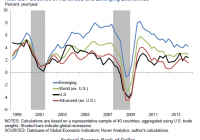
Marc Faber is of the opinion that investors need to remain diversified across asset classes in 2015 and I am in full agreement with this opinion. I am overweight on US equities and Indian equities for 2015 while I am underweight on Chinese Equities and Euro-zone equities. US Treasury bonds are an attractive investment for 2015 along with corporate bonds that provide an attractive yield. In an interview with Bloomberg , Marc Faber opined that he expects volatility and surprises in the coming year. In line with this view, Marc Faber suggested that investors should remain diversified across asset classes in the coming year. I am in full agreement with his views and this article discusses some interesting investment options for the coming year. I want to start with relatively safe assets and my first choice for 2015 is US Treasury bonds. I must add here that I am bearish on US Treasury bonds for the long-term. However, for 2015, I believe that Treasury bonds are a “must have” for the portfolio. As the chart below shows, the global economy is on a decline and the advanced economy (excluding US) is slowing down sharply. Even China’s growth for 2015 remains uncertain with negative surprises coming from the economic data. In such a global economy outlook, it is important to own Treasuries and I believe that US Treasuries will rally from current levels through 2015. In particular, the first half of 2015 will be better than the second half. Investors can therefore consider exposure to Vanguard Long-Term Government Bond ETF (NASDAQ: VGLT ) and the Vanguard Short-Term Bond ETF (NYSEARCA: BSV ). The second investment option in my radar is the corporate bond ETF. As US markets trend at record highs and US corporate profit remains robust, corporate bond ETF’s are an exciting investment option. The interest in corporate bonds is evident with the Vanguard Intermediate-Term Corporate Bond ETF (NASDAQ: VCIT ) witnessing robust fund inflow according to this report. The intermediate bond ETF provides a healthy SEC yield of 3.16%, making it an attractive investment option when the US economy and corporate profits are likely to be strong in 2015. The Vanguard Long-Term Corporate Bond ETF (NASDAQ: VCLT ) and the Vanguard Short-Term Corporate Bond ETF (NASDAQ: VCSH ) also provide a SEC yield of 4.38% and 1.68% respectively. I believe that investors can remain invested in these ETF’s through 2015. Gold (NYSEARCA: GLD ) has been my choice among safe assets in the past. However, I am not bullish on gold for the first half of 2015. I believe that a strong dollar will keep gold lower at least in the first half of 2015. Investors with a long-term view can however consider gradual exposure to gold at current levels. While the near-term outlook is negative, gold remains a good investment and a good currency with a 3 to 5 year investment horizon. My opinion is to have limited exposure to gold in 2015 as high exposure can potentially harm the returns prospects for the portfolio. Coming to equities, I believe that US equities will continue to perform well in 2015 and I have discussed reasons in the past for my view. The primary reasons being a resilient US economy, weak Euro-zone, Japan and Chinese economies and a strong job market to add to a the robust markets. However, I must caution here that the broad index (NYSEARCA: SPY ) might not continue to provide robust returns. Since March 2009, the US index is up by 200% and I don’t expect the same rate of upside to continue in the coming year. My view therefore is to remain selective in terms of picking stocks and sectors instead of exposure to the broad based index. With oil prices plunging, there are some very attractive opportunities in the oil and gas space and I recently wrote on Occidental Petroleum (NYSE: OXY ), which is a good pick for 2015 in my view. I also remain positive on Encana (NYSE: ECA ) among oil and gas stocks in the coming year. I believe that in terms of steady performance, the healthcare sector will remain a bright spot in the coming year and investors can consider exposure to the Vanguard Healthcare ETF (NYSEARCA: VHT ). I must also mention here that the US consumer confidence is at a record high since the financial crisis on the back of a stronger economy and improving jobs markets. I believe that for the first quarter of 2015, consumption based themes will do well. I am bullish on Wal-Mart (NYSE: WMT ) for the first quarter of the year and depending on the consumption pattern and improvement in the jobs market, the stock investment horizon can be extended. Among global markets, I am most bullish on Indian equities and I believe that the Indian markets can be a star performer in the coming year. The Indian government has promised big reforms in the budget coming up in March 2015 and I believe that there is likely to be a pre-budget rally. Further, interest rates have peaked in India and with inflation cooling down; I expect a series of rate cuts in the coming year. That will provide an additional boost to the markets and interest rate sensitive sectors such as banking and infrastructure. In the banking space, my stock pick is ICICI Bank (NYSE: IBN ), which is India’s largest private sector bank. As reforms unfold and as interest rates cuts come in 2015, the bank is best positioned to benefit. Besides the option of directly investing in Indian markets, investors can consider investment through ETF’s. Considering the broad markets, iShares India 50 ETF (NASDAQ: INDY ) and iShares MSCI India ETF (BATS: INDA ) are also good investment options. While the former gives exposure to 50 largest Indian stocks, the latter gives exposure to large and mid-sized companies in India. In conclusion, 2015 is likely to be volatile and the best strategy is diversification. On an overall basis, I remain overweight on US and Indian equities and underweight on China and Euro-zone equities. However, investors need to apply bottom-up approach to investing even in attractive markets. I expect oil to remain largely in the range of $50 to $70 per barrel for the coming year. However, I do expect some oil and gas companies to perform well and I have mentioned some names in the article.

SCHA Looks Like A Nice Complimentary Holding To Enhance A Diversified Portfolio

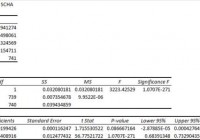
Summary I’m taking a look at SCHA as a candidate for inclusion in my ETF portfolio. The expense ratio relative to the diversification is fantastic. The moderate level of correlation to major funds helps SCHA find a place. I wouldn’t consider SCHA as a core holding, but I may choose it for 5% to 10% of the portfolio. I’m not assessing any tax impacts. Investors should check their own situation for tax exposure. Investors should be seeking to improve their risk adjusted returns. I’m a big fan of using ETFs to achieve the risk adjusted returns relative to the portfolios that a normal investor can generate for themselves after trading costs. I’m working on building a new portfolio and I’m going to be analyzing several of the ETFs that I am considering for my personal portfolio. One of the funds that I’m considering is the Schwab U.S. Small-Cap ETF (NYSEARCA: SCHA ). I’ll be performing a substantial portion of my analysis along the lines of modern portfolio theory, so my goal is to find ways to minimize costs while achieving diversification to reduce my risk level. What does SCHA do? SCHA attempts to track the total return of the Dow Jones U.S. Small-Cap Total Stock Market Index. At least 90% of funds are invested in companies that are part of the index. SCHA falls under the category of “Small Blend”. Does SCHA provide diversification benefits to a portfolio? Each investor may hold a different portfolio, but I use (NYSEARCA: SPY ) as the basis for my analysis. I believe SPY, or another large cap U.S. fund with similar properties, represents the reasonable first step for many investors designing an ETF portfolio. Therefore, I start my diversification analysis by seeing how it works with SPY. I start with an ANOVA table: (click to enlarge) The correlation is about 90%. This is a fairly moderate correlation. It’s low enough that we have a chance at lowering the risk level of a total portfolio so long as the standard deviation is not too high. Standard deviation of daily returns (dividend adjusted, measured since January 2012) The standard deviation isn’t great, but it is acceptable. For SCHA it is .9294%. For SPY, it is 0.7300% for the same period. SPY usually beats other ETFs in this regard, so that isn’t a major issue. Mixing it with SPY I also run comparisons on the standard deviation of daily returns for the portfolio assuming that the portfolio is combined with the S&P 500. For research, I assume daily rebalancing because it dramatically simplifies the math. With a 50/50 weighting in a portfolio holding only SPY and SCHA, the standard deviation of daily returns across the entire portfolio is 0.8094%. If we drop the position to 20% the standard deviation goes down to .7559%. In my opinion, that’s still too high. Once we drop it down to a 5% position the standard deviation is .7357%. If I include SCHA, I would probably seek to use an exposure level around 5%, but could potentially go as high as 10%. Why I use standard deviation of daily returns I don’t believe historical returns have predictive power for future returns, but I do believe historical values for standard deviations of returns relative to other ETFs have some predictive power on future risks and correlations. Yield & Taxes The distribution yield is 1.43%. The SEC yield is 1.30%. In my opinion, these yields make the index less appealing for a retiring investor, but an argument could still be made for a position as large as 5% because of the correlation being down to almost 80%. I’m not a CPA or CFP, so I’m not assessing any tax impacts. If I were using SCHA, I would want it to be in a tax exempt account to remove any headaches associated with frequent rebalancing. Expense Ratio The ETF is posting .08% for an expense ratio. I want diversification, I want stability, and I don’t want to pay for them. The expense ratio on this fund is still within my comfort range. This expense ratio is lower than SPY, but higher than (NYSEARCA: SCHX ). SCHX is an alternative to SPY that I found more appealing. Market to NAV The ETF is at a .07% premium to NAV currently. I’m not thrilled about that, but it isn’t terrible. However, premiums or discounts to NAV can change very quickly so investors should check prior to putting in an order. Largest Holdings The portfolio is wonderfully diversified. The largest position is extremely short duration bonds at .67%. I suspect the ETF is using this as a method for storing dry powder rather than holding cash. That would be a fine solution in my book and I don’t mind seeing it in the portfolio as long as it is less than 1% of assets. I don’t want to be paying an expense ratio on a significant amount of funds that are not invested. For the real investments of the fund, the vast majority are under .30%. This is spectacular diversification and it is remarkable to find this with an expense ratio of only .08%. (click to enlarge) Conclusion I’m currently screening a large volume of ETFs for my own portfolio. The portfolio I’m building is through Schwab, so I’m able to trade SCHA with no commissions. I have a strong preference for researching ETFs that are free to trade in my account, so most of my research will be on ETFs that fall under the “ETF OneSource” program. So far, I like SCHA for exposure to the smaller capitalization side of the market. The moderate correlation helps to mitigate the higher standard deviation of returns and makes this ETF look like a nice fit for a small portion of the portfolio. For me, that’s 5 to 10%. I’d be concerned about investors considering it a core asset and putting in 20% or more, but it looks like a nice piece for that small position in the portfolio. Additional disclosure: Information in this article represents the opinion of the analyst. All statements are represented as opinions, rather than facts, and should not be construed as advice to buy or sell a security. Ratings of “outperform” and “underperform” reflect the analyst’s estimation of a divergence between the market value for a security and the price that would be appropriate given the potential for risks and returns relative to other securities. The analyst does not know your particular objectives for returns or constraints upon investing. All investors are encouraged to do their own research before making any investment decision. Information is regularly obtained from Yahoo Finance, Google Finance, and SEC Database. If Yahoo, Google, or the SEC database contained faulty or old information it could be incorporated into my analysis. The analyst holds a diversified portfolio including mutual funds or index funds which may include a small long exposure to the stock.