Tag Archives: nreum

Will Recent Strong Gains In The Greek ETF Last?

Although the Eurozone markets have perked up on the recent QE launch, Greece continues to trouble investors. The country is still deep in debt and its unemployment rate is a nagging concern. The malaise intensified in December 2014 when the Greek prime minister Antonis Samaras called snap elections in the wake of the political strife in Greece and lost it (read: Polls Indicate Syriza Win: More Pain for Greek ETF? ). Anti-austerity party Syriza came to power and kept on negotiating with the ECB to reach a debt-deal while reinforcing the cancellation of steep austerity measures. At the time of election, the leader of Syriza had vowed to cancel the austerities and quite expectedly, the intent to end austerities is flaring up a disagreement with the EU/IMF, lenders risking Greece’s stay in the Eurozone bloc. Last week, in an interview to Germany’s Stern magazine , Prime Minister Alexis Tsipras promised that Greece will be “a completely different country,” in the next six months. This positive vibe charged up the waning Greece ETF, at least for the time being, and pushed up Global X FTSE Greece 20 ETF (NYSEARCA: GREK ) by over 20% in the last five trading sessions (as of February 13, 2015), though the fund has added just 3% in the last one month. Shares of the country’s biggest bank National Bank of Greece S.A. (NYSE: NBG ) spiked on hopes that the country will retain its spot in the Euro bloc and get assistance from the ECB. The shares of NBG skyrocketed more than 45% in the last five trading sessions (as of February 13, 2015). Will the Uptrend Last? While the market was anticipating a positive outcome, the chances of a clean ending to this situation seem less likely. On February 16, dialogues between the foreign creditors and Athens failed as the latter proposed a six-month extension request of its international bailout package. If the parties fail to reach a unanimous decision by February 28, the date which connotes the expiry of the four-year bailout program offered to Greece, the country and its banks would crash into a cash crunch. The European Central Bank will decide on February 18 whether an emergency lending to the Greek banks, which definitely carry high interest rates, should be continued or not. Notably, the country is due for a hefty loan repayment in March, per Reuters. The Greece banks are already seeing signs of a capital flight at an expected rate of 2 billion euros ($2.27 billion) a week. Overall, Greece is in for trouble yet again and investors have nibbling doubts on this risky market. The Athens Stock Exchange General Index slipped more than 3.8% at the close on February 16 as drumbeats of losses were heard after the country failed to strike a debt deal (read: Greek ETF Faces Volatility on ECB Move ). Financials make up about 30% of GREK and is an important driver to the returns of the fund and the country’s current economic issues. The fund currently has a Zacks ETF Rank #3 (Hold). Bottom Line Investors should remember that despite the recent takeoff, GREK has been on a sale with a P/E (ttm) of 11 times versus the biggest European ETF Vanguard FTSE Europe ETF’s (NYSEARCA: VGK ) P/E of 15 times and the Euro zone powerhouse Germany’s iShares MSCI Germany’s (NYSEARCA: EWG ) 14 times of P/E (ttm) figure. So, a bit of a way up was probably long in arrears for GREK. This is more so given Greece’s Q3 2014 growth rate (0.7%) outstripped all other Eurozone countries (read: What is Behind the Greek ETF Surge? ). However, if the country fails to negotiate with its Eurozone associates, the rosy economy which Greece has just started to enjoy might wither away before being in full bloom. Moreover, a discord will find other Eurozone countries from Malta to Greece’s biggest creditor – Germany – in dire straits. So, all eyes should be now on the progression of the debt deal before one can surely predict the fate of the euro, Greece and the broader European market.

What Are The Limitations And Consequences Of ETFs?

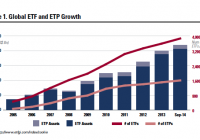
By Niall H. O’Malley of Blue Point Investment Management Before delving into the limitations and unintended consequences of Exchange-Traded Funds (ETFs) it is important to define an ETF. Where did these investment vehicles originate? How significant are ETFs to investors? The first Exchange Traded Fund was launched in January 1993 by State Street Global Advisors under the ticker symbol (NYSEARCA: SPY ). The ETF was designed to track the value of the S&P 500 Index. It is quoted at 1/10 of the value of the S&P 500. The ETF was marketed as a “spider”, shorthand for Standard & Poor’s Depository Receipt (SPDR), traded on the New York Stock Exchange. The popularity of the S&P 500 SPDR led to a family of products. Other fund management companies, such as Barclays – creator of iShares – and Vanguard, followed suit in short order and the universe of ETFs rapidly expanded. The S&P 500 SPDR is still one of the most popular ETFs. Its average volume exceeds 110 million shares on a daily basis, and its assets under management are over $171 billion. 1 How Significant are Exchange Traded Funds and Related Exchange Traded Products? As a financial innovation that is approaching its 22nd anniversary, it is fair to say Exchange Traded Funds and the related Exchange Traded Products have been revolutionary. Investors have entrusted over $2 trillion to this financial innovation. ETFs have grown in popularity since they offer investors cost effective diversification to markets, sectors, currencies and commodities. ETFs have evolved into a family of closely related investment vehicles known as Exchange Traded Products (ETPs). ETPs include Exchange Traded Notes, Leveraged ETFs, Inverse ETFs, Exchange Traded Commodity Pools, Exchange Traded Vehicles (ETV) and Active ETFs. The success of ETFs and other Exchange Traded Products is quite striking, especially when one considers the number of companies traded on the New York Stock Exchange and the NASDAQ, 6,251 2 , compared to the number of global ETFs and ETPs, 5,463. Most ETFs and ETPs are traded in the U.S. There are 1,686 ETFs and ETPs that invest in just U.S. securities and 3,777 that invest in varying levels of international securities. Over 95% of the ETFs and ETPs are passively managed. Once the exchange traded basket is established the composition of the ETP is on autopilot, i.e. it is not actively managed. Note: Exchange Traded Products is often used as an umbrella term. In the chart above Exchange Traded Funds growth is detailed in the top line and growth in other exchange traded structures is detailed in the bottom line. What Are Some of the Benefits of ETFs? Cost Effective Diversification The primary strength of Exchange Traded Funds is the cost effective passive diversification they offer an investor. As an example, exposure to the S&P 500 Index can be gained through the purchase on one share of the S&P 500 SPDR ETF rather than purchasing 500 separate securities. The expense ratio for the S&P 500 SPDR is 0.09% which is very low. The average institutional ETF expense ratio is 0.562%. ETF holdings vary widely from less than 10 securities to over 16,000 securities. An ETF, like a mutual fund, pools the assets of multiple investors; however, ETFs tend to be significantly less expensive and offer instantaneous pricing information during the trading day rather than once daily pricing as is the case with mutual funds. Each share in an ETF represents an undivided interest in the underlying securities less the expense ratio. To understand the pricing variations, an investor has to factor in the type of ETF. An additional consideration with mutual funds is the share class and whether a sales fee is taken. When considering mutual funds, the investor also needs to factor in the fee structure. The table below provides insight into the expense ratio variations in open end funds. Both mutual funds and ETFs are considered open-end funds, i.e. there is no limitation on the number of shares that they can issue. You will notice in the table below that passive ETFs do not have mutual fund sales commissions referred to as front-end load/ No load and back-end load/ level load. Deep Liquidity for Popular ETFs The larger ETFs offer deep liquidity, e.g. the iShares MSCI Emerging Markets ETF (NYSEARCA: EEM ) – founded by Barclays and now managed by BlackRock – has an average daily volume that exceeds 60 million shares and assets under management exceed $36 billion. However, not all ETFs are highly liquid. In fact, liquidity varies widely among ETFs. Important liquidity considerations are the average trading volume, assets under management, plus the strength of the counterparties – authorized participants – that create and redeem the ETF shares. Another consideration is the complexity of the ETF in terms of the number of securities held. Each security is dependent on a functioning market for price discovery which can be interrupted by trading halts and “flash crashes”. New Investment Approaches Investors, both individual and institutional, can use ETFs to gain rapid, cost effective diversification to markets, sectors and various strategies, e.g. growth and/or value. The explosion of the ETF universe has expanded the toolset available to investors. A popular investment approach is a combination of active and passive investing. Investors may also take an active management approach incorporating individual securities or actively managed funds. This is referred to as “seeking alpha”. The investor is seeking a return above the market return represented by market indexes. Some investors prefer to pursue a purely passive approach with ETFs and ETPs which limits down side risk offering a weighted average return. What are Some Limitations and Unintended Consequences of ETFs? Short-term Trading, Taxes and Lower Realized Price Perhaps the biggest ETF limitation is behavioral. ETFs are credited with being less work. All an investor has to do is buy the basket of securities represented by an ETF and the benefits of diversification are gained. While it is true that ETF investing involves less work, it creates an unintended consequence of creating less conviction in the face of adversity – a market selloff. This increases the chance that the investor will become more reactive and short-term oriented. For taxable investors, this introduces the higher short-term capital gains rate. It is important to note that taxes are not the only cost. A potentially even greater cost is incurred when an investor sells during a market selloff and realizes a loss. Performance Limitation – The Best Return is an Average/Weighted Average Return If you had a child, would you encourage them to get Cs in school? The frequent encouragement from parents is to seek As and Bs. Why does the same rule not apply to your investments? How often does an index double? The answer is not that often. When an investor invests in an ETF, it is important to realize that they are electing to receive an average return for the invested amount. An average grade in school is a C. The return of an ETF is the weighted average of the underlying securities less the expense ratio. In short, while the ETF assets benefit from diversification there is a performance limitation. A Less Transparent Issue – Tracking Error & Counterparty Risk An ETF’s market price can trade at a premium or a discount to the value of its underlying securities. Wider bid/ask spreads occur when an ETF or security is thinly traded which creates additional investment costs. The creation and redemption of ETF units is dependent on counter parties that are referred to as authorized participants. An ETF fund manager enters into contractual relationships with one or more authorized participants. Authorized participants create ETF fund shares in large increments – typically 50,000 fund shares. The authorized participant or participants seek to minimize pricing differences between the market value of underlying ETF securities and the net asset value of the ETF. Authorized participants seek to arbitrage the pricing differences but are dependent on functioning markets and stability of their broker dealer operations. Flash crashes and other market disruptions associated with high frequency trading arbitrage can create tracking error. Structure Risk As the popularity of ETFs has grown, it has given way to an alphabet soup of Exchange Traded Products which include alternative ETFs, Exchange Traded Notes (ETNs), alternative ETFs, exchange traded vehicles (ETVs), exchange traded commodities or currencies (ETCs), and other types of structures. It is important to note that the product structures of the newer ETPs in turn create unique risks for investors. From a structure and regulatory perspective, ETFs are open-ended investment companies that offer investors an undivided interest in the underlying securities of the fund less expenses. The same is not true with Exchange Traded Notes (ETNs). An an ETN is just a credit obligation from the issuer, i.e. there is no collateral. The credit obligation is only as good as the balance sheet of the issuer. This became a painful lesson for investors in the Lehman Brothers ETN products as they did not own the underlying collateral, and therefore, became unsecured creditors in the Lehman bankruptcy. Alternative ETFs give investors the potential to invest in investment options that are leveraged and/or inversely correlated to its index benchmark. Typically, alternative ETFs are designed to generate daily returns that are a positive or negative multiple of its benchmark, e.g. stock indexes, currencies and commodities. The math of daily settlements introduces the risk of significant tracking error, and introduces a tax liability that does not exist with traditional ETFs. The primary collateral for alternative ETFs are the derivative contracts and money market instruments used to create the leveraged or inverse exposure. Local Firm Participation A Bethesda, Maryland firm, ProShares, is the world’s largest provider of leveraged and inverse ETFs. ProShares has grown from one fund in 2006 to over 145 alternative ETFs. Another Bethesda, Maryland, based firm is AdvisorShares which offers 28 actively managed ETFs. Actively managed ETFs were first approved by the Securities and Exchange Commission in 2008. The actively managed ETF adds an active management component to the ETF structure that has otherwise been passively managed. T. Rowe Price has received regulatory approval to issue actively managed ETFs. Legg Mason has also received approval from the Securities and Exchange Commission to begin issuing actively managed ETFs. Investment Considerations Before making any investment, it is important to identify your goals and understand the limitations and opportunities associated with the investment you are considering. Do you want the weighted average return? Faced with a market selloff do you have conviction about your investment? Are you familiar with the fund manager? What is the underlying collateral? Exchange Traded Funds and Products have expanded the investable universe for investors. One of the most important benefits that ETFs and ETPs offer is their ability to diversify a portfolio. This is especially true in emerging and developing markets where investment options may not otherwise be accessible. Whether investing in an ETP or a listed company, it is important to research your investment. Due diligence is a key consideration that should not be overlooked whether investing passively, actively or in a blended approach. Sources: – https://www.spdru.com/?internalR edirect=https%3A%2F%2Fwww. spdru.com%2F&_new_user=1#/ content/debunking-myths-and-common-misconceptions-of-etfs – https://www.spdru.com/?internalR edirect=https%3A%2F%2Fwww. spdru.com%2F&_new_user=1#/ content/9-questions-every-etf-investor-should-ask-before-investing – https://www.fidelity.com/learningcenter/investment-products/etf/ drawbacks-of-etfs – http://www.forbes.com/sites/ rickferri/2013/09/02/etf-fees-creephigher/ – https://www.fidelity.com/ viewpoints/active-trader/no-stopping-ETFs – http://www1.nyse.com/about/listed/ nya_characteristics.shtml – http://www.lipperweb.com/ Research/Fiduciary.aspx – http://etfdb.com/compare/marketcap/ – http://www.ici.org/pdf/per20-02.pdf – http://www.etfgi.com/index/cookie Endnotes : 1 ETF Database Top 100 ETFs by Assets 10/16/14 NYSE 3,296 and NASDAQ 2,955 as of 10/16/14 2 ETFs 3,868 and 1,595 ETPs

The 6 Best Passive Large-Cap ETFs

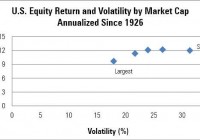
By Michael Rawson The S&P 500 outperformed 80% of active managers in 2014 and beat the small-cap Russell 2000 Index by more than 8 percentage points. Strong fund flows reflected investor preference for large-cap funds as the three exchange-traded funds with the strongest flows in 2014 each track the S&P 500, an index of large-capitalization stocks. While the S&P 500 is the most popular, it is not the only large-cap index that investors can choose. A total stock market index fund is usually the most efficient way for index investors to get exposure to the U.S. stock market because they offer comprehensive coverage of the market with very low turnover. However, there are at least two scenarios where it could make sense to hold separate size segment funds. They could be appropriate for investors who want to give an overweighting to certain size segments, such as small-cap stocks, when they believe that segment will outperform. However, it is very difficult to consistently get these calls right. Because different size segments tend to exhibit different risk and return characteristics, investors could also use these funds to exercise more control over their strategic portfolio allocations. In addition, investors may use size segment funds to balance out a portfolio of active managers. The chart below illustrates the annualized volatility and return for stocks sorted by market capitalization and grouped by quintile dating back to 1926. While smaller-cap stocks have generally offered higher returns over the very long term, there have been several market cycles that favored different size segments. The S&P 500 beat the Russell 2000 each year from 1994 through 1998, but that reversed in each year from 1999 through 2004. – source: Morningstar Analysts There is no industry-agreed-upon definition for large cap , so each index provider defines the large-cap universe in its own way. Morningstar defines large cap as all of the largest stocks, which in aggregate make up 70% of the market value of all stocks; this currently corresponds to stocks with a market cap larger than $17 billion. In terms of index performance, it’s a statistical dead heat. Because the indexes have similar risk and return profiles, the choice of which ETF to use largely comes down to factors such as fees, liquidity, tax efficiency, and personal issues such as which brokerage platform is used or how the other assets in the portfolio are positioned. There are 11 ETFs that track market-cap-weighted passive indexes, excluding mega-cap and total stock market funds that also land in the large-blend Morningstar Category. In terms of fees, they charge between 0.04% and 0.20%. While these fees are low relative to the average large-blend mutual fund, which charges 1.1%, there is no reason to pay more than necessary. We can eliminate the funds charging 0.20%. In fact, it is somewhat odd that iShares is willing to charge just 0.07% for iShares Core S&P 500 (NYSEARCA: IVV ) but charges 0.15% for iShares Russell 1000 (NYSEARCA: IWB ) , which offers similar exposure. The expense ratio is just one aspect of cost. Trading costs also have an impact on total return. While the underlying stocks in each of these indexes are mostly the same and are all liquid, some of the ETFs with fewer assets trade less and have wider bid-ask spreads. For example, the iShares MSCI USA (NYSEARCA: EUSA ) has just $57 million in assets and trades less than $1 million of volume a day. The average bid-ask spread of 17 basis points would quickly eat into the returns of a frequent trader. In contrast, SPDR S&P 500 ETF (NYSEARCA: SPY ) trades more than $20 billion a day, and its bid-ask spread is frequently less than 1 basis point. U.S. equity ETFs tend to be tax-efficient because of their ability to transfer low-cost-basis shares out of the portfolio through in-kind redemptions. However, there have been instances where they have issued capital gains. This is more likely to happen to ETFs with a smaller asset base or trading volume or that happen to switch indexes. The only ETF in this group that has issued a capital gains distribution in the past 14 years is SPDR Russell 1000 ETF (NYSEARCA: ONEK ) . Personal factors also enter into the equation. Brokers such as Schwab, Vanguard, and Fidelity offer trading commission discounts for using certain ETFs (check with your broker). A $10 savings per trade can have a big impact for those investing small sums or making frequent trades. Investors should also consider how their choice will have an impact on their overall portfolio. Investors who already have assets with one index family may want to stick with that suite of index products. For example, if you have a Russell 2000 fund for small-cap exposure, you may want to use a Russell 1000 fund for large-cap exposure to avoid overlaps. After eliminating the higher-cost, less-liquid, and less-tax-efficient ETFs from the list of 11, we are left with IVV, SPY, IWB, Vanguard S&P 500 ETF (NYSEARCA: VOO ) , Vanguard Large-Cap ETF (NYSEARCA: VV ) , and Schwab US Large-Cap ETF (NYSEARCA: SCHX ) . These funds track the four market-cap-weighted indexes in the table below. S&P 500 Unlike the other indexes listed, the constituents of the S&P 500 are selected by a committee that has some discretion over which stocks make it into the index and has stricter rules regarding public float and profitability for new index additions. These rules do not have much of an impact for large caps but can have a bigger impact for small caps. In addition, S&P does not follow a set rebalancing calendar, which helps to keep turnover low. Of the four indexes, S&P has the highest average market cap and includes the fewest mid-cap stocks. The lower exposure to mid-caps explains why the S&P 500 slightly underperformed the other indexes. However, the S&P MidCap 400 outperformed most mid-cap indexes. Of the three ETFs tracking the S&P 500, we prefer IVV or VOO over SPY. While SPY is the most liquid, it is technically organized as a unit investment trust, a more restrictive legal structure, which prevents it from engaging in securities lending, reinvesting dividends, and using index futures. Consequently, SPY has lagged the S&P 500 by more than its expense ratio. CRSP US Large Cap Index This benchmark is more comprehensive than the S&P 500. It targets the largest 85% of the market and applies buffering rules to limit turnover. This sweeps in both large- and mid-cap stocks. VV adopted this index in 2013. Vanguard has a history of working with index providers to refine best practices and negotiate better fees. In fact, it previously switched some index funds to MSCI from S&P. Russell 1000 The Russell 1000 Index dips even deeper into mid-cap territory. The average market capitalization of its holdings is $54 billion compared with $72 billion for the S&P 500. The index includes all but six of the stocks that are in the S&P 500 as well as many more mid-caps. IWB is lower-cost and has better liquidity than the ETFs from Vanguard and SPDR that track the same index. Dow Jones US Large Cap Total Stock Market This index tracks approximately the 750 largest U.S. stocks and is available through SCHX. Schwab offers a suite of ETFs based on Dow Jones indexes. The Dow Jones Small Cap Total Stock Market Index includes the next largest 1,750 stocks, while the mid-cap index encompass 501st to 1,000th largest stocks. S&P acquired the Dow Jones indexes business in 2010. Schwab’s size segment funds have the lowest expense ratios in their respective categories, and liquidity has improved as these funds have gained assets. Disclosure: Morningstar, Inc. licenses its indexes to institutions for a variety of reasons, including the creation of investment products and the benchmarking of existing products. When licensing indexes for the creation or benchmarking of investment products, Morningstar receives fees that are mainly based on fund assets under management. As of Sept. 30, 2012, AlphaPro Management, BlackRock Asset Management, First Asset, First Trust, Invesco, Merrill Lynch, Northern Trust, Nuveen, and Van Eck license one or more Morningstar indexes for this purpose. These investment products are not sponsored, issued, marketed, or sold by Morningstar. Morningstar does not make any representation regarding the advisability of investing in any investment product based on or benchmarked against a Morningstar index.