Tag Archives: nasdaq

RSX: July Review

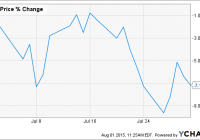
Summary The Market Vectors Russia ETF declined by 7.17% in July. The main reason for the decline were weak oil prices. The Russian economy is under pressure from declining oil prices once again. The Bank of Russia has to choose whether to fight inflation or to support the GDP growth. Weak oil prices will probably weigh on RSX also in August. The Market Vectors Russia ETF (NYSEARCA: RSX ) lost 7.17% of its value in July. The main reasons were declining oil prices and related problems of the Russian economy. Declining oil price leads to a weakening Russian Ruble and a weak Ruble leads to higher inflation. Russia needs to support its currency by hiking interest rates; however, high interest rates damage the economic growth. As a result, the Russian central bank needs to choose between lower interest rates resulting in higher GDP growth but higher inflation and higher interest rates resulting in lower inflation but lower GDP growth (stronger GDP decline respectively). The Russians have chosen GDP growth for now, as the Bank of Russia cut its key interest rate to 11%. The portfolio of RSX experienced some minor changes during July. Gazprom (OTCPK: OGZPY ) and Lukoil (OTCPK: LUKOY ) are not the biggest holdings anymore, as they were overtaken by Magnit. All of the top three holdings have weight over 7%. No new companies got amongst the top 15 holdings; however, the cumulative weight of the top 15 declined slightly, from 75.83% to 73.64%. Source: own processing, using data from vaneck.com Out of the 15 biggest holdings, only two companies experienced a positive share price development in July. Shares of Transneft and Uralkali grew by 5.3% and 3.35% respectively. The biggest decline was recorded by the telecommunication company Mobile TeleSystems (NYSE: MBT ). The company lost 16% of its value. Most of the decline occurred in the first part of the month and wasn’t related to any announcements of the company, as Q2 results will be released in August and the acquisition of NVision Group was announced in the second half of July. The oil & natural gas producers were negatively impacted by weak oil prices. Brent prices declined by 16% and WTI prices declined by more than 17% in July. Natural gas prices were relatively stable. Source: own processing, using data from Bloomberg Although the last three months were negative for RSX and the Russian share market, RSX is still 16% higher year to date. Out of the 15 biggest holdings, only shares of Yandex (NASDAQ: YNDX ) have declined since January (-24%) and the share price of Gazprom is unchanged. On the other hand, London listed shares of Surgutneftegas (OTCPK: SGTPY ) grew by 33%. Source: own processing, using data from Bloomberg The chart below shows the 10-day moving correlations between RSX and the S&P 500 and between RSX and oil prices represented by the United States Oil ETF (NYSEARCA: USO ). The correlation between RSX and the S&P 500 was high and relatively stable during July. On the other hand, the correlation between RSX and USO shows signs of instability. There was high positive correlation in the first and in the last part of the month but a huge decline in the middle of July. As a result, the oil price was declining over the whole of July but RSX managed to recover a part of the early month losses in the middle decade, only to decline even deeper during the last part of the month. Source: own processing, using data from Yahoo Finance Although RSX declined significantly in July, its volatility measured by the 10-day moving coefficient of variation was relatively stable, moving in the 2%-3% range for the better part of the month. Source: own processing, using data from Yahoo Finance Some of the more interesting news: Gazprom continues with preparations of the Nord Stream II project that should bring more natural gas to western Europe, via a gas pipeline beneath the Baltic Sea. Nord Stream II should build on the successful Nord Stream I project. The first Nord Stream gas pipeline was opened in November 2011. Nord Stream II should be completed by 2020. Meetings between Gazprom, OMV and BASF representatives, regarding the Nord Stream II project, took place in July. Gazprom has also announced that it will enter into partnership with NIPIGAZ in order to design and construct the Amur Gas Processing Plant. The Amur Gas Processing Plant should become the biggest gas processing enterprise in Russia and it should also include the world biggest helium production facility. Multicomponent gas from Gazprom’s deposits in the Irkutsk and Yakutia regions should be delivered via the Power of Siberia gas pipeline to the Amur Gas Processing Plant, where methane, ethane, propane, butane, pentane-hexane fraction and helium will be produced. Gazprom Neft (OTCQX: GZPFY ) announced completion of the first production well at Vostochno-Messoyakhskoye oil field. The field should start full-scale commercial production in late 2016, after the oil pipeline connecting the field to the Zapolyarne-Purpe pipeline system is completed. Gazprom Neft plans to expand also its downstream operations. It announced that it has secured the approval for construction of a new generation combined refining unit at its Moscow refinery. The new refining unit should boost light petroleum products production of the refinery by 40% and the refining efficiency should improve by 20%. Yandex has launched an interesting new product, a delivery services aggregator. The service is primarily designed for internet stores; however, it may be useful for some retail clients as well. According to the company, 83% of Russian internet users live outside Moscow but 47% of Russian internet store users live in Moscow. One of the reasons is that many internet stores don’t deliver goods to Russian regions, due to high costs, complicated logistics and administrative barriers. Yandex wants to support online shopping in Russian regions and of course get its share of the pie. It is possible that this is one of Yandex’s first steps on the way to expanding its activities into the online shopping industry. Rosneft (OTC: RNFTF ) keeps on cooperating with its foreign partners. On July 16 , the company announced that it completed pilot drilling at the North-Komsomolskoye field in collaboration with Statoil. Rosneft believes that the field holds at least 600 million tonnes of oil. On July 30 , Rosneft announced that it filed a joint bid with Exxon Mobil (NYSE: XOM ) for Mozambique license round. Mobile TeleSystems signed a binding agreement to acquire IT solutions provider NVision Group JSC for RUB 15 billion ($244 million). NVision is the developer and owner of TeleSystem’s billing system. This transaction should help the leading Russian telecommunications operator to improve its billing services, to offer complementary solutions to its clients and to reduce spending on in-house IT. Conclusion The Russian economy is under pressure of declining oil prices again. The low oil prices lead not only to weaker currency and lower GDP but also to lower RSX prices, as a significant part of RSX’s portfolio is created by shares of oil & natural gas producers. Although the June data indicated that the Russian economy may have reached its bottom , the recent oil price decline may prove this assumption to be incorrect. The decline of RSX should continue also in August, unless the oil prices start to recover. Editor’s Note: This article discusses one or more securities that do not trade on a major U.S. exchange. Please be aware of the risks associated with these stocks. Disclosure: I/we have no positions in any stocks mentioned, and no plans to initiate any positions within the next 72 hours. (More…) I wrote this article myself, and it expresses my own opinions. I am not receiving compensation for it (other than from Seeking Alpha). I have no business relationship with any company whose stock is mentioned in this article.
Tungsten: Under Appreciated And Incredibly Valuable

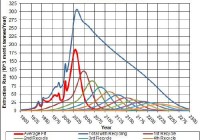
Summary Tungsten is a valuable and under appreciated commodity. Tungsten has certain properties such as durability, a high melting point, and extreme hardness that allow it act as an unparalleled resource in manufacturing. Currently Tungsten supply is diminishing and will likely experience a price hike. Introduction In the midst of environmental concerns and resource scarcity, one valuable commodity often goes overlooked. Generally when people think of diminishing resources, their minds wander to gold, oil (or somewhat recently with California) water. Interestingly, there are dozens of valuable and economically important resources that are getting extracted at unsustainable levels. I will include a link here . I will also spend time (in separate articles) discussing each commodity, its current condition, and its future economic impact. I have already discussed the importance of lithium (particularly in regards to the rise of lithium-ion batteries and consumer electronics). Today I will discuss, what I believe to be, an economically, militarily, and geopolitically essential commodity. The resource I am talking about is the underappreciated metal Tungsten. What is Tungsten? Tungsten is one of the hardest and most durable substances on Earth. Its MOHR’s hardness level falls only beneath diamonds. Tungsten is only economically exploitable in a few specific regions (which I will get to in a minute) due to the geologic conditions necessary for its formation. It can be manufactured into incredibly durable products. Tungsten’s value comes from its hardness. Tungsten is virtually immune to corrosion, and it has a very high melting temperature ( 3,422 degrees celsius ). From the mid-19th century to the mid 20th century, Tungsten was study and utilized as an alloy to improve steel making processes. It was unrivaled until WW2 when supply shortages caused countries to look for alternatives. In some capacity, Molybdenum, Chromium, Corundum, Vanadium, and Nickel were/are utilized as alternatives or additives to tungsten. Tungsten still remains a crucial part of steel making, and the aforementioned metals also have their own supply issues. Formation The formation of economically viable tungsten deposits is related to the intrusion of granites during the formation of mountain ranges (orogenic process) resulting from colliding tectonic plates. Tungsten gets enriched during granite crystallization, and can form a pegmatic tungsten deposit from the last bit of granitic melt. It is released into a hot hydrothermal fluid. Uses for Tungsten Here are a few highly useful sites for studying tungsten: here & here & here . Tungsten is used in the filaments of incandescent light bulbs. Tungsten can also be made into tungsten carbide (a tungsten/carbon compound), which is essential in creating cutting tools, industrial machinery, armor-piercing rounds, abrasives, jewelry, and other assorted tools and instruments. Tungsten’s high melting point allows it to be utilized in arc wielding electrodes and forging processes. Tungsten is also important to the petroleum industry for drill bit manufacturing. Recycling Efforts Based on present and projected tungsten production and usage and maximum recycling efforts, the world will run out of tungsten by 2300. This chart assumes tungsten is recycled to its full-extent and does not take into account future economic factors, pricing, innovation, need, etc. A visual example of diminishing returns. Tungsten World Supply & Regional Concentration According to British Geologic Survey tungsten is one of the most at risk metals on Earth, and look who the leading producer is. Tungsten is most heavily concentrated in notoriously anti-U.S. regions such as China and Russia. While there are some notable reserves in the United States, there is simply not enough tungsten in the U.S. alone to match demand. 83.3% of production comes from China. Regional conflict could affect the inflow or pricing of tungsten. The U.S. imports the vast majority of tungsten, and the U.S. relies on trade deals with China (which could be affected by geopolitical factors). Who is Affected Most & How to Invest Any manufacturer that relies on tungsten will shoulder a cut into marginal profits from a commodity price hike. As economically extractable supply diminishes, miner’s will be forced to raise rates and increase prices to compensate for the additional cost of extraction. Sectors and companies that rely on tungsten include: Defense: Lockheed Martin (NYSE: LMT ) Boeing (NYSE: BA ) Orbital ATK (NYSE: OA ) General Dynamics (NYSE: GD ) iShares U.S. Aerospace & Defense ETF (NYSEARCA: ITA ) Steel: Market Vectors Steel ETF (NYSEARCA: SLX ) U.S. Steel Corporation (NYSE: X ) Solar Energy: Guggenheim Solar ETF (NYSEARCA: TAN ) First Solar (NASDAQ: FSLR ) Drill bit Manufacturers: Schlumberger (NYSE: SLB ) National Oilwell Varco (NYSE: NOV ) Halliburton (NYSE: HAL ) How to Invest It is difficult to invest directly in tungsten. There are a variety of penny stocks, “golden opportunities”, and other risky money losers out there. Instead I will offer a few indirect plays to consider. Examples of Penny Stocks I’m not going to bother analyzing them because I think they’re all bad plays. Forgive me for not dealing with penny stocks. The Safest Idea for Investing in Tungsten The Market Vectors Rare Earth/Strategic Metals ETF (NYSEARCA: REMX ) is the best option I could find for investing in tungsten and rare earth metals. Historically, as technology and extraction methods have improved, REMX has seen a decline in price from increased supply. As tungsten supply continues to diminish, prices should start to increase dramatically in the long run. I believe this will occur once total extraction exceeds total remaining supply (roughly 2021). I prefer the ETF format because it helps reduce investing risk through diversification. REMX data by YCharts REMX REMX is designed to give investors a means of tracking the performance of publicly traded companies engaged in a variety of activities that are related to the mining, refining, and manufacturing of rare earth/strategic metals. It does not necessarily directly track commodity pricing, and it is considered an indirect investment in tungsten. REMX is a small-cap ETF with 42.71 million in total assets and an SEC yield of 0.81%. I personally feel rare earth metals are in decreasing supply and invaluable in today’s economy. However, it should be noted that tungsten is only one part of REMX’s overall holdings. REMX does not specify how much it of the portfolio is based on tungsten, tungsten is named as one of the top four materials including: cerium, manganese, titanium, and tungsten. 95% of REMX is allocated in basic materials, giving it more of a pure play into the rare earth metals market. REMX is internationally diversified as well, and its primarily regional focus is China (22%). Conclusion Tungsten is a valuable commodity that is diminishing in supply. Tungsten has unique properties that make it an invaluable resource in today’s economy. It is possible to capitalize on a market inevitability through buying tungsten exposure. It is important to avoid undue risk inherent in penny stocks with low AUM, so consider a larger mining ETF with indirect tungsten exposure. Images Citations: roperld.com British Geological Survey USGS.gov Editor’s Note: This article covers one or more stocks trading at less than $1 per share and/or with less than a $100 million market cap. Please be aware of the risks associated with these stocks. Disclosure: I/we have no positions in any stocks mentioned, and no plans to initiate any positions within the next 72 hours. (More…) I wrote this article myself, and it expresses my own opinions. I am not receiving compensation for it (other than from Seeking Alpha). I have no business relationship with any company whose stock is mentioned in this article.

Vanguard Long-Term Corporate Bond Index ETF: A Great Bond Option If You Don’t Mind The Duration

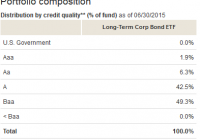
Summary The Vanguard Long-Term Corporate Bond Index ETF takes on some credit risk and quite a bit of duration risk to deliver better yields. The ideal exposure for bond investors would probably include other bond funds for more diversification on credit grades and durations. The low expense ratio is respectable. The Vanguard Long-Term Corporate Bond Index ETF (NASDAQ: VCLT ) is a solid bond fund. As I’ve been searching for appealing bond funds, I’ve found some of my favorites are from Vanguard. Given my distaste for high expense ratios, it should be no surprise that Vanguard products would be appealing. After looking through the portfolio, I think the holdings are fairly reasonable for an investor wanting to regularly keep part of their portfolio in a bond fund. With that said, I have to admit that the duration is fairly long and I’d really like to see stronger yields when taking on this level of duration risk. This would be a dangerous holding for an investor with a fairly short time horizon. For the investor with a long-term horizon, a small allocation here makes sense. Quick Introduction The Vanguard Long-Term Corporate Bond Index ETF is showing a yield to maturity of 4.9% and an average duration of 13.5 years. The yield gives investors a reason to take on the interest rate risk. Credit Quality When I first looked at the credit quality of the Vanguard Long-Term Corporate Bond Index ETF, my first impression was that the credit ratings were stacked pretty close together. The vast majority of the portfolio is rated A or Baa as shown below: It isn’t just the credit ratings that are stacked to a fairly small part of the curve, we also see the effective maturity is very long. Keep in mind that effective maturity is not the same as duration. The average effective maturity is 24 years. Maturities I grabbed another chart to show the effective maturity on the securities: Since we are getting a reasonable yield in a very low interest rate environment it shouldn’t be surprising to see that the maturities are fairly long. However, we are seeing quite a bit of concentration here as well. Because the credit risk and effective maturity are both heavily focused on specific parts of the curve, there is a meaningful amount of diversifiable risk left in the holdings. Risk The easiest way to control for the risk from the concentration of the holdings is simply to combine a few bond ETFs. In my estimate, VCLT is a very solid bond ETF that is at its best when it is combined with other bond ETFs to create the bond portion of a portfolio. Having so much concentration on the risk factors would be a problem if the investor only held VCLT, but very specific exposure can be a desirable factor when an investor is trying to figure out how to fit the bond ETF into their portfolio. Conclusion As far as bond ETFs go, the Vanguard Long-Term Corporate Bond Index ETF is a fairly solid option. For investors that get free trading on the ETF, it is even better because it would be easier to handle rebalancing to take advantage of the diversification benefits that the long-term bond portfolio can bring to a portfolio. The expense ratio is low which is an important selling point. With bond yields already being fairly low, having a high expense ratio is a quick way to get a real drag on any returns from interest payments. If an investor prefers to be a speculator and just wants to bet on rates going lower and getting price appreciation, then the expense ratio is less of an issue. For the long-term holder planning to keep high quality bond ETFs in their portfolio for the next few decades, the low expense ratios are an important factor. Due to the volatility created by having a fairly long duration, I would really favor a strategy with automatic rebalancing and a long time horizon. Disclosure: I/we have no positions in any stocks mentioned, and no plans to initiate any positions within the next 72 hours. (More…) I wrote this article myself, and it expresses my own opinions. I am not receiving compensation for it (other than from Seeking Alpha). I have no business relationship with any company whose stock is mentioned in this article. Additional disclosure: Information in this article represents the opinion of the analyst. All statements are represented as opinions, rather than facts, and should not be construed as advice to buy or sell a security. Ratings of “outperform” and “underperform” reflect the analyst’s estimation of a divergence between the market value for a security and the price that would be appropriate given the potential for risks and returns relative to other securities. The analyst does not know your particular objectives for returns or constraints upon investing. All investors are encouraged to do their own research before making any investment decision. Information is regularly obtained from Yahoo Finance, Google Finance, and SEC Database. If Yahoo, Google, or the SEC database contained faulty or old information it could be incorporated into my analysis.