Tag Archives: management

Gilead, Amgen Q4 Earnings And Weak Outlook Affect Biotech ETFs

The biotech sector stood out last year and the NASDAQ Biotechnology Index delivered a stellar 34% return for 2014. Despite some temporary glitches and rough trading in between, encouraging industry trends, increasing merger and acquisition activities, several important product approvals and label expansions, ever-increasing healthcare spending and an aging population led the sector to easily outperform the broader U.S. equity markets (read: 3 Biotech ETF Winners from 2014’s Best Performing Sector ). The strong performance continued into the New Year with most of the biotech ETFs trading in the green in the year-to-date frame. However, the industry has started to show some weakness lately. Unlike the third quarter wherein most of the well-known industry players easily managed to beat our estimates on both earnings and revenues, the fourth quarter saw some of them reporting mixed financial results. Though the top players like Gilead (NASDAQ: GILD ) and Amgen (NASDAQ: AMGN ) have reported strong results, a not-so-inspiring outlook by Gilead continued to hammer the company’s stock prices post earnings. Pricing war in the hepatitis C virus (HCV) market has led the company to guide revenues for 2015 lower than Street estimates (read: Gilead Falls on AbbVie and Express Scripts Deal: 3 Biotech ETFs to Watch ). Biotech Earnings in Focus GILD Earnings in Focus The company reported solid fourth quarter numbers as net income more than quadrupled to an adjusted $3.88 billion from $930 million in the year ago quarter. Adjusted earnings per share came in at $2.43, easily surpassing the Zacks Consensus Estimate of $2.27. Revenues rose 134.3% to $7.31 billion topping our estimates of $6.69 billion. Strong sales of the HCV drugs, Harvoni and Sovaldi, helped boost net profits, beating Wall Street forecasts. Sales of Sovaldi came in at $1.73 billion for the reported quarter, while sales of the improved combination drug – Harvoni – totaled $2.11 billion. Gilead declared its first quarterly dividend of 43 cents, or $1.72 annually, which will be paid from the second quarter of 2015, pending approval. The company will also begin a $15 billion share repurchasing program to be completed within five years. However, the company said it plans to offer steeper-than-expected discounts on its HCV drugs to health insurers and other group payers, which made investors jittery. The high costs of Sovaldi and Harvoni have intensified competition with AbbVie Inc. (NYSE: ABBV ) and its much cheaper HCV treatment Viekira Pak in the market. The discounts Gilead plans to offer this year will hurt its top line, leading to a sales estimate of $26 billion to $27 billion from the company for 2015, below the average Wall Street estimate of $28.6 billion. AMGN Earnings in Focus The company reported earnings of $2.16 per share, well above the Zacks Consensus Estimate of $2.05, driven by higher revenues. Moreover, total revenues increased 6.4% to $5,331 million in the reported quarter, beating the Zacks Consensus Estimate of $5,192 million. Amgen maintained its previously issued guidance for 2015. The company expects to earn $9.05-$9.40 per share on total revenues of $20.8 billion to $21.3 billion. The Zacks Consensus Estimate for earnings and revenues are $9.35 per share and $20.9 billion, respectively. BIIB Earnings in Focus Biogen (NASDAQ: BIIB ) reported mixed fourth quarter results, beating the bottom line estimates, but marginally missing on the top line. However, the company provided a strong outlook for 2015 and expects earnings in the range of $16.60-$17.00 per share on revenue growth of 14-16%. Alexion Earnings Alexion (NASDAQ: ALXN ) also reported mixed fourth quarter results, beating on revenues, but missing the earnings estimates. The company provided a disappointing outlook for 2015 and expects net product sales in the range of $2.55-$2.6 billion, below the Zacks Consensus Estimate of $2.72 billion. Market Impact Given the disappointing revenue guidance due to steeper than expected discounts on anti-viral drugs, Gilead’s shares plunged 4.5% in after-market trading on the day of the earnings release. Also, the stock closed 8% lower on Feb 4. Weakness in Gilead has fueled concerns about pricing pressure on the overall biotech sector, dragging down other players. Amgen shares are trading more than 1.5% lower post its results, while Alexion shares have plunged more than 5% post earnings. The dull performance of these companies has put biotech ETFs in focus. Investors should carefully watch the movement of these funds and take advantage of any opportunity that arises. iShares Nasdaq Biotechnology ETF (NASDAQ: IBB ) This fund provides exposure to 151 firms by tracking the Nasdaq Biotechnology Index. IBB is one of the most popular funds in the biotech space with an AUM of $7.2 billion and an average trading volume of 1.4 million shares (see: all the Healthcare ETFs here ). Biogen, Gilead, Celgene and Amgen are the top four holdings with 9.8%, 8.3%, 7.9% and 7.1% allocations, respectively. The ETF has lost 2.5% in the past one week but is up 33.5% in the past one year. IBB currently has a Zacks ETF Rank #2 or Buy rating. Market Vectors Biotech ETF (NYSEARCA: BBH ) This fund tracks the Market Vectors US Listed Biotech 25 Index, holding 26 securities in the basket. The product has so far amassed $722.8 million in its asset base and sees moderate trading volumes of roughly 148,000 shares a day. Gilead, Amgen, Celgene and Biogen occupy the top four spots in the fund, with a combined exposure of more than 40%. The fund has lost 2.4% in the past five trading sessions but is up 24.5% in the past one year. BBH currently has a Zacks ETF Rank #1 or Strong Buy rating. Dynamic Biotech & Genome (NYSEARCA: PBE ) This fund provides exposure to 30 firms by tracking the Dynamic Biotech & Genome Intellidex Index. Biogen, Gilead and Amgen are among the top 10 holdings with a combined exposure of 16%. The product has amassed $1492.3 million in its asset base while it trades in lower volumes of 71,000 shares per day. PBE has lost 2.8% in the past one week and currently has a Zacks ETF Rank #2 or Buy rating (read: The Complete Guide to Biotech ETFs).
Sapa JV Achieves 9% Growth In North America For Norsk Hydro

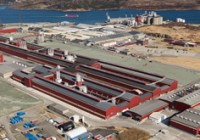
Summary Today’s earnings from Orkla act as a partial pre-announcement for Hydro’s earnings next week, due to the 50/50 joint venture. The Norwegian government invests NOK 1.5 billion in Norsk Hydro’s new plant, with the European Trade Commission’s blessing. Hydro reports on February 10th – are there more surprises? In my most recent article about Norsk Hydro ( OTCQX:NHYDY ), I focused on some key drivers for EPS that I felt made the company a better value play than Alcoa, Inc. (NYSE: AA ). Today’s earnings announcement by Orkla ASA ( OTCPK:ORKLY ) gives us a sneak peek into Hydro’s earnings next week. Sapa is an extruded aluminum company, and is run as a 50/50 joint venture between, Orkla ASA ADR and Hydro: September 12, 2013 press release . Sapa is the global leader in extruded aluminum, and has a market share of 30% in North America and 26% in Europe. It offers a variety of solutions to its customers through five business segments, and is a leader in energy-efficient buildings. Sapa also has a strong presence in Asia and South America. “Orkla’s share of Sapa’s result was NOK -360 million in the quarter. Sapa’s results were negatively impacted by extraordinary costs related to the accounting write-down of fixed assets in China. Demand for extruded aluminium products in North America rose by 9%, primarily driven by growth in the automotive and building industry. In Europe, demand was on a par with 2013.” – Earnings release Sapa makes up only a part of Hydro’s earnings, but level demand in Europe is encouraging, as it has been recognized that the European economy may be contracting. Growth in North America appears robust at 9%, and bodes well given the current high aluminum price. It will be necessary to wait for Hydro’s results to get a full picture of the accounting write-down, but I anticipate that it will be similar to write-downs made by Alcoa this quarter, which had a negligible effect on share price. The write-down should not be taken out of context from the rest of Hydro’s earnings. The strong demand is evident, and should translate across all of Hydro’s primary aluminum business. A further NOK 1 billion in synergy savings is anticipated over the next 2 years. This fact will only enhance the value of Sapa for both of its parent companies. It is all cash that falls straight to their bottom lines at each earnings announcement. Norwegian Government Invests in Eco-Friendly Norsk Hydro Central to my thesis about Hydro is the idea that the company can continue to make more money by being as environmentally friendly as possible. In other news yesterday: “The EFTA (European Free Trade Association) Surveillance Authority has approved funding of NOK 1.5 billion from Enova for Hydro to test the world’s most energy- and climate-efficient aluminum production in a full-scale pilot plant at Karmøy, Norway.” – Hydro press release. Enova is a Norwegian state-supported agency for promoting efficient-energy consumption and renewable energy. The same day, and sticking with the eco-friendly theme, Hydro announced a new research partnership with SGL Group ( OTCPK:SGLFF ). The project will take place over the next three years, and is being funded by the Research Council of Norway. The goal is to develop new, energy-saving, carbon cathode technology for use in the primary aluminum production process. Any reduction in energy costs is a big saving for Hydro, but it also provides extra income, because Hydro sells any excess energy it produces into the national grid. Exactly how well Hydro performed over all in the fourth quarter is still somewhat of a mystery. If results from Alcoa are anything to go by, the company should surprise to the upside next week. The two press releases yesterday continue to confirm that the future looks bright for Hydro. I look forward to seeing the increased earnings created by the synergies at Sapa over the rest of the year. The stock has performed well over the last year or so since my first article about it . It would appear there is more to come. NHYDY data by YCharts Editor’s Note: This article discusses one or more securities that do not trade on a major exchange. Please be aware of the risks associated with these stocks. Disclosure: The author is long NHYDY. (More…) The author wrote this article themselves, and it expresses their own opinions. The author is not receiving compensation for it (other than from Seeking Alpha). The author has no business relationship with any company whose stock is mentioned in this article. Additional disclosure: This article is not intended as investment advice. It is for informational purposes only and expresses the authors opinion. The reader should conduct their own research and form their own opinion prior to initiating any position. Actual outcomes may vary from those discussed in the article.This article may contain certain forward-looking statements. I have tried, whenever possible, to identify these forward-looking statements using words such as “anticipates,” “believes,” “estimates,” “expects,” “plans,” “intends,” “potential” and similar expressions. These statements reflect my current beliefs and are based on information currently available. Accordingly, such forward-looking statements involve known and unknown risks, uncertainties and other factors which could cause actual results, performance or achievements to differ materially from those expressed in or implied by such statements. I undertake no obligation to update or provide advice in the event of any change, addition or alteration to the information contained in this article including such forward-looking statements.

A Return To Emerging Market ETFs

More investors are turning to the emerging markets. Emerging markets look relatively cheap compared to U.S. equities. What’s supporting the emerging market investment theme. While developed markets languished, investors turned to emerging markets and related exchange-traded funds for a cheaper play on global markets. Emerging equities are outperforming developed markets. Year-to-date, the iShares MSCI Emerging Markets ETF (NYSEARCA: EEM ) rose 1.1% and the Vanguard FTSE Emerging Markets ETF (NYSEARCA: VWO ) increased 1.6%, whereas the SPDR S&P 500 ETF (NYSEARCA: SPY ) dipped 1.8%. According to the Institute of International Finance, investors funneled $18 billion into emerging market stocks and bonds over January, reports Carolyn Cui for the Wall Street Journal . While EEM and VWO experienced heavy outflows , some areas drew heavy inflows. For instance, the iShares MSCI India ETF (BATS: INDA ) added $617.2 million in assets, iShares MSCI Taiwan ETF (NYSEARCA: EWT ) saw $172.0 million in inflows and the Market Vectors Emerging Markets Local Currency Bond ETF (NYSEARCA: EMLC ) experienced $148.4 million in inflows, according to ETF.com data. As the developed markets stumbled at the start of the new year, investors turned to other global opportunities that could generate improved returns, following the rally in developed-market equities and fixed-income assets last year. “Emerging markets are one of the few bargains out there in an increasingly expensive world,” Jeffrey Kleintop, chief global investment strategist at Charles Schwab Corp., said in the article, arguing that the low valuations could provide “some sort of buffer” when volatility spikes. For instance, EEM shows a price-to-earnings ratio of 12.1 and a price-to-book of 1.5, VWO has a 12.3 P/E and a 1.6 P/B. In contrast, SPY shows a 17.3 P/E and a 2.5 P/B. The cheap raw materials and commodities prices will help fuel emerging market growth at a faster pace than developed economies. For example, India is well positioned to benefit from cheap oil prices as the country is a prominent energy importer. Meanwhile, countries like Taiwan can benefit from the U.S. recovery as the island country is the 12th largest goods trading partner with the U.S. as of 2013 data . Moreover, the added global liquidity, with the European Central Bank adopting a €1 trillion, or $1.3 trillion, quantitative easing program , could push investors toward emerging markets to chase after higher returns. Investors who are concerned about the continued strength in the U.S. dollar and its effect on emerging market exposure can also consider the recently launched iShares Currency Hedged MSCI Emerging Markets ETF (NYSEARCA: HEEM ) and the Deutsche X-trackers MSCI Emerging Markets Hedged Equity Fund (NYSEARCA: DBEM ) , which is three years old, to track developing markets while hedging against forex risks. Max Chen contributed to this article . Tom Lydon’s clients own shares of EEM and SPY. Disclosure: The author is long EEM, SPY. (More…) The author wrote this article themselves, and it expresses their own opinions. The author is not receiving compensation for it. The author has no business relationship with any company whose stock is mentioned in this article.