Tag Archives: management

Build America Muni ETFs For Income Generation
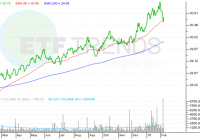
Summary Taxable muni bonds are a good alternative to investment-grade corporate debt. Focus on Build America municipal bonds. Comparison of Build America Bond ETFs. Taxable municipal bonds and related exchange traded funds may be a good fixed income alternative to investment-grade corporate debt. According to J.P. Morgan analysts, investors should consider taxable munis over comparable corporate bonds to generate income without sacrificing credit quality, Randall Forsyth reports for Barron’s . AA-rated long-term non-callable taxable munis have a 4.1% yield, showing a spread of 49 basis points above corresponding corporate bonds and 168 basis points over comparable Treasuries. Investors can look at Build America Bond ETFs for diversified exposure to taxable munis. Build America debt obligations were first created under President Barack Obama’s 2009 American Recovery and Reinvestment Act, where municipalities sold $188 billion of the debt before the program expired at the end of 2010. The Build America bonds helped diminish borrowing costs for state and local governments as part of a stimulus package. Local governments used the bonds to pay for infrastructure projects and received a 35% federal subsidy on interest payments. For example, the PowerShares Build America Bond Portfolio ETF (BAB ) has a 9.13-year duration and a 3.54% 30-day SEC yield, and the SPDR Nuveen Barclays Capital Build America Bond ETF (NYSEARCA: BABS ) has a 12.79-year duration and a 3.42% 30-day SEC yield. BAB’s credit quality breakdown includes AAA 10%, AA 41%, A 38% and BBB 1%. BABS’s quality allocations include Ass 11.1%, Aa 44.4%, A 44.1% and Baa 0.5%. In contrast, the iShares 10-20 Year Treasury Bond ETF (NYSEARCA: TLH ) has a 9.72-year duration and a 1.89% 30-day SEC yield, and the iShares 10+ Year Credit Bond ETF (NYSEARCA: CLY ) has a 13.16-year duration and a 3.97% 30-day SEC yield. TLH only tracks high-quality, AAA-rated U.S. Treasuries, while CLY holds a slightly lower-quality tilt, including AAA 2.6%, AA 9.9%, A 37.3% and BBB 49.4%. PowerShares Build America Bond Portfolio ETF (click to enlarge) Max Chen contributed to this article . Disclosure: The author has no positions in any stocks mentioned, and no plans to initiate any positions within the next 72 hours. (More…) The author wrote this article themselves, and it expresses their own opinions. The author is not receiving compensation for it. The author has no business relationship with any company whose stock is mentioned in this article.
Agribusiness ETFs: Commodity Slump Pressures Farmers

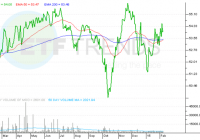
Summary Depressed commodity prices are hurting farmers. As farmers’ profits fall, the agribusiness industry could slow. Overview of current agriculture industry. Agribusiness exchange-traded funds could experience stunted growth as depressed grain prices squeeze farmers’ profit margins. Over the past year, the Market Vectors Agribusiness ETF (NYSEARCA: MOO ) rose 7.7% and the PowerShares Global Agriculture Portfolio ETF (NASDAQ: PAGG ) increased 7.6% higher. “U.S. farmers are beginning to cut back on farming equipment as the low crop prices and rising costs diminish income,” reports Alan Bjerga for Bloomberg . The U.S. government projects that farm income this year is heading toward the third consecutive decline and will post its largest fall since the Great Depression. Net-cash income from farm activity is expected to plunge 22% to $89.4 billion, the biggest drop off since 1932. For instance, Illinois grower Jason Lay stated that he will purchase 30% less fertilizer for 2,500 acres of corn and soybeans, 7% fewer seeds for spring planting and no new equipment, with crop futures now trading near a five-year low. “You spend when times are prosperous so you don’t need to when they’re not,” Lay said in the Bloomberg article. “That’s how you make it through.” Over the past year, the Teucrium Corn ETF (NYSEARCA: CORN ) has declined 17.0% and the Teucrium Soybean Fund (NYSEARCA: SOYB ) fell 14.1%. “The U.S. Department of Agriculture has predicted lower-than-expected U.S. corn stockpiles next year of 1.827 billion bushels, down from 1.877 billion, but raised its global stockpile projections to 189.6 million metric tons from 189.2 million,” reports Jesse Newman for the Wall Street Journal . “Combined grain supplies are substantial, and the market will not shift attention to the spring-planting progress and crop development across the Northern Hemisphere,” Jerry Gidel, the chief feed-grain analyst at Rice Dairy LLC, said in a Bloomberg article. Market Vectors Agribusiness (click to enlarge) Max Chen contributed to this article . Disclosure: The author has no positions in any stocks mentioned, and no plans to initiate any positions within the next 72 hours. (More…) The author wrote this article themselves, and it expresses their own opinions. The author is not receiving compensation for it. The author has no business relationship with any company whose stock is mentioned in this article.

Hawaiian Electric Industries (HE) Q4 2014 Results – Earnings Call Webcast

The following audio is from a conference call that will begin on February 12, 2015 at 17:00 PM ET. The audio will stream live while the call is active, and can be replayed upon its completion. Are you Bullish or Bearish on ? Bullish Bearish Neutral Results for ( ) Thanks for sharing your thoughts. Submit & View Results Skip to results » Share this article with a colleague