Tag Archives: management

High Yield In Focus: 9.53% From Suburban Propane Partners
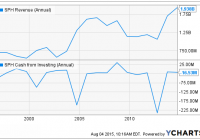
Summary Suburban Propane Partners is not impacted by commodity downturns. The company has a capital-light business model. Growth opportunity is limited, but SPH can increase distributions via accretive acquisitions. Suburban Propane Partners (NYSE: SPH ) is an MLP that markets and distributes energy products. In addition to propane, the company also sells fuel oil and electricity. As a reseller of energy, the company was not dramatically impacted by the recent commodity downturn. Given that SPH hasn’t missed a single dividend over the past 10 years and has grown the distribution from $0.6125 per quarter in 2005 to $0.8875 per quarter today (45% increase), would now be a good time to buy the stock at a yield of 9.53%? Largely A Propane Business Propane accounts for the highest percentage of the total revenue, coming in at 83%. The propane segment also constituted more than 100% of the total operating income in 2014. How is that possible you ask? That’s because other segments are actually losing money on a GAAP basis. For example, the “All Other” segment has been losing money for three years in a row ($17 million in 2012, $26 million in 2013 and 2014). Evidently, although the company offers a variety of products, the core business still revolves around the sale of propane. Propane use is heavily dependent on the weather. To illustrate, the company sells approximately two-thirds of its retail volume from October to March (the cold months). Of course, this means that warmer weather will directly affect the bottom line. This will introduce some uncertainty to our cash flow in the short term, though this fluctuation should even out in the long run when colder weather returns. Financials The company generated $226 million of operating cash flow ($248 million after adjusting for working capital changes) in 2014. This amount was very close to the company’s distribution of $211 million. This means that the company is pretty much paying out everything that it earns, which is great for income investors. Unlike other popular MLPs (e.g., midstream), the company’s operations are not capital intensive. There are no pipelines to be laid or other growth projects that would require large capital spending. This has allowed the company to keep net maintenance capital expenditure at around $20 million per year. So we have a capital-light company that is generating high cash flows. But growth opportunity is rather limited. Let’s look at the chart below. Although revenue has increased significantly, the growth was not attained organically. Jumps in revenue in 2004 and 2013 can be attributed to the acquisition of Agway Energy and Inergy Propane, respectively. But this should not faze you, as the company has increased normalized operating cash flow per share from $2.41 in 2004 to $4.08 in 2014. Ultimately, dividends depend on cash flow generation, and the fact that these acquisitions were accretive means that the company could afford to increase dividends. So the question is, can the company continue to make accretive acquisitions? The answer is quite complicated, as it depends on a multitude of factors, including but not limited to the skill of the management and the existence of opportunities. We can somewhat gauge the former by looking at how major acquisitions have turned out. Judging by the outcomes described in the previous paragraph, the management seems to have made the right decisions. As for the existence of opportunities, this is completely out of management’s control and depends on market sentiment. When assets are valued cheaply, it creates opportunity. Unfortunately, we don’t know when and how it will happen, so this is a big question mark. One thing we do know is that the management is looking for acquisition opportunities, as they’ve stated that they “seek to extend our presence or diversify our product offerings through selective acquisitions.” The fact that the management looks for “businesses with a relatively steady cash flow” should also provide you with some assurance. Another question you may have is that if the company is paying out everything in cash, where is it getting money to complete acquisitions? Well, management completes deals by raising additional debt and equity. For example, for the recent Inergy acquisition worth $1.8 billion, the company raised $1 billion in debt and paid the rest with cash and stock. The debt may seem high, but the company earns more than enough to cover the interest expense. Looking at the chart below, we can see that the interest coverage ratio has generally been above 1.5x. If we add the non-cash expenses back, the cash coverage ratio would be even higher. This means that the company should be able to maintain the current capital structure. Takeaway The company runs a stable business and sells a product that will always be in demand. Its operation is not capital-intensive, allowing it to pay out much of its operating cash flow. While you shouldn’t expect an increase in dividends without an acquisition, the company is capable of maintaining the current distribution. Keep an eye on acquisition announcements; if history is a good indicator, you should expect dividend increases to follow. However, even if we look at the stock right now, it is hard to argue with its current yield. If you are satisfied with a near-10% yield, then now may be a good time to consider Suburban Propane Partners for your portfolio. Disclosure: I/we have no positions in any stocks mentioned, and no plans to initiate any positions within the next 72 hours. (More…) I wrote this article myself, and it expresses my own opinions. I am not receiving compensation for it (other than from Seeking Alpha). I have no business relationship with any company whose stock is mentioned in this article.
Malaysia: Truly A Bear Market

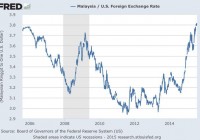
The Trend Is Your Friend for the Malaysia’s stock market and currency. Sell the iShares MSCI Malaysia ETF on worsening economic fundamentals, worsening technicals and worsening sentiment. The looming unwind of the global carry trade and a relatively pricey valuation for EWM means a further 20% drop in price by year end is highly likely. Malaysia is in big trouble. Its currency and stock markets are in bear markets with no sign things getting better any time soon. First of all, the country has weak economic fundamentals. Analysis by the Malaysian Institute of Economic Research, dated 4h August 2015, shows that the important indicators of consumer confidence, retail trade, employment and residential property are all pointing to weaker economic growth conditions. Then there is the country’s deteriorating terms of trade situation. In 2014 commodity exports accounted for 26% of exports and 18% of GDP. With palm oil, crude and refined products and natural gas, Malaysia’s key export commodities all heading lower, this is putting pressure on Malaysia’s fiscal situation. But don’t lower commodity prices hit many emerging markets? Yes, but in actual fact Malaysia is the only country within the Association of South East Asian Nations region that does not benefit from lower oil prices. This means that Bank Negara the country’s central banks will likely need to ease, weakening the ringgit further. This would be a bad development for the iShares MSCI Malaysia ETF (NYSEARCA: EWM ). The ringgit which is at ten year lows and broke though the key technical level of 3.7 ringgits to the dollar is in a strong bear market and monetary policy divergence is set to make the currency weaker. (click to enlarge) Although a weaker currency could help exports in theory, Malaysia has little room for credit expansion to spur domestic consumption and investment. According to the IMF Malaysia’s debt to GDP stands at 165% – one of the highest of all emerging market countries. This means the ” monetary transmission mechanism ” by which lower policy rates should help economic conditions may not be very effective. With EWM dropping from its 52 week high $16.32 to below $12, hasn’t the market already priced in a lot of these negative factors in already? I don’t think so – with a trailing P/E ratio of 16 times, the market is not cheap. Additionally, Malaysian stocks are highly susceptible to a de-rating once the Fed raises interest rates and fast money investors with their global carry trades accelerate their unwinding of risky asset holdings. That’s because as funding costs creep up for carry trades, the risk return of carry trades in Emerging Markets looks increasingly less favorable, and with fast money investors all conscious of the positioning of other like-minded investors it’s likely that they will be inching nearer to the exit door in order to get out first. This situation and a potential rush to sell could lead to a self-fulfilling prophecy in so many of the higher risk and especially commodity linked markets like Malaysia. For EWM the $12 mark was also a key technical level, as it has been both a support and resistance level several times since 2007 – see chart below. The next key technical level appears to be $10. (click to enlarge) Furthermore, global investors have no doubt been troubled by the ongoing scandal in Malaysian politics concerning the Prime Minister Najib Razak’s personal finances. At a time when Japan is steadily improving its corporate governance, other Asian countries need to do everything to keep up on this front because unlike Japan, countries like Malaysia are unable to implement quantitative easing without spurring massive inflation. The key risk to my thesis is if oil prices were to rally hard or if the policy divergence between the Fed tightening and Bank Negara’s likely easing were to turn around. These two scenarios would alleviate the economic fundamentals somewhat and support a market valuation of 16 times earnings in my view. However, I view this outcome as very low probability. The bottom line is Malaysia is a falling knife. There is no catalyst on the horizon which suggests attempting to pick a bottom could be successful. Investors with the ability to short, should short EWM. Long only investors who want exposure to Asia can find better alternatives. Disclosure: I/we have no positions in any stocks mentioned, but may initiate a short position in EWM over the next 72 hours. (More…) I wrote this article myself, and it expresses my own opinions. I am not receiving compensation for it (other than from Seeking Alpha). I have no business relationship with any company whose stock is mentioned in this article.

HHYX: International Junk Bond Exposure With Protection From A Strong USD

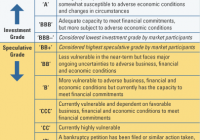
Summary IShares recently listed a new USD hedged high yield bond ETF. This fund is composed of Canadian dollar, British pound sterling, and Euro denominated corporate junk bonds. This fund may be useful to an investor looking for international fixed income exposure without the foreign exchange risk. The Fund On July 28th, iShares from Blackrock (NYSE: BLK ) listed a new ETF, the iShares Currency Hedged Global ex USD High Yield Bond ETF (NYSEARCA: HHYX ). As stated in the fund’s prospectus, this fund seeks to invest in corporate junk bonds …while mitigating exposure to fluctuations between the value of the component currencies and the U.S. dollar. HHYX seeks to track the Markit iBoxx Global Developed Markets ex-US High Yield (USD Hedged) Index . HHYX principally invests in another iShares fund, and/or the components of that fund, the iShares Global ex USD High Yield Corporate Bond ETF (BATS: HYXU ). The difference between the two is that, while both achieve exposure to non-USD denominated high yield bonds, only HHYX actually protects and hedges against the foreign exchange risk associated with international investing. In this article, I will briefly go over the components of the new fund and the structure of the currency hedging strategy used by this fund. Components Geography: The top five geographic areas of exposure in HHYX are: Italy (22.23%) United Kingdom (15.22%) Germany (14.87%) France (12.36%) Spain (5.97%) Investors may also note that 1.36% of the exposure comes from Greece. Remember that HHYX is strictly exposed to corporate junk bonds, and not municipal or government debt. That being said, I think most investors are aware that there is some concern in the market about the status of Italy’s debt levels. Sovereign debt is at an all time high in Italy, and there are some analysts saying that Italy will be the “next Greece.” For these reasons, I see the large exposure to Italy as one of the principle risks. Sectors: The most represented sectors in the fund are: Financials (18.85%) Telecommunication (17.10%) Capital Goods (16.91%) Consumer Cyclical (16.75%) Consumer Non-cyclical (9.40%) Grades: The primary credit ratings of the underlying investments are BB (63.67%) and B (30.71%). As far as where these credit ratings are derived from, iShares states that: Credit quality ratings on underlying securities of the fund are received from S&P, Moody’s and Fitch and converted to the equivalent S&P major rating category. From the S&P’s Credit Ratings website, here is how the various ratings are described: Of course, there are many risks associated with speculative grade junk bonds, but I will assume that if you are seeking exposure to them, then you have some understanding of these risks. How the Currency Hedge Works: In order to hedge against fluctuations of exchange rates between the USD and other currencies, HHYX shorts forward contracts for each of the non-dollar currencies in the portfolio. What this means is that if one of the underlying currencies in the portfolio loses value compared to the USD, the losses will be offset by the gains from the forward contracts. It is important to realize that the forward contracts will offset and limit, but not necessarily eliminate, losses from foreign exchange risk. It should be also noted that the inverse of this is also true. If the underlying currency of one of the portfolio’s investments gains value compared to the U.S. dollar, the gains would be offset by a loss from the forward contract. In other words, the investor would not benefit from the foreign exchange, whereas he or she would if they had purchased the asset using converted U.S. dollars. Conclusion: This article is not necessarily intended to encourage or discourage investors from investing in international high yield bonds. However, if one is inclined to do so, I believe that this new ETF is a reasonable way to gain exposure. I do have concerns about the large allocation towards Italian debt, but the underlying index could possibly rebalance if the situation deteriorated further. Arguably, it is a benefit that the fund is geared towards the higher-end of speculative grade debt. In short, if an investor is seeking to diversify his or her portfolio with exposure to international speculative grade corporate debt, this new ETF may be a worth further investigation. Disclosure: I/we have no positions in any stocks mentioned, and no plans to initiate any positions within the next 72 hours. (More…) I wrote this article myself, and it expresses my own opinions. I am not receiving compensation for it (other than from Seeking Alpha). I have no business relationship with any company whose stock is mentioned in this article. Additional disclosure: This article is not intended to be a buy/sell recommendation, it is simply offered as an analysis of a new exchange traded product that some investors may find useful for their portfolios.