Tag Archives: load

DGRS Looks Like Great Diversification At First, But Poor Liquidity Is More Likely
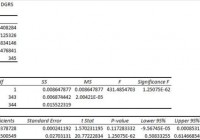
Summary I’m taking a look at DGRS as a candidate for inclusion in my ETF portfolio. The ETF tracks small dividend paying stocks, but the yield isn’t too great. The correlation to SPY is low, but the statistics are unreliable because of poor liquidity. Diversification within the portfolio isn’t bad, but it isn’t amazing either. I’m not assessing any tax impacts. Investors should check their own situation for tax exposure. Investors should be seeking to improve their risk adjusted returns. I’m a big fan of using ETFs to achieve the risk adjusted returns relative to the portfolios that a normal investor can generate for themselves after trading costs. I’m working on building a new portfolio and I’m going to be analyzing several of the ETFs that I am considering for my personal portfolio. One of the funds that I’m considering is the WisdomTree U.S. SmallCap Dividend Growth Fund (NASDAQ: DGRS ). I’ll be performing a substantial portion of my analysis along the lines of modern portfolio theory, so my goal is to find ways to minimize costs while achieving diversification to reduce my risk level. What does DGRS do? DGRS attempts to track the total return (before fees and expenses) of the WisdomTree U.S. SmallCap Dividend Growth Index. At least 90% of the assets are invested in funds included in this index. DGRS falls under the category of “Small Blend”. Does DGRS provide diversification benefits to a portfolio? Each investor may hold a different portfolio, but I use (NYSEARCA: SPY ) as the basis for my analysis. I believe SPY, or another large cap U.S. fund with similar properties, represents the reasonable first step for many investors designing an ETF portfolio. Therefore, I start my diversification analysis by seeing how it works with SPY. I start with an ANOVA table: (click to enlarge) The correlation is excellent at 74.6%. I want to see low correlations on my investments. Extremely low levels of correlation are wonderful for establishing a more stable portfolio. I consider anything under 50% to be extremely low. However, for equity securities an extremely low correlation is frequently only found when there are substantial issues with trading volumes that may distort the statistics. Standard deviation of daily returns (dividend adjusted, measured since August 2013) The standard deviation is great. For DGRS it is .8929%. For SPY, it is 0.6717% for the same period. SPY usually beats other ETFs in this regard. However, many ETFs won’t lose this badly to SPY, but it is worth noting that the standard deviation is pretty high. The best way to counteract the high standard deviation for an ETF with low correlation is to simply use it as a fairly small part of the portfolio. Liquidity is awful Average trading volume is absolutely terrible. The average volume for the last 10 days is only 3,181 shares. It’s possible to buy and sell in an ETF with terrible liquidity, but it is a very unattractive feature for the casual investor seeking diversification. I checked the change in closing values looking for the 0.00% change in dividend adjusted close that could indicate a day in which 0 shares changed hands. In the time period I used, from August 2013 through the middle of December 2014, there were 11 days where there was no change. It is possible that this is simply a coincidence, but investors should be aware that the presence of these days represents a challenge to the validity of the correlation and standard deviation that were calculated. The real values may be lower or higher, though I think higher is more likely than lower. Mixing it with SPY I also run comparisons on the standard deviation of daily returns for the portfolio assuming that the portfolio is combined with the S&P 500. For research, I assume daily rebalancing because it dramatically simplifies the math. With a 50/50 weighting in a portfolio holding only SPY and DGRS, the standard deviation of daily returns across the entire portfolio is 0.7321%. With 80% in SPY and 20% in DGRS, the standard deviation of the portfolio would have been .6811%. If an investor wanted to use DGRS as a supplement to their portfolio, the standard deviation across the portfolio with 95% in SPY and 5% in DGRS would have been .6721%. Why I use standard deviation of daily returns I don’t believe historical returns have predictive power for future returns, but I do believe historical values for standard deviations of returns relative to other ETFs have some predictive power on future risks and correlations. Yield & Taxes The distribution yield is 1.85%. This is a little low for retirees hoping to use the yield for income, but I’d be even more concerned about the poor liquidity if the investor had any liquidity needs. I wouldn’t consider an illiquid investment with only a moderate distribution yield if I were a retiring investor. I’m not a CPA or CFP, so I’m not assessing any tax impacts. Expense Ratio The ETF is posting .38% for both the gross and net expense ratios. I want diversification, I want stability, and I don’t want to pay for them. The expense ratio on this fund is higher than I want to pay for equity securities, but not high enough to make me eliminate it from consideration. I view expense ratios as a very important part of the long term return picture because I want to hold the ETF for a time period measured in decades. Market to NAV The ETF is at a .09% premium to NAV currently. Premiums or discounts to NAV can change very quickly so investors should check prior to putting in an order. The premium isn’t enough to be concerned about, but the liquidity issues could still result in a large bid-ask spread. If an investor was determined to invest in DGRS, I would hope they would use limit orders and be wary of crossing the spread. Largest Holdings The diversification within the ETF isn’t too bad. Unfortunately, it isn’t too good either. The top ten positions are all in the 2% to 1% range. (click to enlarge) Conclusion I’m currently screening a large volume of ETFs for my own portfolio. The portfolio I’m building is through Schwab, so I’m able to trade DGRS with no commissions. I have a strong preference for researching ETFs that are free to trade in my account, so most of my research will be on ETFs that fall under the “ETF OneSource” program. While I like the low correlation, I’m concerned that if liquidity were higher the correlation would also be higher. If the ETF had a substantial increase in volume without a significant increase in correlation, I’d be contemplating it. As it stands currently, I don’t see enough value to make it worth the headache of the low liquidity. I’ll be knocking it off my list of ETFs to consider for my long term portfolio. Additional disclosure: Information in this article represents the opinion of the analyst. All statements are represented as opinions, rather than facts, and should not be construed as advice to buy or sell a security. Ratings of “outperform” and “underperform” reflect the analyst’s estimation of a divergence between the market value for a security and the price that would be appropriate given the potential for risks and returns relative to other securities. The analyst does not know your particular objectives for returns or constraints upon investing. All investors are encouraged to do their own research before making any investment decision. Information is regularly obtained from Yahoo Finance, Google Finance, and SEC Database. If Yahoo, Google, or the SEC database contained faulty or old information it could be incorporated into my analysis. The analyst holds a diversified portfolio including mutual funds or index funds which may include a small long exposure to the stock.
Revisiting The ‘Problem’ With Leveraged ETFs

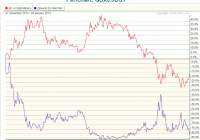
Editor’s note: Originally published at tsi-blog.com on January 6, 2015. My 3rd November blog post explained why leveraged ETFs should only ever be used for short-term trades. To set the scene, here is an excerpt from this earlier post: The crux of the matter is that leveraged ETFs are designed to move by 2 or 3 times the DAILY percentage changes of the target indexes. They are NOT designed to move by 2 or 3 times the percentage change of the target indexes over periods of longer than one day. Due to the effects of compounding, their percentage changes over periods of much longer than one day will usually be less – and sometimes substantially less – than 2-times (in the case of a 2X ETF) or 3-times (in the case of a 3X ETF) the percentage changes in the target indexes. In the earlier post, I presented tables to show that the greater the volatility of an index and the greater the leverage provided by an ETF linked to the index, the worse the likely performance of the leveraged ETF over extended periods. The worse, that is, relative to the performance superficially implied by the daily percentage change relationship between the index and the leveraged ETF. I concluded that leveraged ETFs are only suitable for short-term trades and that a trade should be very short term if it involves a 3X ETF and/or a volatile market. To illustrate how badly a leveraged ETF can perform relative to the performance superficially implied by the daily percentage change relationship between the leveraged ETF and the market to which it is linked, here is a chart comparing the performances of the Market Vectors Junior Gold Miners ETF ( GDXJ) and the Direxion Daily Junior Gold Miners Index Bear 3X Shares ETF ( JDST) since the end of 2013. JDST is designed to have a daily percentage change that is roughly three times the INVERSE of GDXJ’s daily percentage change, so it is an ETF that someone would buy if they were bearish on GDXJ. For example, on a day when GDXJ lost 5%, JDST would gain about 15%, and on a day when GDXJ gained 5%, JDST would lose about 15%. Given that GDXJ is presently about 15% lower than it was at the end of 2013, people who are unfamiliar with how leveraged ETFs work would likely jump to the conclusion that a JDST position purchased at the end of 2013 and held through to the present would show a healthy profit. However, this conclusion could not be further from the truth, because JDST has lost 81% of its value over the period in question. The dismal performance of JDST is a trap for the novice trader, but it is not a design flaw. As outlined in my 3rd November post, it is a mathematical function of how the leverage works and simply means that this type of ETF should only ever be used in trades with time frames of no more than a few weeks. Now that you’ve read this, are you Bullish or Bearish on ? Bullish Bearish Sentiment on ( ) Thanks for sharing your thoughts. Why are you ? Submit & View Results Skip to results » Share this article with a colleague

Best And Worst Performing Currency ETFs Of 2014

Currency markets had an eventful 2014 with the U.S. dollar touching multi-year highs against a basket of major currencies. Improving U.S. economic data, escalating geopolitical tensions, diverging central bank policies around the world and chances of a sooner-than-expected rate tightening cycle in the U.S. were some of the factors contributing to a stronger greenback. In fact, divergence in monetary policies across the globe was one of the primary factors for the strong advance in dollar this year against major currencies. While the Fed has wrapped up its QE program and is expected to start raising rates sometime this year, central banks of some of the major developed nations have stepped up their monetary stimulus programs to stimulate their struggling economies. Stronger U.S. recovery and speculations of a faster-than-expected rate hike are leading investors to pull out capital from emerging markets and pour it into U.S. stocks, causing the currencies of these nations to take a plunge. Given this, we have highlighted two of the best performing and worst performing currency ETFs of 2014 below. These were big movers in the currency market, and undoubtedly investors are expecting big things out of these currencies in 2015 as well: Best Currency ETFs of 2014 Market Vectors Indian Rupee/USD ETN (NYSEARCA: INR ) Indian equity markets have posted stellar performances this year driven by optimism over the new pro-reform, business-friendly government led by Prime Minister Narendra Modi. In fact, the Indian economy has been witnessing improving macroeconomic conditions led by better-than-expected corporate earnings, a falling inflation level and improving manufacturing and industrial production. Moreover, steps taken by the RBI governor have been successful in narrowing the current account deficit. These factors led the Indian rupee to be the best performing major currency worldwide against the dollar during 2014 and INR to be the best currency ETF this year. The fund tracks the performance of the S&P Indian Rupee Total Return Index, providing exposure to exchange rate movement of the U.S. Dollar against the Indian Rupee. The product is, however, quite unpopular and illiquid with an asset base of under $2 million and average trading volume of 27,000 shares a day. The fund charges 55 basis points as fees and has returned 14% this year. INR currently has a Zacks ETF Rank #3 or Hold rating. PowerShares DB USD Bull ETF (NYSEARCA: UUP ) Thanks to a stronger U.S. economic recovery led by higher-than-expected U.S. GDP growth numbers, renewed optimism in housing activity, continued job creation and rising consumer confidence combined with global factors, the U.S. dollar emerged as a strong currency this year. The fund tracks the performance of the Deutsche Bank Long US Dollar Index (USDX) Futures Index to provide exposure to the performance of U.S. Dollar against the following currencies: Euro, Japanese Yen, British Pound, Canadian Dollar, Swedish Krona and Swiss Franc. In terms of holdings, UUP allocates nearly 58% in Euro, while 25% collectively in Japanese Yen and British Pound. The fund has so far managed an asset base of $959.9 million and sees an average daily volume of 1.8 million shares. It charges 80 bps in total fees and expenses. The fund has added 11.3% in 2014 and has a Zacks ETF Rank of 2 or ‘Buy’ rating with Medium risk outlook. Worst Currency ETFs of 2014 CurrencyShares Swedish Krona Trust ETF (NYSEARCA: FXS ) The Swedish Krona has been among the worst performing currencies in 2014 against the greenback, with FXS plunging 18% this year. This is especially true as the currency is struggling badly in the wake of record low interest rates and deflationary pressures. The central bank’s unexpected move to slash interest rates to zero in October in order to fight deflation further aggravated the situation and led the currency to struggle badly against the U.S. Dollar. The fund tracks the price of the Swedish Krona relative to the U.S. Dollar managing an asset base of $25.3 million. The fund is quite illiquid with average daily volume of just 2,000 shares. The fund charges 40 basis points as fees and currently has a Zacks ETF Rank #3 or Hold rating. CurrencyShares Japanese Yen Trust ETF (NYSEARCA: FXY ) Though the Yen was performing well in the first part of the year due to its safe haven appeal in the wake of rising geopolitical tensions, it plummeted to a seven-year low in the second half due to an ultra loose monetary policy adopted by the Bank of Japan (BoJ). Weakening growth conditions and sliding consumer prices led the BoJ to expand its monetary policy in 2014 leading to a slumping Yen. FXY measures the relative values of two currencies, the Japanese Yen against the U.S. Dollar. The fund gains in value as the Yen appreciates relative to the Dollar. The fund manages an asset base of $105 million, charges 40 basis points as fees and trades with good volumes of 200,000 shares a day. FXY plunged roughly 13.7% for 2014, continuing its long term track record of weakness and pushing its two year loss to -27%.