Tag Archives: load

GII Survives My First Round Of Cuts As Poor Liquidity Meets Strong Dividend Yields
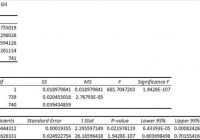
Summary I’m taking a look at GII as a candidate for inclusion in my ETF portfolio. The expense ratio isn’t great, but it is within reason. The correlation to SPY is a huge selling point, but the poor liquidity may have made the statistics less reliable. I’m not assessing any tax impacts. Investors should check their own situation for tax exposure. Investors should be seeking to improve their risk adjusted returns. I’m a big fan of using ETFs to achieve the risk adjusted returns relative to the portfolios that a normal investor can generate for themselves after trading costs. I’m working on building a new portfolio and I’m going to be analyzing several of the ETFs that I am considering for my personal portfolio. One of the funds that I’m considering is the SPDR S&P Global Infrastructure ETF (NYSEARCA: GII ). I’ll be performing a substantial portion of my analysis along the lines of modern portfolio theory, so my goal is to find ways to minimize costs while achieving diversification to reduce my risk level. What does GII do? GII attempts to track the total return (before fees and expenses) of S&P Global Infrastructure Index. At least 80% of the assets are invested in funds included in this index. GII falls under the category of “Miscellaneous Sector”. Does GII provide diversification benefits to a portfolio? Each investor may hold a different portfolio, but I use (NYSEARCA: SPY ) as the basis for my analysis. I believe SPY, or another large cap U.S. fund with similar properties, represents the reasonable first step for many investors designing an ETF portfolio. Therefore, I start my diversification analysis by seeing how it works with SPY. I start with an ANOVA table: (click to enlarge) The correlation is excellent at 69%. I want to see low correlations on my investments. Extremely low levels of correlation are wonderful for establishing a more stable portfolio. I consider anything under 50% to be extremely low. However, for equity securities an extremely low correlation is frequently only found when there are substantial issues with trading volumes that may distort the statistics. Standard deviation of daily returns (dividend adjusted, measured since January 2012) The standard deviation is also very good. For GII it is .7760%. For SPY, it is 0.7300% for the same period. SPY usually beats other ETFs in this regard; GII is doing very well comparatively. Because the ETF has fairly low correlation for equity investments and a reasonable standard deviation of returns, it should do fairly well under modern portfolio theory. Liquidity looks fine Average trading volume is bad. The average over the last 10 days was in the ballpark of 5,000 to 6,000 shares. This represents a serious liquidity problem. As I’m writing (market open), the spread is .46%. I’d be very cautious about crossing that spread and would stick to limit orders. In my sample period (about 3 years), there were 31 days where the dividend adjusted close did not change at all. Those days may represent days in which no shares changed hands and thus a change in fair value would not be recorded. Such an event could significantly damage the reliability of the statistics for correlation and standard deviation. I will perform the rest of the analysis treating the standard deviation and correlation as being reliable and valid numbers, but investors should be aware that the poor liquidity may have significantly changed the results. Mixing it with SPY I also run comparisons on the standard deviation of daily returns for the portfolio assuming that the portfolio is combined with the S&P 500. For research, I assume daily rebalancing because it dramatically simplifies the math. With a 50/50 weighting in a portfolio holding only SPY and GII, the standard deviation of daily returns across the entire portfolio is 0.6930%. With 80% in SPY and 20% in GII, the standard deviation of the portfolio would have been .7006%. If an investor wanted to use GII as a supplement to their portfolio, the standard deviation across the portfolio with 95% in SPY and 5% in GII would have been .7210%. Why I use standard deviation of daily returns I don’t believe historical returns have predictive power for future returns, but I do believe historical values for standard deviations of returns relative to other ETFs have some predictive power on future risks and correlations. Yield & Taxes The distribution yield is 3.12%. The SEC yield is 2.90%. That appears to be a respectable yield. This ETF could be worth considering for retiring investors. I like to see strong yields for retiring portfolios because I don’t want to touch the principal. By investing in ETFs I’m removing some of the human emotions, such as panic. Higher yields imply lower growth rates (without reinvestment) over the long term, but that is an acceptable trade off in my opinion. I’m not a CPA or CFP, so I’m not assessing any tax impacts. Expense Ratio The ETF is posting .40% for a gross expense ratio, and .40% for a net expense ratio. I want diversification, I want stability, and I don’t want to pay for them. The expense ratio on this fund is higher than I want to pay for equity securities, but not high enough to make me eliminate it from consideration. I view expense ratios as a very important part of the long term return picture because I want to hold the ETF for a time period measured in decades. Market to NAV The ETF is at a .09% premium to NAV currently. Premiums or discounts to NAV can change very quickly so investors should check prior to putting in an order. Generally, I don’t trust deviations from NAV and I will have a strong resistance to paying any meaningful premium to NAV to enter into a position. While the .09% premium isn’t too bad, the spread is still a concern. Largest Holdings The diversification within the ETF is mediocre. There are 7 investments that are each over 3% of the total investments, so I’m not overly impressed by the diversification within the portfolio. The value for correlation was great for an equity security, and if that correlation was based on much higher trading volumes I would be confident enough to disregard some of the concentration within the portfolio. (click to enlarge) Conclusion I’m currently screening a large volume of ETFs for my own portfolio. The portfolio I’m building is through Schwab, so I’m able to trade GII with no commissions. I have a strong preference for researching ETFs that are free to trade in my account, so most of my research will be on ETFs that fall under the “ETF OneSource” program. The best argument for the ETF, in my opinion, is that it has a very favorable level of correlation (NYSE: LOW ) with SPY and a strong dividend yield. If further testing on the correlation supports the idea that it actually is that low (I’m doubtful), then I would rate the ETF very favorably despite a mediocre expense ratio and poor liquidity. I’m willing to deal with poor liquidity by using limit orders and watching for deviations from NAV if the ETF actually provides meaningful diversification benefits. I’ll keep GII on my list for the next round with a note to dig deeper on correlations and poor liquidity.

Positioning For An Oil ETF Rebound? Watch For Contango

Some may consider an Oil ETF to play a rebound in prices. Investors should consider the effects of the underlying market on a futures-based ETF. Potential alternatives to play a recovery in the oil market. As crude oil prices dip to fresh lows, contrarian traders are becoming increasingly antsy for a rebound. Traders may try to tap into an oil-related exchange traded fund to capitalize on a potential recovery, but one should first look under the hood and understand how the futures market can affect an ETF. For instance, many would likely turn to the United States Oil ETF (NYSEArca: USO ) , which tracks West Texas Intermediate crude oil futures, to play a potential turn in the energy market. USO is the largest and most popular oil-related ETF option on the market, with $1.2 billion in assets and $387 million changing hands daily, according to Attain Capital . However, oil traders should be aware that USO tracks front-month WTI future contracts and the underlying oil market is currently in a state of contango. Consequently, USO could experience a negative roll yield when rolling a maturing futures contract. Contango occurs when the price on a futures contract is higher than the expected future spot price, which creates the upward sloping curve on future commodity prices over time. Essentially, the phenomenon reflects a current spot price that is lower than the futures price. For instance, WTI futures were trading around $48.2 per barrel Tuesday for the February 2015 delivery, but contracts with a later delivery are trading higher, with contracts for December 2015 delivery at $55.1 per barrel. Commodity prices are typically higher in the future because people would rather pay a premium to have the commodity on a later date instead of paying the costs for storage and the carry costs for buying the commodity right now. While this phenomena is a normal occurrence in the futures market, contango can have a negative effect on ETFs. Specifically, ETFs that hold futures contracts sell the contracts before they mature and purchase a later-dated contract. In a contangoed market, the ETF loses money each time it rolls contracts to a costlier later-dated contract – the fund would technically sell low and buy high. Consequently, long-term investors may notice underperformance to the oil market since the ETF holds front-month contracts and would see a slight cost when rolling each front-month contract . According to Attain Capital: This is why USO has drastically underperformed the “spot price” of Oil over the past five years, with USO having lost -39% while the spot price of Oil went UP 48%. It is like an option or insurance premium – a declining asset with all else held equal. Alternatively, the PowerShares DB Oil ETF (NYSEArca: DBO ) and the United States 12 Month Oil ETF (NYSEArca: USL ) provide exposure to WTI oil, but include a different weighting methodology to limit the negative effects of contango. DBO can include contracts as far out as 13 months and dump contracts at any point. USL, on the other hand, ladders 12 months of contracts to diminish the effects of backwardation and contango. Additionally, Attain Capital suggests buying the energy industry ETF , such as the Energy Select Sector SPDR ETF (NYSEArca: XLE ) to capitalize on a potential rebound since companies have other factors that don’t relate to oil prices. More aggressive traders can fuel bets with leveraged energy funds, like the Direxion Daily Energy Bull 3X Shares ETF (NYSEArca: ERX ) , which takes the 300% performance of energy stocks on a daily basis. Investors can also look at the hammered alternative energy stocks, like Tesla (NASDAQ: TSLA ), which has been out of favor since lower oil prices make green energy plays seem less viable. The Market Vectors Global Alternative Energy ETF (NYSEArca: GEX ) and the First Trust NASDAQ Clean Edge Green Energy Index ETF (NasdaqGS: QCLN ) both include heavy tilts toward TSLA and other clean energy picks. Max Chen contributed to this article .

When Picking Stocks, It’s Good To Be Lucky.

Summary There are very few human endeavors that do not involve any element of luck. Investing is no exception luck plays a role. When judging the luck vs. skill ratio in a game an interesting test is to try to lose. The harder it is to intentionally lose, the less skill the game requires. The same test can be applied to investing. I suggest we give it a try. Have you ever played a game with a young child and tried to lose, only to find yourself having to cheat to allow the toddler to win? That’s because most games for very young children have a very low skill component. A few years later perhaps you’re teaching the child to play checkers or chess. Now it is very easy to lose intentionally. The more skill a game requires the easier it is to lose intentionally. (Being competitive I find it very difficult to lose intentionally to anyone over six – a sad but true commentary on my personality.) This can also be applied to stock picking. If stock picking is mostly based on skill, it should be easy to pick stocks that trail the market. I propose we put the theory to the test by having a contest to see who can pick a portfolio that will trail the market over the next year. Let’s start February 1st, to give everyone a chance to select their stocks and to give me a chance to find a place to post and share the portfolios. Before I give the rules of the contest I want to discuss skill and luck a little. First, let’s look at the definition of skill from Merriam-Webster: Skill: The ability to use one’s knowledge effectively and readily in the execution of performance. Skill is not based only on the outcome. The outcome can be the result of luck. I have known investors who have made a lot of money by making large bets on a small number of stocks and letting those bets ride. Was it skill? It’s hard to know. I do know that if enough investors participate in the market in that manner some of them will get rich even if no skill is involved. If we have a coin flipping contest and define flipping heads as winning: If you flip a coin 10 times the chances that you end up with 60% heads or greater are approximately: 38%. If you flip a coin 20 times the chances that you get 60% heads or greater is about 25%. If you flip the coin 100 times the chances of getting 60% heads or greater is approximately 3%. If at least part of investment returns are based on luck, an investor who does not make a lot of bets has a better chance of out performing the market by a large amount. An investor can limit his bets by only selecting a limited number of stocks. An investor can also limit his number of bets by investing only in a single industry, sector, market cap etc. Of course, making fewer bets also means you have a better chance of under performing the market by a large amount. Which is why my portfolio is diversified; it is not that important to me to have outsized gains, but it’s very important to me to avoid outsized losses. I will also note that the reason the market involves so much luck is actually because most of the participants are highly skilled. If you sit down at a poker table with a bunch of rubes your skill at poker will almost guarantee you win. If everyone at the table has the same skill level, skill evens out and luck becomes a much larger factor. Now back to our contest.. Each contestant should select a portfolio of twenty stocks from the S&P 500. The stock must be diversified with two stocks from each sector: Consumer Discretionary Consumer Staples Energy Financials Health Care Industrials Information Technology Materials Telecommunications Services Utilities Each stock gets equal weighting and the entire portfolio is invested in these equities – no bonds no cash. The portfolio is created in La-La land where there are no expenses and no taxes. The goal is to select a portfolio that will trail the S&P 500 in total return over the next year. Send me a message with your selections. I will post the selections somewhere where we can monitor our progress. I will post the location on an insta-blog. The contest will start Feb. 1 2015 and end Feb. 1 2016. Is this a perfectly formulated study? No, far from it. Even I, who am not a researcher can point out a lot of flaws, but I think it will be interesting and challenging, and in spite of its flaws, we may learn something. Conclusion It is difficult to tell luck from skill when judging investment returns. Portfolios that lack diversification have a better chance of either greatly outperforming or greatly underperforming the market. If we account for this, by forcing the selection of a diversified portfolio, a skilled stock picker should still be able to create a portfolio that will under perform the market. Let’s give it a try and see how we do.