Tag Archives: load

Investing In Africa: A Long-Term Growth Opportunity?

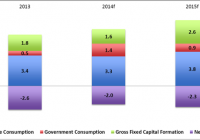
Summary Certain indicators point to an overvalued S&P 500. Prudent investors should consider more attractively valued indexes. Despite headwinds, Africa’s improving fundamentals suggest long term growth opportunities. As the new year begins to take shape, most investors have their attention squarely focused on the United States as the oasis of growth in a desert of underperforming national economies. Nevertheless, when we take a closer look at the key American stock market index, the S&P 500 (NYSEARCA: SPY ), it would appear that many market observers consider it to be overvalued. Some suggest that its blended P/E ratio of 17 is on the upper end of its historical normal valuation range since 2001, others warn that it is historically expensive relative to GDP and finally most point to the Shiller P/E which currently sits at 26.4, which is 59% higher than the historical mean of 16.6. Although it is difficult to make accurate broad valuation forecasts for a large collection of companies such as the S&P 500, such forecasts can be useful to the prudent investor. If we are willing to accept that many companies trading on the S&P 500 are trading at or above their fair value we may at minimum need to consider the possibility of a slowdown in broad index growth over the coming year. As such, the prudent investor may want to start contemplating other more attractively valued indexes. It would appear that such opportunities lie in Africa. Despite several headwinds such as the effects of the Ebola virus, civil unrest (Boko Harem), the slowdown in the global economy and the drop in the price of oil, Africa remains a resilient continent poised to record around +5% economic growth. In a recent report Yogesh Gokool, head of the AfrAsia Bank explains that this growth will be primarily driven by more foreign direct investments and remittances from non-OECD (Organization for Economic Co-operation and Development) countries that will continue to pour money into corporate acquisitions and large-scale infrastructure projects. Resource rich countries will continue to attract the lion share of FDIs into Africa yet with the drop in the price of oil and rising wages in Asia, manufacturing will also be a significant recipient. The other main driver of growth will be private consumption. In a recent report by the United Nations Economic Commission for Africa entitled African Economic Outlook 2015 it was found that private consumption in Africa is expected to accelerate by 0.5 percentage points to 3.8 percent in 2015 due to consumer confidence and the expanding middle class. Private Consumption and gross capital formation are expected to be key drivers of growth (click to enlarge) Data Source: UN-DESA, 2014 In addition, inflation should remain under control by 0.4 percentage points to 0.7 in 2015. Subdued inflation across economic groupings (click to enlarge) Data Source: UN-DESA, 2014 As for fiscal deficits, the current account balance is expected to decline but remain positive for oil exporting countries while the current account deficit may rise less than expected due to lower oil prices for oil importing countries. Moderating fiscal deficits expected in 2015 among country groupings (click to enlarge) Data Source: EIU, 2014 As mentioned above, certain downside risks could slow economic growth in Africa such as the effects of the Ebola virus, civil unrest (Boko Harem), the drop in oil and commodity prices and a global growth slowdown. Based on early assessments , the economies of Guinea, Liberia, Sierra Leone are experiencing significant hardship as public finances are strained and household incomes are dropping. Nevertheless, the economic impact is not as bad as some feared as the World Bank estimated that Ebola could cost the region as much as $32 billion and the real cost appears to only be a tenth of that figure. In fact, a positive impact of the outbreak seems to be the renewed urgency to reinforce basic public health systems in vulnerable regions. As for lower commodity prices, the negative impact on the continent’s growth may be offset as lower prices will help ease balance of payments pressures in food and energy importing countries while commodity exporting countries face lower export earnings. Furthermore, these commodity declines will serve to reaffirm the benefits of more diversified national economies. Finally, in the face of a potential global slowdown Africa should remain attractive as its economic fundamentals remain sound . Governance and macroeconomic management have improved. Investment in infrastructure, human and physical capital are increasing. Productivity, the middle class and diversified trade are all growing and finally a culture of entrepreneurship is being created. Conclusions Given the risks outlined above and my belief that stable growth in Africa is still a long way off, it may be better to describe investing in Africa as an opportunity for the enterprising investor rather than the prudent investor. Nevertheless, if you remain patient and take a long-term view of an investment in Africa, you may be interested in several ETFs which have African exposure and are currently trading near their 52 week lows. The first is the Market Vectors Africa Index ETF (NYSEARCA: AFK ), which allocates just over a quarter of its weight to developed market countries that do business in Africa. This allocation serves to reduce some of the fund’s exposure to the volatility of local African markets. The fund is heavily weighted to South Africa, Egypt and Nigeria with financials accounting for around 40% of the fund while materials and energy account for around 30%. The other ETF of note is the Guggenheim Frontier Markets ETF (NYSEARCA: FRN ). This fund invests in a collection of small, illiquid and risky markets with great growth potential known as frontier markets . These often high yielding markets have become an asset class in their own right and the fund’s exposure to Africa is only about 13%, with the rest allocated to other markets in Latin America.

Sri Lanka – Do The Elections Represent A Green Or Red Light To Investors?

Summary 2-term President Rajapksa loses despite calling election 2 years early. President Sirisena calls for National Government in ‘Rainbow Coalition’. China’s Economic Influsence likely to be reduced, but any shortfall likely to be made up from elsewhere. India likely to play a more prominent role in economic activity. The election is a milestone in Sri Lanka’s maturing democracy and may well represent a milestone in its economic progression. Background On Thursday January 8th 2015, Sri Lanka went to the polls in a Presidential election. This election had been called 2 years early by President Rajapaksa following evidence of declining support for a President that had once been hailed as a national hero . Indeed, his party’s previous dominance had allowed him to change the constitution and permit his seeking a third term. However, despite this wavering support, few expected him to actually lose the election. In the event, Maithripala Sirisena, a former health minister in Mr. Rajapaksa’s cabinet, won the election and was immediately installed as President. Whilst polls had shown the 2 candidates to be level pegging, this result remained shocking. It is thus necessary to consider whether this is evidence of a maturity in Sri Lankan politics or a dangerous change of course following a period of solid economic advance. The Election Despite rumors that elements of the police and army were intimidating anti-Government supporters prior to the election, the poll went ahead in a relatively peaceful fashion. Around lunchtime on the 9th, President Rajapaksa conceded defeat and left the Presidential Residence. That evening, President Sirisena was inaugurated as President and congratulations poured in on a smooth transition from the country’s neighbours and indeed from US Secretary of State Kerry . However, on January 11th, news emerged that the transition may not have been as smooth after all. An aide to President Sirisena announced that President Rajapaksa had approached the police and military seeking support to remain in office. An attempted coup was claimed . However, even if this is correct, the police and military refused to support Mr. Rajapaksa and a peaceful transition has been effected. It seems highly unlikely that Mr. Rajapaksa will make any further attempt to unseat his successor following his rejection by the security forces. Moreover, it is likely that this initiative will be used by President Sirisena and his supporters led by the United National Party (‘UNP’), as a way of pressuring Mr. Rajapaksa’s Sri Lankan Freedom Party (‘SLFP’) ahead of April’s parliamentary elections. From this perspective, it seems likely that the Rajapaksa family’s dominance of Sri Lankan politics (and indeed business life) is at an end. Winners and Losers The principle losers from this election are the Rajapaksa family and China. It was no secret that members of the Rajapaksa family had benefited from their family connection to the President. Whether by holding official office or by their involvement in business deals, the ‘first family’ had clearly benefited. One of the first questions private equity or strategic investors made was which part of the family would be involved and what their expectations would be. Their involvement in the country’s business life cannot be removed overnight. A comparison may be made with some of the business associates of President Suharto of Indonesia whose influence certainly waned following his removal from office, but didn’t disappear. However, it is equally clear that Mr. Rajapaksa’s loss was at least partially owing to discontent with the nepotism that had marked his rule. Many of the transactions in which they had been involved were with Chinese investors . Indeed, a simple overview of Sri Lanka’s international relations during President Rajapaksa’s rule involves China supplying the armaments and finance required to extinguish the LTTE and in return being given a prominent role in the country’s economic expansion. Whilst this certainly involved providing access to money and equipment that has propelled the rebuilding of Sri Lanka’s infrastructure at a rapid rate, critics pointed to the Chinese investment as being a quid pro quo for securing a naval base in the Indian Ocean. Such Chinese involvement naturally put pressure on Sri Lanka’s relationship with neighbouring India. President Sirisena has already talked about China being a good friend to Sri Lanka but warned about not being behoven to any one nation. Additionally, his election manifesto included the cancellation of the Colombo Port City project, a US$1.3 billion project to reclaim land and build everything from high rise offices and apartments to a Formula 1 Grand Prix track. If he carries out these promises, it is clear to annoy China on both economic and strategic grounds. Indeed some have hailed the defeat of President Rajapaksa as destroying China’s overall Indian Ocean Foreign Policy and placing a dent in its ambitions to build a global network of ports. This is likely to be exaggerating things a little, at least at this stage. It is easy to point to India as being the strategic winner from this election. It understandably held concerns about China’s influence both economically and militarily in Sri Lanka. Additionally, the economic policies of the ruling BJP are more in line with the UNP in Sri Lanka than they were with the more left wing Rajapaksa administration. Additionally, the religious minorities of Sri Lanka were solidly behind President Sirisena, and polls indicate that the size of their turn out was a major influence in his victory. Whilst President Sirisena and his key supporters are Sinhalese, it is likely that their policies will be more accommodative of minorities than had been the case with the previous administration. Hence his call for a ‘rainbow coalition’ Invest or Wait? Let’s consider the key questions at this time: · Will President Sirisena change economic course in Sri Lanka to the detriment of investors? o Highly unlikely. His key supporters (UNP) have a more pro-business posture than the SLFP and have been critical of policies (such as the land reform bill) that were deterring to foreign investors. · What will the impact be of cancelling the Colombo Port City project and the planned integrated resorts (casinos)? o The Port City was certainly a massive project and the construction and engineering would certainly have added to the local economy. However, there were major doubts about its ambition and viability. o Given recent revenue contraction in casinos from Macau to Singapore and the planned launch of casino based projects in many other East Asian countries, it is questionable whether building such projects in Colombo would have had a big impact on tourist arrivals and expenditure. Sri Lanka has a wealth of attractions for tourists and many would argue that it can continue to accelerate its tourism industry without resorting to gambling. · Are the upcoming Parliamentary Elections important? o President Sirisena has pledged to reverse the trend of increasingly centralized Presidential power that evolved during President Rajakasa’s terms and strengthen parliament. However, this may be the largest uncertainty given the composition of the coalition which supported his candidacy. o There is little doubt that this coalition was more ‘anti-Rajapaksa’ than it was ‘pro-Sirisena’. Equally, that Sirisena comes from the left-leaning SLFP but now is supported by the right-leaning UNP creates uncertainty. He talks of a “rainbow cabinet’ but this may turn out to be a more effective sound bite with echoes of Mandela than a sustainable coming together of previous enemies. o President Sirisena now has 3 months during which he must bring together elements of multiple parties into a coalition which will support him and demonstrate leadership prior to the election. This will require an impressive level of political maneuvering and only time will tell whether he can pull this off to create a balanced but effective government. The worst case scenario is for the coalition to fracture and leave him without a power base. o His Prime Minister, Ranil Wickremsinghe, was the driving force behind the selection of Mr. Sirisena and is the leader of the UNP. The day to day relationship between these two gentlemen is going to be critical as if Sirisena is regarded as being a puppet of the UNP, then the coalition could fracture rather easily. · Should we be concerned about China being annoyed? o In a word…’No’. Whilst there is little doubt that a return of Rajapaksa would have been China’s preference, they will not want to endanger their access to this strategically important island. Whilst the military benefits of Sri Lanka were often focused upon, the economic benefits of having a trans-shipment option that is lower cost and arguably more convenient to Singapore or Malaysia is also key to Chinese interests. o As mentioned above, this may also allow India and Sri Lanka to become friendlier, particularly given the friendship of Messrs Modi and Wickremsinghe. It would be no surprise if Mr. Modi was one of the first visitors to Sri Lanka, bringing with him promises of additional trade and support. · What about the response of other Countries? o The removal of Mr. Rajapaksa who was the architect of the crushing of the Tamils may bring Sri Lanka closer to its Commonwealth brethren as well as the US. This may well translate directly into expanded financial support as well as giving the country the ability to face the events that accompanied the ending of the civil war without being punished for retaining as President the architect of these events. o It is likely that international relations will improve under Mr. Sirisena and Sri Lanka may once again focus on promoting its many strengths rather than defend its recent history. Conclusion Whilst there are reasonable uncertainties about President Sirisena’s political leadership and his ability to build a sustainable coalition, the positives from this election exceed the doubts. International investment will be more balanced and strategic investors are less likely to be frozen out by preference for ‘first family’ initiatives or Chinese investment. Despite this, credit has to be given to President Rajapaksa for the great strides that Sri Lanka has made over recent years. The country now has a solid foundation of infrastructure including power generation and transportation from which it can build. In m y previous article , I argued that there were many reasons to be positive about Sri Lanka over the coming decade. I see no reason for concern that these reasons have been diluted and indeed believe that stronger growth can now be achieved. Today, Pope Francis arrives in Sri Lanka on an official Papal visit. The timing is appropriate as he will be being greeted by a President who has made reconciliation between religions a key issue. From this perspective, it is an effective ‘Christening’ of the new administration. Only time will tell whether President Sirisena will reward the electorate’s confidence, but the signs are positive and assuming that he can harness the spirit of co-operation and renewal that Pope Francis is certain to preach, the country is set for strong further growth. Investment options for prospective investors in Sri Lanka remain limited. The Ceylon Stock Exchange is small, illiquid and volatile. In essence, it is more of a private equity market for the time being. However, we believe that this will change over coming months as Sri Lanka focused investment vehicles emerge. To this end, emerging market investors should keep at least one eye on Sri Lanka given its strong potential.

Spark Energy’s Income Statement Is In For Some Pain

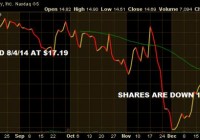
I’m taking my losses and selling SPKE before Q4 earnings. SPKE has abandoned its plan to increase spending to acquire customers and has now doomed its income statement. SPKE’s model isn’t built for constant shifting between high and low spending and this will create many problems. In hindsight I always knew what Spark Energy (NASDAQ: SPKE ) was, and I detailed that in my initiation article, so maybe I shouldn’t be as disappointed in how this trade turned out as I am, because I’m actually really disappointed. I’m selling SPKE on Monday at the open down 14.5% or so (depending on where this stock opens) for a couple reasons but primarily because the company has no idea what it’s doing. It’s literally operating in an industry where all you have to do is spend endlessly to acquire customers (welcome to the S&M black hole!), pray that you can do a decent job at hedging exposure to natural gas (creating the spread that creates the margin), do a good enough job to hang on to the majority of customers (but trust that there will in fact be churn), hope the share price goes higher, raise debt or finance via equity offering, and repeat the process. The most important must-do by far of those listed is spend, by the way. That’s all you have to do. Heck, I’ll make it even simpler for you SPKE – use your new revolver, yeah the one with the $37.9 million in current borrowing availability and go acquire customers. It’s that easy. Just spend, spend, spend! What do you not get about that? (click to enlarge) But of course, SPKE management couldn’t do that. No, SPKE management just announced on the Q3 CC that it’s executing its third strategic shift in as many years. What is this shift I speak of? Well, I’m speaking of the shift to (again) lower customer acquisition spending (this is after ramping customer acquisition spending in mid-2013 after lowering it in early-2012) to focus on “the longer-term sustainable growth consistent with our focus on distributable cash flow (SOURCE: SPKE Q3 CC )”, whatever that means. I say whatever-that-means because there’s nothing “longer-term” about SPKE’s business. It’s a commodity of the worst variety, meaning it has zero differentiation from competitors and zero value-prop to customers other than at any given point it can offer electricity services at a cheaper price than its competitors, which is by definition the definition of a commoditized business. This is pretty well evidenced in the attrition SPKE experiences regularly. I mean consider this, SPKE spent to acquire 91,000 customers between Q2 and Q3 while at the same time 44,000 customers walked through the door on the way to the next commoditized provider: (click to enlarge) Talk about an inefficient model. Now getting back to the stated reduction in spending and focus shift, this becomes a big problem because every time SPKE drops customer acquisition spending, as they did in FY2012, SPKE sees its revenues fall off a cliff. I’ve detailed this in SPKE’s financials in previous articles and even promoted this as a reason that “value” existed in buying the shares when I did. Of course this was under the assumption that management would actually do what it said it was going to do at the time I bought shares, which was spend, spend, spend. I only bought these shares because I wanted to piggy back on the ramped spending and the fact that the spending costs (customer acquisition costs) get recorded as an asset on the balance sheet and accounted for through D&A over 8 quarters. I wanted to front-run the what should have been explosive top-line growth with what would have been for a while minimal D&A additions to the income statement. This would have artificially enhanced the income statement and I was hoping propped the stock to a point that I could have sold at a healthy gain all while collecting a fat dividend for waiting. Yeah, it didn’t exactly turn out as planned. So, here we are with today’s “new model” that SPKE is promoting as the way of the future. Forget that the company has a horrible looking S-1 filing with three years of volatile financials and that the company has zero history of being able to execute on any single strategic initiative for more than a quarter or two. Don’t mind that. Let’s just get long some shares because, well, this is the way of the future. This is the “longer-term” more “sustainable” way to run this commoditized business. I think SPKE thinks it’s something it’s not and that can be a very dangerous thing. It has been for bagholders in the past and has been for this bagholder through 5 five months of ownership. The Ramp UP and The Ramp DOWN SPKE’s creating huge financial volatility for itself by constantly ramping up and ramping down spending. It’s also creating volatility for itself in not having a focused approach to its S&M efforts. SPKE also noted on its Q3 CC that it’s shifting its focus again back to commercial accounts, something it had completely abandoned after focusing on several years ago. You see a pattern here? SPKE seems to always be chasing the “hot dot” of the moment and seems to be the real case of the tail wagging the dog. Take a look at what it’s done for the income statement: (click to enlarge) So, first things first SPKE’s 9M results are absolutely blown up because 1H/14 was blown up by spending not being ramped until Q3/13. Let me explain how that works. SPKE can easily track revenues growth with S&M spending growth. What it can show is that once it increases spending, roughly three months into elevated spend levels revenue growth begins to turn upward. After about six months revenue growth reaches a terminal velocity where more spend is needed to created more velocity. That’s a pretty easy equation to follow. Now, I don’t know if that is uniform in this space or not but that’s what SPKE’s history has shown us. When SPKE decided to increase S&M spend in Q3/13 that means Q1/14 was only seeing terminal velocity of the initial increases in spend levels (which were increased from there further) and in fact the spend was being spread across larger geographic areas. This means that velocity was lower across a wider casted net which means sales were lower than they could have been had SPKE simply been concentrated (further saturating an area with spend). Yet another misstep. Regardless, that explains the 9M results showing such a variance from the Q3 results. Oh, by the way, we’re heading back to the days of reduced spending but don’t worry things are going to be different this time around because management has a plan. The 9M/14 results show flat top-line results, better NAO revenues (which are basically hedging gains or losses and largely SPKE has shown it has zero control and/or predictability in this line item), much higher operating expenses, and growing operating and net losses. This is inclusive of the benefit of a lower D&A expense, which will slowly be getting bigger quarter after quarter for the next six quarters before shrinking assuming SPKE actually maintains its plan to lower spending. There’s a huge amount of customer acquisition costs that have to be D&A’d to the income statement from the previous quarters spending ramps, regardless of if SPKE abandons the strategy half way through. What drove the 9M and quarterly results? S&M spending and hedging. That’s the entire business here folks. There’s a guy knocking on your door or a flyer in your mail offering you electric service. Is it at a lower cost or not? That’s what drives SPKE’s income statement. It’s really not that complicated but somehow SPKE has found a way to complicate it. What’s really sad is that had SPKE just stayed the course it might have been able to finally hit a vein regionally that it had some traction with or find a market that actually responded to its spending. I mean the cash is already gone, why not actually use what’s left on the balance sheet and dip into the revolver? Everything outlined in red is bad. The entire income statement is bad. I mean just look at that net income destruction Y/Y from ~$12 million to ~$7 million. Now, I’ll give SPKE that it hadn’t had a full 9M to show its increased spending and larger customer base within the 9M/14 figure, and subsequently SPKE went out and acquired some customers from outside sources so at least it’s trying the M&A route, but the comps it was up against in 2014 weren’t tough considering it didn’t ramp 2013 spending until Q3 as well. I just don’t have any sympathy for SPKE’s financials at this point because it’s doing this to itself. SPKE’s Adjusted EBITDA really shows the customer acquisition cost spend differential and why I say that once you start spending in this model you have to continue to spend forever, that the model basically becomes a constant black hole of S&M dollars: (click to enlarge) You can see how I’ve outlined the massive difference in customer acquisition costs in the comparable periods. In Q3/14 it was roughly 400% Q3/13, you don’t think that should have been driving revenues? You don’t think the ramp from previous quarters should have been driving revenues? The fact that the Q3 income statement showed flat revenues Y/Y in Q3/14 is a clear sign that the ship is already starting to take on water. That ramped spending is about to start to really add up on the income statement over the next few quarters in the form of a D&A uptick and SPKE isn’t going to have the revenues to offset it. It’s going to be taking huge losses on that when it happens. The spending difference becomes pretty egregious on the 9M side of the Adjusted EBITDA. 9M/14 customer acquisition costs were roughly 700% 9M/13 spending. Even with that, even with the compounding spending that should have reached maximum velocity from quarter prior SPKE still posted flat revenues. What an absolute disaster. This is going to bury SPKE’s stock over the next few quarters and was something I outlined in my prior articles. If SPKE didn’t have consecutive and sequential blowout top-line growth quarters you want nothing to do with this company. It won’t have the top-line to make up for the D&A uptick. That in a nutshell explains the bear thesis around this name going forward. This stock is dead, it just doesn’t know it yet. Do I need to even note those Adjusted EBITDA figures? Didn’t think so. Now, you can imagine what these types of operations have done for cash flows, which actually account for the cash outflows of the customer acquisition costs as they are incurred: (click to enlarge) Yeah, the cash from operations has been blown up and maybe that’s the reason for the strategy shift towards lower spending. Maybe SPKE management saw that what they were doing (again) wasn’t working and decided that conserving the last of the cash and the last of the liquidity via the revolver was the primary concern. I mean to hell with the income statement, that’s just for accounting nerds, the cash flow statement is dealing in real dollars, actual cash and when you run out of that and still don’t have a plan on the board for how you turn the corner and make it to spring you don’t get to play anymore. Even at minimal levels of revenues if SPKE can get spending down low enough it can generate good levels of FCF. Just look at both of these periods listed here. Solid FCF could allow the company to rebuild its cash balances and make one more run at another strategy shift or whatever else the company might have in mind. The point is, just don’t run out of cash. I think that’s probably the best explanation I have for what’s been announced and what’s about to be allowed to happen to the incomes statement. Where’s the trade? The trade is to sell SPKE and don’t ever consider it on the long side again. This business model and this niche isn’t one that you want to invest in for all the reasons mentioned in the beginning of this article. It’s a commodity with no way to differentiate itself and no way to protect itself from the wide swings that come with trying to hedge energy exposure on a constantly fluctuating demand. SPKE always was a bad business but I thought I could catch a few cheap points riding an accounting loophole that would have allowed revenue to grow while expenses remained artificially low on the income statement. I was wrong and lesson learned. I recommend a sell of SPKE. I look forward to providing continuing coverage in the future. Good luck to all.