Tag Archives: investing ideas

Don’t Sell Your XLF

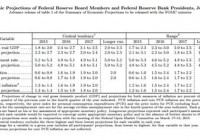
Yesterday a very bearish piece was published on XLF. But I think the author’s arguments are factually incorrect. XLF should perform well as rates normalize. Yesterday, fellow SA author James Stefurak published a piece on the F inancial Select Sector SPDR ETF (NYSEARCA: XLF ), explaining that now is the time to sell given that he sees 20%+ downside for the ETF. A variety of reasons are given for this bearishness but given that I steadfastly disagree with both the reasoning and final conclusion of the piece, please accept this article as my humble and well-intentioned rebuttal. The first point given for why XLF is doomed is concentration. Like most ETFs, XLF has a few key names that make up a significant proportion of the fund. This is normal and even if it wasn’t, the top three names only make up 25% of the fund. The author says if “something goes awry” with one of the top holdings the XLF will tank. That is, of course, true but that’s true of the SPDR S&P 500 Trust ETF (NYSEARCA: SPY ) as well or any other fund. I’m not sure what qualifies as “something going awry” but the author seems to imply that would mean a total liquidation of the holding. Not sure about you but playing for JPMorgan (NYSE: JPM ) or Wells Fargo (NYSE: WFC ) to go out of business and sink the XLF is probably not the highest probability trade I’ve heard of. The XLF isn’t really all that concentrated and besides, concentration is not a reason to sell by itself. If that were the case then all exchange-traded products would be off limits. Next up is the housing recovery and here, I see some efficacy in the arguments made. It is true the housing market is having a tough time producing sales due to a lack of inventory and high prices. This will crimp earnings for the big mortgage players going forward so the author is right about that. Where we differ is in whether or not this information is priced in. The author seems to think the market doesn’t yet know about this information but this has been going on for a year or more now; the market is well aware that mortgage originations are weak. He also draws comparisons to the financial crisis but these are quite short-sighted because the banking landscape is a completely different world than it was in 2008. Capital levels and controls are infinitely stronger and more robust and with regulators watching every move large banks make, the idea of another 2008 style meltdown is pretty far-fetched. Derivative exposure is the next reason to sell I’ll touch on here. This is one that bears have been pointing to forever as a reason that the world is going to explode. Yes, the dollar values are huge in the derivative market but that doesn’t mean that banks are on the hook for a quadrillion dollars in losses if the world economy sneezes. This “reason” for a selloff is ridiculous and has been touted for years to no avail. The derivative market is not a reason to sell because derivatives to a large degree are hedging instruments. There is no possible scenario where they all come due at once which is what bears continuously tout as the reason the stock market will collapse. It’s beyond the realm of possibility and should be ignored. Finally, the author claims that many financials are actually negatively correlated to interest rates and quotes this as yet another reason to sell. I was dumbfounded when I read this because regardless of whatever evidence may be presented, the market is telling you otherwise and that is all that matters. You don’t have to take my word for it; here are just three examples of where the financials rallied this year as rates moved up ( here , here and here ). It is important to note that this is not my opinion; this is hard evidence that the market likes when rates move up for financials. Presenting anything besides this isn’t intellectually honest. On the valuation piece, the author makes assumptions that I find entirely too bearish without presenting any basis for how the numbers were chosen. This removes the efficacy of the price target because the extreme bearishness has no basis presented. To quote the author: “We have a 12-month price target for XLF at $19.75 which represents an approximate 20% discount to current share price. This downside is conservative. We modeled various assumptions including equity market selloffs (12% U.S. equity market selloff), interest rate rises (the 3-month LIBOR at 35 basis points, the 30-year fixed mortgages of 4.50%, the U.S 10-year Treasury above 3%) and U.S. unemployment rate moving higher (to 5.8%, U-6 rate up to 11.3%) and a bottoming of the delinquency rate on Commercial Real Estate (FRED’s ‘DRCR’).” Based on what? A 12% selloff in equities would produce a sizable selloff in XLF but that’s true of any stock fund; that is not a reason to sell XLF specifically. Rates rising would be a positive, not a negative, as I already outlined. And unemployment is moving up towards 5.8%? Again, based on what? The Federal Reserve is projecting 5% out to at least 2017 so no offense to the author, but I’ll stick with that. Wrapping up, I see very little reason to sell XLF based upon the forecasts of the author’s piece. The evidence presented largely lacks substance in my view and in particular, the section on valuation. If equities in general sell off, of course XLF will go down. But other than that, forecasts for economic doom and gloom are not a reason to sell XLF. Before you run out and dump your XLF – which I think will perform very well as rates rise – please make sure you look at both sides of the argument. Disclosure: I/we have no positions in any stocks mentioned, and no plans to initiate any positions within the next 72 hours. (More…) I wrote this article myself, and it expresses my own opinions. I am not receiving compensation for it (other than from Seeking Alpha). I have no business relationship with any company whose stock is mentioned in this article. Additional disclosure: I am long several names in the XLF but not long the fund itself.
Inside ALPS’ New Sector Leaders’ ETF

Probably, every investor dreams of beating the benchmark index. And to fulfill this investor desire, issuers are increasingly resorting to smart-beta or unique approaches. After all, with the industry presently sporting close to 1,745 products and sitting on an asset base of $2.13 trillion, it is tough to wait out competition with a product that lacks novelty. To serve the need of the hour, ALPS recently launched an ETF, which does not focus on a specific sector or style like most, but uses the equal-weighted strategy as its winning mantra. To do so, the issuer targets the U.S. market itself, which is sitting pretty right now amid global market gloom spread by ‘Grexit’ worries and the Chinese equities sell-off. Below we give the details of this ETF. ALPS Sector Leaders ETF (NYSEARCA: SLDR ) in Focus The fund looks to track the S-Network Sector Leaders Index which is a benchmark of the U.S. large cap equities with equally weighted sector exposure. The index starts screening stocks from the S&P 500 index emphasizing high quality and growth scores. From every nine sectors of the S&P 500, five securities with the highest growth criteria are chosen. The fund charges 40 bps in fees. Investors should also note that the product uses an equal-weight methodology both in terms of individual securities and sectors. As a result, each company takes up about 2% of the total while each of the sectors has a roughly 11% weighting. Cigna Corp (CT) (2.64%), Alexion Pharma (NASDAQ: ALXN ) (2.45%) and Edward Lifesciences (NYSE: EW ) (2.39%) are top three holdings of the fund. How Does it Fit in a Portfolio? This ETF could be an interesting fit for investors who want a slight smart-beta approach, but want to stay invested in the broad markets. The product could also be an intriguing addition for those seeking an equal-weight strategy. The ETF is a fairly priced option as the fees on this product is in line with the average expense ratio of the U.S. large-cap blend equities ETFs. However, costs are roughly 4.5 times higher than what the biggest U.S. large-cap blend ETF – the SPDR S&P 500 Trust ETF (NYSEARCA: SPY ) – charges. The fund’s strategic approach might have caused it to charge higher than the plain vanilla market-cap oriented funds like SPY, the iShares Core S&P 500 ETF (NYSEARCA: IVV ) and the Vanguard S&P 500 ETF (NYSEARCA: VOO ) . In a nutshell, the fund offers huge diversification benefits with lower volatility as it provides meaningful exposure to every sector of the market. None of the sectors dominates the fund’s returns, thereby preventing the portfolio from heavy concentration. ETF Competition While SLDR may have a lucrative investment objective, the ETF will be facing some stiff competition for assets from some of the players in the U.S. large-cap blend equities ETFs. Among these, the Guggenheim S&P Equal Weight ETF (NYSEARCA: RSP ) , the PowerShares Russell 1000 Equal Weight Portfolio ETF (NYSEARCA: EQAL ) and the ALPS Equal Sector Weight ETF (NYSEARCA: EQL ) seem to be the top contenders. Link to the original article on Zacks.com

China, Greece And Volatility

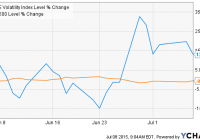
Summary VXX will benefit if backwardation appears long-term. The U.S. is more exposed to China than Greece. Risks to investing in volatility should be assessed. The last few weeks have had Greece front and center in most financial publication headlines. However, is Greece the main focus right now? In this article we will review the performance of the U.S. stock market, some European markets, and the Chinese stock market. To conclude, we will factor how this has and might affect U.S. volatility going forward. The U.S. Market has seen a sharp increase in volatility, which has been historically low. Below is a look at the DAX and FTSE over the same time period. Now, let’s look at the Chinese (and Hong Kong) stock market, again using the same time period. Despite major shocks to global markets, the U.S. market has shown pockets of resilience. Given the current risk, I see the U.S. as a safe haven. Just three months ago you had many touting the emerging markets because growth projections were better than those here at home. They are taking a much larger hit from this than U.S. stocks have. Earnings season is also right around the corner which could provide additional instability if guidance is weak. Assessment This is a classic, here is what we want you to focus on. The media coverage of the Greek drama has far outweighed the plunge in Chinese shares. Only now has China surfaced in headlines. Why? Because Greece is playing nice and is getting boring. Drama sells news, even if that drama isn’t the most important thing to be focusing on. The U.S. has much more exposure to China, than to Greece. Take a look below on the social media data from StockTwits. China doesn’t come close to the amount of interest from Greece. (click to enlarge) Chart created by Nathan Buehler using data from StockTwits.com. Volatility In this article we will focus on the iPath S&P 500 VIX Short-Term Futures ETN (NYSEARCA: VXX ). For two times the leverage you could also use the ProShares Ultra VIX Short-Term Futures ETF (NYSEARCA: UVXY ). VXX invests in second month futures that roll over to the front month and will benefit from backwardation and suffer from contango. For a video on those terms, click here . See below for the current term structure of the VIX. (click to enlarge) Vixcentral.com is my go-to place for futures. However, the website has experienced some problems over the last few weeks with some changes at the CBOE. I would recommend checking the CBOE term structure here if you have any trouble with the above site. Currently futures are in backwardation, which are not reflected on vixcentral, but are reflected on the CBOE link. Contango/Backwardation Despite the recent market rout, futures have struggled to make it to, and maintain positions in backwardation (which benefits VXX). See below: (click to enlarge) Conclusion I continue to believe that Greece will come to a solution with its creditors. A deadline of Sunday (July 12th) has been set to have a permanent agreement in place. Each Monday for the past two weeks has opened down significantly due to weekend events. It is possible that next Monday could be the same. At the end of the week we will hear from Fed chair Janet Yellen and the FOMC meeting minutes will be in focus. China, in my opinion, will level out but still face a lot of volatility. If the plunge continues I would expect some spillover to the U.S. markets. I continue to look for a better opportunity in the VIX futures. For the risk in this environment I would prefer to see a backwardation event from 5-10%, I just don’t know if it will get there. For now, the U.S. economy continues to appear stable and that is my best outlook for the VIX. I have traded in and out of most of my positions in options and the ETFs I mentioned in previous articles. I came out slightly ahead but disappointed in the overall performance. Such is life. I expect China to take center stage if the Greek drama dies down, and vice versa. News channels always need something to talk about. Please take time to assess your risk during periods of uncertainty. I have several articles available on risk assessment. VXX Outlook VXX will benefit from larger periods of backwardation. Backwardation reduces your risk of losses from time value decay. I would be more concerned with a drop off in volatility after this plays out. I have always been one to short volatility after a spike instead of chasing it up the hill. The boulder will eventually roll back down and run you over. I urge you to read up on my previous articles to understand what I am talking about. This is not an article to support buying VXX. I would currently suggest the opposite. I have begun a new volatility blog that will feature options strategies that will complement my Seeking Alpha articles. Check it out here . I also hope to add a personal finance and budgeting section in the near future. As always I appreciate you reading and wish you the best. Disclosure: I/we have no positions in any stocks mentioned, but may initiate a short position in UVXY, VXX over the next 72 hours. (More…) I wrote this article myself, and it expresses my own opinions. I am not receiving compensation for it (other than from Seeking Alpha). I have no business relationship with any company whose stock is mentioned in this article.