Tag Archives: investing ideas

Patience And Liquidity

The continued drop in commodity prices raised fears in the financial markets that global growth was slowing to a crawl. The result? Bond prices rose while stock prices fell. It is clear that there is overproduction relative to demand in most commodities. This is highlighted by energy. Prices continued to decline last week. Each commodity has its own dynamic but in virtually all cases production is increasing year over year at a rate surpassing demand growth. The key takeaway is demand and production are increasing. Major producers are finally cutting back production to levels equal to or beneath demand growth so that inventory levels stabilize or actually decline, which is a prerequisite for pricing power moving forward. It will take time and patience. Unfortunately there is a lot of speculation in the commodity markets and continued weakness in prices initially led to margin calls and now outright liquidation. Markets typically move too far each way. Fear of a further collapse in the commodity markets has spilled over into other financial markets creating opportunities for investors who have been patient and maintained their liquidity. I have stated that lack of or no growth was my biggest fear. But let’s put all of this in perspective: the U.S. economy is improving led by the consumer; China reported 7.0% growth last quarter and its stock market has rebounded of late; Greece is settled, at least for now, lifting a big cloud over Europe which will lead to renewed growth; Japan is doing fine led by exports; India is continuing to accelerate and will grow over 7% this year however many third world countries are suffering. The world is growing over 3.0% this year which may be less than in the past. Global growth should improve in 2016, too. Don’t forget that the drop in oil prices recently from $60 dollars per barrel to around $48 per barrel will boost consumer disposable income around the world and lower inflationary expectations boosting bond prices from what they otherwise would be at this point in the economic cycle. Beside the consumer, the drop in energy and other commodity prices are good for corporate margins in the aggregate but of course not for the commodity producers themselves. By the way, we added to our energy shorts after it appeared that a deal would be reached with Iran, which we discussed in previous pieces. It was an easy call. Over 70% of companies reporting so far have exceeded their forecasts for the second quarter and maintained or raised numbers for the year. Not too bad. Rather than reviewing events by region as we have done in the past, I’d like to review my core beliefs and see if there are any changes that may influence my investment policy: Monetary policy remains easy virtually everywhere and the supply of funds is exceeding the demand for funds, which is favorable for financial assets. It is clear that the Fed is on hold until year-end or early 2016 at the earliest removing an immediate concern in the marketplace. The dollar has remained the currency of choice, which may impede U.S. economic growth but also lowers inflationary expectations. Positive capital flows from abroad continue to reduce our interest rates from what otherwise they would be. The yield curve will steepen but the degree may be less than initially thought due to the sharp drop in commodities, weakness overseas and strength in the dollar reducing inflationary expectations further. A new conservatism permeates governments, corporations and individuals is clearly true. Just look at new Fed rules for the banks and at corporate cash flow reported for the second quarter so far. Hillary Clinton’s tax proposals are not good for the economy, capital formation and investment but may improve the Republican’s chances in the next Presidential election. Profits will surprise on the upside clearly occurred with second quarter results reported so far. Financial leverage and capital ratios will continue to improve. Clearly this is the case as most corporations are capping capital spending at depreciation therefore generating a lot of free cash. Banks continue to raise capital ratios and reduce leverage and risk. M & A activity will remain strong. Just look in the newspapers every day to see deals of all sizes. Both the acquirer and the acquired company’s stocks rise, as most deals are anti-dilutive day one. Commodity prices continued to decline as producers remained slow to cut back production at levels to or beneath demand growth so inventories continued to rise and prices fell. But lower commodity prices are good for inflation, interest rates and profit margins. Not for commodity companies though. Corporate managements are acting as their own activists recognizing that change is a necessity to survive and thrive in a globally competitive landscape. A Greek default was contained although I doubt that Greece can live up to the terms of its new deal with the ECB. The can was kicked down the road. I still doubt that the Fed can begin raising rates until 2016 and overall policy will remain easy. Future rate hikes will be small and spread out unless there are major changes in the outlook for the U.S and global economies. The economic cycle will be extended with lower highs and higher lows. Still valid. There are few, if any, excesses. Speculation exists today in real estate, private equity and art. Still valid. My beliefs remain for the most part intact. I continue to be pleasantly surprised by how managements are adapting to this global competitive environment. Management is everything to me. There is a reason why Alcoa, Dow Chemical, GE, Honeywell, Nucor, JP Morgan Chase, Wells Fargo are best in class. Then take a look at Facebook, Google, Apple, Starbucks, Visa to name some more. I am long 25 of the best managements in the world who have winning long-term strategies regardless of the economic environment. And that is the key to be a successful investor. Be patient and maintain ample liquidity at all times to take advantage of market moves like last week. While change is in the air it does not happen overnight. Follow your beliefs and challenge them at all times. Invest in stocks, not markets. Invest accordingly! Share this article with a colleague
Why Capital Allocation Matters

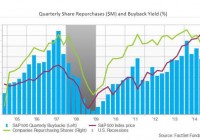
Summary Despite being a direct factor of long-term investor returns, few investors actually focus on identifying management teams that allocate capital well. Empirical studies suggest that even most management teams do not fully understand the importance of capital allocation on their business. The “holy grail” in investing is to find an excellent business, trading at a discount to fair value with a management team that allocates capital well. Introduction: Capital allocation is a topic of great importance to investors and management teams. At the core of any business is the simplistic NPV/IRR model which is used to answer a very simple question: Where should we invest? Whether a company invests in a new factory or an individual invests in a security, the concept is the same: If I outlay an amount today, how much will I expect to get in return in the future. Capital allocation in its simplest form is allocating capital from its various sources to its highest return. As author William Thorndike argued in his work, ” The Outsiders: Eight Unconventional CEOs and Their Radically Rational Blueprint for Success ,” the goal of a CEO is to properly allocate capital to its next highest return. The argument for such a quantitative measure of success is in stark contrast to the numerous more qualitative theories to excellent management. This article will focus on the goals of capital allocation and how an investor should logically assess the decisions management teams and Boards of Directors are making in regards to capital allocation decisions. As I previously mentioned in an older article, over long periods of time, compounding at higher rates creates exponential differences in ending values. Just like with investing, allocating capital in projects at high rates of return won’t matter as much in the short term but will matter tremendously in long term. Why Capital Allocation Matters: Capital allocation is the most critical aspect to generating long-term investment returns, yet despite many management teams making mention of the topic, their track record remains poor. A recent article posted in the HBR made a record of faults of current CEOs and their lack of focus on capital allocation. This is despite the fact that much of the financial theory regarding how value in a firm is created was first theorized in 1960s. So why do most CEOs perform poorly at what is arguably the most important for their position? A powerful argument, aptly discussed by legendary investor Warren Buffett in his 1987 Berkshire Hathaway (NYSE: BRK.A ) (NYSE: BRK.B ) Annual Letter, is that CEOs are more popularity contest than aptitude test. CEOs usually come up through the ranks of a company’s most important divisions such as sales, marketing, R&D or engineering. Their background and skill set is completely different as compared to what is actually required of them when they are promoted to CEO. This mismatch between a CEO’s background and the expectation for proper capital allocation by a firm’s investors has created the basis for typical activist investing. For all investors, the matter is still paramount when making investing decisions, especially those that are long term in nature. For the same exact business, excellent capital allocation will deliver excellent shareholder returns while poor capital allocation will do the opposite. How to Assess Capital Allocation Decisions: Management teams have a basic toolbox of decisions they can make to generate returns. The equation itself is relatively straightforward. First, capital can be obtained in four ways, the sale of debt, the sale of equity, the sale of assets and through internally generated operating cash flow. Next, the capital can be allocated in five different ways, either the issuance of dividends, the repurchase of stock, the retirement of debt, the purchase of other assets (M&A) or the reinvestment back into the business (i.e. Capex or net working capital additions.) Among each of these decisions, no specific one has precedence over the others. This is a critical concept that few investors or management teams truly appreciate. Whether capital is obtained through issuing debt or through operating cash flow, the capital is still finite and should be treated as such. A common misconception that many management teams and investors have is their view that operating cash flow is free and costless. This is not true as its real cost is the opportunity cost of other projects that could be done with the cash. Investors have been and should be upset when a management team uses operating cash flow to spend it on new internal projects with poor prospects of sufficient returns. Lastly, the question of capital allocation is not cut and dry. The best answer a management team could give investors regarding their view on capital allocation is: “it depends.” A common answer by some management teams might be to first spend on the business itself (new Capex or R&D) then pay a dividend and then use the rest of the excess capital for share repurchases. The graph below depicts this concept as share repurchases tend to peak during cyclical economic peaks, when operating cash flows are at their highest levels. (click to enlarge) This decision process is flawed, however, because capital should be allocated towards its next highest return. When a business is earning very high returns in its core business, reinvestment makes sense but if incremental returns are slowing, the company should not spend more despite the prospects of the business growing future revenues and profits. If the share price is substantially undervalued, the company should forego cash dividends and instead repurchase stock. If the share price is extremely expensive, M&A multiples far too high and all reinvestment opportunities exhausted, the last resort for management should be to pay a special cash dividend. This kind of flexibility in decision making may make investors nervous or less likely to buy a stock but it is the correct mindset for management teams who wish to drive attractive long-term shareholder returns. Finding Management Teams with Good Capital Allocation Skills: How does one find which management teams are apt at capital allocation? First, assess how a company’s management team discusses and presents its view on capital allocation. Does management think growth in the business should come at all costs? Are they beholden to a cash dividend no matter what other options for capital allocation exist? Do they not have an internal hurdle rate for returns when they do an M&A transaction? These types of viewpoints are indicative of a management team that does not have a solid grasp on proper capital allocation. Good management teams will describe the financial reasoning for their decisions. For example, for an M&A transaction, mentioning of the multiple to EBITDA or cash flow and how the deal is accretive to EPS and attractive on an ROIC basis are all needed to be sure the management team is doing due diligence. If a company is making share repurchases, they should make mention of their view on how undervalued the shares are. If the company is making share repurchases no matter what the multiple of the stock is to EPS or FCF, that is a telltale sign that management isn’t focused on capital allocation. Conclusion: Investors should be very wary of management teams and their capital allocation skills. Many CEOs move up through a company in divisions that don’t train them in proper capital allocation, leaving them less than apt at making investors above average shareholder returns. By staying focused on how management teams allocate capital, investors can figure out whether their investments’ management teams are making capital allocation decisions that maximize future shareholder returns. Disclosure: I/we have no positions in any stocks mentioned, and no plans to initiate any positions within the next 72 hours. (More…) I wrote this article myself, and it expresses my own opinions. I am not receiving compensation for it (other than from Seeking Alpha). I have no business relationship with any company whose stock is mentioned in this article.

Here’s Why I Am Staying Away From California Water Service Group

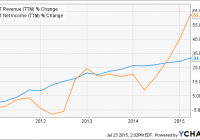
Summary California Water Service Group is a water utility serving California, Washington, New Mexico and Hawaii. California Water Service Group generated free cash flow in only two of the past 19 years. California Water Service Group possesses a high amount of long-term debt. It’s important for long-term investors to develop a guide for doing their investment research. Over the years, I have developed questions to guide me in my thinking when researching the publicly traded universe. Today, let’s talk about California Water Service Group (NYSE: CWT ). 1.) What does the company do? When you buy shares in a company you effectively become part owner of that company. Therefore, it’s important for an investor to understand what a company sells. California Water Service Group sells water. The company operates mainly on the west coast in states such as California, Washington, New Mexico and Hawaii. It operates regulated and non-regulated businesses. 2.) What do the fundamentals look like? Investors should also look for companies that grow revenue and free cash flow over the long term, retaining some of that cash for reinvestment back into the business and for economic hard times. Excellent revenue and free cash flow growth serve as catalysts for superior long-term gains. California Water Service Group expanded its revenue and net income 32% and 63%, respectively, over the past five years (see chart below). CWT Revenue (TTM) data by YCharts California Water Service Group operates in a highly regulated business which constrains operations. Also, drought conditions make operating a water utility difficult. Moreover, the company has only been free cash flow positive in two of the past 10 years, according to Morningstar. Large amounts of capital expenditures exceed operating cash flow due to the capital intensive nature of the business. Capital maintenance of this nature leaves little room for expansion and tangible capital returns to shareholders in the form of dividends, which can contribute heavily to any stock market return. I like to see companies expand their free cash flow over the long term. This gives an indication that a company can stand on its own two feet. California Water Service Group sports a lousy balance sheet by my standards. In the most recent quarter, the company possessed $33.3 million in cash and equivalents, which equates to a mere 5.4% of stockholders’ equity. I always like to see companies with cash amounting to 20% or more of stockholders’ equity to get them through tough times. California Water Service Group’s long-term debt amounts to 68% of stockholders’ equity. I like to see companies keep long-term debt at 50% of stockholders’ equity or less. Operating income only exceeded interest expense by three times in FY 2014. The rule of thumb for safety lies at five times or more. Like most utilities, California Water Service Group does pay a dividend. However, its dividend sustainability doesn’t hold water. I like to see companies pay out less than 50% of their full-year free cash flow in dividends, retaining the remainder for other things. Last year, California Water Service Group ran a free cash flow deficit, meaning that the dividend came from sources other than free cash flow. Currently, the company pays its shareholders $0.67 per share per year and yields 2.9% annually. California Water Service Group’s sub-par fundamentals only translated into 48% total return for the company’s shareholders vs. 114% for the S&P 500 as a whole (chart below). CWT Total Return Price data by YCharts 3.) How much management-employee ownership is there? Investors should always look for businesses where the managers and/or employees own a lot of stock in the company. Managers with a great deal of stock in the company will take better care to maximize company profits, which will enhance share price and their personal wealth along with the wealth of shareholders. According to California Water Service Group, company executives each own less than 1% of the company’s stock. This isn’t too big of a deal, this just mean that management lacks the extra incentive provided by huge ownership of the company. 4.) How does its “Report of Independent Registered Public Accounting Firm” stack up? Every year a company employs external auditors to audit financial statements and evaluate whether the company maintains adequate financial controls. At the conclusion of the audit, you want to see a letter from auditors with the language “unqualified” or “fairly presents”, which generally means that the financial statements and internal systems in constructing them were clean or adequate. If you see “qualified” or “adverse” in the auditing letter’s language, then deeper issues in a company’s financial statements may exist. According to California Water Service Group’s latest auditing statement, the financial statements were presented fairly and the company maintained adequate internal controls. 5.) What types of risk does it have? It’s always important for investors to weigh the various risks such as exposure to political risk in parts of the world where war is the norm, competitive positioning, and market price risk. California Water Service Group operates exclusively in the United States, which means political risk resides in the minimum range. California Water Service Group represents an infrastructure stock, meaning there is little or no competition in its service area. The barriers to entry reside in the high range due to regulatory and capital hurdles to entering the business. However, drought conditions could increase regulatory scrutiny and the introduction of more exotic accounting. California Water Service Group’s market price risk actually resides in the low range. The company’s P/E ratio clocks in at 18 vs. 19 for the S&P 500 as a whole, according to Morningstar. 6.) What does its forward analysis look like? Just because California Water Service Group is a needed water utility doesn’t mean that it’s risk free. I prefer to see companies generate free cash flow on their own and possess a margin of safety in terms of interest cost coverage. Regulatory conditions combined with high capital maintenance will make it difficult for the company to generate free cash flow, which represents the life blood of things like superior capital gains and dividend increases. I am keeping my investment dollars away from this company. Disclosure: I/we have no positions in any stocks mentioned, and no plans to initiate any positions within the next 72 hours. (More…) I wrote this article myself, and it expresses my own opinions. I am not receiving compensation for it (other than from Seeking Alpha). I have no business relationship with any company whose stock is mentioned in this article.