Tag Archives: industry

ALLETE, Inc: Consistent Dividends Since 1950
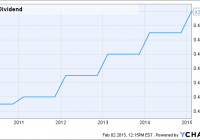
The company has paid dividends consecutively since 1950. The shares currently sport a yield of about 3.57%. Growth of the company points directly to further growth of the dividend. As I continue my never-ending quest to find quality companies with safe, and attractive dividends, my search led me to ALLETE, Inc (NYSE: ALE ). The diversified utility company mainly focuses on electric generation in Minnesota, North Dakota, and Wisconsin. Founded in 1906, the company has a rich history, but I am more interested in its dividend history. In late January it raised its dividend 3.1% to 50.5 cents a quarter. With the raise the company now sports a 3.57% yield that is very attractive in my eyes. This was the fourth straight year of a raise, according to Dividends.com. This doesn’t seem like that much, but what I view as being just as important is consistency. Even so I believe going forward the company will continue this track of dividend growth and that is one of the main reasons I’m a fan. ALE Dividend data by YCharts The company has paid a consecutive dividend since 1950, and this is most definitely not going to change anytime soon. Some don’t like to reference the past to point to the future, however, I always believe a strong dividend history is a plus. It shows the company is dedicated to maintaining its dividend even when the market may be bad overall. On a different note, growth is setting up nicely for the company and the chart below illustrates this beautifully. year Revenue Earnings Per Share 2013 $1.02B $2.63 2014(Est) $1.09B $2.93 2015(Est) $1.15B $3.21 (Source: Yahoo Finance ) The company is expected to release its Q4 2014 results along with its FY 2014 results on February 17th before market open. Revenue, as seen above, is estimated to be reported up 7.4% compared with last year. EPS is expected to be up 11.4% compared with last year, and that trend looks to continue with EPS forecasted to be up another 9.55% for FY 2015. I have heard a lot lately about utilities being overpriced, and for some names I am in agreement. Currently the shares are trading at 19.33 times earnings, which is lower than the industry average at 21.8. The forward price to earnings is 17.9, and this is why I believe the shares are not currently overpriced. The company currently has a payout ratio of about 65%, which is a very safe number for a business in a quite stable and consistent industry. EPS of $3.21 for 2015 point to a payout ratio of just 62.8%. This then points to the company being in a great position to raise the dividend again in the next year. Beyond that, things also look good for more raises with earnings increasing nicely into 2016. A mid-term growth catalyst for the company is its recent acquisition of U.S. Water Services. This further diversifies its holdings and will provide an extra boost to growth. U.S. Water generated $120 million in revenue in 2014 and the company projects it to grow revenue 10%-15% on an annual basis going forward. This is a great investment for the company and should definitely begin to pay off during the next few years. I love this diversification because as a diversified utility, it offers good exposure for one’s portfolio. In conclusion, ALLETE is yet another strong dividend payer in the utilities sector. Although the company’s core business is electricity generation, it does have a fairly diversified portfolio of holdings, adding to it most recently with the purchase of U.S. Water. The growth trend looks to be strong, and the company has lots of room to continue to raise its dividend in the future. I believe as a long-term play, ALLETE will continue to reward its shareholders both through growth in the business and the dividend. Disclosure: The author has no positions in any stocks mentioned, and no plans to initiate any positions within the next 72 hours. (More…) The author wrote this article themselves, and it expresses their own opinions. The author is not receiving compensation for it (other than from Seeking Alpha). The author has no business relationship with any company whose stock is mentioned in this article. Additional disclosure: Always do your own research before investing.
American Electric Earns Bullish Thesis With Its Solid Growth Prospects

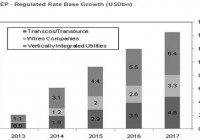
Summary Company making correct decisions to grow regulated operations. Regulated operations will provide sales, earnings and dividend stability. Aggressive capital expenditures will fuel AEP’s earnings growth in future. I reiterate my bullish thesis on American Electric Power (NYSE: AEP ); the company’s strategic growth plan focused on broadening and improving its regulated asset base will help it better its sales and attain a sustainable cash flow base through a decent increase in its rate base. As part of its long-term growth plan, the company is working to improve its competitive business results, and it will be making aggressive investments in transmission operations, which will portend well for both AEP’s top-line and bottom-line numbers. As regulated operations will gather more cash flow stability for the company, AEP will continue to reward its shareholders through dividends. Moreover, the company’s cost saving plan will positively affect its bottom-line numbers. The stock offers a potential price appreciation of 8.3%, as per my price target calculations, shown below. AEP Making Right Moves to Excel in Long Term 2014 was a good year for AEP; the stock is up approximately 35% in the last 12 months. The company’s performance has been positively affected by the low yield environment and improving demand from industrial and consumer segments. The company’s increased dependence on regulated operations has been helping it exploit the industry’s growth prospects. AEP’s strategic growth formula is centered on generating sales growth through increased capital expenditures for the infrastructure development of transmission business. The company has laid out its plan to make an investment of around $4.8 billion towards the betterment of its transmission business over the next three years. Owing to its large scale capital expenditure plan for regulated operations, especially for the transmission business, I believe the company’s regulated rate base will grow at a decent pace, delivering significant upside to its top-line numbers. The following chart shows AEP’s expected regulated rate base growth for upcoming years. Source: Power&RenewableInsights.com Along with the transmission infrastructure growth expenditures, the company is also looking at all possible options to better the results of its competitive business. AEP has made an announcement that Goldman Sachs will assist in improving and exploring the options of its competitive business operations. As utility companies like Duke Energy (NYSE: DUK ) are shedding their competitive operations , I believe AEP will also consider the option of selling its competitive energy assets to address the prevailing challenges and increase its focus on regulated asset base. Moreover, if the company opts to sell its competitive operations, the sales proceeds of competitive assets could be approximately $2.8-$3.6 billion . In addition, AEP has been actively pursuing its cost reduction plan, the “lean deployment” plan, to reduce its expense burden and support its future profitability. The plan has been rolled out to 13 distribution districts and 13 more districts are under review in order to deliver the management’s anticipated cost savings of $100-$200 million from the lean deployment plan by the end of 2016. In fact, the cost saving plan will grow the company’s bottom-line trajectory and will add towards its EPS growth. AEP have reiterated its earnings guidance for 2015 in its recent 4Q14 earnings conference call; the company expects its earnings to grow in a range of $3.40-$3.60 per share. Owing to its ramped up efforts to grow regulated rate base and healthy cost saving initiatives, I believe AEP will be able to grow its earnings at a decent base. Analysts are also anticipating that the company will deliver a healthy next five-year earnings growth rate of approximately 4.92% . Financial Performance The company recently reported 4Q’14 operating EPS of $0.48 , down from $0.60 per share in 4Q’13. The company’s quarterly earnings were negatively affected by its plan to speed up its capital expenditures and shift its O&M expenditures from 2015 and 2016, to 2014. The company’s decision to shift the future expenses to 2014, have improved earnings visibility and will positively affect its future earnings growth rate. Despite soft earnings for 4Q’14, the company reported an operating EPS of $3.43 for full year 2014, up 6% year-on-year. Investors Remain Rewarded AEP has a strong history of rewarding its shareholders through healthy dividends. The stock currently offers a safe dividend yield of 3.35% . The company’s healthy cash flow base has been supporting its hefty dividend payments and its current payout ratio of 55% indicates that AEP can increase its payout ratio to increase dividends in upcoming years. Keeping track of its impressive dividend payment policy, the company recently announced a quarterly dividend payment of 53 cents , an increase of 6%, year-over-year. Owing to AEP’s increased focus on regulated operations, I believe the company will attain more cash flow stability in the years ahead, ensuring the stability and security of its long-term dividend payment plan. The following table shows the dividend per share and dividend payout of AEP from 2012-2014, and includes figures for 2015, based on my estimates. 2012 2013 2014 2015(NYSE: E ) Dividend Per Share (In-$) $1.88 $1.95 $2.02 $2.10 Dividend Payout Ratio (In-%) 61% 60% 57% 61% Source: Company’s Yearly Earnings Reports & Equity Watch Estimates Risks Despite the company’s sturdy growth efforts, strict environmental regulations from authorities will remain an overhang on its future stock price performance. Since AEP has been making huge investments to develop its transmission infrastructure, I believe future capital expenditures could weigh on its cash flows. Price Target I have calculated a price target of $69 for AEP through a dividend discount model. In my price target calculations, I have used cost of equity of 6% and nominal growth rate of 3%. The stock offers an upside price potential of approximately 8.3%, as per my price target calculations, shown below. 2015 2016 2017 Terminal Value Dividend Per Share (In-$) 2.10 2.12 2.20 75.53 Present Value of Dividend Per Share (In-$) 1.98 1.88 1.85 63.45 Source: Equity Watch Calculations & Estimates Total Present Value of Dividend per Share = Price Target = $1.98 + $1.88 + $1.85 + $63.45 = $69/share Conclusion The company has been delivering a healthy financial performance in the recent past. The company has been making the correct decisions to grow its regulated operations, which will improve its financial performance. Also, regulated operations will provide sales, earnings and dividend stability. The company’s aggressive capital expenditures will fuel its earnings growth in the future. The stock offers a safe dividend yield of 3.35%, which makes it a good investment option for dividend-seeking investors. The stock also offers a potential price appreciation of 8.3%, based on my price target. Due to the aforementioned factors, I am bullish on AEP. Disclosure: The author has no positions in any stocks mentioned, and no plans to initiate any positions within the next 72 hours. (More…) The author wrote this article themselves, and it expresses their own opinions. The author is not receiving compensation for it (other than from Seeking Alpha). The author has no business relationship with any company whose stock is mentioned in this article.

Are Multi-Asset Funds A Threat To The Fund Industry?

By Detlef Glow The chase for yield by all kinds of investors has driven up the popularity of so-called multi-asset funds, since the funds promise to be widely diversified and therefore able to generate returns from all kinds of assets. In a number of cases the promise also extends to all kinds of market conditions, since some of the funds have the ability to use shorts or so-called market-neutral strategies. With regard to the investment objectives of multi-asset funds, these funds can be considered as really actively managed funds. That mixed- or multi-asset funds are privileged products for European investors is shown in the impressive inflows these funds have been able to gather. Asset allocation funds were not only the best selling fund sector for 2013 (+€61.6 bn), they also led the table for the first 11 months of 2014. In this period asset allocation products gathered €63.3 bn, far ahead of the second and third best selling sectors: mixed-asset conservative (+€27.9 bn) and bonds EUR (+€27.5 bn). The strong inflows into the multi-asset sector, combined with the fact that more and more fund promoters are launching multi-asset products to benefit from this trend, have raised questions and concerns about multi-asset products. One of these questions is whether all of these new managers are able to handle multi-asset portfolios, especially in tough times. Will these managers be able to meet the expectations of their investors in bear markets? The fear behind this question is linked to the negative image of the fund industry that stemmed from a number of absolute return funds failing to meet their goals during the 2008 financial crisis. From my point of view this is a valid concern: some managers may not be able to handle rough markets. They might not be experienced in the use of shorts, or they may not have the right risk management tools in place. Another point of concern is that some asset managers try to run their multi-asset portfolios with small teams to cover a large number of asset classes, or they are managing these portfolios in addition to other portfolio management tasks. In this regard, investors should make sure the fund management team of their fund is focused on the multi-asset portfolio and has enough resources to handle all the asset classes in the portfolio. The second major concern I have heard often in recent months is about fund flows. Since multi-asset products seem to have been the investment of choice of both institutional/professional and private investors in the past two years, some observers state that the flows might have reached their peak. Investors may start to pull out their money from these funds, which could lead to major outflows and therefore disruptions in some asset classes. I do not think that private investors will stop investing in multi-asset products as long as the funds fulfill their investment objectives and the goals of the investors. But it looks a bit different on the institutional side. New regulations such as Solvency II, with its high reporting standards, may cause some outflows from mutual funds, regardless of whether the fund promoters are able to deliver holdings data and other statistics on time. Another reason for outflows might be because asset managers are using multi-asset funds instead of buying the single building blocks and building multi-asset portfolios of their own. That would be the only way for them to have their asset allocation fully under control. From my point of view both concerns are valid; institutional outflows could easily offset inflows, which might cause outflows from the asset allocation sector. Even so, I would not expect any major disruptions in the utilized asset classes from this, since major outflows are unlikely to happen from one day to the next. In addition, I don’t think all the institutional investors who have bought multi-asset funds are able to manage this kind of portfolio in-house and therefore need an external manager to participate in these broadly diversified investment strategies. I would assume some questions and concerns around multi-asset funds are valid, but as long as at least the major funds in this market segment continue to deliver on their investment objective, the fund category is not a major threat for the European mutual fund industry. From my point of view, the major risk for the fund industry would be if one of the top-selling funds in this segment fails to deliver on its investment objective or faces major losses during a crisis. That would once again damage the reputation of the fund industry, which might then irrevocably lose investors’ trust. The views expressed are the views of the author, not necessarily those of Thomson Reuters.