Tag Archives: income

New ETF Takes The Yield Approach To Infrastructure
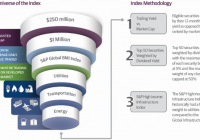
Summary Investors play the boom in infrastructure with sector-related ETFs. Guggenheim Investments recently launched a new yield-weighted infrastructure ETF. A closer look on the infrastructure industry. By Todd Shriber & Tom Lydon Due to an expected boom in global infrastructure, investors can choose from multiple infrastructure exchange-traded funds, several of which also offer compelling dividend yields. The new Guggenheim High Income Infrastructure ETF (NYSEArca: GHII ) , which debuts today, takes a different, unique approach to infrastructure. Eschewing traditional market capitalization weighting, GHII looks to solidify its status as an option for income investors by weighing its components on the basis of trailing 12-month yield. “GHII is the first yield-weighted infrastructure ETF to come to market. The new ETF tracks the S&P High Income Infrastructure Index, which is composed of the 50 highest-dividend-paying companies within the S&P Global BMI that operate in the energy, transportation, and utilities sectors,” according to S&P Dow Jones Indices . The index is home to 50 companies, including three firms listed outside the U.S. in the top 10 holdings. Names familiar to U.S. investors found in GHII’s underlying index include Williams Companies (NYSE: WMB ) and Kinder Morgan (NYSE: KMI ), which have an average dividend yield of 4.6%. GHII’s index allocates just over half its weight to utilities stocks, a third of its weight to the industrial sector, and 16.3% to energy names. Some new ETFs are afflicted with poor timing, particularly thematic funds, but that does not appear to be the case with GHII as the fund debuts at a time when governments all over the world are talking about boosting infrastructure spending. “Governments are increasing fiscal expenditures to update and expand infrastructure projects. For instance, The Obama administration has proposed $478 billion in spending on roads, bridges, ports and other key transportation nodes,” reports Jeffrey Sparshott for the Wall Street Journal . “While infrastructure investment will continue to be needed even after the economy reaches full employment, time is running out to make these needed investments under ideal economic conditions,” the White House budget said. “Oxford Economics and PwC project global infrastructure spending will top nearly $78 trillion between 2014 and 2015, with about 60% of that coming out of the Asia Pacific,” the Wall Street Journal reports. As Guggenheim notes, demand for infrastructure assets remains durable regardless of economic conditions and market factors. “The infrastructure asset class offers investors the opportunity to realize enhanced return and capital appreciation. Offering strong cash flow potential, assets with typically long lifespans, as well as relatively low volatility and significant barriers to entry, infrastructure provides investors with access to an emerging segment of the market aligned with the global recovery,” said the issuer. GHII Index Information (click to enlarge) Chart Courtesy: Guggenheim ETF Trends editorial team contributed to this post. Disclosure: The author has no positions in any stocks mentioned, and no plans to initiate any positions within the next 72 hours. (More…) The author wrote this article themselves, and it expresses their own opinions. The author is not receiving compensation for it. The author has no business relationship with any company whose stock is mentioned in this article. Additional disclosure: Mr. Lydon serves as an independent trustee of certain mutual funds and ETFs that are managed by Guggenheim Investments; however, any opinions or forecasts expressed herein are solely those of Mr. Lydon and not those of Guggenheim Funds, Guggenheim Investments, Guggenheim Specialized Products, LLC or any of their affiliates.

2015 Is A Growth Year For Technology Mutual Funds

The fourth quarter 2014 earnings season is the tale of two factors; Oil prices, and global economic shifts. The decline in oil has given the consumer more disposable income, but that income has yet to be seen positively impacting other sectors as it would be expected. Further, global economic shifts have caused the dollar to be stronger against other currencies. This is having a negative impact on international conglomerates, and most other companies that have a significant international exposure. The oil situation is the main culprit for the volatility due to the fact it impacts so many other segments of the world economy. Further, the decline in oil has given a slight rise of better performances in some other sectors due to consumers having more money in their pocket, but not as much as analysts initially thought. On the other side, the strengthening dollar is cutting into profits for international companies, causing negative revisions in 2015. But there is one segment that is showing double digit growth, but has no real dependence upon oil prices, or is adversely impacted by the stronger dollar; the Technology Sector. The Technology sector earnings growth is almost twice as much as the S&P 500 for Q4, and is expected to outperform the S&P 500 over the next three quarters after that (Q4 14 +12.4 vs. 6.4% for S&P 500, Q1 15 expected growth +6.4%, S&P 500 -2.1%, Q2 15 +3.8% vs. S&P 500 at -3.0%, Q3 15 +6.8% vs. S&P 500 at +0.6%). So with growth prospects outperforming the S&P 500 through Q3 15 it would be wise to look into the segment to see what Zack Ranked #1 Mutual Funds in the Technology sector are poised to capitalize on the expected growth levels in 2015. Using the Zacks Mutual Fund Rank, and then separating out funds with high expense ratios , and load fees we were able to identify 4 funds that are well positioned to capture the expected growth through FY 15. Technology Funds for 2015 Fidelity Select Electronics Portfolio (MUTF: FSELX ) a Zacks Rank #1 (Strong Buy) is designed to seek capital appreciation by investing at least 80% of assets in common stocks of companies principally engaged in the design, manufacture, or sale of electronic components (semiconductors, connectors, printed circuit boards, and other components); equipment vendors to electronic component manufacturers, electronic component distributors, and electronic instruments and electronic systems vendors. The fund offers dividends and capital gains twice a year in April and December. This fund allocates its capital between Large Cap Growth, Small Cap Value, and Foreign Stocks, and holds over 80% of their portfolio in the technology segment. The fund holds companies like Intel (NASDAQ: INTC ), Broadcom (NASDAQ: BRCM ), Texas Instruments (NASDAQ: TXN ), Samsung ( OTC:SSNLF ), and Qualcomm (NASDAQ: QCOM ). The current fund manager has been with the fund since 2009, and has shown solid gains for his (Stephen Barwikowski) clients. This tech fund has a very low expense ratio, 0.79, and has no front or back loaded fees. The minimal investment is $2,500. Past Performance: 1 year +38.37%, 3 year 25.89%, 5 year 16.36%. T. Rowe Price Global Technology Fund (MUTF: PRGTX ) a Zacks Rank #1 (Strong Buy) seeks long-term capital growth. The fund invests at least 80% of its net assets throughout the world in the common stocks of companies that generate a majority of their revenues from the development, advancement and use of technology. The fund’s holdings can range from small companies to blue chip firms with established track records. Dividends and capital gains, are declared annually in December. The fund allocates its capital between Large Cap Growth, Foreign stocks, and Intermediate Bonds. Further, the fund holds companies like Amazon (NASDAQ: AMZN ), Alibaba (NYSE: BABA ), Priceline.com (NASDAQ: PCLN ), and Qualcomm. This fund has a low expense ratio, 0.92, and does not have a front or back loaded fee. The minimal investment is $2,500. Past Performance: 1 year 24.0%, 3 year 27.44%, and 5 year 20.08%. T. Rowe Price Science And Technology Fund (MUTF: PRSCX ) a Zacks Rank #1 (Strong Buy) invests at least 80% of net assets in common stocks of companies expected by T. Rowe Price to benefit from the development, advancement, and use of science and technology. While most assets are invested in U.S. common stocks, other securities may also be purchased, including foreign stocks, futures, and options, in keeping with the fund objectives. This fund declares dividends annually in December. This fund allocates its capital between Large Cap Growth, Foreign Bonds, and Foreign Stocks. Further the fund holds companies like Amazon ( AMZN ), Altera (NASDAQ: ALTR ), Western Digital (NASDAQ: WDC ), and LinkedIn (NYSE: LNKD ). Like our other choices, this fund carries a very low expense ratio, 0.85, and is not front or back loaded. The minimal investment is $2,500. Past Performance: 1 year 12.59%, 3 year 19.79%, 5 year 14.76%. Fidelity® Select Software & Comp Portfolio (MUTF: FSCSX ) a Zacks Rank #1 (Strong Buy) seeks capital appreciation by investing at least 80% of assets in common stocks of companies principally engaged in research, design, production, or distribution of products or processes that relate to software or information-based services. The fund offers dividends and capital gains twice a year in April and December. This fund allocates its capital between Large Cap Growth stocks, Foreign Bonds, and Small Cap Growth Stocks. Further the fund holds companies like Microsoft (NASDAQ: MSFT ), Google (NASDAQ: GOOG ), Oracle (NYSE: ORCL ), Facebook (NASDAQ: FB ), and Adobe (NASDAQ: ADBE ). This fund carries a low expense ratio, 0.78, and is not front loaded but does have a back load of 0.75. The minimal investment is $2,500. Past Performance: 1 year 8.22%, 3 year 26.48%, 5 year 19.72%. Bottom Line With growth expectations outpacing the S&P 500 for the next three quarters, the Technology sector is an area to explore while many other sectors are being negatively impacted by outside economic forces. All four of these Technology Mutual Funds have large exposure to the Tech industry, and also have a portion of their position in foreign markets to hedge against the stronger dollar. A look into these 4 mutual funds may enable you to outpace the S&P 500 through most of 2015.

Volatility Brings Buy-Write ETFs Into Focus

Summary Buy-write ETFs hold long equity positions while simultaneously writing covered call options hoping that the calls expire worthless so they can bank the options premiums. These funds tend to outperform in volatile or bear markets while underperforming in rising markets. Market volatility as measured by the CBOE’s Volatility Index has been on the rise since the 4th quarter of 2014. Market volatility as measured by the CBOE’s Volatility Index (VIX) has been on the rise thus far in 2015. Over the past couple of years, volatility has remained relatively tame as the market was marching upward in almost a straight line. In the 4th quarter of 2014, up until now, volatility has increased with much more movement on a regular basis. This comes right around the time of falling oil prices, weakness in several Eurozone countries, and high political tensions. Investors looking to maintain exposure to the equity markets, but also looking to protect themselves on the downside, might find solace in buy-write ETFs. These are the products that buy equity shares while at the same time write covered calls on those positions in an attempt to boost income and total return. These funds tend to underperform in rising markets as calls tend to get exercised limiting the overall upside potential. But they tend to do better in sideways or down markets as managers can let out-of-the-money calls expire and collect the premiums. One of the benefits of these products is that they tend to produce oversized yields. The Recon Capital NASDAQ 100 Covered Call ETF (NASDAQ: QYLD ) – an ETF that has been executing the buy-write strategy for over a year – has a current yield of 11.6%. It’s precisely that type of yield that helps cushion investors on the downside should the market turn bearish or become overly volatile. As expected, however, the ETF has underperformed the SPDR S&P 500 Trust ETF (NYSEARCA: SPY ) and the PowerShares QQQ Trust ETF (NASDAQ: QQQ ) by a wide margin in 2014. The Covered Call ETF lost about 5% on the year compared to the NASDAQ 100’s 18% total return as the option premium income wasn’t able to overcome the upside limitation resulting from the exercised options. In a volatile or bear market though (which this ETF hasn’t experienced yet), we should reasonably expect that this fund could outperform the S&P 500 and NASDAQ as many call options would instead expire worthless. The Recon Capital ETF is just one such option in this space. Horizons S&P 500 Covered Call ETF (NYSEARCA: HSPX ) Whereas the Recon Capital ETF targets NASDAQ 100 stocks, this one focuses on the S&P 500 stocks. This fund, which launched in June of 2013, was able to grind to a 4% gain in 2014, and currently yields a little over 5%. Madison Covered Call & Equity Strategy Fund (NYSE: MCN ) This is actually a closed-end fund and targets mid- and large-cap companies across all exchanges and indices. It carries a current yield of 8.6% and has carried the same $0.18/share quarterly distribution since 2009. One thing to consider with this closed-end fund is that the distribution is in most cases not a pure dividend yield. Distributions on these funds are often times a combination of dividends, capital gains and return of capital. Taking a look at the fund’s most recent annual report , we can see that 22% of the 2013 distribution was a return of capital. In 2012, it was almost 98%. In other words, do your research to see what those yields are actually comprised of. Conclusion There are other buy-write funds out there, but these three cover some of the most popular strategies and products. These types of funds can be an important part of a larger portfolio so long as investors know the structure of these types of products. At roughly 60 basis points, the expense ratio on these funds is not excessive. Investors hoping for a market return in addition to an income boost will likely be disappointed though. We’ve already seen in the examples above that these funds will lag in up markets. In down markets, the funds could outperform, but that yield boost could come in a straight return of shareholder capital. These funds could be appropriate for a short-term play on a down market, but it’s unlikely you’ll want to hold them for the long term. But given the recent volatility the markets have already experienced lately, coupled with an uncertain global economic environment, these funds could find themselves outperforming in the near future. Disclosure: The author has no positions in any stocks mentioned, and no plans to initiate any positions within the next 72 hours. (More…) The author wrote this article themselves, and it expresses their own opinions. The author is not receiving compensation for it (other than from Seeking Alpha). The author has no business relationship with any company whose stock is mentioned in this article.