Tag Archives: function

Profit From The Stock Market’s Newest Red-Hot Tech Sector
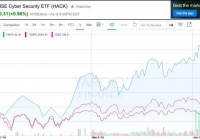
The “Internet of Everything” offers incalculable benefits as millions of devices become connected across the planet. At the same time, the explosion in connectedness has introduced the world to a new word in our vocabulary – “cybercrime.” Ironically, this also offers traders and investors one of the most exciting investment opportunities in an otherwise flatlining U.S. stock market. Over the past year, cybercrime has become a staple of the evening news. In October of 2014, the breaches of the databases of The Home Depot (NYSE: HD ), JPMorgan Chase (NYSE: JPM ) and Target (NYSE: TGT ) resulted in the compromised security of 56 million credit cards, 76 million households, seven million small businesses and 110 million accounts. Last month, the IRS announced that the identities of 2.7 million taxpayers were hacked last year. Last week, the government revealed that hackers stole personnel data and Social Security numbers for every federal staffer, past and present. According Symantec’s annual Internet Security Threat report, cyber attacks and cybercrime against large companies – those with over 2,500 employees – rose 40% globally in 2014. Attacks on small and medium-sized companies, which accounted for 60% of targeted attacks, increased 26% and 30%, respectively. And as the world becomes ever more interconnected through ever-expanding computerized networks, the frequency and scale of cyber attacks are likely to increase. By 2020, Gartner estimates that there will be over 26 billion Internet-connected devices, 250 million Internet-connected automobiles and a $50-billion market for surveillance. And as mobile payment technologies like Apple (NASDAQ: AAPL ) Pay and Google (NASDAQ: GOOG ) Wallet take off, mobile devices will become more prominent victims of cyberattacks. The Eye-Popping Costs of Cybercrime The costs of cybercrime are already huge. The Home Depot estimated that investigation, credit monitoring, call center and other costs of its breach last year could top $62 million. Target estimates that its breach-related expenses hit an eye-popping $146 million. That’s a lot of money. No wonder an estimated 60% of all companies experiencing a cybersecurity breach go out of business within six months of suffering an attack. Overall, cybercrime costs the globe over $400 billion per year. That’s more than the annual gross domestic product (GDP) of the Philippines, a country of 100 million people. And cyber attacks are about more than just losing money. Attacks can potentially shut down or manipulate a country’s energy infrastructure, weapons defense systems, medical devices and transportation systems. Russia launched the first cyber war against tiny Estonia in 2007. The president of Stanford University told me two years ago that the Silicon Valley-based university was being attacked dozens of times a day, with most of the attacks coming from China. How to Profit from the Cybersecurity Boom Cybersecurity companies claim they can stop more than 99% of cyber attacks from happening. And defense against cyber attacks is becoming a very big business. Gartner estimates cybersecurity spending topped $71 billion worldwide last year. FBR Capital Markets predicts a global 20% increase in spending in 2015. This year’s spending, in turn, could double to more than $155 billion by 2019. Of course, picking the long-term winners within the dynamic and ever-changing cybersecurity sector is a challenge. That said, savvy investors know that the pattern for making money in any new sector is similar, whether it’s automobiles in the early 1990s or the Internet in 1999. Stage one involves a general run-up in the sector across a wide range of players. Stage two is a painful period of consolidation. In the end, there will be a handful of winners. If you are holding one of them, you will make a fortune. But if you bet on one of the losers, you can lose a lot of money. As I recently recommended to my Alpha Investor Letter subscribers, the PureFunds ISE Cyber Security ETF (NYSEARCA: HACK ) – a broad-based bet on the cybersecurity investment theme – is one way around this. HACK tracks the ISE Cyber Security Index, investing in 31 stocks across the planet, each focused on software systems and other solutions that defend against cyberattacks. HACK’s top three holdings include Cyberark Software Ltd. (NASDAQ: CYBR ), 6.09%; Fireeye Inc. (NASDAQ: FEYE ), 5.96%; and Infoblox Inc. (NYSE: BLOX ), 5.14%. The fund invests 49.35% of its portfolio in the top 10 holdings. This means that the risk in the fund is quite concentrated. And, as a result, it is quite volatile. HACK has outperformed both the S&P 500 and the NASDAQ 100 – by more than 27% and 23% over the past 12 months, respectively. HACK itself is up 22.54% this year. (click to enlarge) Still, most of today’s biggest opportunities in cybersecurity lie in next-generation solutions, including cloud security and big data security analytics. It is these cyber startups that are providing the most innovative solutions, and many are doubling and tripling revenues annually. That’s why cybersecurity is a sector best suited for short-term traders skilled at playing both the long and short side of highly volatile individual stocks. But whether you’re a long-term investor or short-term trader, just realize that the cybersecurity rocket ship has taken off. So strap yourself in for the ride.
Grexit Fears And Fed Meeting Put These ETFs In Focus

This week started with a rough stock market session as major benchmarks finished the day in the red. The Dow Jones Industrial Average fell more than 200 points in early Monday trading and was down 0.6% at the close. In fact, the steep decline eroded all the gains made this year and sent the Dow Jones into red from the year-to-date look as well. The downswing has mainly been blamed on growing concerns over the future of Greece in the Euro zone. Tensions on Rise The latest talk between Greece and its international creditors collapsed yet again last weekend, sparking off threats of default and a possible Greek exit from the Euro zone. The move sent panic alarms ringing all over the globe and renewed uncertainty in the global stock market. Notably, the Greek bourse fell 4.9% on Monday trading session, spreading the contagion across the European, Asian and U.S. markets. Added to the Greece concern is the Federal Reserve’s two-day meeting, which ends on Wednesday. Investors have been cautious and are keeping a close eye at this meeting to find out whether the Fed Chair Janet Yellen modifies the language regarding the rates hike or adds some color to the decision. While the Fed will not raise interest rates at this meeting, a spate of better-than-expected economic data has raised speculation for a hike in September or October. The Fed is expected to release its policy statement, economic outlook and interest rate forecasts at the end of the ongoing meeting. Market Impact The events have led to risk-off trading with lower risk securities, including precious metals and bonds, in vogue. Meanwhile, the broad U.S. market fund (NYSEARCA: SPY ) saw volume that exceeded 124 million shares on the day, well above average shares of roughly 105 million. A few ETFs were severely impacted by the news of the Greece deal failure while a few were in focus ahead of the Fed meeting. Below are four ETFs which are especially volatile in the wake of the Greece crisis and amid uncertainty regarding the timing of the interest rates hike: Global X FTSE Greece 20 ETF (NYSEARCA: GREK ) The Greece ETF was the worst performer on the day, losing 6.5% on elevated volume of 1.5 million shares compared to 815,000 shares on average. The fund tracks the FTSE/ATHEX Custom Capped Index and is home to a small basket of 21 companies. It is heavily concentrated on the top firm – Coca Cola HBC – at nearly 21% while other firms make up for less than 10% share. Financials takes the top spot at 25% in terms of sector holdings, followed by consumer staples (21%), consumer discretionary (16%) and telecom (10%). The product has AUM of $330 million and charges 61 bps in fees per year from investors. iPath S&P 500 VIX Short-Term Futures ETN (NYSEARCA: VXX ) While volatility products have been terrible performers over the medium and long terms due to a contangoed market and a steep roll cost, they are intriguing picks during periods of turmoil or uncertainty. That being said, VXX gained 4.2% in the session while volume hit 56.4 million shares, well above the 39.1 million average. The note has amassed $1.1 billion in AUM and charges 89 bps in fees per year. The ETN focuses on the S&P 500 VIX Short-Term Futures Index, which reflects implied volatility in the S&P 500 Index at various points along the volatility forward curve. It provides investors with exposure to a daily rolling long position in the first and second months VIX futures contracts. SPDR Gold Trust ETF (NYSEARCA: GLD ) Gold is often viewed as a store of value and a hedge against market turmoil. The product tracking this bullion like GLD could be an interesting pick to play the market turbulence. The fund tracks the price of gold bullion measured in U.S. dollars, and kept in London under the custody of HSBC Bank USA. It is the ultra-popular gold ETF with AUM of $26.7 billion and expense ratio of 0.40%. However, the ETF added just 0.4%, exchanging more than 500,000 shares in hand. The upside was capped in anticipation of a hawkish stance in the Fed meeting that would further boost the dollar against the basket of major currencies and dampen the safe haven appeal across the board. iShares 20+ Year Treasury Bond ETF (NYSEARCA: TLT ) The U.S. government bonds tracking the long end of the yield curve often carry a safe haven status. The flight-to-safety on Greece default concerns led these bonds higher in early trading but soon eroded most of the gains on rising rates concern. As such, the ultra-popular long-term Treasury ETF – TLT – was up only 0.2% on the day on below average daily volume. It tracks the Barclays Capital U.S. 20+ Year Treasury Bond Index and has AUM of over $4.3 billion. Expense ratio came in at 0.15%. Holding 30 securities in its basket, the fund focuses on the top credit rating bonds with average maturity of 26.90 years and effective duration of 17.20 years. Original post

Low Volatility ETFs Turn The Lights Off And That’s A Good Thing

Summary Concerns about a rising rate environment has triggered a sell-off in utilities stocks. Low-volatility ETFs have trimmed their exposure to utilities. A look at the changes in low-volatility ETF options. By Todd Shriber & Tom Lydon Rising 10-year Treasury yields have, predictably, stoked chatter about the vulnerability of interest rate-sensitive asset classes and sectors. Case and point: Utilities stocks and exchange traded funds. Over the past three months, the Utilities Select Sector SPDR ETF (NYSEARCA: XLU ) , the largest utilities ETF, is off 2.2%, as 10-year Treasury yields have surged nearly 13%. There was a time when such a yield spike would have been problematic for the PowerShares S&P 500 Low Volatility Portfolio ETF (NYSEARCA: SPLV ) , particularly if investors did not properly understand how SPLV works, but that is not the case today. The low-volatility ETF targets 100 of the least volatile stocks from the S&P 500 index and weights the positions inverse to volatility – the least volatile stocks has a greater weight in the portfolio. That led to spurious accusations that SPLV was a utilities ETF in disguise. Critics will be heartened to learn that the utilities sector is now SPLV’s second-smallest sector weight. The ETF’s utilities allocation has dwindled to 2.6% as of June 12 from 19.4% in September. In fact, SPLV is underweight utilities stocks by 20 basis points relative to the S&P 500. “Given the prospect of higher rates, investors may wish to consider a low volatility investment approach and check their holdings for interest rate sensitivity. Over the past five years, financial stocks have been among the most sensitive to rising interest rates – especially insurance and diversified financial shares,” according to a recent PowerShares note. Of course, utilities are the group worst affected by rising interest rates. So, the double dose of good news for SPLV is its scant utilities weight combined with a 35.6% weight to financial services names, by far the ETF’s largest sector allocation. Digging deeper into SPLV’s financial services lineup reveals opportunity. Seventeen of the ETF’s financial services holdings are either insurance providers or regional banks, two industries that are positively correlated to rising interest rates. “In fact, since its May 2011 inception, SPLV has exhibited lower volatility than the S&P 500 Index. This is because the fund’s underlying index follows an unconstrained investment approach that allows for dynamic sector rotation,” according to PowerShares. “Due to SPLV’s unconstrained sector rotations, the fund has shed much of its exposure to the underperforming utility sector over the past two years, from just over 30% in March 2013 to under 3% currently.” SPLV’s primary rival, the iShares MSCI USA Minimum Volatility ETF (NYSEARCA: USMV ) , has a utilities weight of 7.7%, nearly triple that of the PowerShares offering. PowerShares S&P 500 Low Volatility Portfolio ETF (click to enlarge) Disclosure: The author has no positions in any stocks mentioned, and no plans to initiate any positions within the next 72 hours. (More…) The author wrote this article themselves, and it expresses their own opinions. The author is not receiving compensation for it. The author has no business relationship with any company whose stock is mentioned in this article.