Tag Archives: europe

A More Tempered Global Equity Fund

By Patricia Oey Low-volatility strategies, such as the iShares minimum volatility family of exchange-traded funds, can be attractive options for long-term investors. This is because these ETFs’ underlying MSCI indexes generally exhibit less-dramatic declines in bear markets . Over the long term, these muted drawdowns explain much of the strategy’s outperformance versus its cap-weighted benchmark. iShares MSCI All Country World Minimum Volatility (NYSEARCA: ACWV ) tracks an index that is designed to be less volatile than its market-cap-weighted parent index–the MSCI All Country World Index (MSCI ACWI). Low-volatility strategies seek to exploit the observed phenomenon that portfolios with smaller price fluctuations tend to outperform portfolios with larger price fluctuations over the long term. This strategy has had a good track record–as measured by the back-tested performance of this fund’s benchmark index (the index’s live performance commenced in November 2009). Over the trailing 15 and 10 years through Dec. 31, 2014, this fund’s underlying index beat the cap-weighted MSCI ACWI by 393 and 202 basis points annualized, respectively. The risk-adjusted returns were also relatively strong, with 15-year Sortino ratios of 0.73 for the minimum-volatility index and 0.22 for the cap-weighted index. However, low-volatility strategies can underperform for long periods of time and tend to lag in bull markets. This fund is suitable for use as a core holding for long-term investors. Typically, global-equity funds are more volatile than U.S. equity funds, as the former have exposure to both international equities and the associated foreign currency fluctuations. But because global equities are a heterogeneous asset class, there is greater diversity (as evidenced by lower correlations) among its constituents, which allows for greater reduction in overall volatility in a fund that employs a minimum-variance strategy such as ACWV. In fact, the trailing five-year standard deviation of returns for this fund’s index of 9% was significantly lower than the S&P 500’s 13% during that same span. Part of this is due to the benchmark’s lower drawdowns during bear markets. For example, in 2008, when the MSCI ACWI fell 42%, this fund’s benchmark declined 25%. This fund does not hedge its currency exposure, so its returns reflect both asset-price changes and changes in exchange rates between the U.S. dollar and other currencies. In the 10-year period through December 2012, a rising euro, followed by a rising yen (against the U.S. dollar), helped boost the performance of this fund. However, more recently, the rising dollar has hurt the fund’s performance. Fundamental View Historically, low-volatility stocks have outperformed high-volatility stocks over the long term. This “volatility anomaly” was first discovered in 1968 by Bob Haugen, who theorized that behavioral factors were behind this phenomenon. More specifically, investors tend to chase risky stocks, expecting these companies to deliver higher returns. This drives up stock prices of riskier names, which ultimately results in weaker future returns, relative to less-volatile names. Generally, this fund had been heavy in less-volatile sectors including consumer staples, health care, telecoms, and utilities, and light in cyclical sectors including financials, technology, energy, and materials, relative to its parent index (MSCI ACWI). In 2013, the fund’s greater exposure to less-volatile names in the United States and Japan weighed on its performance (relative to the MSCI ACWI), as higher-beta names outperformed in those markets. However, in 2014, the fund’s underweighting in the energy sector boosted this fund’s performance (relative to MSCI ACWI). At this time, dividend-oriented sectors such as consumer staples and utilities have been bid up in the recent low-rate environment, and sectors such as materials and energy are trading at low valuations. This fund’s tilt toward more-expensive sectors and tilt away from cheaper sectors may weigh on future performance. About 50% of this fund’s assets are invested in U.S. equities. As of the first quarter of 2015, the U.S. economy appears to be on stable footing. However, now that the U.S. Federal Reserve’s quantitative-easing program has ended, there is uncertainty on how monetary policy will be managed and how it might ultimately affect asset prices–especially considering that valuations across most major asset classes appear to be somewhat stretched. This fund’s second-largest country allocation is Japan, at 12%. After two “lost decades,” Japan’s equity markets responded very enthusiastically to Prime Minister Shinzo Abe’s programs to jump-start the Japanese economy. At the start of 2013, Japan’s Central Bank unleashed an aggressive monetary easing program. This move provided the foundation for improving macroeconomic fundamentals and corporate earnings growth. Japanese equities may also benefit as Japan’s $1.2 trillion public pension raises allocations in domestic equities and away from low-yielding government bonds. However, any sustainable growth in Japan will require difficult-to-implement structural reforms to address Japan’s inefficient labor market and protected private sector. In addition, Japan’s aging population and massive 200% debt/gross domestic product ratio are two issues that likely will weigh on Japan’s growth in the years to come. European equities comprise 10% of this fund’s portfolio. Many European large caps are high-quality, multinational corporations that have benefited from improving productivity, cheap financing, and exposure to faster-growing emerging markets during the past few years. Most of these firms are in good financial shape. This fund’s largest European country allocations are Switzerland and the United Kingdom, and it has an underweighting (relative to the cap-weighted benchmark) in eurozone countries, such as France and Germany. Portfolio Construction This fund employs full replication to track the MSCI ACWI Minimum Volatility Index, which attempts to create a minimum-variance (or lowest-volatility) portfolio of 350 holdings selected from its parent index, MSCI All Country World Index. It does this using an estimated security covariance matrix (the Barra Global Equity Model) and a number of constraints to limit turnover, ensure investability, and maintain sector and country diversification. This index methodology is somewhat of a black box, as data are not available regarding the estimated risk inputs used for the covariance matrix. The index (and fund) is rebalanced twice a year in May and November. ACWV’s portfolio represents about 20% of its parent index, which includes about 2,400 securities. During the past decade, this minimum-volatility index had a correlation of 0.92 to its parent index. But during the past three years, this correlation was lower, at 0.79. This index was launched in November 2009, so data prior to the initial calculation date reflect hypothetical historical performance. Fees This fund charges an annual expense ratio of 0.20%, which is composed of a management fee of 0.33% and a fee waiver of 0.13%. According to iShares, the fee waiver may be reduced or discontinued at any time without notice. During the past three years, the fund outperformed its benchmark by 16 basis points annualized. This is partly due to the fact that the fund’s benchmark incorporates aggressive foreign tax withholding assumptions. In practice, the fund has had lower foreign tax withholding relative to the estimates incorporated in its benchmark. Dividends are paid out quarterly, and in 2013 and 2012, 86% and 71% of this fund’s dividends were classified as qualified by the Internal Revenue Service, respectively (dividends from companies in certain countries are not considered qualified). Investors should note that some of the dividends paid by stocks in the fund are subject to foreign tax withholding. Investors can claim their portion of the withheld taxes as a tax credit, but only if they hold this fund in a taxable account. Alternatives One similar option is Vanguard Global Minimum Volatility (MUTF: VMNVX ) . Similar to the iShares fund, this Vanguard fund employs quant models to construct a low-volatility portfolio. Key differences are: The Vanguard fund hedges out foreign-currency exposure and has a mid-cap tilt, whereas the iShares fund does not hedge out foreign-currency exposure and has a large-cap tilt. This Vanguard fund is relatively new; its inception was in December 2013. The Admiral share class carries an annual expense ratio of 0.20%. IShares has a suite of low-volatility strategies that cover the different segments of the global equity universe. These ETFs include iShares MSCI USA Minimum Volatility (NYSEARCA: USMV ) , iShares MSCI Emerging Markets Minimum Volatility (NYSEARCA: EEMV ) , iShares MSCI EAFE Minimum Volatility (NYSEARCA: EFAV ) , iShares MSCI Japan Minimum Volatility (NYSEARCA: JPMV ) , iShares MSCI Asia ex Japan Minimum Volatility (NYSEARCA: AXJV ) , and iShares MSCI Europe Minimum Volatility (NYSEARCA: EUMV ) . A solid core allocation option is Vanguard Total World Stock ETF (NYSEARCA: VT ) . This fund tracks the FTSE Global All Cap Index, which seeks to cover 98% of the world’s total investable stock market capitalization and includes approximately 7,500 securities. It has an expense ratio of 0.18%. Disclosure: Morningstar, Inc. licenses its indexes to institutions for a variety of reasons, including the creation of investment products and the benchmarking of existing products. When licensing indexes for the creation or benchmarking of investment products, Morningstar receives fees that are mainly based on fund assets under management. As of Sept. 30, 2012, AlphaPro Management, BlackRock Asset Management, First Asset, First Trust, Invesco, Merrill Lynch, Northern Trust, Nuveen, and Van Eck license one or more Morningstar indexes for this purpose. These investment products are not sponsored, issued, marketed, or sold by Morningstar. Morningstar does not make any representation regarding the advisability of investing in any investment product based on or benchmarked against a Morningstar index.
U.S. Equity Shines As The USD Struggles In The Months Ahead

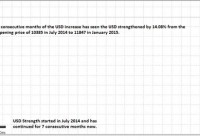
Summary According to different measures, USD has been strengthening for 7 consecutive months now between 14% and 18%. This is due to several drivers of USD strength and the market has priced it in over these 7 months of unprecedented period of strength in the past 11 years. USD is expected to moderate its strength to the range of $24-$25 for UUP from February to May 2015 prior to FOMC liftoff on condition of global status quo. US equity market (as represented by SPY) has strengthened remarkably even in the period of USD strength and is expected to strengthen further during this interim period. Overview of Recent Remarkable USD Strength There is a saying that what comes up must come down. This is the same in the financial sector but there is one asset class which seems to be defying this logic with its relentless rise. That would be the United States Dollar (USD). We can look at the extent of the USD rise through the charts of the FXCM USDollar Index (USDOLLAR) below. (click to enlarge) The USDOLLAR follows the performance of the USD against a basket of the most liquid currencies in the world such as the EURUSD, USDJPY, AUDUSD and GBPUSD. This basket covers 80% of the world spot market activity. This would mean that for the past 7 months, the USD has increased in value by 14.08% against the euro (EUR), Japanese Yen (JPY), Australian Dollar (AUD) and Great Britain Pound (GBP) combined. The USDOLLAR is chosen in the form of its monthly chart to give you an impression of the parabolic nature of the USD ascent visually. The value of a currency lies in its relative value against other currencies. Perhaps, it is because the USDOLLAR only started in April 2013, this is why the effect is so much more dramatic. I will show the more established US Dollar Index later. In any case, we should note that of the countries in currencies mentioned above, only the UK refrained from adding monetary accommodation in the past few months. Europe and Japan has adopted massive Quantitative Easing (QE) to the tune of $1.14 Trillion euros and $80 Trillion yen, respectively, to fight deflation which weaken their currencies. Australia joined in the easing bandwagon when it cut its cash rates by 25 basis points to 2.25% last month to aid its faltering economy despite the threat of a potential housing bubble. The USD Index covers a much broader spectrum of currencies to match against the strength of the USD. They are the EUR, JPY, GBP, Canadian Dollar (CAD), Swiss Franc (CHF) and Swedish Krona (SEK). The USD Index shows that in the past 7 months, the USD has strengthened at a more impressive pace of 18.76% against a wider range of currencies. We can see from the chart above that in the past 11 years, we have not seen a period of sustained 7 months of consecutive advancement as seen from the recent July 2014 to January 2015 period. You can just count the monthly candles in the chart above and not to mention the scale of 18.76%. This is a wider timeframe to look at the strength of the USD which allows us to put things into perspective. This rally has already brought the USD to a 9-year high not seen since November 2005 of 92.43 and just a few points short of the September 2003 peak of 99.12. Recap of Drivers of USD Strength The drivers of the strength of the USD are well known by now, but I shall briefly recap it. The first and foremost driver of the USD strength is the divergence of monetary policy between the US (and maybe the UK to a certain extent) and the rest of the world. Simply put, the Fed is expected to lift off its interest rates in mid-2015 while the rest of the world led by Japan and Europe are expected to increase their degree of monetary accommodation. This market expectation of higher interest rates in the United States has prompted funds that fled to the markets of emerging countries in search of yield when rates were cut back in 2008, to begin the gradual process of return to the United States. Also, funds in Europe and Asia that are in search of greater yield are also attracted to enter the United States market driving up the USD. Secondly, the US has been the lone bright spot in the global economy with growth of 5% in the third quarter of 2014 at a 11-year high and advance estimate of fourth quarter GDP of 2.6%. This stands in contrast to the growth of 0.2% in Europe for the third quarter and -0.5% for Japan in the same quarter after a -1.9% growth in the second quarter. This means that Japan is officially in a recession after 2 consecutive quarters of economic contraction. Thirdly, there is more political stability in the US when compared to Europe. The European Union is facing threats to its integrity with Greece trying to wriggle out of its debt obligation as much as possible and creditors who are not willing to cede ground. This tension will weigh on the economic potential of Europe and there are the lingering concerns over its relations with its giant neighbor Russia over its proxy invasion of Ukraine. This political instability will encourage funds to enter the US in search of safety as much as to tap its economic growth potential. Consolidation of USD Strength and Status Quo All these 3 factors are the reasons behind the strength of the USD over the past 7 months. In this 7 months, the US remains the sole source of strength and stability in the world amongst major economies. However, with a 18% rise, it is clear that the market has priced in these advantages and it is already unprecedented over the experience of a decade. Hence my view is that the USD will consolidate its strength from now in February 2015 to May 2015 until we are nearer to mid-2015. The Federal Open Market Committee (FOMC) will have 2 meetings in June and July 2015. This is the crucial period where the first rate lift-off is expected to occur. The USD might then rise 1 month before that event as the Fed would have given the market more clues in its March and April meetings. We are assuming that the US economy continues on its strong path of economic growth over the next 4-6 months period which will encourage the Fed to raise rates as scheduled. If the US economy shows signs of weakening, the USD would weaken past May 2015 as the market would be less confident of a Fed liftoff. The next assumption is that the European situation will not get worse especially with Greece as it is the precedent for which other debtor nations will follow. Hence even though Greece is tiny in the absolute sense (only 0.39% of the global economy), it will receive determined treatment from the Troika to preserve the interest of creditors. The danger is that they do not push Greece too much which might result in some nasty unintended consequences. We note that although the deadline for the official negotiation is until the end of the month, the European Central Bank (ECB) which is part of the Troika has already expressed disappointment over the negotiations. It has decided that it will not accept Greek bonds as collateral for its monetary policy operations (which is to swap Greek bonds for euros). It has since relegated Greece to the secondary Emergency Liquidity Assistance (ELA) scheme. If European Union were to undo itself back into individual countries, it would be bullish on the USD even if the Fed might be forced to postpone its rate lift-off. Relative Strength of US Equity Market and USD The strength of the economy is often reflected in the strength of its stock market and this is true for the US too. As we have mentioned earlier about the strength of the US economy, we can refer to the S&P 500 SPDR (NYSEARCA: SPY ) to gauge the overall strength of the US stock market. (click to enlarge) We can see from the weekly chart of the SPY above that the overall trend has been bullish. There are ups and downs along the way but the market has always been able to make a comeback. The only time that it has crossed its 50-week moving average was in October 2014 but even that it has been able to recover swiftly. The other thing to note is that in the past few weeks, SPY has stalled and it is ranging in the $200 to $210 price level. (click to enlarge) The other way to look at the USD would be through the PowerShares DB US Dollar Index (NYSEARCA: UUP ) as seen in the chart above. The USD has risen 17.86% from the closing price of $21.39 at the week ending 30 June 2014 with the closing price of $25.21 to the week ending 20 January 2015. It should also be noted that the UUP has been heavily overbought for weeks now. The UUP is likely to range between $24-$25 in the months ahead to May 2015, if the global status quo remains. Hence given that the half the profits of large US corporations are based overseas, the interim USD weakness would have a bullish impact on their earnings during this period. One way where we can gauge how the USD affects the performance of businesses in the US is to overlay the SPY against the UUP. The effect is shown in the chart below. (click to enlarge) The SPY/UUP overlay shows us that the SPY has weakened relatively compared to its performance before July 2014 when the USD strengthened. This is not easily discernible in the SPY chart above. This also goes to show that the SPY has been performing quite resiliently in the face of USD strength. This has to do as much with the fundamental earnings of the underlying companies and the overall appeal of US equity markets as Japan and Europe struggle. With the upcoming interim weakness of the USD, it is likely that the SPY will pick up strength and this would be a good time to pick up SPY for some short-term gains. However, it will also be a good addition to your long-term portfolio as the US economic strength is expected to persist for the foreseeable future. Disclosure: The author has no positions in any stocks mentioned, and no plans to initiate any positions within the next 72 hours. (More…) The author wrote this article themselves, and it expresses their own opinions. The author is not receiving compensation for it (other than from Seeking Alpha). The author has no business relationship with any company whose stock is mentioned in this article.

ETFs For An Ongoing Stimulus Bubble

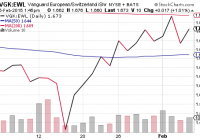
At this moment in time, nearly every significant central bank (excluding the U.S. Federal Reserve and the Swiss National Bank) is engaging in some form of rate lowering and/or currency devaluation. Clearly, “stimulus fever” is sweeping the globe, suppressing interest rates and bolstering risk assets. The question an investor may wish to ask, however, is whether or not the efforts are doing anything beyond creating temporary “wealth effects” for the investing class. Canada, India, Turkey, Australia, China and Denmark. What do all of these countries have in common? The central bank of each nation has eased monetary policy to stimulate respective economies in 2015. What’s more, none of these actions had been anticipated; rather, the media described rate cuts as “surprising” or diminished reserve requirements as “unexpected.” In the case of Denmark, recent stimulus has been creative as well as startling. For the fourth time in less than three weeks, the Danish central bank lowered its deposit rate to keep its krone in line with the weakened euro. Maintaining the peg of the Danish krone to the severely weakened euro is a means by which Denmark can spark export-driven growth. Depositors are now being charged 0.75% (what is known as a negative deposit rate) to let money sit at a financial institution. In effect, Danish depositors are now paying for the privilege of “hoarding” the krone – a risk some might be willing to take in order to preserve capital from rapid euro depreciation. At this moment in time, nearly every significant central bank (excluding the U.S. Federal Reserve and the Swiss National Bank) is engaging in some form of rate lowering and/or currency devaluation. Perhaps ironically, even the Fed has merely telegraphed a shift towards tightening the monetary reins. In actuality, it has been more than six years of zero percent interest rate policy (ZIRP) with no specific measure taken to raise overnight lending rates. So Switzerland, which removed the franc’s cap against the euro on January 15, is the only warrior in the “currency wars” that believes a strong currency is beneficial as opposed to detrimental. U.S. and Switzerland: The Only Countries In A Tightening State Of Mind Approx YTD % CurrencyShares Swiss Franc Trust ETF (NYSEARCA: FXF ) 7.9% PowerShares DB USD Bull ETF (NYSEARCA: UUP ) 3.3% CurrencyShares Japanese Yen Trust ETF (NYSEARCA: FXY ) 1.9% CurrencyShares British Pound Sterling Trust ETF (NYSEARCA: FXB ) -1.7% CurrencyShares Australian Dollar Trust ETF (NYSEARCA: FXA ) -4.4% CurrencyShares Euro Trust ETF (NYSEARCA: FXE ) -5.2% CurrencyShares Canadian Dollar Trust ETF (NYSEARCA: FXC ) -6.2% The Swiss consumer may benefit from a stronger franc. Yet Swiss businesses have been bemoaning the fate of their exports. Additionally, investors appear more intrigued by the prospect of euro-zone asset price gains than the possibility of Swiss company success as demonstrated by the Vanguard FTSE Europe ETF (NYSEARCA: VGK ): iShares MSCI Switzerland Capped ETF (NYSEARCA: EWL ) price ratio. VGK:EWL since January 15 shows that the early money is betting on asset price reflation occurring in the euro-zone where the European Central Bank (ECB) is engaged in a large-scale electronic money printing program (a.k.a. quantitative easing) to revive the economies of member nations. Clearly, “stimulus fever” is sweeping the globe, suppressing interest rates and bolstering risk assets. The question an investor may wish to ask, however, is whether or not the efforts are doing anything beyond creating temporary “wealth effects” for the investing class. In other words, is Switzerland onto something by refusing to play the game, or is the U.S. blueprint for economic revival worthy of imitation? Until the global investment community gives up on the notion that any stimulus is good stimulus – that any financial engineering designed to inspire risk taking will reward risk takers – expect the uptrends in respective stock markets to continue moving higher. I prefer removing the currency aspect from the equation with funds like the iShares Currency Hedged MSCI Germany ETF (NYSEARCA: HEWG ), the WisdomTree Europe Hedged Equity ETF (NYSEARCA: HEDJ ) and/or the Deutsche X-trackers MSCI Asia Pacific ex Japan Hedged Equity ETF (NYSEARCA: DBAP ). Yet I am equally convinced of the necessity to hedge against a monumental shift in central bank sentiment. There’s a reason that negative yields on sovereign bonds in Europe – Netherlands, Austria, Germany, Finland and Switzerland are becoming increasingly common. For one thing, negative yields can become even more negative, extending price gains for buyers of the debt. For another, there’s a remarkable demand for safe storage. Government bonds, even with negative yields, might be considered safer than cash deposits, particularly when those cash deposits are substantial. (Think Cyprus!) I am by no means recommending that an investor rush out to purchase negative -yielding sovereign debt; rather, I anticipate the U.S. bond rally to stay the course on relative value . If the U.S. 10-year yields 1.82%, but German 10-year’s offer 0.3% and Swiss 10-year offers a negative yield, is there any reason to suspect that a fund like the iShares 10-20 Year Treasury Bond ETF (NYSEARCA: TLH ) will fail to find buyers? Consider incremental purchases of an exchange-traded fund like TLH when it revisits its 50-day moving average. Disclosure: Gary Gordon, MS, CFP is the president of Pacific Park Financial, Inc., a Registered Investment Adviser with the SEC. Gary Gordon, Pacific Park Financial, Inc, and/or its clients may hold positions in the ETFs, mutual funds, and/or any investment asset mentioned above. The commentary does not constitute individualized investment advice. The opinions offered herein are not personalized recommendations to buy, sell or hold securities. At times, issuers of exchange-traded products compensate Pacific Park Financial, Inc. or its subsidiaries for advertising at the ETF Expert web site. ETF Expert content is created independently of any advertising relationships.