Tag Archives: etfs

Diversification Is Not Sufficient
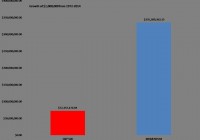
Strategy diversification may be superior to traditional methods. Momentum and trend following could provide protection during down markets. We demonstrate a simple system that can be replicated using low cost index funds. In a follow up to our recent article, Value Based Asset Allocation , we wanted to introduce you to our method for diversification. Unlike financial theory, we do not believe that diversification is sufficient for shielding a portfolio against large declines. Our view is that strategy diversification goes a long way to properly diversify a traditional asset allocation, especially during periods of market stress. Momentum is simply using price to determine the appropriate allocation. Price works as the ultimate indicator because of supply and demand. The irrefutable law of supply and demand has been the ultimate guide to navigating markets for centuries. Supply and demand governs how prices move. Therefore, price tells the true story. For example, if there are more buyers than sellers, prices will rise. If there are more sellers than buyers, prices will fall (Dorsey, 2007). Understanding what force is governing the market is critical to making allocation decisions. If supply is in control, you will want to avoid that market. On the other hand, you will want to invest in a market where demand is the stronger force. Momentum investing, by our definition, is allowing price to determine the investment allocation. It is about maintaining a harmonious relationship with the market. The idea is that the market is the sum total of all the investment experience and expertise of the market participants. The collective knowledge of the group is, in theory, superior to the individual’s over the long term. It is better to exist within a synchronous association rather than in opposition. As John Maynard Keynes suggested, “The market can stay irrational longer than you can remain solvent.” According to a trend follower, “Mr. Market” is always right, no matter how seemingly irrational. Momentum strategies have delivered superior performance to buy and hold investing (Berger, Israel and Moskowitz, 2009) . Meb Faber used a simple moving-average system to allocate to the S&P 500 or cash, demonstrating that he could reduce the correlation of his strategy to the S&P 500 in down markets to -0.38 and maintain a positive correlation of 0.83 during positive years (Faber & Richardson, 2009) . The implications of this study are profound. They indicate that by using a simple trend-following system, one can create a strategy to reduce correlation to equities when most other correlations are rising. When correlations rise during periods of market uncertainty, portfolio risk increases. Faber provides a simple solution to this particular conundrum despite using the S&P 500 as the investment vehicle. Momentum and trend following are strategies used to diversify a portfolio and cut market risk through the avoidance of large slumps. We use momentum in order to take advantage of positive herd mentality and avoid negative herd mentality. We alternate between risk-on and risk-off, dependent on the price trend of stocks and bonds. Capitalizing on the short term and herd mentality allows the investor to gain access to a return stream that does not always move in tandem with stocks and bonds. For example, during the time period from 2007 to 2009, the stock market (S&P 500) collapsed over 55 percent. Many managed-futures managers or commodity-trading advisors (CTAS) showed positive returns. Managed-futures managers are largely trend followers. Consequently, the managed-futures traders were negatively correlated with stocks and provided the ultimate diversification to a traditional portfolio. The time period from 2007 to 2009 is not unique. During several other market declines and reductions in traditional asset classes, trend-following traders demonstrated the ability to take advantage of the scrambling herd and capture impressive gains. Trend following seems high risk to many investors who still look at risk as volatility. Many momentum systems actually have higher volatility than the market. The fact is that volatility is not risk, and “the acceptance of higher risk in a trend-following investment can actually lower the risk of your stock and bond portfolios because when trend following zigs, typical stock and bond investments zag.” (M.W. Covel, 2009) Trend following appears to be an elixir for the behavioral ills of investing. Herd mentality, overconfidence, representativeness, anchoring effects, and loss aversion are all dealt with through systematic trend following, or momentum investing. We can use a simple system with indexes to replicate a strategy that protects during market declines without sacrificing the upside. In our strategy we use indices (baskets of securities tracking a particular market) to gain exposure because of their relatively low costs and high transparency. To illustrate the effectiveness of trend following historically, we are going to provide a simple, rules-based system as an example. The rules are as follows: Rank the S&P 500, Russell 2000, and the US 10-Year Treasury bond based on the three-month performance. Pick the strongest index based on the ranking. Run the ranking system each month. The important information to gather from the historical results is the performance of the momentum strategy during the years when the market declines. The ability to rotate away from the stock market when the price deteriorates allows for better performance when trouble is present. The core tenet of trend following and momentum investing is the protection of capital. Hence, the momentum strategy demonstrates the most significant outperformance during periods in which the overall stock market is experiencing large declines. The strategy performs well during positive stock market environments as well. The portfolio can be invested in the stock market when the trend is positive and stocks are stronger than bonds. In other words, the simple momentum system acts as a risk reducer during the down markets without sacrificing profits during up markets. The momentum strategy has done well compared to the S&P 500 since 1972. In the chart below, we illustrate the results to better demonstrate the benefits of incorporating trend following. If you had invested $1 million in the S&P 500 in the beginning of 1972, your investment would have grown to over $72 million by the end of 2014. If you had invested your $1 million during the same period using our momentum strategy, it would have grown to over $335 million. That is significant outperformance. Remember that the model can only maximize returns up to what the market earns. The outperformance comes from avoiding the down markets. (click to enlarge) The momentum system does not avoid declines. Since the end of 1971, there have been nine years in which the S&P 500 declined. Over the past forty years, the momentum strategy declined seven times. The beauty of momentum strategy lies in avoiding the big declines. The strategy never suffered a loss of greater than 7 percent in any given year. In comparison, the market suffered five declines over 10 percent, of which three were over 20 percent. Investors have to minimize the big declines to succeed when investing. The momentum system is able to accomplish the task of protecting the investors during big market declines, helping the portfolio grow more over the long term. As we have outlined above, momentum has historically worked to participate in up markets and protect against deep market declines. While we cannot predict the future trajectory of prices, we know that markets will fluctuate, and we have designed portfolios to potentially take advantage of market volatility. Trend-following traders have demonstrated their ability to navigate the uncertain markets and capitalize on turmoil. Trend following is not only reserved for the Wall Street elite or the ultra-rich. You can apply the same principles to diversify your portfolio using simple index funds and at a fraction of the cost of paying a manager. Disclosure: I/we have no positions in any stocks mentioned, and no plans to initiate any positions within the next 72 hours. (More…) I wrote this article myself, and it expresses my own opinions. I am not receiving compensation for it. I have no business relationship with any company whose stock is mentioned in this article. Additional disclosure: HYPOTHETICAL PERFORMANCE RESULTS HAVE MANY INHERENT LIMITATIONS. NO REPRESENTATION IS BEING MADE THAT ANY ACCOUNT WILL OR IS LIKELY TO ACHIEVE PROFITS OR LOSSES SIMILAR TO THOSE SHOWN. IN FACT, THERE ARE FREQUENTLY SHARP DIFFERENCES BETWEEN HYPOTHETICAL PERFORMANCE RESULTS AND THE ACTUAL RESULTS SUBSEQUENTLY ACHIEVED BY ANY PARTICULAR TRADING PROGRAM. PAST RESULTS DO NOT GUARANTEE FUTURE RETURNS. HYPOTHETICAL PERFORMANCE FOR ILLUSTRATION PURPOSES ONLY.
Energy ETF PSCE Hits New All-Time Low

For investors looking for momentum, the PowerShares S&P SmallCap Energy Portfolio ETF (NASDAQ: PSCE ) is probably on their radar now. The fund just touched a new record low, and shares of PSCE are down roughly 61% from their 52-week high price of $49.57/share. But is more pain in store for this ETF? Let’s take a quick look at the fund and the near-term outlook on it to get a better idea on where it might be headed: PSCE in Focus PSCE focuses on the energy segment of the U.S. market, holding 33 stocks in its basket. It is a small cap-centric fund with key holdings in the energy equipment & services and exploration & production segments. The fund charges investors 29 basis points a year in fees, and has its top holdings in PDC Energy (NASDAQ: PDCE ), Exterran Holdings (NYSE: EXH ) and Carrizo Oil & Gas (NASDAQ: CRZO ) (see: all the Energy ETFs here ). Why the Move? The Energy sector has been an area to watch lately as oil price resumed its decline and got trapped in the nastiest downward spiral joining the broader sell-off in commodities amid growing global glut and the China slowdown. Additionally, the latest downbeat economic data from both the U.S. and China led to the concerns over tepid oil demand growth. More Pain Ahead? Currently, PSCE has a Zacks ETF Rank #4 (Sell), suggesting its continued underperformance in the coming months. Further, many of the segments that make up this ETF have the worst Zacks Industry Ranks. So there is still some downside risk signaling caution, and investors should wait until the sector bottoms out before jumping into this ETF. Original Post Share this article with a colleague

3 Reasons Why Risk Is Exiting The Debate Stage

Investors tend to ignore financial markets until they really start to move significantly in one direction or the other. Ironically, investors who wait to buy undervalued securities when the technical backdrop is dramatically improving tend to miss out on sensible risk-taking opportunities. Don’t let the flatness fool you; risk-taking is subsiding and risk-aversion is gaining. More than a handful of people asked me if I would be watching the big debate. 10 candidates. One stage. Which politician will emerge as the clear-cut favorite to win the Republican party nomination? It may surprise some folks, but I have zero interest in the made-for-television event. Each individual will receive about as much air time as Bethe Correia earned in her UFC Title fight against Ronda Rousey. (America’s superstar dropped the Brazilian fighter in 34 seconds.) From my vantage point, a debate exists when two individuals (or two unique groups) express vastly different opinions. And I would be intrigued by an actual match-up with actual position distinctions. Scores of presidential hopefuls from one side of the aisle looking to land a sound byte? I’d rather watch multiple reruns of ESPN’s SportsCenter. In other words, I will tune in when it’s Walker v. Kasich and Hillary versus Joe. (I am name-dropping, not predicting.) In the same way that I might ignore political theater until it really starts to matter, investors tend to ignore financial markets until they really start to matter. And by really start to matter, I mean move significantly in one direction or the other. Ironically, investors who wait to buy undervalued securities when the technical backdrop is dramatically improving tend to miss out on sensible risk-taking opportunities. In the same vein, those who wait to reduce exposure to extremely overvalued stocks when the technical backdrop is weakening tend to miss out on sensible risk-reduction opportunities. What’s more, theoretical buy-n-holders shift to panicky sellers when the emotional pain of severe losses overwhelm them. Although the Dow is slightly negative in 2015, and the S&P 500 is slightly positive, risk has already been sneaking out the back door. Don’t let the flatness fool you; don’t be misled by ‘journalists’ with political agendas. Risk-taking is subsiding and risk-aversion is gaining. Here are three reasons why risk has been exiting the debate stage: 1. The Recovery Is Stalling . Bad news on the economy had been good news throughout the six-and-a-half year stock bull. The reason? The Fed maintained emergency level policies of quantitative easing (i.e., QE1, QE2, Operation Twist, QE3) as well as zero percent overnight lending rates. Today, however, the Fed desperately wants to flip the narrative such that committee members can claim the economy is healthy enough for rate tightening. The data suggest otherwise. For example, Wednesday’s ADP report of 185,000 jobs in July was 20% lower than July of 2014 a year earlier. It is also the lowest headline ADP number since Q1 2014 when an unusually rough winter shouldered the blame. This goes along with the worst wage growth since data have been kept (0.2%), U-6 unemployment between 10.8% ( BLS ) and 14.6% (Gallup), as well as the lowest percentage of employees participating in the working-aged labor pool (62.7%) since 1977. It gets worse. Factory orders have only experienced month-over-month growth in 3 of the last 12 months. Year-over-year, export activity is down 6.6%. Business spending via capital expenditures – dollars used to acquire or upgrade plants, equipment, property and other physical assets – has plummeted. Corporate revenue (sales) will be negative for the second consecutive quarter, perhaps contracting -3.8% in Q2 per FactSet. What’s more, the Conference Board’s Consumer Confidence sub-indexes are dismal; the future expectations gauge is falling at a faster month-over-month clip than the present situation measure. Consumer spending is sinking as well. In sum, risk aversion as well as outright bearish downturns are frequently associated with recessionary pressures. Is a recession imminent? Maybe not. Yet risk-off movement in the financial markets reflect understandable concerns that the U.S. economy may not be capable of absorbing multiple rounds of Federal Reserve tightening. 2. Commodities Are Tanking . One could easily wrap the commodities picture up into discussions about the U.S. economy. That said, I am pulling the topic out into a separate header because it reflects economic woes around the world. As it stands, the IMF’s most recent projections for global output in 2015 represent the slowest annual ‘expansion’ in four years. And the waning use of raw materials is a big part of the IMF’s anemic outlook as well as the collapse in commodity prices. For a year now, a wide variety of analysts have endeavored to explain the oil price decline in positive terms. They’ve been wrong. Consumers and businesses are not spending their energy savings. Meanwhile, energy companies are abandoning projects, laying off high-paying employees and witnessing a dramatic exodus from their stock shares. The Energy Select Sector SPDR ETF (NYSEARCA: XLE ) has depreciated by more than 30% already. Similarly, many of the world’s emerging markets (and some developed markets) depend upon the extraction of materials and natural resources. Granted, the U.S. stock market has been an island unto itself since 2011. However, no market is an island unto itself indefinitely. The Vanguard FTSE Emerging Markets ETF (NYSEARCA: VWO ) is reaching for 52-week lows. The PowerShares DB Commodity Index Tracking ETF (NYSEARCA: DBC ) is already there. And in the last two U.S. recessions, year-over-year commodity depreciation via the Core CRB Commodity Index led forward S&P earnings estimates significantly lower. 3. ‘Technicals’ Are Faltering . Overvalued equities can become even more overvalued, particularly when authorities are easing the rate reins and/or an economy is expanding at a brisk pace. In fact, expensive stocks often become even pricier before market participants typically become squeamish. Yet current technical data show that – across the entire risk spectrum – the smarter money may be seeking safer pastures. What’s more, authorities are talking about tightening at a time when the economy is not expanding briskly. In the bond market, the spread between the Composite Corporate Bond Rate (CCBR) and the 10-year yield is widening. That is a sign of risk aversion. Similarly, investment grade treasuries are witnessing higher highs and higher lows (bullish) whereas the iShares iBoxx $ High Yield Corporate Bond ETF (NYSEARCA: HYG ) has seen lower highs and lower lows (bearish). These developments are also signs of risk leaving the room before the elephant. In equities, more stocks in the S&P 500 are below their long-term moving average (200-day) than above them. This is coming form a place where 85% of the components had been in technical uptrends. Historically speaking, this kind of narrowing in market breadth is typically associated with an eventual stock benchmark correction. Additionally, as I had identified in my commentary one week ago , the New York Stock Exchange Advance Decline Line (A/D) has a strong track record as a leading indicator of corrections/bears. It recently crossed below its 200-day for the first time in four years (as it did prior to the euro-zone crisis in 2011). In addition, decliners have been pressuring and outpacing advancers regularly since the beginning of May. Granted, the Dow Jones Industrials (DJI) Average and the Dow Jones Transportations (DJT) Average may not be as important as the S&P 500 in identifying technical breakdowns. (Dow Theorists would disagree with me on that.) Nevertheless, when the DJI and DJT are both signalling the potential for longer-term downtrends, there’s something going on. What’s going on? Risk is quietly tip-toeing off the stage. I’ve been telling folks for several months to rethink partying like it’s 1999 . Otherwise, you may find that you overstayed your welcome and that the punch bowl is empty. Is it too late to ratchet down the risk? Hardly. When sky-high valuations meet with weakness in market internals, a 65% growth/35% income investor might make a strategic shift toward 50% large-cap and mid-cap equity/30% investment-grade income/20% cash. You’ve reduced equity risk by avoiding small companies; you’ve reduced income risk by exiting higher-yielding junk. And you’ve given yourself the cash that put you in the right frame of mind to be able to “buy lower” in the next correction. Disclosure: Gary Gordon, MS, CFP is the president of Pacific Park Financial, Inc., a Registered Investment Adviser with the SEC. Gary Gordon, Pacific Park Financial, Inc, and/or its clients may hold positions in the ETFs, mutual funds, and/or any investment asset mentioned above. The commentary does not constitute individualized investment advice. The opinions offered herein are not personalized recommendations to buy, sell or hold securities. At times, issuers of exchange-traded products compensate Pacific Park Financial, Inc. or its subsidiaries for advertising at the ETF Expert web site. ETF Expert content is created independently of any advertising relationships.