Tag Archives: etfs

Revisiting The 100 Stocks With The Lowest Volatility In S&P 500 Index
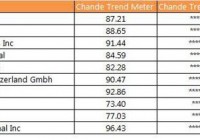
Summary We expand the discussion from a recent Editor’s Pick on building portfolios with the lowest volatility stocks in the S&P 500 Index. We point out that high beta is not necessarily high momentum and discuss why low volatility stocks might provide stronger performance. We simulate the portfolio construction calculations behind the S&P 500 Low Volatility Index and construct the current Top-10 portfolio holdings. We re-rank the lowest volatility stocks by momentum metrics to find stocks trending higher even in the current choppy market conditions. Introduction In a recent Editor’s Pick , Ploutos discussed the relative merits of using low volatility and high beta funds to generate better returns than the SPX (Ref 1). He combined the PowerShares S&P 500 Low Volatility Portfolio (NYSEARCA: SPLV ) and the PowerShares S&P 500 High Beta portfolio (NYSEARCA: SPHB ) to improve returns. His analysis is open to two criticisms. First, he was using a high beta portfolio as a substitute for a momentum strategy. However, high beta does not necessarily mean high momentum. Naturally, these terms are not cast in stone, and differences in calculation methodology and time period of data used in the analysis can change the measured beta as well as calculated momentum. So, for example, a fund like the PowerShares DWA Momentum Portfolio (NYSEARCA: PDP ) could be substituted for the SPHB portfolio. Second, he does not discuss why a stock may have low volatility, why a group of 100 stocks with the lowest volatility had returns greater than the full 500-strong index, and why this outperformance should persist for years on end. Thus, it is theoretically possible to go through a prolonged period during which the 100 stocks with the lowest volatility as a group do not consistently outperform the full index or their high-beta cousins quarter after quarter, and two groups flip flop back and forth negating any benefit of switching from one group to another. Why do stocks have low volatility? There are many reasons a stock could have low volatility. A stock may have low volatility because it has slow earnings growth and does not have the price amplitude, volume and spreads to catch the fancy of short-term traders. The stock may have large institutional ownership, and any dip in the stock leads to greater accumulation by institutions, so that large drops are rare. The earnings could be highly predictable and consistent, so the stock does not produce either positive or negative earnings surprises. The stock could have a large dividend payout, so it trades more like a bond than a stock. The stock could have gone through a period of very high volatility, that has shaken “weak longs” out of the stock, and volatility has diminished as the stock goes through a consolidation. A stock may be viewed as having a conservative management with high cash-flow, slow-growth businesses, that are not sensitive to strength or weakness in the economy. Hence, low volatility could be proxy for slow growth, high cash generators with large institutional ownership that are perceived as “low risk” investments. Thus, the exact reasons that a stock has low volatility over a given period and its implications for price advancement over the immediate future are unclear. Also, there could be numerous other reasons for low volatility in a stock. Why do low volatility stocks outperform the full index? In the ideal scenario, a stock has low volatility, is accumulated, and volatility increases due to favorable developments in the stock, such as improved growth prospects, and the stock breaks out into a strong trend. For example, management could focus on cutting costs and buying other companies with higher-margin products in the same sector. Thus, trading low volatility becomes a counter-trend entry into a stock that will morph into a growth story in the future. In this scenario, this stock starts off as a low volatility entity that shifts gears into a high growth phase, accounting for its outperformance. Of course, it will eventually drop off the 100-lowest volatility list, but then, its substitute will ideally repeat the same pattern. Alternately, the external market environment deteriorates, due to a weak economy or geo-political risks, prospects for price acceleration are murky or confusing, and money comes out of high-beta or high-volatility stocks and rotates into low-volatility stocks, being used as a temporary hedge or defensive position against market worries. These conditions could last for several quarters, and would again account for out-performance versus the full index. Naturally, there could many other possibilities for why low volatility stocks perform better than the index as a whole, such as buy-outs, rising dividends or a prolonged period of very low interest rates. Current State of Play: SPLV ETF As we have discussed above, low volatility does not have to mean low returns, especially when these stocks are used as a bulwark against market uncertainty. We perform a full trend analysis of the top-10 holdings of the PowerShares SPLV ETF (see Figure 1) below. The Top 10 are trending well, with good buying support for CB and BAX in particular. (click to enlarge) Figure 1: The current Top-10 holdings in the SPLV ETF are trending well given all the uncertainty in the market. (Data courtesy ETFmeter.com ) Updated Holdings through August 6 We asked the question: what would the current top 10 look like? We copied the methodology of the index and our updated top-10 holdings are shown in Figure 2. From Figure 1, XL Company (NYSE: XL ) and Stericyle (NASDAQ: SRCL ) are the only two companies in the top 10. One can then argue that an equally weighted portfolio would be better, since the rebalancing would only involve stocks which dropped out of the 100 least volatile stocks group. Figure 2: We update the portfolio weights using data through August 06 and the methodology described by the index provider. Only two of stocks, XL and Stericycle from the current top-10 in the SPLV ETF are on the list. (Data courtesy ETFmeter.com) The Best Trending of the 100 Lowest Volatility Stocks We can now ask the question: which are the best trending of the 100 stocks with the lowest volatility in the S&P 500 index? How are they doing? If money is rotating into low-volatility stocks in the face of market worries, then the 10 best trending stocks out of the 100 stocks with the lowest volatility in the S&P 500 index should be largely defensive stocks with steady earnings. We check this hypothesis in Figure 2 below using data through August, 06 2015. We find that out of the lowest 100 stocks, seventeen stocks seem to be surging, and we show them in Figure 3. The charts are somewhat similar, and we show the charts of Kellogg (NYSE: K ) and Clorox (NYSE: CLX ) to illustrate this idea (see Figures 4 and 5). Figure 3: The 17 stocks with the strongest trends in the 100 stocks with the lowest volatility in the S&P 500 index are a who’s who of defensive stocks. (Data courtesy ETFmeter.com) (click to enlarge) Figure 4: The Kellogg chart is rising strongly during the recent market uncertainty after analyst upgrades. (Chart courtesy StockCharts.com) (click to enlarge) Figure 5: The chart for Clorox looks quite similar to the one in Figure 4, showing the defensive rotation into low volatility stocks. (Chart courtesy StockCharts.com) Summary The low volatility group in the S&P 500 index can offer a respite in the rough seas of a choppy market. There are many alternatives to constructing portfolios with the lowest 100 volatility stocks and combining them with high beta and pure momentum strategies. Disclosure: I/we have no positions in any stocks mentioned, and no plans to initiate any positions within the next 72 hours. (More…) I wrote this article myself, and it expresses my own opinions. I am not receiving compensation for it. I have no business relationship with any company whose stock is mentioned in this article.
Buying The Next Hot Idea

If you want to know what is the core problem of the average person approaching the market (though this applies more to males than females, women have more native caution on average), it is chasing a hot idea. This can take a number of forms: Getting tips from friends who have bought some stock that is currently popular in the market. Doing the same thing with investors who talk or write about investing. The best investment advice is not flashy, and does not make for good video. Looking at charts and buying something that is rising rapidly, because popular media say this is “The Next Big Thing.” Buying the mutual fund or other pooled vehicle of some manager who has done very well in the past, and seems to never fail. (If you buy a mutual fund, don’t buy one that has had a lot of money pile into it recently… usually a bad sign. Spend more time to see if the manager thinks in a businesslike way about assets that he buys.) Going to a broker who is very well-dressed and confident, and talks really well, but who has no obligation to act in your best interests. If you don’t know how he is earning his money from you, avoid him, because it usually means investments with high fees or hidden ways that you can lose, e.g. structured notes that offer a nice yield, but where possibilities to lose are more significant than you think. At best, he will give you consensus ideas and managers that deliver him above average remuneration. Buying the newsletter of some overly confident person who claims to know the secrets of the market, which he will share with you and 100,000 other close friends for a mere $299/year! (Please read Mark Hulbert before buying a newsletter.) Worse yet, giving into the fakery of those who try to bring you into a hidden opportunity. It can be a Ponzi scheme, a promoted stock, but they suggest returns that are huge… or, like Madoff, decent but not exorbitant returns that are altogether too regular. Many of these appeal to our desire to get something for nothing, which is endemic – we all have it to some degree, and marketers play off this regularly by offering us “free” this, and “free” that. Earning returns from your investable assets is a business in its own right, and there are costs to doing it well. You should not be surprised that doing well with it will take some time and effort. You also have to avoid the impulse that there is some hidden knowledge, or group of insiders that have found an easy road to riches. The markets aren’t rigged in any material way. The principles of investing are well-known, but applying them takes creativity, time and effort. There are no significant players with a new theory who make amazing money investing in secondary markets for stocks and bonds. Most of the things that I listed above involve low-thought imitation of others. There is little advantage in investing to mimicry. Even if it worked for someone else, the prices are different now, and easy gains have been made. You will do worse than the one you are trying to imitate with virtual certainty, and likely worse than average. You need to plan to take an independent course, and learn enough such that if you do choose to use advice of any sort, that you can evaluate it rationally. If you choose to do it yourself, you will need to learn more than that. It takes effort, but that effort will pay off, if not in investing itself, but there are spillover effects in intelligent management of your finances, and in improving your abilities in the businesses that you serve. In most areas of life, most things that pay off well take effort. If people present you with easy or hidden ways to make above average money, be skeptical. Doing it right takes discipline and effort. (If you want the easy route while avoiding all the pitfalls see the postscript. It is boring, but it works.) As an aside – you can always index, and beat most average investors over the long haul. Buy broad funds that invest in a large fraction of all of the stocks that there are, and those that replicate the bond market as a whole. Make sure they have low fees. Buy them, hold them, and be done. You will still face one hurdle: will you be able to maintain your strategy when everything is in a crisis, or when your friends tell you they are earning a lot more than you, and it is easy to do it? Size the bond portion of your assets to the level where you can sleep soundly in all circumstances, and you will be fine. Disclosure: None

The O’Shares FTSE U.S. Quality Dividend ETF: You’re Dead To Me

Summary Mr. Wonderful Kevin O’Leary recently launched a dividend focused ETF. OUSA is a smart beta ETF with screening parameters focused on Quality, Value, and Yield. Is there merit in this fund, or should Kevin go take a hike? As a frequent watcher of Shark Tank, I was intrigued to find out that dirty-rich Kevin O’Leary, self anointed “Mr. Wonderful,” had developed a dividend ETF, the O’Shares FTSE U.S. Quality Dividend ETF (NYSEARCA: OUSA ). The fund is less than a month old, with onset of trading July 14. I wanted to determine if there was merit to the fund, or whether O’Leary is just throwing chum into the water to attract some attention. Kevin O’Leary OUSA’s online materials state that the fund is correlated to the FTSE U.S. Qual/Vol/5% Capped Factor Index, which focuses on “Quality, Low Volatility, and Dividend Yield.” OUSA’s tearsheet refers us to the FTSE web site for additional information relative to how index constituent are selected and weighted within the portfolio. There one can read all about the ground rules as well as a methodology overview . There is also a fact sheet summary available, for those interested in statistical gibberish. I was unable to find a complete list of current constituents. Portfolio The fund (as of July 14) is invested in 142 companies, both large- and mid-cap, with weighted average market cap of $152 billion. The average dividend yield is 3.2 percent. Here is a list of top 10 holdings as disseminated on July 14, complete with the common misspelling of Proct”o”r and Gamble: (click to enlarge) Images sourced from Oshares.com There was also a breakdown of industry exposure: (click to enlarge) Let’s compare the holdings to the SPDR S&P 500 Trust ETF (NYSEARCA: SPY ) ….and sector weightings…. Source: spdrs.com OUSA vs. SPY The funds share 6 of their top 10 holdings with one another. The main difference is in concentration. OUSA concentrates 38% of assets in the top 10 while SPY has about 17% of assets in the top 10. O’Leary’s fund is considered “smart beta” since it screens on basis of “Quality, Value, & Yield.” SPY is a plain passive index that we generally know the constituents of at all times. And while there is sector diversification, I don’t think I would characterize OUSA’s as “index hugging” in nature. For instance, SPY contains 17% exposure to financials. Presumably, according to graphs above, OUSA has less than 4% exposure. Generally when ETFs have somewhat similar allocations, the trump card could be the fee. Currently SPY charges .0945% annually while OUSA’s net expense is .48%, with a waiver in place until July of 2018. Since O’Leary is advertising a 3.2% yield on the underlying holdings, we can probably guess that it will actually pay out somewhere between 2.5 and 2.7% on a full year run rate. SPY sits somewhere around 2.1 percent. Let’s Make A Deal! If I were able to switch positions and grill O’Leary like he does the entrepreneurs that stand in front of his majesty, I’d hit him hard on the fee, because like him, I’m not overpaying and want good ROI. I’d inquire as to what makes this FTSE methodology so superior to a passive index like SPY. He’d probably respond that investors should only own stocks that pay dividends, which his fund does. About 1 in 5 S&P 500 stocks don’t. He’d probably also bring up the point that his fund concentrates in quality and low volatility, providing opportunity to not only realize a yield in excess of SPY, but perhaps total return as well. Plus one could also sleep better at night with OUSA than SPY. Maybe he’d have a point. Since I wouldn’t characterize this fund as index hugging in nature, maybe it has a good shot of providing portfolio alpha. But I’d remind him 75% of active fund managers can’t beat an index. Further, OUSA has no track record of success and doesn’t appear to be pulling in assets by the boatload as of yet. Perusing the top 10 holdings once again, I’d remind him that many of them have really stunk up the joint ( Exxon Mobil Corporation (NYSE: XOM ), Chevron Corporation (NYSE: CVX ), The Procter & Gamble Company ( PG), Apple Inc. ( AAPL)) over the less than a month the fund has been public. Of course he’d then remind me that the fund hasn’t fared any worse than SPY over the same time – which is basically true. But, I tell him I’d want a better deal to be a buyer. “You’re no better than SPY,” I’d tell him. Then I’d tell Mr. Wonderful to drop his fee, at which point he’d say, “You’re no better than an Italian hit man, Aloisi” and turn down the offer. As he turns his back to me I’d utter, “O’Leary, you and your OUSA are dead to me!” Disclosure: I am/we are long AAPL,XOM. (More…) I wrote this article myself, and it expresses my own opinions. I am not receiving compensation for it (other than from Seeking Alpha). I have no business relationship with any company whose stock is mentioned in this article. Additional disclosure: Disclaimer: The above should not be considered or construed as individualized or specific investment advice. Do your own research and consult a professional, if necessary, before making investment decisions.