Tag Archives: etf-hub

The Risk Of Owning Stock Assets And Holding Stock Assets Right Now
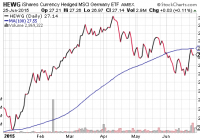
Hold-n-hope advocates believe that greater gains with stocks over investment grade bonds require nothing more than a commitment to accepting increased volatility. At least during the bulk of the current century, one’s willingness to endure wacky stock price changes did not lead to enhanced results. Risk is not synonymous with price volatility, even though erratic price shifts do lead to a greater likelihood of losing money. Hold-n-hope advocates believe that greater gains with stocks over investment grade bonds require nothing more than a commitment to accepting increased volatility. In other words, if you accept the occasional craziness of stock prices, then your rewards will be far more robust than lower yielding debt instruments. But is that even accurate? In the 15-year period through 5/31/2015, stocks exhibited 4 times the amount of price vacillation (a.k.a. volatility) than bonds. Yet the S&P 500 SPDR Trust ETF (NYSEARCA: SPY ) provided annualized gains of 4.5% and the iShares Core Total U.S. Bond Market ETF (NYSEARCA: AGG ) produced annualized returns of 5.4% in the same time frame. At least during the bulk of the current century, one’s willingness to endure wacky stock price changes did not lead to enhanced results. The facts become even more revealing when one examines them in dollar terms. An investor who placed $250,000 in SPY on 6/1/2000 found the investment growing to $483,000 by 5/31/2015. He did not sleep particularly well during the dot-com bust, financial collapse or the euro-zone crisis, but he made progress with his account. Meanwhile, an investor who placed $250,000 in AGG on 6/1/2000 witnessed her investment growing to $550,000 by 5/31/2015. Her world never felt like it was coming to an end; she slept like a beloved house cat on a warm blanket. Risk represents the possibility of loss. Risk is not synonymous with price volatility, even though erratic price shifts do lead to a greater likelihood of losing money. It follows that many trumpet the idea that if you hold stocks long enough, you cannot lose money, let alone lose out to bond assets. Keep in mind, however, there are circumstances when stocks have struggled to break even over 65 years, 30 years as well as 15 years . Additionally, there are no guarantees that one will achieve a positive inflation-adjusted outcome over any time period. On the contrary. History suggests that when one pays an inordinate amount for the privilege of stock ownership, he/she would be fortunate to be “made whole” over 3, 5, 7 and 10 year periods. By nearly every measure of stock valuation, investors are already paying an inordinate amount for stocks. This alone implies that one might be setting himself/herself up for poor returns over the short- and intermediate-term. Let’s revisit the mistake that scores of investors made in June of 2000. They purchased stocks when price-to-earnings (P/E) and price-to-sales (P/S) ratios were higher than they had ever been beforehand. The result? An exceptionally rocky ride that produced little in the way of gain, and that’s if one had the fortitude to hold through thin and thick. Today, the P/E and P/S ratios for the median U.S. stock are higher than they were in June of 2000. So, then, what’s the probable result for buy-n-holders over the next 3, 5, 7 and 10 years? Even 15 years may be discouraging for those who pay today’s premium for ownership privileges. Granted, today’s 10-year yield is 2.38%. In June of 2000? 5.28%. The likelihood that bonds will outperform stocks over the next 15 years may be pretty darn slim. Over 10 years, however? With less risk of loss? Less volatility? In a buy-n-holder’s world, 2.4% on the 10-year may not be so ugly. My approach to the risks associated with owning and holding stocks at the current moment is to maintain cash/cash equivalents at 15%-20% for most of my client base. How did we move from roughly 70% growth/30% income to roughly 55%-60% growth/20%-25% income and a basket with cash/cash equivalents? Throughout the year, I reduced exposure to intermediate- and longer-term bonds; I had reduced the exposure to stock ETFs as well – stock ETFs like iShares Currency Hedged Germany (NYSEARCA: HEWG ) that had hit stop-limit loss orders and/or fallen below key trendlines. I will keep the 55%-60% growth allocation in funds like the Vanguard High Dividend Yield ETF (NYSEARCA: VYM ), the iShares S&P 100 ETF (NYSEARCA: OEF ) and the Health Care Select Sect SPDR ETF (NYSEARCA: XLV ), until those assets break below long-term moving averages or hit pre-determined stop-limit losses. And when cash is raised, the proceeds will be moved to money markets or shorter-term vehicles like the S PDR Nuveen Barclays Short-Term Municipal Bond ETF (NYSEARCA: SHM ). Why the combination of lower-risk equity positions, lower-risk bond positions and a higher cash allocation? Later or sooner, profitability and revenue shortfalls will weigh on equities. Later or sooner, borrowing cost increases will weigh on bonds and stocks. Most importantly, the best way to deal with sky-high valuations as well as the increased cost of capital is to keep more of the dollars that you already have. Is preservation sexy? No. Might it seem like a silly proposition over the next three months, six months, or one year? Perhaps. Looked at another way, though, selling overvalued assets higher offers one the opportunity to purchase fairly valued or undervalued assets lower. With current prospects for stock percentage returns sitting at 0% for three, five, seven and even 10 years, successful investors will prevail by making acquisitions after the proverbial fall. Disclosure: Gary Gordon, MS, CFP is the president of Pacific Park Financial, Inc., a Registered Investment Adviser with the SEC. Gary Gordon, Pacific Park Financial, Inc, and/or its clients may hold positions in the ETFs, mutual funds, and/or any investment asset mentioned above. The commentary does not constitute individualized investment advice. The opinions offered herein are not personalized recommendations to buy, sell or hold securities. At times, issuers of exchange-traded products compensate Pacific Park Financial, Inc. or its subsidiaries for advertising at the ETF Expert web site. ETF Expert content is created independently of any advertising relationships.
Who Ya Gonna Call? VIXbusters Are Here!

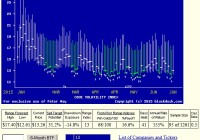
Summary The “fear index” investing/speculating/trading quickly gets submerged into what is for many ordinary investors a morass of arbitrage complexities. So most won’t go near any of the confusing and dangerous ETF products that require constant attention and diddling adjustments. Despite new ETF offerings. Too bad, since assured gains are there from time to time. The trick is in knowing when the time is right to use the tools with adequate market seasoning. Market-makers [MMs] know when. It’s woven into their job. But they are often busy frying much bigger profit fish. Here are simple guidelines for the individual investor to check periodically, any time, any day, for only $25 x 4 a year. The VIXbusters crowd They don’t screw with futures-based ETF products to track and evaluate the VIX INDEX. Contangos, roll yields, backwardation, and margin maintenance are not their things. They deal directly in arbitraging the index itself, hourly or more frequently as necessary, taking the market’s temperature, as preventive maintenance. We check them out at the close, every market day. That tells us what they expect the VIX index can be in the coming near future. Tomorrow, next day, next week. Both upper reaches possible, and lower ones. Sure, you could try to play cute-guy games with untried, unpredictable new ETFs or other more seasoned ones having low credibility and horrible odds of profit success. But there’s no need to take such risks. There are just a few simple things that need to be known. Then the game gets a lot clearer. First, take a look at how the market pros see, and have seen, coming prospects for the VIX Index. Figure 1 (used with permission) The vertical lines of Figure 1 are a visual history of forward-looking expectations of coming prices for the subject ETF. They are NOT a backward-in-time look at actual daily price ranges, but the heavy dot in each range is the ending market quote of the day the forecast was made. What is important in the picture is the balance of upside prospects in comparison to downside concerns. That ratio is expressed in the Range Index [RI], whose number tells what percentage of the whole range lies below the then current price. Today’s Range Index is used to evaluate how well prior forecasts of similar RIs for this ETF have previously worked out. The size of that historic sample is given near the right-hand end of the data line below the picture. The current RI’s size in relation to all available RIs of the past 5 years is indicated in the small blue thumbnail distribution at the bottom of Figure 1. The first items in the data line are current information: The current high and low of the forecast range, and the percent change from the market quote to the top of the range, as a sell target. The Range Index is of the current forecast. Other items of data are all derived from the history of prior forecasts. They stem from applying a T ime- E fficient R isk M anagement D iscipline to hypothetical holdings initiated by the MM forecasts. That discipline requires a next-day closing price cost position be held no longer than 63 market days (3 months) unless first encountered by a market close equal to or above the sell target. The net payoffs are the cumulative average simple percent gains of all such forecast positions, including losses. Days held are average market rather than calendar days held in the sample positions. Drawdown exposure indicates the typical worst-case price experience during those holding periods. Win odds tells what percentage proportion of the sample recovered from the drawdowns to produce a gain. The cred(ibility) ratio compares the sell target prospect with the historic net payoff experiences. Figure 2 provides a longer-time perspective by drawing a once-a week look from the Figure 1 source forecasts, back over (almost) two years. Figure 2 The most important thing to learn from these pictures and this data is that the VIX index is not like most all investable securities. It does not have a growth trend. Its prices do not fluctuate about that trend in any statistical “normal” distribution. MPT and conventional quantitative investment analysis have very little to offer here. VIX Index realities The VIX index is a derivative of other derivatives of the S&P500 index. Our implied price range forecasts from the market-makers are, in turn, a further derivative in a long family chain of such critters. They exist because they have been useful to market pros, far more than to the retail investor or the institutional investor. But like other derivatives, they can’t get used without revealing the expectations of the users. The users operate from a world that is in a narrow balance most of the time, with fluctuations that range in a limited, expected way. For the VIX, its index numbers typically hang around the 15 to 20 level. Their longterm (20-year) average is 20, but is skewed so that 60% are below 20 and 1/3rd are below 15. Its maximum of 80 is so rare that only 1/8th of the time is it above 30. The record low is a hair under 10, and it now is 13, well within, but near the low end of a usual range. The VIX Index goes up when stock prices go down, hence the “fear” label. Here’s the catch But it is very hard to tell in advance when that may happen, by a large enough amount to cause the VIX to rise productively. Past experience from the present MM forecast level has produced (see the row of data under the picture in Figure 1) +16.6% gains on average from the 95 similar forecasts of the last 5 years. But only 68/100 of them were profitable, and they had to recover from typical interim price drawdowns of nearly -15% to do that, or a price swing of over 30%. Not an experience designed to calm the nerves of many retirees. Besides, that “attraction” is largely available only to investment professionals, dealing in more limited circulation markets and securities. In contrast, what the individual investor has had most available is the i Path S&P 500 VIX Short-Term Futures ETN (NYSEARCA: VXX ). It has attracted $1.15 billion of capital and trades 39,164,600 shares a day, sufficient to turn over the entire committed capital in less than 2 days. Not exactly the company of long-term investors, if that is the way you may think of yourself. But such a liquid market might provide some comfort. Let’s see what opportunities the pros have seen there, in comparison to their direct appraisals of the VIX Index in Figures 1 and 2. Figure 3 Figure 4 No, the last 6 months were not an aberration, it is a trend built into the security by its reference to VIX futures instead of the VIX Index as an underlying security. Complex explanations are not needed where pictures make the problem clear. Two other parts of Figures 1 and 3 may also help to enlighten. They are the small blue thumbnail pictures at the bottom of each of those figures that show the distribution of opportunities presented by the forecasts. There are many more, wider opportunities in the VIX distribution than in the narrow, towering cluster of the VXX. VXX provides very little opportunity to anticipate advantageous price change for any but the aggressive day-trader. So how can the individual investor profit from the VIX? The answer is not to try to anticipate a market correction, and thus a rise in the VIX. But instead, to react to one, and profit from the recovery of the market by the VIX’s decline. As is often the case, an ability to do that requires perspective on when to act, using what instrument, and how long to stay committed to a position. The Instrument needed is one that is driven up by a rising market and a declining VIX. There is a related family of such sensitive ETF instruments, led by the P roShares Short VIX Short-Term Futures ETF (NYSEARCA: SVXY ). In support are several leveraged ETFs tracking the S&P500 Index, notably the ProShares UltraPro S&P 500 ETF (NYSEARCA: UPRO ), a 3x ETF tracker, the Direxion Daily S&P 500 Bull 3X Shares ETF (NYSEARCA: SPXL ), and the ProShares Ultra S&P 500 ETF (NYSEARCA: SSO ), a 2X ETF tracker. Figure 5 illustrates SVXY’s appealing price behavior even when markets are only in modest price progress. But Figure 6 should caution that this may not be the time to start or emphasize holdings in SVXY, since we have not yet had the market correction expected by so many VIX advocates. Figure 5 Figure 6 When to act is less of a challenge in anticipating a recovery than in anticipating a correction, but it still is not usually obvious – until after the fact. Conclusion You may do a lot better by calling VIXbusters than VIXbuilders because often market correction worries persist interminably. Time is a valuable resource, made clear by the securities involved here. Our worst recent market correction though, lasted barely 9 months, and until the last couple of them the prevailing focus seemed to be on how much worse it could get. Even missing the first month or two after the turn left another five or so years of upward march, which has pretty much nailed the VIX to its traditional floor. Stay patient. Disclosure: I/we have no positions in any stocks mentioned, and no plans to initiate any positions within the next 72 hours. (More…) I wrote this article myself, and it expresses my own opinions. I am not receiving compensation for it (other than from Seeking Alpha). I have no business relationship with any company whose stock is mentioned in this article.

Why I’m Now More Of A Buffett And Munger Type Investor

Summary Why I changed from Graham to Buffett and Munger. The importance of low hanging fruit in investing. What Growth as an Investor Really Is. Why You Need to Improve Risk Management. I’ve changed. How? It’s the same evolution that a lot of people have followed. Originally I focused purely on Ben Graham’s criteria and net nets. The beauty is that Graham’s techniques are easy to understand and follow because there is a lot of quantitative factors. Here’s one example of a Graham checklist you can study and follow. Graham came out with this back in his early days while running the partnership with Jerome Newman. ## Graham’s 10 Point Checklist An earnings-to-price yield at least twice the AAA bond rate P/E ratio less than 40% of the highest P/E ratio the stock had over the past 5 years Dividend yield of at least 2/3 the AAA bond yield Stock price below 2/3 of tangible book value per share Stock price below 2/3 of Net Current Asset Value (NCAV) Total debt less than book value Current ratio great than 2 Total debt less than 2 times Net Current Asset Value (NCAV) Earnings growth of prior 10 years at least at a 7% annual compound rate Stability of growth of earnings in that no more than 2 declines of 5% or more in year end earnings in the prior 10 years are permissible. ## Why It’s Important to Change for the Better It’s important to “adapt” your own version of this checklist because times have changed and this 10 point checklist may not work as well as it used to. And like a lot of people that have adapted and changed away from a pure quantitative approach towards buying quality assets, I have too. Buffett is the most obvious example here because he followed Graham’s investment style during his early partnership days until he met Charlie Munger. Of course, Buffett’s focus is now exclusively on buying quality businesses due to the size of Berkshire Hathaway, the compounding required to keep up growth and the special deals Buffett can strike up. But what’s the reason so many people morph from a Graham investor to more of a Buffett and Munger style of investing? My changes were made based on the need to keep things simple, chase low hanging fruit and improve risk management. Graham certainly did all these things, but when combining my temperament with Graham methods, I started digging myself into a hole without knowing it. So I changed. ## Keep Things Simple and Chase Low Hanging Fruit First The truth is that simple ideas and investments are not sexy. Some investments are so easy and obvious that people think it’s a dumb idea. Or, that low hanging fruit type investments have low upside so it’s not worth the investment. Being an early investor in Uber (Pending: UBER ) is much sexier than being an early investor to AT&T (NYSE: T ). The Fitbit (NYSE: FIT ) IPO is a clear indicator of how people want to be in on the next big thing. You get bragging rights if you say you got into the Fitbit IPO. You get more recognition from friends. You can talk and speculate about what the company is going to do to jet you to your next million. But I hold Amerco (NASDAQ: UHAL ). The parent company of U-Haul DIY moving trucks and storage. The investment thesis is simple. Their DIY truck rental business has a huge moat which is close to a monopoly. They own a ton of real estate for its storage business. They are family owned with large insider ownership. The bad family fights are behind them. They do not focus on quarterly performance or what Wall Street expects them to do. Their financials aren’t the easiest to understand because of the different parts and their focus on reinvesting for the long term. I used to think that I had to find complex stocks. That my goal was to find 1,000% potential returns. That would be awesome, but my focus was way off. I was reaching for the golden shiny apple at the top of the tree when there were very good apples hanging in front of my nose. I was simply ignoring them because it didn’t seem complicated enough. Well, here’s a note I received the other day. You should stop relying on your spreadsheet models and being so promotional with your website – it hinders your ability to analyze and think as an investor. I’ve followed you for quite a while, and you haven’t grown much in the past few years. – Anonymous I don’t know about you, but I’m perfectly content with having the skill to quickly know which stocks to pass on and which ones to dig into further. I’d rather know when something is overvalued or undervalued instead of just chasing a stock and falling in love with the story. Take it from Seth Klarman; Many investors are able to spot a bargain but have a harder time knowing when to sell. One reason is the difficulty of knowing precisely what an investment is worth. An investors buys with a range of value in mind at a price that provides a considerable margin of safety. As the market price appreciates, however, that safety margin decreases; the potential return diminishes, and the downside risk increases. Not knowing the exact value of the investment, it is understandable that an investor cannot be as confident in the sell decision as he or she was in the purchase decision. – Seth Klarman A 50 page complex stock analysis is not growth. Increased activity is not growth. Growth as an investor is knowing what to buy and when to buy. Growth is being able to pounce on a deal when it’s obvious. Growth is knowing how you react in certain situations preventing yourself from falling victim to it each time. Growth is being able to sit still and wait for an elephant to shoot instead of trying to shoot every rabbit. And all this comes from keeping things simple instead of trying to do too much. Graham did the same thing. Being such a savvy businessman and investor, Graham knew that he didn’t have to complicate things. He cut out the fat in investing and used discipline and simple ideas to generate his returns. ## Keeping Things Simple from a Baseball Perspective I’m a Seattle baseball fan which is painful. The team has been the definition of mediocrity for the past decade, but one of baseball’s best hitters is Seattle’s very own Edgar Martinez . In case you’re not a baseball fan, know that baseball is a game of failure. Most professional players can’t hit the ball more than 70% of the time. If you can hit the ball at least 3 out of 10 times throughout your career, you are considered elite. Edgar Martinez falls into this category. But what makes him so special? Two current hall of fame pitchers, Pedro Martinez and Randy Johnson, as well as future hall of famer Mariano Rivera have gone on the record saying that they thought Edgar Martinez was the best and toughest batter they’ve faced. Was it his homerun power? No. He had 309 and is no. 125 on the all time list. Was it his speed? No. He was slow due to an injury. It was simply because he was so disciplined, knew himself and limited mistakes that made him so difficult to get out. In recent interviews by Edgar, his approach was to keep things simple even when the stakes were high. Instead of trying to hit the game winning home run, his method was to stick to the basics, not get out and to keep the ball in play. Does that sound familiar? Edgar Martinez was happy with low hanging fruit by maintaining focus on the bigger picture – keeping the game alive in key situations even with a single. Edgar Martinez focused on protecting the downside and letting the upside take care of itself. Edgar Martinez didn’t go all out on one pitch that could blow up his team’s chance of winning. Edgar Martinez style of play wasn’t sexy and why he hasn’t been inducted into the hall of fame. Edgar Martinez is the baseball version of the investor I want to be. That means controlling the things that I can. Things like understanding how the stock fits within my overall investment objective calculating a valuation range to know when to act or not defining an entry price and exit strategy making better decisions with portfolio allocation ## The Need to Always Improve Your Risk Management Risk can be viewed differently between people, but when you boil it down, people don’t want to lose money. As Howard Marks puts it, I don’t think most investors fear volatility. In fact, I’ve never heard anyone say, “The prospective return isn’t high enough to warrant bearing all that volatility.” What they fear is the possibility of permanent loss. I too fear permanent loss of capital. The key to investing is knowing how to survive. That means at times playing conservatively, cutting losses when necessary and keeping a large portion of one’s portfolio out of play. – George Soros As I took up being a Graham first investor, one bad trait that I found myself creating was the focus on upside. Graham never emphasized the upside so this was purely a bad side effect created by myself. While focusing on the upside, I’ve made plenty of bad mistakes that come along with it. Trying to do too much all the time Over allocating on positions that I should have made much smaller Consuming too much information without putting the time to process it Fear of missing out on something Trying to pick up pennies in front of a bulldozer and the list goes on But one day, it finally sunk in. I finally knew and experienced what it meant to limit the downside. Protect the downside. Worry about the margin of safety. – Peter Cundill And another gem from Klarman. Interestingly, we have beaten the market quite handsomely over this time frame, although beating the market has never been our objective. Rather, we have consistently tried not to lose money and, in doing so, have not only protected on the downside but also outperformed on the upside. – Seth Klarman For me, that meant becoming a more Buffett and Munger investor. Slowing down my agendas and giving myself more time to think and process the information on hand. Look for strong moats. Look for good management. Look for businesses that I can hold for a long time without losing sleep over. I’ve changed for the better. Have you? Disclosure: I am/we are long UHAL. (More…) I wrote this article myself, and it expresses my own opinions. I am not receiving compensation for it. I have no business relationship with any company whose stock is mentioned in this article.