Tag Archives: etf-hub

Bearish GLD Trend After Greece Won Its Gamble
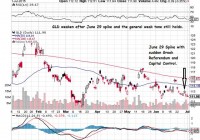
Summary The sudden Greek referendum and capital control gave the impression that events would spiral out of control and GLD spike up. U.S. and China intervened to keep the status quo and even the IMF which was defaulted on by Greece considered debt relief. Even the EU backed away from its demands and prepared to spend $35 billion euros to keep Greece within the EU. Still Greek PM wants a ‘No’ vote to increase negotiation leverage for greater concession. In short, Greece called the EU’s bluff and won the gamble. Financial stability concern had subsided but the world would still flock to USD. Bearish trend for GLD is now in place. The value of gold in our current fiat monetary system would be to serve as a hedge against inflation and financial instability. Inflation remains subtle today and major Centrals Banks only expect inflation to return to the 2% target in the next 2-5 years. Hence there is no reason to purchase gold from an inflation perspective. The financial stability argument is now in vogue with the whole Grexit saga that is playing out in real time. This has been expected after the Syriza government seized power back in January 2015 with the conflicting mandate of overthrowing austerity imposed by its European partners and to stay in the Eurozone at the same time. This is doomed for failure because the internal devaluation (cutting of wages and pensions, etc) would still go against the constraint of the strong euro in Greece’s competitiveness. Hence the Greek economy had shrunk year after year which would increase the debt to GDP ratio and make its debt untenable. Greek Referendum Card Therefore the only way forward would be for the Syriza government to play with the only card they have to force debt relief. That is the card of brinkmanship. It is only when Syriza threaten to burn the Eurozone apart with its default and the threat of leaving the European Union, then would the creditor nations be willing to grant them the much needed debt relief. It is important to understand this whole dynamics because it would in Greece’s interest to keep pushing Europe to the brink of collapse but at the same time maintain its membership in the Eurozone as long as the mandate of the Greek sways towards staying in the Eurozone. The Syriza government had to keep pushing the envelope to scare its creditors and it did a big scare on June 27. Greek Prime Minister Alexis Tsipras called for a sudden referendum on July 5 when the deadline for the EU bailout package on June 30. This worked wonders and was broadcasted worldwide for its sudden and irrational nature. At that point in time, shocked EU finance ministers expressed their angry clearly and closed the negotiations with Greece. On the next working day of June 29, Greece installed capital controls and limited the withdrawals of ATM cash to $60 euros per day. Banks were closed as the ECB refused to increase its emergency lending to deal with the bank run. Ratings agency such as Fitch and Standard and Poor downgraded Greeks banks and sovereign debt respectively. For a while, it would appear that things are rapidly spiraling out of control. I was shocked too and I wrote an article about the irrational nature of the Greek government as seen here . As the SPDR Gold Trust ETF (NYSEARCA: GLD ) chart below would show, gold prices actually spiked up that day as the threat of unconstrained disaster of Grexit appears imminent. The risk was that it would move out of Europe to the wider global economy. USD weakened as it was exchanged for gold. However this extreme extrapolation was a result of shock rather than a comprehensive assessment of the global economy. Foreign Intervention It turned out that the global will to keep the status quo was underestimated. Global leaders such as U.S. President Barack Obama, China’s Premier Li Keqiang and even IMF Christine Lagarde were not willing to rock the boat too hard. On June 30, the New York Times reported that President Obama intervened in the talks to urge creditors to soften their stance and come to a resolution. Obama was concerned over the financial stability concerns as the situation unfolded as described above. The U.S. President had grounds to believe that the unraveling of Europe could easily cause the contagion to spread not only in weaker European countries like Spain and Italy but also to the global economy including the U.S. In addition to the economic damage, there would also be geopolitical damage as Greece is part of NATO which is used to actively counteract the influence of Russia in Europe. This is especially after Russia annexed part of Ukraine in 2014 and this is still an existing concern. Obama was concerned enough for him to dispatch a senior Treasury officer to Europe to follow the status of the talks. For China , they had substantial investments in Greece and want Greece to stay within the EU framework for the safety of their investment. When the new government came into power, they tried to tear apart signed infrastructure contracts which unnerved Beijing. Things would only worsen if Greece were to leave the EU under desperate circumstances. Lastly we have the IMF which was at the losing end of Greece’s struggle with the EU. Greece failed to pay the $1.6 billion euros due on June 30 as the bailout negotiations failed. However the IMF had not taken action against Greece. Instead IMF Managing Director Christine Lagarde is entertaining the option of debt relief in exchange for reforms. Calling The EU Bluff Meanwhile the EU President Jean-Claude Juncker urged the Greeks to vote yes on the July 5 referendum and to stay within the Eurozone. This indicated that the EU would bend over backwards to accommodate the Greeks. In fact, the EU had already backed away from its proposal to rise the Value Added Tax from 13% to 23% and was prepared to give away another $35 billion in bailout. This is despite their doubts over the ability of the current Greek government to implement any reforms as demanded for the creditors. In fact even with these concessions on the table, the Greek PM is still urging his people to vote ‘no’ so that they can have more leverage on the EU for even more concession. The creditors are losing ground step by step with the negotiations with the current Greek government. The recent referendum, flawed as it is, is not used to primarily as a means for the Greek people to express their opinion. It is used as negotiation tool. In short, Tsipras had called the EU’s bluff. Even if the EU was willing to let go of Greece and go against its strong political will to unite the European nations on the frustrations of the creditor nations, international pressure would not allow it to happen so soon after a major recession and with the ongoing Russian aggression. In short, Tsipras took a gamble politically and he won. We can now expect to see more debt relief for Greece even if its record for implementation of reforms are doubted. Tsipras had won and Greece can stay within the Eurozone and not pay its debt. Conclusion The GLD chart below shows the recent impact of the Grexit drama. It spiked on June 29 as pointed out in the chart but it softened shortly after. It is clear that the financial stability concerns had faded and what is left is the rush to safety which would benefit the USD. (click to enlarge) Hence we should continue to sell GLD on any spikes in prices but we should not push it too far as there will be residual demand for gold in case events escalate beyond control suddenly. In other words, there will be a gradual weakening of GLD with periodic strength which should be sold. Disclosure: I/we have no positions in any stocks mentioned, and no plans to initiate any positions within the next 72 hours. (More…) I wrote this article myself, and it expresses my own opinions. I am not receiving compensation for it (other than from Seeking Alpha). I have no business relationship with any company whose stock is mentioned in this article.

5 American ETFs Enjoying Independence

A marked growth in the U.S. economy has increased the confidence in its people. Yet the U.S. stock market is caught in a bull-bear tug of war this year. This is especially true as the S&P 500 recorded its worst performance in five years, gaining just 0.2% in the first half. Meanwhile, Dow Jones shed over 1% in the same time period. A massive decline thanks solely to the Greece crisis spoilt the market mood in the final days of the first half. The debt drama in Greece climaxed after the deal talk collapsed last weekend, forcing prime minister Alexis Tsipras to close the country’s banks and impose capital controls. Further, rounds of downbeat economic data, strong dollar, global economic slowdown concerns, and the prospect of higher interest rates kept the stock prices at check. Yet in such a sluggish backdrop, some specific zones like small caps, health care, technology and many others shone. The financial sector too is pinning all hopes on the likely interest rates hike later this year. In fact, the tech-heavy Nasdaq Composite Index and the small cap Russell 2000 Index have been on a tear, having returned respectively 5.3% and 4.1%. Nasdaq has been blessed this year. It crossed the 5,000 milestone for the first time in early March since the 2000 dot-com bubble and touched multiple highs at regular intervals. Robust performances were driven by growing demand for novel and advanced technologies, and better job prospects. Economically sensitive sectors like technology generally pick up in an expanding economic cycle and most of the tech companies are sitting on a huge pile of cash, which ensures their strength in the rising rate environment. On the other hand, small caps ensure higher returns when the American economy is arguably leading the way. These pint-sized stocks are closely tied to the U.S. economy and generate most of their revenues from the domestic market, making them safer bets than their large and mid cap counterparts during a global turmoil. Due to their less international exposure, these stocks remained relatively unscathed by the strong dollar and Grexit fears. Given this, we have highlighted five star-spangled ETFs with handsome returns of at least 10% in the first six months of 2015. These funds focus exclusively on American equities and could definitely be worth a look for investors seeking a domestic tilt to their portfolio following the Fourth of July Holiday. Also, these are free from external threats, and move independently from the major indices: ALPS Medical Breakthroughs ETF (NYSEARCA: SBIO ) This fund targets companies with one or more drugs in Phase II or Phase III FDA clinical trials by tracking the Poliwogg Medical Breakthroughs Index. It provides a well spread out exposure to 82 stocks in its basket with none holding more than 4.50% share. SBIO is a small cap centric fund, having amassed $124.7 million in its asset base since its debut six months ago. The product charges 50 bps in fees per year from investors and trades in average daily volume of around 78,000 shares. It has delivered excellent returns of about 38% in the first half driven by its dual nature – small cap exposure and non-cyclical sector. Aging population, Obamacare, an endless hunt for new drugs, merger mania and cost cutting efforts added to the further strength. Barclays Return on Disability ETN (NYSEARCA: RODI ) This product is also the new entrant in the space, having debuted last September. It provides exposure to the companies that have acted to attract and serve people with disabilities and their friends and family as customers and employees. The fund follows the Return on Disability US LargeCap ETN Total Return USD Index, which measures the 100 largest companies that are outperforming in the disability market. The note charges 45 bps in annual fees from investors and trades in a meager volume of under 1,000 shares. The ETN was up over 26% in the same timeframe. ARK Web x.0 ETF (NYSEARCA: ARKW ) This is an actively managed fund focusing on companies that are expected to benefit from the shift of technology infrastructure from hardware and software to cloud enabling mobile and local services. These companies will primarily be either developers or users in fields such as cloud computing, wearable technology, big data, cryptocurrencies, social media, services and data mining, Internet of Things and digital education. The fund holds 45 stocks in its basket with a tilt toward the top firm – Athenahealth (NASDAQ: ATHN ) – at 7% while other firms hold less than 5% share. It has amassed $11.4 million in its asset base within less than a year while sees average daily volume of around 2,000 shares. Expense ratio came in at 0.95%. The fund has added over 12% in the first six months of this year. Guggenheim S&P SmallCap 600 Pure Growth ETF (NYSEARCA: RZG ) This fund targets the small cap U.S. market and follows the S&P SmallCap 600 Pure Growth Index. Holding 133 securities in its basket, it is well spread out across components with each holding less than 2.2%. Health care, financials, consumer discretionary, information technology, and industrials are top five sectors with double-digit allocation each. The fund has amassed $182.8 million in its asset base while trades in light volume of about 18,000 shares a day on average. It charges 35 bps in fees per year from investors and gained nearly 12% in the same time period. PowerShares KBW Regional Banking Portfolio ETF (NYSEARCA: KBWR ) This fund offers exposure to the regional banking corner of the broad financial market. It tracks the KBW Regional Banking Index and holds 50 stocks in its basket. The product is widely diversified across components with none accounting more than 4.01% share. It is a small cap centric fund as these account for 79% of the portfolio while the rest goes to mid caps. The ETF is often overlooked by investors as depicted by its AUM of $41.5 million and average daily volume of under 6,000 shares. It charges 35 bps in annual fees and added nearly 11% in the first half of 2015. Original Post

3 ETFs To Add To Your Celebrations On July Fourth

As one of the busiest travel holidays, this Fourth of July promises big business as pockets are heavier and confidence is on the rise. While the strength in the U.S. economy has translated into rising income, cheaper fuel has led to increased savings for long weekend getaways. This is especially true as gasoline price has been on the downtrend over the past couple of weeks. As per the AAA, drivers paid an average of $2.77 per gallon as of July 1, which is below 91 cents per gallon from the year-ago price and the lowest on this date since 2010. This trend is likely to continue over the Independence Day weekend and July 4 gas price will likely be the lowest in at least five years, spurring travelling demand. AAA estimates that 41.9 million Americans will travel 50 miles or more during the holiday weekend (July 1 to July 5) with 85% (35.5 million) choosing to travel by car. This represents maximum travelling since 2007. But the celebration is incomplete without fireworks, barbecues and of course shopping. In fact, Independence Day marks the beginning of the busiest half of the year for retailers. Many retailers are already flashing exciting deals for July Fourth and massive discounts are in the cards for a specific day. Among the most notable, Best Buy (NYSE: BBY ) is offering up to 40% discount on major appliances, including refrigerators, ranges and dishwashers while the departmental store Macy’s (NYSE: M ) is offering the “lowest prices of the season” on indoor and outdoor furniture, and mattresses on Independence Day. The online e-commerce behemoth Amazon (NASDAQ: AMZN ) will celebrate with limited-time price cuts on movies, books, music and more. About 23% of consumers would hit the stores in search of decorative items, apparels, and groceries. Spending per household is estimated at $71.23, up from $68.16 last year, according to the National Retail Federation (NYSE: NRF ). Further, Americans are expected to spend $6.6 billion on food alone. That being said, this holiday will be a celebration of not only freedom, but also economic growth. Along with the spirit of the Americans, this July Fourth weekend should lift revenues and profits in various corners. Industries like transportation, lodging, hotel, restaurants, food and retail will benefit the most. Investors seeking to tap the July Fourth fanfare could ride on these industries through the following ETFs: iShares Dow Jones Transportation Average ETF (NYSEARCA: IYT ) The ETF provides exposure to the broad transportation sector by tracking the Dow Jones Transportation Average Index. The fund holds a small basket of 20 stocks with heavy concentration and dominance in the top 10 holdings. Railroad takes the top spot at 46.3% while airfreight & logistics and airlines round off to the next two spots with double-digit allocation each. The fund has accumulated $841 million in its asset base while it sees good trading volume of around 442,000 shares a day. It charges 43 bps in fees and expenses and has a Zacks ETF Rank of 3 or ‘Hold’ rating with a High risk outlook. SPDR S&P Retail ETF (NYSEARCA: XRT ) This product tracks the S&P Retail Select Industry Index, holding 104 securities in its basket. It is widely spread across each component as none of these hold more than 1.15% of total assets. In terms of sector holdings, about one-fourth of the portfolio is allotted to apparel retail while specialty stores, Internet retail and automotive retail also receive double-digit allocation each. XRT is the most popular and actively traded ETF in the retail space with AUM of about $1.1 billion and average daily volume of about 2.1 million shares. It charges 35 bps in annual fees and has a Zacks ETF Rank of 1 or ‘Strong Buy’ rating with a Medium risk outlook. PowerShares Dynamic Leisure and Entertainment Portfolio ETF (NYSEARCA: PEJ ) This fund tracks the Dynamic Leisure and Entertainment Intellidex Index and holds a small basket of 30 US leisure and entertainment companies. The product is pretty well spread out across various securities as none accounts for more than 5.14% of total assets. From an industrial look, the fund is heavy on airlines and restaurants that collectively make up for 58% share, closely followed by hotels & leisure facilities (20%). The ETF has amassed $181.2 million in its asset base and trades in light volume of 49,000 shares a day on average. Expense ratio came in at 0.63%. PEJ has a Zacks ETF Rank of 3 with a Medium risk outlook. Original Post