Tag Archives: etf-hub

NRG Energy – A Business Pivot At Just The Right Time
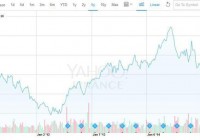
Summary There are major trends impacting the Utility sector: Fuel fluctuations, renewable energy targets, increasingly connected customers and innovations in distributed generation. The interest rate environment is favorable for highly leveraged Utility companies to refinance at attractive rates. NRG is using this drawdown period to shift their business to benefit from these trends in the future. The utility sector is going through a period of margin compression and market disruption which is challenging for a group of companies which are expected to pay stable dividends. The sector is being impacted by changing trends in renewable energy, increasingly connected retail customers, fluctuations in fuel costs and the increasing economic validity of distributed generation. NRG (NYSE: NRG ) is using this challenging business environment and the current low interest rates to pivot all of the Company’s businesses to benefit from these trends going forward. Make no mistake, NRG is undergoing major restructuring of their business model. The Company taken a hard look at all facets of the company and is making broad changes. One major change is that NRG has reorganized their company organizational structure, which is summarized in the Business Overview section below, to fit their view on trends in the Utility sector. Another major change is how NRG is approaching regulatory risks regarding the environment. 31% of NRG’s generation fleet is “dirty” coal-fueled power plants, the Company is currently burning cash upgrading these plants to bring them on pair with cleaner Combined Cycle Gas Turbine plants which are fueled by Natural Gas. The bottom-line benefits of the coal plant upgrades have yet to be seen. By analyzing the NRG’s current business environment, future trends in the sector, growth plan, risk management strategy and expert opinions we can tentatively postulate that the Company will produce sub-par results in the near-term, but has positioned itself as a Utility sector leader in the long-term. (click to enlarge) *from Yahoo Finance Business Overview: NRG Energy, Inc. is a competitive power company that produces, sells and delivers energy and energy products and services in major competitive power markets in the United States. Further the Company is a leader in the Utility sector and is 48th in the Fortune 100 Largest Companies in the United States. NRG owns and operates around 52,000 MWs of generation and engages in trading of wholesale energy, capacity, fuel and transportation services. Further the Company directly sells energy and sustainable services to retail customers. There are three major grouping within NRG: NRG Business: Was traditionally known as the Wholesale Power Generation Business, but now also includes business-to-business solutions. These solutions include, demand response, commodity sales, energy management and energy efficiency. Further this branch includes the distributed generation team for NRG. NRG Home: Is the consumer facing retail power operations, including solar. The branch serves 2.8 million recurring customers and is the largest retail energy provider in Texas and one of the largest in the United States. NRG Renew: The branch of NRG which develops mirco grid solutions as well as renewable products and services for large clients. In 2014, NRG Renew became one of the largest domestic wind-operators after an acquisition from EME . NRG Yield: A publicly traded dividend growth-oriented company formed to serve as the primary vehicle through which NRG owns operates and acquires contracted renewable and conventional generation. NRG Carbon 360: Consists of the Company’s carbon capture business. The branch plans to develop carbon capture technologies for NRG with an aim to prolong the life of NRG’s coal fleet and convert the carbon emissions to a marketable asset. (click to enlarge) * from 10-k Trends: The NRG has stated that the U.S. energy industry is going to be increasingly impacted by a long-term societal trend towards sustainability. Further the company stated that the information technology revolution, which has enabled greater personal choice, will increase churn in the U.S. retail energy sector. The sector specific trends above need to be considered in context with two current trends in the Natural Gas Market and Credit Markets which directly impact NRG’s business results. The Natural Gas Market has been in a downward price trend since its peak in 2007. While it might seem counter intuitive, downward Natural Gas prices actually reduce margins for NRG’s power generation portfolio, this relationship is explained further in the Risk Management section below. If Natural Gas reverse trend and begin rising, NRG will see an expansion of margins from their generation fleet. (click to enlarge) * Henry Hub Natural Gas Prices, Monthly from WSJ The Credit Markets have been in a decreasing interest rate environment since 2007. Like many Utilities, NRG is heavily leveraged, which means the company has significant exposure to interest rate risk, these risks are explained further in the Risk Management section below. If the Credit Markets reverse their trend and NRG cannot hedge adequately, the Company will be forced to devote much of their operating capital to debt repayments. (click to enlarge) *from the US Treasury Database Growth Plan: from the 10-k Enhance Generation: Continue to invest in upgrading the Company’s coal-fueled generation fleet. Expand Retail : NRG has increased its exposure to the Texas retail energy market in order to gain access to the competitive pricing structure of the ERCOT market. Further the company is diversifying its retail brand names to capture more segments of the market. Go Green: The company recently acquired the largest wind farm in north America. See it here . Smart Capital Allocation: NRG has hedged a portion of its coal and nuclear capacity with decreasing hedge levels through 2019. As a result of the GenOn aquisition , the majority of the Company’s generation is in forward capacity markets that extend three years into the future. As of December 31, 2014 the Company had purchased fuel forward under fixed price contracts, for approximately 50% of its expected coal requirement from 2015 – 2019. Risk Management: from the 10-k Many of NRG’s Power Generation Facilities Operate Without Long-term Power Sale Agreements: The Company’s “merchant” generation fleet operates without long-term power sales agreement, and therefore are exposed to market fluctuations. Without long-term agreements NRG cannot be sure that these facilities will operate profitability in future energy price environments. Exposure to Fluctuation in The Natural Gas Markets: In many of the markets NRG operates in the price of power is typically set by natural gas-fired power plants which have traditionally had higher variable costs than NRG’s coal-fired plants. Decreases in natural gas prices have resulted in a corresponding decrease in the market price of power which significantly reduces the operating margins of the Company’s baseload generation assets. At extremely low natural gas prices, gas plants become more economical than coal generation, in such environments NRG coal-fired units cycle more often or even shut down. 31% of NRG’s generation fleet is coal-fueled. Disruptions of Fuel Supplies: NRG relies upon coal, oil and natural gas to fuel a majority of its generation facilities. Delivery of these fuels depends upon continuing viability of counterparties as well as upon the infrastructure available to serve each facility. There are many risks which can disrupt the distribution of fuel such as, weather conditions, demand levels, changes in market liquidity, etc. For an example of these risks please read this article on well freeze-offs. Competition in the Wholesale Power Markets: Many of the Company’s facilities are old, newer plants owned by the competition are often more efficient than NRG’s aging plants. In order to compete effectively NRG seeks to use its scale and aggregate fuel supplies, efficiently utilize transportation services and transmission services from other Utilities and third-parties. Power Outages: Old facilities require periodic maintenance, and unexpected outages are extremely costly for NRG. Government Regulation: NRG’s business is subject to extensive U.S. federal, state and local laws and foreign laws. Except for ERCOT (Texas), most of NRG’s generation companies are considered ‘public utilities’, which subjects these generation companies to FERC oversight, ratemaking and environmental oversight. There are many ongoing regulatory issues, here are a few examples that the Company is currently dealing with: Cross-State Air Pollution Rule , MATS , CO2 Emissions , and Byproducts, Wastes, Hazardous Materials and Contamination. Interest Rate Risk: NRG’s substantial debt could have negative consequences including: Increasing NRG’s vulnerability to general economic and industry conditions Requiring large portions of NRG’s cash flow from operations to be dedicated to the payment of interest, reducing the Company’s ability to pay dividends Limits NRG’s ability to enter into long-term power agreements Limits NRG’s ability to obtain additional financing for working capital Limiting NRG’s ability to adjust to changing market conditions and placing it at a competitive disadvantage compared to its competitors who have less debt. Expert Opinion: (click to enlarge) * from Yahoo Finance The experts are currently bearish on the prospects of NRG’s near-term stock price. Most experts are providing a “Neutral” or “Hold” rating to NRG. However with NRG’s current price of $25 per share, there is still an upside of 22% to the median price estimate of $30.50. (click to enlarge) * from Yahoo Finance The experts expect NRG to have a difficult year during 2016. EPS is expected to decay from $0.83 for 2015 to $0.17 during 2016. Further the revenues are expected to stagnate between 2015 to 2016 with estimated revenues of $15.33B and $15.31B respectively. Recent News: The California Public Utilities Commission approved the SDG&E Power Purchase and Tolling Agreement for the NRG Energy, Inc Carlsbad Energy Center. The Center is a 500 MW, five unit natural gas peaking plant in southern California. Reliant launches integrated home security, automation solutions. CEO David Crane wins 2015 C.K. Prahalad Award for Global Business Sustainability Leadership. NRG moves to spot 48 on the Fortune 500 List. The Company acquired Goal Zero , a leading provider of portable solar power and battery packs. Through the acquisition NRG hopes to increase cross selling between mass market system power, residential solar and personal power. Conclusion: In conclusion NRG is going through a difficult business pivot. Low Natural Gas prices have hurt NRG’s margins for the electricity generation fleet. However, the low interest rates in the Credit Markets have given NRG financial flexibility to restructure the Company into position which benefits from the major trends in LNG technology adoption, renewable energy, distributed generation and increased energy connectivity of retail customers. NRG is a massive company, so these changes are going to be slow and relatively painful for the company’s bottom line in the near-term. However, if NRG and David Crane can weather this challenging business environment then the Company will be able to apply its scale to capture increasing margins as the Natural Gas Markets bounce back. I recommend NRG as a near-term Short, but a long-term Buy, because the Company’s margins are tied to the fluctuations in the Natural Gas Markets. The Company will refinance at currently attractive interest rates and the global Natural Gas Markets are slowly moving towards parity with one another as the adaptation of LNG technology allows for easier transportation of Natural Gas. These two factors should allow NRG to boost their cash flows from operations and reward long-term investors. Disclosure: I/we have no positions in any stocks mentioned, and no plans to initiate any positions within the next 72 hours. (More…) I wrote this article myself, and it expresses my own opinions. I am not receiving compensation for it (other than from Seeking Alpha). I have no business relationship with any company whose stock is mentioned in this article.
Concerned About Rising Interest Rates? Consider These 4 Alternative Investments

Summary Certain types of alternative investments are well suited to help prepare portfolios for rising interest rates in the future, while also potentially adding value in the present. We highlight senior loan, unconstrained bond, market neutral and global macro strategies. Looking past traditional stocks and bonds may help prepare portfolios for a future rise in rates By Walter Davis, Alternatives Investment Strategist As I travel across the country meeting with financial advisors and their clients, a common concern I hear voiced is “how can I position my portfolio for when the inevitable happens and interest rates start to rise?” In response, I state that certain types of alternative investments are well suited to help prepare portfolios for rising interest rates in the future, while also potentially adding value in the present. Specifically, I highlight four different types of alternatives for clients to consider: Senior loans (also known as bank loans, senior secured loans and/or leveraged loans) – Senior loans are loans made by banks to non-investment grade companies, commonly in relation to leveraged buyouts, mergers and acquisitions. The loans are called “senior” because they are contractually senior to other debt and equity, and are typically secured by collateral. Given that the loans are made to non-investment grade companies, the yield associated with them tends to be higher than on investment grade corporate bonds. 1 For example, as of the end of May, senior loans were yielding 5.51% versus a yield of 2.99% on investment grade corporate bonds. 2 Another key aspect of senior loans is that the interest rate paid is a floating rate that resets every 30 to 90 days. 3 This means that in a rising interest rate environment, as long as the rate rises above a predetermined minimum level, the investor will receive increased payments from the borrower. Therefore, senior loans may potentially outperform other types of bonds in rising rate environments due to their floating rates. Unconstrained bond funds – Unconstrained bond funds are funds in which the portfolio manager is given the flexibility to invest globally across all sectors of the fixed income markets. The manager also may use derivatives, leverage and shorting when implementing his or her strategy. Given the tools made available to the manager, unconstrained bond funds tend to have an absolute return orientation, meaning that they may seek to generate a positive return in any market environment. In a rising interest environment, an unconstrained bond fund has the ability to take advantage of rising rates by utilizing a number of derivative strategies. One such strategy would be to short Treasury bond futures. Treasury bond futures mimic the returns of Treasuries, which are negatively impacted by rising rates. Therefore, by shorting Treasury futures you would gain when interest rates rise. Furthermore, such funds have the ability to avoid regions and sectors that they do not find attractive while focusing on the regions and sectors they believe offer the best potential for success. In general, investors should expect unconstrained bond funds to potentially outperform traditional bond funds in down bond markets, and to possibly underperform traditional bond funds in rising bond markets. Market neutral funds – Market neutral funds seek to generate positive returns regardless of market environment by trading related stocks on a long and short basis. Such funds are designed to cushion a portfolio against broad market swings. Although market neutral funds invest in equities, many of these funds are designed to generate returns that are bond like, both in terms of the level of return and the volatility associated with the return. That said, investors considering market neutral funds should be aware that such funds, unlike traditional bond funds, do not generate current yield, and that they can experience more severe declines than traditional bond funds. Global macro funds – Global macro funds are funds that invest across the global markets in equities, fixed income, currencies and commodities on a long and short basis. As a result, these funds tend to be very opportunistic in their investment approach. When interest rates begin to rise, the fallout is likely to be felt across the global markets. Given the markets traded and their opportunistic nature, global macro funds have the potential to thrive in a rising interest rate environment. Read more about alternative investing from Walter Davis. References This is due to the increased credit risk associated with non-investment grade companies relative to investment grade companies. Bloomberg L.P. as of May 31, 2015. Corporate bonds are represented by a subset of the Barclays US Aggregate Bond Index, and senior loans are represented by the S&P/LSTA Leveraged Loan Index. Senior loans are usually priced relative to three-month LIBOR, with the lender receiving a fixed spread above the LIBOR rate. Therefore as LIBOR rises, the amount paid by the borrower increases. Importantly, most loans have a provision that establishes a minimum, or floor, for LIBOR. Typically the floor rate is around 1.00%. This helps protect the lender should LIBOR fall below 1.00%. Currently, the three-month LIBOR rate is approximately 0.28%. Due to the floor, LIBOR would need to rise above the 1.00% floor before the investor would receive the benefit of rising interest rates. Important information The Barclays US Aggregate Bond Index is an unmanaged index considered representative of the US investment-grade, fixed-rate bond market. The S&P/LSTA Leveraged Loan Index is a weekly total return index that tracks the current outstanding balance and spread over Libor for fully funded term loans. An investment cannot be made in an index. Past performance cannot guarantee future results. Alternative products typically hold more non-traditional investments and employ more complex trading strategies, including hedging and leveraging through derivatives, short selling and opportunistic strategies that change with market conditions. Investors considering alternatives should be aware of their unique characteristics and additional risks from the strategies they use. Like all investments, performance will fluctuate. You can lose money. Derivatives may be more volatile and less liquid than traditional investments and are subject to market, interest rate, credit, leverage, counterparty and management risks. An investment in a derivative could lose more than the cash amount invested. Fixed-income investments are subject to credit risk of the issuer and the effects of changing interest rates. Interest rate risk refers to the risk that bond prices generally fall as interest rates rise and vice versa. An issuer may be unable to meet interest and/or principal payments, thereby causing its instruments to decrease in value and lowering the issuer’s credit rating. Most senior loans are made to corporations with below investment-grade credit ratings and are subject to significant credit, valuation and liquidity risk. The value of the collateral securing a loan may not be sufficient to cover the amount owed, may be found invalid or may be used to pay other outstanding obligations of the borrower under applicable law. There is also the risk that the collateral may be difficult to liquidate, or that a majority of the collateral may be illiquid. Short sales may cause an investor to repurchase a security at a higher price, causing a loss. As there is no limit on how much the price of the security can increase, exposure to potential loss is unlimited. The information provided is for educational purposes only and does not constitute a recommendation of the suitability of any investment strategy for a particular investor. Invesco does not provide tax advice. The tax information contained herein is general and is not exhaustive by nature. Federal and state tax laws are complex and constantly changing. Investors should always consult their own legal or tax professional for information concerning their individual situation. The opinions expressed are those of the authors, are based on current market conditions and are subject to change without notice. These opinions may differ from those of other Invesco investment professionals. Before investing, carefully read the prospectus and/or summary prospectus and carefully consider the investment objectives, risks, charges and expenses. For this and more complete information about the products, visit invesco.com/fundprospectus for a prospectus/summary prospectus. NOT FDIC INSURED MAY LOSE VALUE NO BANK GUARANTEE All data provided by Invesco unless otherwise noted. Invesco Distributors, Inc. is the US distributor for Invesco Ltd.’s retail products and collective trust funds. Invesco Advisers, Inc. and other affiliated investment advisers mentioned provide investment advisory services and do not sell securities. Invesco Unit Investment Trusts are distributed by the sponsor, Invesco Capital Markets, Inc., and broker-dealers including Invesco Distributors, Inc. PowerShares® is a registered trademark of Invesco PowerShares Capital Management LLC (Invesco PowerShares). Each entity is an indirect, wholly owned subsidiary of Invesco Ltd. ©2015 Invesco Ltd. All rights reserved. Concerned About Rising Interest Rates? Consider These Four Alternative Investments by Invesco Blog

The Factor-Based Story Behind Successful Growth Funds

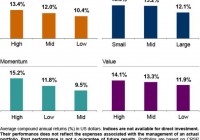
Summary Most large cap stock active fund managers underperformed their benchmarks in the 15 years to December 2014. Active large growth funds performed much better than large value funds vis-à-vis benchmarks. Virtually all of actively managed growth funds’ outperformance can be explained by quantitative multi-factor analysis. Americans have invested trillions of dollars in actively managed mutual funds in the hope of beating an index such as the S&P 500 or the Russell 1000 Growth. At Gerstein Fisher, we believe that markets tend to do a pretty good job of pricing risk and that most investors are better off “buying the market” (via an index fund) than trying to beat it. But we also think that there’s a better way to invest in equities than through either purely passive indexing or traditional active management. I’ll get to that method shortly after sharing summary results of a multi-step fund performance study that we recently conducted. Active Funds and Benchmarks We analyzed two Morningstar categories of funds, large cap growth and large cap value, from January 1, 1990 to December 31, 2014. During this 15-year period, 37% of the growth funds and 42% of the value funds disappeared-liquidated, merged, etc. We studied this aspect to eliminate survivorship bias in the study; obviously, funds that are shuttered by managers tend to be the poor performers. In the next step, we measured how many of the surviving funds outperformed their benchmarks during the 15-year time frame. Of the large cap growth survivors, 67.5% beat their benchmark (Russell 1000 Growth), while just 49% of the living value funds beat their bogey (Russell 1000 Value). All told, 42% of the large cap growth funds that existed in January 1990 beat their benchmark, compared to only 28% of large cap value funds. Moreover, the average outperformance for active growth was 2.14 percentage points per year vs. just 1.17 points for the active value funds. Two conclusions we can draw from this research are that 1) It is very difficult for professional portfolio managers to outperform an index, and 2) Growth appears to be the investing style that quite consistently performs best among actively managed funds. In fact, neither of these conclusions is either particularly new or surprising, as past research by Gerstein Fisher and others has amply demonstrated. See, for example, ” In Mutual Funds, is Active vs. Passive the Right Question? ” Explaining Outperformance But here is where the research gets really interesting. We conducted an extensive statistical analysis of the large cap growth funds that outperformed. We drilled down and studied whether quantifiable company characteristics, or “factors”, could be used to explain the outperformance. We honed in on just four factors– size, value, momentum and profitability-to measure the extent to which excess exposure (relative to the Russell 1000 Growth Index) to these factors could explain outperformance. I’ll digress very briefly to explain the theory and evolution of multi-factor investing. In 1976, Steve Ross published a landmark paper on Arbitrage Pricing Theory, which explained that security returns are best explained by more than one factor.* Since then, academics have identified dozens of quantifiable variables, such as momentum, that impact stock returns. In effect, even stocks from different industries that share similar such characteristics should generate similar returns. The Exhibit below illustrates the premiums over a 40-year period for the four factors we used to analyze the active growth funds. Note, for instance, that investors were historically rewarded with a 3-point premium (per year) for investing in more profitable companies and 3.5 points for being in smaller companies. (click to enlarge) Now back to our study. When we accounted for the momentum, size, value and profitability factors, we found that only 1.6% of the managers actually outperformed the benchmark (after adjusting for positive tilts to these four factors), or generated positive alpha (i.e., excess return of a fund relative to its benchmark). Another way of stating this is that 98.4% of the outperformers had higher factor exposure than the benchmark. For example, 95% of these winners had a positive tilt to value (relative to the Russell 1000 Growth Index) and 64% had higher-than-index exposure to smaller companies. Given this evidence that outperformance of active growth managers is almost entirely explained through their (witting or unwitting) excess exposure to certain factors, the next question is whether there is a rigorous, methodical, quantitative way to target certain factor exposures in order to outperform the index over extended time periods. We believe that there is-the Multi-Factor® quantitative investing style that underpins our three equity mutual funds. In the coming weeks, I plan to write a series of articles to elaborate on the principles and applications of multi-factor investing. In advance of that, I invite you to read a short piece we recently published on this investment strategy: ” What is a Multi-Factor Investment Approach? ” Conclusion Active fund managers have great difficulty beating passive indexes over long time periods. Actively managed growth funds perform well relative to benchmarks compared to value funds, but nearly all of the growth funds’ outperformance can be explained quantitatively by multi-factor analysis. *Finance students will recognize the factor-premium formula for portfolio return–+β11 +β22 +… … + β n n + –where portfolio return is described as the sum of the risk-free rate, factor exposures, and alpha. Disclosure: I/we have no positions in any stocks mentioned, and no plans to initiate any positions within the next 72 hours. (More…) I wrote this article myself, and it expresses my own opinions. I am not receiving compensation for it. I have no business relationship with any company whose stock is mentioned in this article.