Tag Archives: earnings-center

Weak Wages And Weaker Manufacturing, But How ‘Bout Those Rate Hike Expectations!
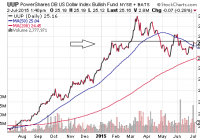
When half of the employed folks make less than what it takes to support one’s self, the wage growth required for a stronger economy cannot suddenly appear. Rather, increases in consumption must rely entirely on low-rate debt binging. Crafting a positive spin on the economy should not be a substitute for frank discussions on the actual state of affairs. I started working at the age of 13. I wanted to be productive. I wanted to make money. Gardener, golf caddy, food deliverer, waiter, bartender, entrepreneur, researcher, analyst, writer, planner, adviser, money manager – I probably spent as much time cursing and complaining as I did whistling. Nevertheless, thirty five years of work contributed to my well-being as well as the well-being of others. Will people from my generation (“Gen X”) leave the workforce anytime soon? Not if we intend to maintain our lifestyles. In fact, Gen Xers aren’t slated to begin retiring in earnest until 2030. We may have grown up as apathetic slackers, yet studies routinely demonstrate that those born between 1961 and 1981 are exceptionally industrious. (Good looking too.) So why are Gen Xers and post-World War II baby boomers leaving the workforce at an accelerated pace during this economic recovery? For example, today’s jobs report celebrated the creation of 223,000 new jobs in June and a 5.3% unemployment rate, while barely mentioning that 432,000 civilian workers disappeared from the labor force altogether. At present, a record 93.6 million of the U.S. working-aged population are no longer in the picture, resulting in the employment rate/participation rate hitting 1977 levels of 62.6%. It actually gets worse. There are roughly 100 million Americans out of 160 million Americans considered by the Bureau of Labor Statistics ( BLS ) as fully employed. Yet it has been estimated that 1/2 of those 100 million earn less than $15,000 annually as part-timers or self-employed workers. Should we really be declaring an annual income of $15,000 as sufficient for a spot in the full-time work column? Houston, we’ve got a problem. And I’m not even referring the planned layoffs across the oil and gas space. For one thing, when half of the employed folks make less than what it takes to support one’s self, let alone support children or elderly family members, the wage growth required for a stronger economy cannot suddenly appear; rather, increases in consumption must rely entirely on low-rate debt binging. Can you say, low rates for longer? Secondly, crafting a positive spin on the economy should not be a substitute for frank discussions on the actual state of affairs. Specifically, popular media outlets like the Associated Press have little business calling a tepid jobs report “solid.” In the absence of any month-over-month wage growth? In spite of downward revisions to job growth in prior months? With employment gains only keeping up with population gains? Indeed, the Associated Press even acknowledged that the employment rate/workforce participate rate fell because people out of work gave up on the pursuit and no longer count in the unemployed tally. How exactly is this a topnotch turn of events? There are two key ramifications of today’s data from the BLS as well as ancillary manufacturing data from the U.S. Census Bureau. First, the idea that the dollar can only move higher in light of China uncertainty and euro-zone complications is flawed. Expectations for the timing and the extent of rate hikes by the Fed continue to diminish with every lackluster economic presentation. Since the dollar had already priced in the end of quantitative easing in the U.S. and the eventual beginning of eurozone quantitative easing, I’m more inclined to expect the dollar via the PowerShares DB USD Bull ETF (NYSEARCA: UUP ) to end 2015 very near where it is today. Next, prominent sector investments like industrials and transports will continue to underperform. Simply stated, factory orders have fallen in nine out of the last 10 months; the seasonally adjusted year-over-year decline in factory orders is 6.3%. Strong dollar excuses notwithstanding, this type of data is entirely recessionary. In fact, it’d be difficult to find a period where the weakness in demand for U.S. manufactured goods was this low and it wasn’t associated with economic recession. As I have discussed on many prior occasions, one does not necessarily need to pare back core positions like the iShares S&P 100 ETF (NYSEARCA: OEF ). Not unless one is employing a disciplined approach to risk reduction . Still, if you have been holding onto an allocation to the Industrial Select Sector SPDR ETF (NYSEARCA: XLI ) or the iShares Transportation Average ETF (NYSEARCA: IYT ), consider taking profits. Technical analysis of the sectors suggest further erosion of price, and neither the BLS employment data nor the U.S. Census Bureau manufacturing data indicate a quick turnaround. Disclosure: Gary Gordon, MS, CFP is the president of Pacific Park Financial, Inc., a Registered Investment Adviser with the SEC. Gary Gordon, Pacific Park Financial, Inc, and/or its clients may hold positions in the ETFs, mutual funds, and/or any investment asset mentioned above. The commentary does not constitute individualized investment advice. The opinions offered herein are not personalized recommendations to buy, sell or hold securities. At times, issuers of exchange-traded products compensate Pacific Park Financial, Inc. or its subsidiaries for advertising at the ETF Expert web site. ETF Expert content is created independently of any advertising relationships.
July 2015, Funds In Registration

First Western Short Duration High Yield Credit Fund First Western Short Duration High Yield Credit Fund will seek a high level of current income and capital growth. The plan is to invest in a global portfolio of junk bonds and floating rate senior secured loans. The fund will be managed by Steven S. Michaels. The minimum initial investment is $1,000. The opening expense ratio for retail shares will be 1.2%. RiverNorth Marketplace Lending Fund RiverNorth Marketplace Lending Fund will seek “a high level of total return, with an emphasis on current income.” The plan is to invest in “loans to consumers, small- and mid-sized companies and other borrowers originated through online platforms.” That is, they’ll subscribe to loans through peer-to-peer lenders such as Lending Tree and Prosper.com. They urge you to think of this as a fund that might fit into the “high yield / speculative income” slot in your portfolio. They also, rightly, raise two red flags: (1) no one has ever done this before and so there’s no established market for trading these shares, which might well make them illiquid for rather longer than you like and (2) this is structured as a closed-end fund but will likely function as an interval fund; that is, you might have to request redemption of your shares then wait for a redemption window. That’s akin to the practice in hedge funds, since they also make money from the mispricing of illiquid investments. The fund will be managed by Philip K. Bartow and Patrick W. Galley. Mr. Bartow just joined RiverNorth after serving as “Principal at Spring Hill Capital, where he focused on analyzing and trading structured credit, commercial mortgage and asset-backed fixed income investments.” Mr. Galley is RiverNorth’s Alpha male. Details like purchase requirements and expenses have yet to be worked out. RQSI Small Cap Hedged Equity Fund RQSI Small Cap Hedged Equity Fund will seek total return with lower volatility than the overall equity market. The plan is to invest in a diversified portfolio of U.S. small cap stocks and ADRs, when they need exposure to a foreign stock, which will be selected using the Ramsey Quantitative Systems, Inc. quantitative system. The manager will use options, futures and ETFs to hedge the portfolio. The fund will be managed by Benjamin McMillan, formerly a manager for Van Eck Global’s Long/Short Equity Index Fund. The minimum initial investment is $2,500. The opening expense ratio will be 1.56% for retail shares. T. Rowe Price Emerging Markets Value Stock Fund T. Rowe Price Emerging Markets Value Stock Fund will pursue long term growth of capital. The fund will invest in “stocks of larger companies that are undervalued in the view of the portfolio manager using various measures.” The fund will be managed by Ernest Yeung. Mr. Yeung joined T. Rowe in 2003. Price describes him as having “joined the Firm in 2003 and his investment experience dates from 2001. He has served as a portfolio manager with the Firm throughout the past five years.” He’s also described as a “sector expert” on Asian media and telecomm stocks. I can, however, only find a four month fill-in stint as manager of T. Rowe Price New Asia Fund (MUTF: PRASX ) . Presumably he’s been managing something other than mutual funds and has done it well enough to satisfy Price. The opening expense ratio, after waivers, will be 1.5%. The minimum initial investment will be $2,500, reduced to $1,000 for tax-advantaged accounts. The prospectus is dated August 24, 2015 which suggests the launch date. Thornburg Better World Fund Thornburg Better World Fund will seek long-term capital growth. The plan is to invest in international “companies that demonstrate one or more positive environmental, social and governance characteristics.” They can also hold fixed income securities, but that’s clearly secondary. The fund will be managed by Rolf Kelly, who has been with Thornburg since 2007. Before that, he was a “reservoir engineer” for an oil company. The minimum initial investment is $5,000, reduced to $2,000 for various tax-advantaged accounts. The opening expense ratio is 1.83% for “A” shares, which also carry an avoidable 4.5% load. United Income and Art Fund United Income and Art Fund will seek income with long-term capital appreciation as a secondary objective. The plan is to invest in equity and fixed-income mutual funds (based on “performance, risk, draw downs, portfolio holdings, turnover, and potential concentration risk – easy peasy!) and up to 15% in potentially illiquid “art companies,” plus long and short ETFs for hedging. The fund will be managed by Doran Adhami and Itay Vinik of United Global Advisors. Mr. Adhami was a Vice President of Investments for UBS from 2005-13; Mr. Vinik was an intern there and is now, with “approximately three years” of industry experience, United Global’s CIO. He also helps manage the Ace of Swords Fund . The minimum initial investment is $500. The opening expense ratio has not been released; the existence of a 2% redemption fee and a 0.25% 12(b)1 fee have been established. Zevenbergen Genea Fund Zevenbergen Genea Fund will seek long-term capital appreciation. The plan is to invest in the stocks of 15-40 firms which are “benefitting from advancements in technology.” I’m certain that’s not nearly as dumb as it sounds. International exposure would come mostly through ADRs. The fund will be managed by Nancy Zevenbergen, Brooke de Boutray, and Leslie Tubbs. The adviser has about $2.4 billion in assets under management and all of the managers have experience as portfolio managers at regional banks. The minimum initial investment is $2,500. The opening expense ratio is 1.40%. Zevenbergen Growth Fund Zevenbergen Growth Fund will seek long-term capital appreciation. The plan is to invest in 30-60 industry leaders, described as firms which seek to invest in industry leaders with “strong competitive positioning.” International exposure would come mostly through ADRs. The fund will be managed by Nancy Zevenbergen, Brooke de Boutray, and Leslie Tubbs. The adviser has about $2.4 billion in assets under management and all of the managers have experience as portfolio managers at regional banks. The minimum initial investment is $2,500. The opening expense ratio is 1.3%.

Spain Is The Next Greece – Avoid EWP

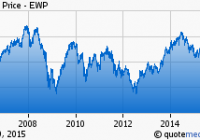
Summary A political push is underway in Spain that appears to me to have a lot in common with Syriza’s rise to power in Greece. Leftist politicians have won a majority of Spain’s municipal elections and taken control of key cities including Madrid and Barcelona, and they have their eyes on national control. If Spain is going to be the next Greece, then its future actions and direction are not likely to sit well with its Eurogroup partners. The investment community is likely to see this as “contagion,” and that does not bode well for the euro, European equities, and judging by the developments in Greece, Spanish equities. Thus, no matter what happens between Greece and its creditors, it would seem wise to avoid Spanish stocks and the iShares MSCI Spain Capped ETF. Some pundits believe that any sort of closure for the Greece issue is a plus for Europe, whether Greece stays in the eurozone or leaves it. But there is one European market sector that I do not see a positive outlook for either way. Spain looks to be the next Greece because of a political circumstance similar to what occurred in Greece before the current crisis heated up. Thus, I suggest investors sell the iShares MSCI Spain Capped ETF (NYSE: EWP ) and Spanish stocks generally. A succession of leftist political victories in Spain too closely resembles what happened in Greece before it raised issue with its creditors. I believe it will lead to division between Spain (perhaps emboldened now by Greece’s display of strength) and more progressive economies to the North. While Spain is not in the same situation as Greece, its political policies and direction moving forward are likely to trouble investors. Before Syriza, a decidedly left wing party, was elected into power in Greece, everything seemed to be improving, at least from our perspective over here. The economy was growing and the budget was operating at a surplus. Yes, there was still extremely high unemployment and unbearable taxation for a people suffering in strife, but from the perspective of those on the outside Greece was doing better. It was, in the end, the pain and suffering of the people that allowed the political candidate (Tsipras) calling for an end to austerity to overcome the reigning government’s plea for patience. Guess what’s happening in Spain today? The Leftists are Coming! This month, a wave of leftists (not my description) won victories in municipal elections across Spain. The political push in Spain sure resembles the same movement that took control of Greece and led Europe and relative investors into today’s turmoil. In the comment section of the article I linked to here, the first comment says something like, “This must be the Greek contagion they were all afraid of. This won’t end well.” I agree, but would add, this won’t end well for European stocks and debt and the euro, and especially Spanish equities. The newly elected municipal leaders in Spain easily overcame their predecessors with popular campaign pleas. For instance, one new mayor is working to put the victims of foreclosure (that’s how they see it) into homes foreclosed upon and held by banks. Back in Greece, Syriza won with promises to hire back laid-off public sector workers, reduce taxes and to restore old pension norms. But what the so-called leftists in Greece and Spain will have in common is an aversion to German inspired austere budgeting. So then the leftists in Spain are likely to cause a fuss, and I suspect they’ll stare their national intentions now that the Greeks are on the marquee. Opportunistic politicians with plans to take control of Spain this year should find opportunity now to organize gatherings in support of the Greek people. I would be surprised if it doesn’t happen. It will draw global investor attention to the contagion they all feared might spread across the PIIGS (Portugal, Italy, Greece, Spain – I’ll leave out Ireland) of the eurozone periphery. And when the leftists unseat the ruling power atop the Prime Ministry in Spain this year as I expect, we will all have to take note. 10-Year Chart of EWP at Seeking Alpha Just like it played out for Greece, none of this weighs well for Spanish stocks. It portends rather that this 10-year chart of the iShares MSCI Spain Capped ETF , which seems to show stocks going up and down before ending up at the same place, will continue to do so while sporting a new leg lower. Indeed, EWP was one of the poorest performers of the eurozone on Monday, as this secret seems to be leaking. EWP fell 5.2% on Monday, while the iShares Europe ETF (NYSE: IEV ) dropped just 3.4% and the iShares MSCI Germany ETF (NYSE: EWG ) fell 4.0%. The Global X FTSE Greece 20 ETF (NYSE: GREK ) fell 19.4%, since it was the star of the show. Take note that the German ETF was doing quite well this year, but EWP had a negative year-to-date performance record heading into the black day for Europe. Things just got worse for Spain. The political change overtaking Europe is a problem for the euro, but the Swiss National Bank (SNB) and the European Central Bank (ECB) have managed to manipulate the currency well enough to turn a 1.9% overnight loss into a sharp gain by Monday afternoon. The SNB flooded the market with Swiss francs (the safe haven for capital running from the euro at the time) to weaken the franc unnaturally against the euro and support stability (or illusion) in Europe. It’s going to get harder to hide this mess, though, when the Spaniards hit the streets in solidarity with Greece or when these new party candidates win national elections. I found a CNBC report interesting today, as I watched Sarah Eisen report that currency traders believe the euro has not yet given way because of no sign of Greek contagion. Well, I agree but I’m saying that is exactly what is about to change. So, friends, I would keep this in mind when venturing investments in European shares and especially when considering the iShares MSCI Spain Capped ETF, which I would avoid. Disclosure: I/we have no positions in any stocks mentioned, and no plans to initiate any positions within the next 72 hours. (More…) I wrote this article myself, and it expresses my own opinions. I am not receiving compensation for it (other than from Seeking Alpha). I have no business relationship with any company whose stock is mentioned in this article.