Tag Archives: earnings-center

Australia’s Getting Comfortable At 2% Cash Rate And Is Expected To Maintain
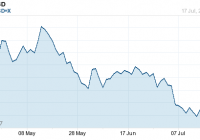
Summary Australia’s last two rate decreases have begun to spur the economy. The RBA will likely cite progress and hold steady at the current 2 percent rate at the August policy meeting. Australia looks profitable in the long term, but the market will not react much to policy announcement. Why Australia Won’t Lower Rates Amid an environment of global easing, lowered interest rates and weakening currencies, Australia’s RBA will have a tough decision to make concerning its own interest rate at the monetary policy meeting on August 4. Over this past year, Australia has begrudgingly cut its rates twice in order to spur economic growth as a result of lowered domestic demand and weak job growth. Since its initial 25 basis point cut in February, the accommodative policy has spurred borrowing and lending, improved the housing market, and weakened the Australian dollar against the U.S. dollar. As the Australian dollar continues to decline, currently worth US74 cents, down 9.7 percent from the beginning of the year, we can expect to see an improving trade deficit and an accompanying natural economic stimulus to the labor market in the upcoming months. RBA Governor Glenn Stevens feels that this depreciation is good news for Australia – the boost is necessary for its economy to recover , especially considering the intense pressure on its inflation level due to lowering commodities prices. All of these factors will be taken into account when policy makers determine whether to maintain its 2 percent cash rate, or cut rates further. Given its current position, it is unlikely that Australia will feel the need to further spur the economy via monetary policy – at least in 2015. Instead, the announcement will likely cite the recent improvements and maintain steady rates, with the intention to further monitor data in upcoming months. While several analysts expect rates to dip down to 1.75 percent by the end of the year, that sort of cut doesn’t make sense over this timeline. Australia has not shown as much eagerness in resorting to these accommodative measures as Asia, Europe, and now Canada have; consequently, they are unlikely to jump to a third cut so soon. With the Federal Reserve expected to liftoff rates in September or early 2016, there is even more reason for Australia to wait out the clock and see how a U.S. tightening could impact both the exchange rate and exports. As a result, the RBA will most likely maintain its 2 percent rate at the August meeting. How To React When Australia lowered its cash rate in February, the Australian stock market saw an initial surge that led to a steady climb as investors began to feel more comfortable with the economy’s future prospects. The May announcement led to a similar initial surge, but was not followed by the steady climb, as the expected easing was mostly priced in over previous months leading up to the announcement. However, in June when the RBA maintained its current rate, the stock market hardly reacted, and instead, slightly dipped over those following weeks. In looking at this historical pattern, the market will likely not jump at the news of maintained policy, meaning it would not be a very profitable short-term investment. However, with the conditions slowly improving in Australia and an outlook that supports future growth, a long-term investment with Australian exposure would likely perform well over several years, as its policy is gearing it up for continued growth and stability. The iShares MSCI Australia ETF (NYSEARCA: EWA ): This Australian ETF closely tracks the Australian index with a beta of 1.02. While on an overall downward trend since January, it has ticked up 4.2 percent from opening to close of this past week. Disclosure: I/we have no positions in any stocks mentioned, and no plans to initiate any positions within the next 72 hours. (More…) I wrote this article myself, and it expresses my own opinions. I am not receiving compensation for it (other than from Seeking Alpha). I have no business relationship with any company whose stock is mentioned in this article.
LS Opportunity Fund Changes Sub-Advisor, Objective, Strategy

By DailyAlts Staff There have been a number of changes to the LS Opportunity Fund (MUTF: LSOFX ) over the past several months. On April 23, the fund’s Board of Trustees filed paperwork with the SEC announcing the termination of the fund’s sub-advisory relationship with Independence Capital Asset Partners. According to sources, this change was due to the retirement of Jim Hillary, a portfolio manager on the fund and Chairman, CEO and CIO of Independence Capital Asset Partners. In addition to Mr. Hillary’s retirement, the firm will be returning capital to his hedge fund investors. Following the termination of Independence, the fund appointed Prospector Partners, LLC, a Connecticut based asset manager, as an interim sub-advisor and transitioned the portfolio to Prospector on May 28. Shareholders are being asked to approve Prospector as the sub-advisor, along with additional changes to the fund as outlined below, at the upcoming shareholder’s meeting on September 17. Changes to Fund Objectives and Implementation Now the LS Opportunity Fund is planning changes to its investment objective and strategy, as well as giving its advisor more power to hire and fire sub-advisors. According to a July 15 SEC filing, these changes will not result in higher fees for investors, nor will they alter the long/short equity orientation of the fund’s strategy. There is, however, a moderate change to the implementation of that strategy, which will now allow the fund to combine long positions with shorts of two or more stocks in the same sector, whereas previously, it called for “pair trades” of one long and exactly two shorts. The fund’s investment objective has also been slightly revised, with the new objective “to seek to generate long-term capital appreciation by investing in both long and short positions within a portfolio consisting of primarily publicly-traded common stock, with less net exposure than that of the stock market in general.” Formerly, the word “risk” appeared in place of “net exposure” in the fund’s stated objective. Fund Performance The LS Opportunity Fund, which launched in September 2010, has a three-star rating from Morningstar. For the three-year period ending June 30, the fund returned 7.76%, ranking it in the top 38% of funds in its Morningstar category. More recently, however, the fund’s returns haven’t been as strong: Year-to-date, through June 30, the LS Opportunity Fund’s -3.57% returns ranked in the bottom 13% of long/short equity funds. For more information, view a copy of the fund’s prospectus .

The Season For Merger Arbitrage

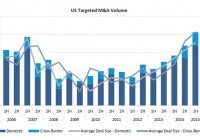
Summary The ongoing boom in M&A activity is creating a more robust opportunity set in merger arbitrage. Importantly, this is occurring at the same time that most other strategies (and general equity market exposure) are becoming increasing overvalued/unattractive. From a risk standpoint, merger arbitrage also appears to be becoming more compelling given its relatively low beta, and the plethora of risks building for general equity market exposure. A Little Background For those new to the strategy, generally when a merger is announced, the stock price of the target immediately jumps toward (but not fully to) the offer price. The remaining gap exists for two primary reasons: 1) there is a possibility (typically small) that the deal could fail to be consummated, and 2) legacy holders of the target’s stock that have typically just experienced a large windfall gain are sometimes willing to forgo the relatively smaller amount of remaining alpha due to their lack of experience in merger arb (and consequent limited ability to underwrite the risks). Merger arbitrage specialists attempt to capture this alpha by buying the target’s stock (and shorting the acquirer’s in cases where part of the consideration offered is stock). They then seek to profit as the spread compresses, with the deal moving to completion. Merger arb is most commonly pursued by hedge funds. However, in recent years ETFs have also emerged to pursue the strategy passively (the largest of which being the IQ Merger Arbitrage ETF (NYSEARCA: MNA )), and there are a handful of Seeking Alpha contributors focusing on it as well. Increasingly Attractive when Other Strategies are Least Attractive Like most strategies, the general attractiveness of merger arb varies over time based on fluctuations in supply (in this case of M&A deal volume) and demand. As mentioned, demand comes mostly from hedge funds and tends to be reasonably sticky, as it takes time for the funds to raise capital from their underlying investors (or for investors to take back capital) based on changes in the attractiveness of the opportunity set. The result is that when there are big changes in deal volume, this supply can temporarily overwhelm (or underwhelm) demand, leading to higher (or lower) risk-adjusted returns. From 2010 through 2013, deal-flow was limited as corporate managements were reluctant to make bold moves toward expansion with fresh memories of the 2008-2009 disaster in mind. As a result, merger arb players struggled to perform, and the HFR merger arb index posted very modest single-digit returns annually. However, since 2014 there has been a substantial pick-up in M&A activity as the financial crisis has fallen farther from mind, many corporate balance sheets have become increasingly bloated with cash, and tightened credit spreads have enabled companies to raise capital very cheaply. (click to enlarge) Source: Dealogic Though many hedge funds have been seeking to deploy additional capital in the space, demand has still been slow to catch up with supply. The result is that merger arb has been becoming more interesting at the same time that most other strategies and equity beta have become less attractive. One illustrative data point is that the number of $100m+ deals with annualized spreads over 15% ballooned from late 2014 to now, as shown below. Source: SINLetter Less Beta when Beta is Most Overvalued In the current environment with high equity valuations and abundant macro dangers, another potential attraction of merger arb is its risk profile, as noted above. For each deal, the main sources of risk are idiosyncratic/company-specific (e.g., antitrust investigations, unwieldy regulatory reviews, loss of financing). It is true that merger arb still retains some exposure to general risk premiums, or the tendency of market participants to require higher returns to hold any investments during times of fear. Further, the probability of deals breaking does increase somewhat when market is stressed, particularly for deals with financing contingencies (e.g., LBOs). However, the recent M&A boom has predominately represented strategic deals with relatively few LBOs. Also, the level of exposure to general risk premiums is lessened due to the short duration, self-realizing nature of the strategy. Accordingly, the strategy has tended to produce much lower drawdowns than the overall equity market during past market shocks. For instance, in 2008-2009, the CSFB risk arbitrage index posted a maximum drawdown of roughly 20% vs. roughly 50% for the S&P 500. In 2000-2001, the risk arb index posted a max drawdown under 10% vs. ~40% for the S&P 500. Conclusion For those with interest/experience in event-driven investing, this is a good time in the cycle to explore opportunities in merger arb. For those with less experience or time to underwrite the risks of individual deals, a diversified approach may be worthy of consideration, for instance through one of the ETFs that exist today. Disclosure: I am/we are long DTV, MEA, OVTI, OWW, DARA, PNK, ODP. (More…) I wrote this article myself, and it expresses my own opinions. I am not receiving compensation for it (other than from Seeking Alpha). I have no business relationship with any company whose stock is mentioned in this article.