Tag Archives: earnings-center

Why You Should Own Utility Westar Energy
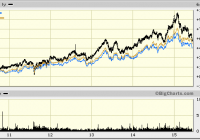
As regulated assets increase with reduced debt and equity needs, the incremental earnings should improve overall ROIC. With the decline in share price since peaking in January, Westar offers an acceptable yield and low payout ratio of around 64%. Kansas has a neutral regulatory environment, but growth is pegged to FERC-regulated transmission assets. Westar Energy (NYSE: WR ) is a mid-sized regulated electric utility in the heart of the Midwest. The company service 700,000 electric customers in central and northeast Kansas. WR also has a relatively high 6,200 miles of transmission lines and seven power plants with generating capacity of 7,160MW. There is a lot to like about WR from a longer-view perspective. Over the past 5 years, stock price performance has kept up with the Dow Jones Utility Index (DJU) and outperformed the S&P Utility Index (NYSEARCA: XLU ). However, over the last 6 months, WR has performed worse than these indexes by losing around 12% vs. 5% for the overall peer index. Morningstar reports 1-yr total return at -1.0% vs. its regulated electric utility peers at 3.1%, 3-yr total return at 9.3% vs. 11.3% respectively, 5-yr return of 14.1% vs. 11.3% respectively, and 10-yr total return at 7.6% vs. 8.3% respectively. Below are 5-yr and 6-month price only charts: 5-yr 6-month Westar’s Equity Quality rating by S&P Capital IQ for 10-yr consistency in earnings and dividend growth is A-. This falls within the top 25% of all publicly traded utilities with 10 firms rated A+ or A, and 15 firms rated A-. WR has an average credit rating at BBB+. Westar has been investing in its regulated asset base for the past several years. While WR has one of the largest capital expansion programs of a utility its size, free cash flow has remained almost neutral over the previous 2 ½ years. Previous expansion of WR regulated assets is driving the current growth in operating cash flow. For example, in 2011 and 2012, WR invested a combined $1.5 billion but had operating cash flow of just a bit over $1.0 billion, generating a free cash flow deficit of $500 million. However, in 2013 and 2014 combined, WR invested $1.6 billion and its operating cash flow increased to $1.5 billion, reducing the free cash flow deficit to $100 million. Over the trailing 12 months, WR has invested $821 million while generating operating cash flow of $800 million, for a deficit of only $21 million. Morningstar’s analysis of this asset driven aspect for Westar: Between 2006 and 2013, Westar increased its asset base from $5.5 billion to $9.6 billion, and we expect that it could top $11 billion by 2017. Its equity base has doubled since 2007 with its investments in new power plants, environmental upgrades, wind farms, and large transmission lines. With cash flow tight, investors have had to settle for pedestrian 3% annual dividend growth. But as Westar’s investment pace slows and rate increases flow in, dividend growth should accelerate. In addition, as Westar’s investment mix shifts to higher-return transmission projects, earned returns and cash flow should grow. Westar is waiting on a decision on a rate case that could increase rates by an average of 7.0% to 7.9%, and would represent the first rate increase since 2012. Included in the rate request will be approval of $600 million in upgrades to coal plants for environmental investments and to its nuclear plant to expend its useful life. While the company is requesting a $152 million rate increase, it is likely the PUC will approve around $135 million. In dealing with the issue of distributed generation, WR’s rate request include higher fixed charges with the monthly fee increasing for $12 to $15 in year one and to $27 by year four. If approved, the rate plans would shift a greater percentage of Westar’s revenues to fixed monthly fees, which better reflects the utility’s cost to serve its customers. Kansas is considered by S&P Credit to be a neutral regulatory environment. The anticipated allowed ROE for its state-regulated assets will be set at 10.0% with the resolution of the pending rate case. About 18% of WRs asset base are federally regulated transmission assets with a higher allowed ROE of 11.3%, and some projects in central Kansas carry an allowed ROE of 12.3%. However, the Kansas utility commission has filed an appeal to the FERC to reduce transmission ROE to just below 10%. Westar has a growing transmission profile as transmission investments will be about a third of the firm’s total cap ex budget. Currently, transco assets account of about 18% of its total regulated rate base at $1.1 billion. The company is expected to almost double the transco base over the next four years by investing $225 million a year in this business. Westar’s service area is smack in the middle of the wind-generating corridor of the Midwest with an abundance of project to connect wind farms with several grid operators to the north and south. Westar is well-versed in the transmission business and has a joint venture with American Electric Power (NYSE: AEP ) and MidAmerican Utility. On a per mile valuation comparable to ITC Holdings, the major independent publicly traded transco, Westar’s current network could be worth about $2.5 billion, or about $20 a share. With a target growth in base assets of 18% to 20% annually, not only is the regulated transmission business more profitable, but also is gaining sufficient critical mass to be considered an independent company. With the industry on the cusp of financial engineering for transmission assets, Westar is well positioned. Westar operates in a stable economic environment as described in their fourth qtr. conference call: Turning to the Kansas economy, it continues to hum along. Year-end unemployment was just over 4%, a level not seen since 2008. And it remains 150 basis points favorable to the nation. Small business formation continues at a good pace with most of that right in our service territory. Recent articles have touted our part of the world. Topeka was recently ranked America’s top ten most affordable cities by livability.com and a new report by the Brookings Institute ranked Wichita, which is our largest city that we serve, third in the nation among top 100 metro areas for concentration of jobs in advanced industries. These instances and a state report showing a 6% increase last year in the number of new businesses registered validate our outlook for our Kansas economy that has a lot of offer. Westar has historically generated above average return on invested capital ROIC. In an industry where the average ROIC is between 4% and 5%, since 2004, WR has consistently generated ROIC in the 5.5% to 6.0% level. Below is a 20-yr ROIC chart courtesy of fastgraph.com. (click to enlarge) With a weighted cost of capital of 5.2%, as calculated by ThatsWACC.com, management has barely generated sufficient returns over its cost of capital. On the brighter side, there are utilities that generate negative Net ROIC. However, as regulated assets increase with reduced debt and equity requirements, the incremental earnings should improve overall ROIC. Westar is trading at a slight discount to its peers with a forward P/E of 13.7. Below is a table from morningstar.com reflecting higher operating statistics such as 3-yr revenue and net income growth and operating margins compared to industry averages. However, these attributes is not reflected in the share price. Source: morningstar.com Fastgraph.com historic graph suggests WR is fairly valued. At the end of 2014, the yield was 3.4%, but has improved to a more historic year-end average of 4.1% yield (the downside to the yield improvement was a decline in price). Dividend growth has been a bit shy of many in the utility sector but could ramp up as earnings continue to grow at 6% a year. With the financial troubles of the early 2000s, an annual increase in the dividend goes back only 10 years, a bit light for a utility with Westar’s roots. The low payout ratio of 64% allows management to increase the dividend faster than its underlying earnings growth without jeopardizing its financials. (click to enlarge) The June investor’s presentation is one of the most through descriptions of various aspects of their business. Even current shareholders should learn something new by reviewing the information and it is recommended reading. However, Westar has a bit of a tarnished history . In 2002, then-CEO David Wittig and his Chief Strategic Officer were fired for alleged financial improprieties and the company, then known as Western Resources, almost went bankrupt. Wittig was convicted in federal court of 39 counts of financial malfeasance in 2005, but it was over turned in 2007. Amazingly, Wittig settled with Westar in 2011 to the tune of $42 million in compensation and legal fees from an unjust termination dispute while his underling negotiated a $22 million deal. In recap, Westar offers acceptable historic returns based on its peers, high quality ratings, rising operating cash flow to fund aggressive regulated asset accumulation, pending rate relief, good regulatory environment, growing regulated transmission asset base, increasing economic environment, stable ROIC and positive Net ROIC with the potential for increasing returns. With a typical current utility yield, the potential for above-average dividend growth is also attractive. What’s not to like about that? Author’s Note: Please review disclosure in Author’s profile. Disclosure: The author is long AEP. (More…) The author wrote this article themselves, and it expresses their own opinions. The author is not receiving compensation for it (other than from Seeking Alpha). The author has no business relationship with any company whose stock is mentioned in this article.


Seeking Alpha On Day 1

Summary How should a new investor begin? How can you get the fullest use out of Seeking Alpha? What have I learned in over 900 days of writing for Seeking Alpha? Seeking Alpha – Completely Unofficial User’s Guide* *See comment section for someone asking if this is an official user’s guide. Welcome to Seeking Alpha. If this is your day one using this site, here is an unofficial welcome along with my thoughts and encouragement as someone who has written on it over the course of the past few years (day 1,000 coming up shortly). You can use it as a guide with the caveat that it is simply what worked for me. My one overriding message is to think for yourself. That message holds true here as well as elsewhere on the site. Approaching The Start Line Seeking Alpha is largely about the topic of security selection. This is an interesting, important, and often fun topic. However, it is not the most important topic and does not come first. To be ready for day one investing and to get the fullest use out of the ideas on security selection, there are eight steps that are crucial to have taken. They include: paying off any bad debt, setting a careful and frugal budget, setting up any tax-advantaged accounts that you can access, funding an emergency fund, funding a down payment for a home, setting up a brokerage for taxable investments, funding your healthcare, and simplifying each aspect of your financial life. If these are not first taken care of, the topic of individual security selection is premature. Once you have taken those steps, then you are ready to approach the starting line. Protecting You From… You It is good to learn from your mistakes, but far better to learn from others. So, while you are new, it is probably best to be thoughtful about how much you are willing to expose your financial life to the ideas – even the best ideas – that you read about on Seeking Alpha and other similar sites. Some articles are designated as “Top Articles” and others as “Editors’ Picks,” but you can never safely outsource thinking for yourself or managing your own risk. How much should you risk on your favorite ideas? This is a question that you should ask yourself before you get enthused by something you read here or on similar sites. In particular, you can protect your financial life from amateur (or professional) errors by diluting the amount of resources that you give yourself access to. I fully (maybe even over-) fund the following, diverting a substantial amount of resources away from what I put to work on Seeking Alpha ideas: life insurance, cash, pre-purchasing appreciating assets that I eventually want, education for my kids, and additional capital for my kids’ investments and entrepreneurship. After those five priorities are funded, I am left with a substantially reduced amount of capital for my own ideas. This reduction protects me from me. Besides taking money off of the table to reduce my downside to an acceptable outcome, it also reduces the daily stress to have less at risk. I don’t mind if I risk turning my 21st century life into a pleasant 19th century life, but I want zero chance of turning it into a 14th century life. After the above steps, I have far less ability to hurt myself and those I most love. I have protected my downside and can go to work on my upside. Navigating The Site Profile Page Now that you are ready to start, where do you begin? On day one, I started by setting up my profile . Once you do, too, then you become a part of the Seeking Alpha community. If you are new to investing, you can begin the process of identifying what kind of investor you are. Like-minded investors can follow what you write and you can follow them in turn. Home Page The home page offers a lot of information; sometimes it can almost be too much. Except for top articles , articles are mostly organized chronologically, so they come and go quickly. Early on, I would simply read articles based on titles that interested me. Later, I was able to make judgments about who I considered some of the best writers , who I then followed and read their subsequent articles. Instablog Instablogs are less formal, sometimes fun sites that individuals set up to discuss their ideas. I use them for ideas that are not perfect fits for articles, but are still interesting to me and might be interesting to others. Since articles are organized around specific companies, Instablogs can be useful for more generalized content and content outside of the public equity markets. Premium Authors A recent addition to the site in the last few months has been its premium author program. That is where you can subscribe to what Seeking Alpha describes as: Value-added investment services from top SA contributors It is not necessary and it is not for everyone. However, you may choose to check it out. If it is not a good fit, you can subsequently cancel it and get a refund on the balance of your subscription. Incorporating Seeking Alpha Into Your Investing Strategy I am probably as enthusiastic about Seeking Alpha as anyone, but even for me, it is only a small part of my investing strategy. Even Seeking Alpha’s founder blogs on a separate site . How does it fit into other online resources and an overall financial plan? Vetting authors – how do Seeking Alpha stock picks measure up? Who can you rely on? This is a question that I have often asked myself . I have five criteria, including: money – someone who has made some, flexibility – writers without a narrow mandate, introspection – ignorance is fine if it is not covered up, proximity – a writer close to his subject in the real world, and performance – this is the big one. In terms of number 5., where do you find performance data? While it is only a crude instrument, I have found TipRanks to be a useful supplement to Seeking Alpha. Past performance is the best predictor of success. – James Simons Executing Ideas Once you find an idea that you like, you will need a way to put it to work. So, in addition to Seeking Alpha, you will need a broker that you like and trust. My primary criterion is price with a secondary consideration for the strength of its online trading platform. It is a fairly commoditized business. Different investors have different preferences. Something to consider: if you have a significant retirement account at Vanguard, it comes with a large number of free trades. With a $1 million balance, you get 25 free trades. With a $10 million balance, you get 500 free trades. I also like Charles Schwab (NYSE: SCHW ), in part because it is able to take delivery of paper certificates, which I often use. Goldman Sachs (NYSE: GS ) has the best service, in my experience, but it is looking for clients that generate a substantial amount of annual trading commissions. Leucadia’s (NYSE: LUK ) brokerage, Jefferies is a fine compromise for smaller accounts than are of interest to GS. Interactive Brokers (NASDAQ: IBKR ) is great on price, great on its trading platform, and almost comically inept at customer service. Picture trading with a brokerage that learned efficiency and charm from the DMV. Goal A common goal is to beat the S&P 500 (NYSEARCA: SPY ) over a three- to five-year time horizon. SPY serves as a convenient standard – if you are not going to be able to beat it or do not want to try, you can always buy it instead. What is SPY and how hard has it been to beat it? Here are SPY’s major pluses, minuses, and attributes that an active investor needs to beat. “+” 1.) Performance In terms of performance, the SPDR S&P 500 Trust ETF has returned over 600% since inception. In terms of dividend growth investing, SPY has had a growing dividend over that period. In percentage terms, the SPY yield is currently under 2%. Over the long term, SPY has beat most asset classes and trounced the average investor returns. “+” 2.) Cost The net expense ratio for SPY is an extremely low 0.0945%. The extremely high liquidity in SPY shares means that you pay a tiny bid/ask spread when buying and selling. “+” 3.) Diversification SPY is diversified across hundreds of shares, so permanent impairment of capital is unlikely over the very long term. It is certain that at least one SPY component company will go bankrupt. It is unlikely that all five hundred will. In that unlikely event, you will probably have greater concerns than the return on your investment portfolio. “-” 1.) Hyperactivity How is it possible that SPY could have a multiple of the average investor returns, as shown in the above chart? Almost any passive exposure outperforms the average investor. Part of the answer is hyperactivity. SPY trades over 16 million shares per day. Which side of these trades has edgy information about the market’s direction? Most frequently, neither side does. But average investors attempting market timing frequently buy and sell at the worst possible times. Market timing efforts typically buy when markets appear certain and sell when markets appear to be uncertain. In doing so, they tend to pay a high price for the comfort of greater certainty. “-” 2.) Reconstitution There is a pronounced S&P 500 inclusion effect. Average SPY constituents cost about 9% more than non-constituents. This impact might be durable and could impact you both when you buy and sell SPY. But the SPY value including dividends is reduced proportionately. “-” 3.) Forced Selling SPY, by definition, owns equities in the S&P 500. So, when a SPY constituent member is involved in a corporate transaction that creates a security that does not qualify, then SPY’s managers have to sell it. The trading of components in and out of the S&P 500 is often constrained and sloppy. It is not the S&P 500 managers’ jobs to trade such securities with any price sensitivity. Such trading often follows the narrow, specific mandates of SPY at the expense of getting the best prices. Once you contemplate the salient pluses and minuses of SPY, you can then ponder whether or not this is something worth trying to improve upon. Even the great investor Warren Buffett favors a passive investment very similar to SPY for most of his wife’s trust. He did not select Berkshire Hathaway (NYSE: BRK.A ) (NYSE: BRK.B ) as the investment vehicle. Instead, he said: My advice to the trustee couldn’t be more simple: Put 10% of the cash in short-term government bonds and 90% in a very low-cost S&P 500 index fund. (I suggest Vanguard’s.) I believe the trust’s long-term results from this policy will be superior to those attained by most investors – whether pension funds, institutions or individuals – who employ high-fee managers. You may want to do the same with some or all of your money. Only once you have determined if you want to select securities do you need to bother with sites such as Seeking Alpha. As for me, I do some of each – some passive and some active management of my assets. Conclusion If this is your first day on the site, I hope that some of what I have learned and passed on will be of benefit to you. It took me almost one thousand days to learn. It is what I wish I knew on day one. Seeking Alpha can be a fun, useful, and lucrative part of your financial life. If you think for yourself and find ideas worth putting to work, you can both learn and profit. Disclosure: The author has no positions in any stocks mentioned, and no plans to initiate any positions within the next 72 hours. (More…) The author wrote this article themselves, and it expresses their own opinions. The author is not receiving compensation for it (other than from Seeking Alpha). The author has no business relationship with any company whose stock is mentioned in this article. Additional disclosure: Chris DeMuth Jr is a portfolio manager at Rangeley Capital. Rangeley invests with a margin of safety by buying securities at deep discounts to their intrinsic value and unlocking that value through corporate events. In order to maximize total returns for our investors, we reserve the right to make investment decisions regarding any security without further notification except where such notification is required by law.

Wall Street Lunch

Summary A mid-day update on arbitrage, event-driven opportunities, and value. Details of price changes and progress on POM, TWC, and DTV. In each case, there are still double-digit returns available. Lunch is for wimps. – Gordon Gekko Arbitrage Here are my collected thoughts on arbitrage, wandering from the academic to the practical definitions, with a heavy dose of the middle ground. The definition is indeed a tortured one. However, in both its strong and weak forms, the idea focuses on the key to investing: mispricing. In the recently launched Sifting the World , arbitrage will be a major focus. What arbitrage opportunities are available today? *Available as of today. The word “arbitrage” in academia means “certain profits,” whereas in practical investing, arbitrage often means “a trade we kind of like.” Some in the industry adhere to a perhaps reasonable middle ground: that arbitrage is not riskless, but unlike much of investing, it involves going long and short very similar securities and betting on a price difference. I can live with that. But it is clear that many use it in the loosest sense and, therefore, strip it of its meaning. – Cliff Asness Dresser-Rand / Siemens Update DHR has returned 4% since the last update. (click to enlarge) The buyer completed a $7.7 billion note placement as a component of the acquisition financing. The EU review is going well and is likely to result in approval this summer. Pepco / Exelon Update POM has returned over 8% since I last discussed it. (click to enlarge) Since then, it has remained an attractive long opportunity with a positive expected value. I have not added to my position, but I am holding onto it. From the outside looking in, this situation involves a lot of political noise. From the inside looking out, it is a negotiation like any other. There is a regulatory cost that needs to be paid, and both the applicants and the regulators have preferences on what that cost would be. The difference was surmountable. In the Maryland PSC approval, the commission majority split the difference with an order that was acceptable to both sides. Subsequent to the Maryland PSC approval, the deal was also approved in Delaware. Additionally, EXC completed its five-tranche $4.2 billion senior notes acquisition financing through Barclays (NYSE: BCS ) and Goldman Sachs (NYSE: GS ). Time Warner Cable / Charter Update TWC returned over 30% since I first discussed it. (click to enlarge) It remains a safe position; I still have $13 million of TWC, based on confidence in the current deal. DirecTV / AT&T Update This position is up over 5% since the last update. (click to enlarge) The parties appear to be progressing towards regulatory approvals later this summer. Event-Driven Event-driven, my wife was sorry to learn, is not used in the same sense as event planning. It involves few parties or cocktails in the backyard. Instead, the ones I focus on tend to involve: Mutual conversions Odd lot tender offers Merger securities Squeeze outs Here is how it worked out so far. I am thrilled that Seeking Alpha’s exclusive research program will include several such authors. Value Value is like honesty and fidelity – few people own up to being in the opposite camp. Also, like honesty and fidelity, talking about it a lot does not make it so. The core of value investing is thinking about securities as pieces of a business, valuing that business, and then underpaying for it. The remaining problem involves finding a counterparty with something at stake besides the same value that you are trying to capture. Today, my favorite values include this and this . Conclusion Arbitrage, event-driven, and value are often categorized separately, but I think of them as points on a spectrum. In the case of arbitrage, the investment opportunity has an explicit process for unlocking value. In event-driven opportunities, there is still a catalyst, but it is somewhat less explicit and there is greater variance in the outcomes. Value investing has the greatest range in outcomes. However, successful value investing frequently results in securities becoming targeted by M&A and other corporate events. These events often unlock value, whether or not that was explicitly part of the original investment thesis. Editor’s Note: This article discusses one or more securities that do not trade on a major U.S. exchange. Please be aware of the risks associated with these stocks. Disclosure: The author is long TEG, POM, IGTE, HE, TWC, OWW, OVTI, BRLI, ODP, BHI, DTV, PRGO, KRFT. (More…) The author wrote this article themselves, and it expresses their own opinions. The author is not receiving compensation for it (other than from Seeking Alpha). The author has no business relationship with any company whose stock is mentioned in this article. Additional disclosure: Chris DeMuth Jr is a portfolio manager at Rangeley Capital. Rangeley invests with a margin of safety by buying securities at deep discounts to their intrinsic value and unlocking that value through corporate events. In order to maximize total returns for our investors, we reserve the right to make investment decisions regarding any security without further notification except where such notification is required by law.