Tag Archives: earnings-center

E.ON – Strategically Positioning Itself For A Green Future
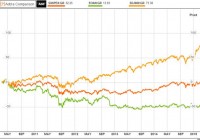
Positioning themselves strategically; inflection point in stock price. Geographical exposure to accelerating green energy trends. Preferred pick amongst large-cap European utilities. E.ON ( OTCQX:EONGY ) reported a record annual loss for 2014 as it took impairment charges associated with writing off its Italian and Spanish businesses as discontinued assets in its FY14 results on 11th March. These divestments are part of a refocusing its core businesses and portfolio optimization. E.ON’s announced in Dec 2014 that it will divest carbon interests and look to refocus business on renewables, smart grids and energy efficiency in a bold move to reposition itself in an industry strongly influenced by green energy trends. The European Union has set a target of 20% for the share of energy consumption to come from renewable energy sources by 2020, with each member state agreeing to a national target outlined in the 2009 EU Renewables Directive. Initial doubters of the credibility of the commitment have been proved wrong with the steady progress made by member nations. By 2012 the EU achieved 11.0% share of energy consumption generated from renewables . E.ON is particularly exposed to these trends as its home market is Germany which has undergone a transformation since the 2011 Fukushima crisis. It has set itself a target of generating 80% of electricity from clean sources by 2050 . Furthermore, technological advances in renewables have seen the costs of generating renewable energy falling, particularly for solar energy. This the shift towards renewable energies looks set to continue and we believe E.ON’s recently announced new strategic positioning will bring long term benefits to the company and its shares. Within Europe, E.ON has exposure to the regions that appear to be most affected by trends towards green energy. The company’s earnings are mainly generated from Germany with the UK and Sweden the other largest sources of earnings within the EU. Germany and Sweden generated ~24% and 60% of their electricity consumption from renewables in 2012. Furthermore, the UK government has been supportive of new green energy projects approving a number of projects in recent years as it tries to meet EU targets for 2020. In 2014, E.ON grew EBITDA by 20% in wind and solar and overall 18% of EON s EBITDA came from renewables . This looks set to continue as they stated they would pursue disciplined capex with > 70% of 2015 capex in Wind, Solar, Distribution Networks & Customer Solutions. The recent new refocused strategy and its exposure to countries in Europe that provide more favorable conditions for renewable energy growth should benefit the company in the medium to long term. E.ON has stated its preference towards wind and solar energy. Positioning towards renewables not only aligns it to wider energy regulation but also to technological trends. UBS stated in a report published in 2014 it believes solar and smart grid technologies will be at the forefront of wider change in power generation . It emphasizes “Solar is at the edge of being a competitive power generation technology” and that “power is no longer something that is exclusively produce by huge, centralized units owned by large utilities”. The falling cost of renewables technologies has coincided with the expected rise of the electric car and improvements in battery technologies. UBS predict a 50% reduction in the cost of batteries by 2020. This will allow homeowners to own battery packs to store energy and power their electric vehicles. Michael Liebrich of Bloomberg New Energy Finance stated that renewable energies have become “fully competitive with fossil fuels in the right circumstances” and their competitiveness looks set to strengthen in coming years as technological advances continue. Therefore, the positioning of the business towards renewables looks smart and it should help E.ON trade on higher valuation multiples, such as P/E. Renewables trade on higher multiples compared to traditional energy business due to stagnation in these traditional businesses and the potential for growth in renewable energy along with higher profit margins. Risks during the strategic overhaul should be taken into account as there is degree of uncertainty over divestments and the valuation of the new company that will be spun-off in 2016. Divestments have continued into 2015 with the sale of its Italian coal and gas power plants and reports suggesting it is looking to sell its North Sea exploration and production assets for around $2bn. Other business risks include its exposure to Russia which generated 7.4% of EBITDA in 2013. Furthermore, gas prices which continue to stay low or trend downwards will affect company earnings as E.ON repositions its business model. Analysts appear divided on whether EON’s transformation is too radical and whether the strategy will be successful. The stock has underperformed the wider European market and Stoxx 600 Utilities index over the last 5 years due to its poor performance, see graph below. It is valued attractively given this underperformance and current poor ROA at 0.96x P/B (cf sector 3.2x) with EV/EBITDA of 4.2x . Its dividend yield is 3.9%, slightly higher than the sector with a pay-out ratio of 60% which is easily defendable given a reasonable net debt to EBITDA ratio of 2.4x. It has also announced it will keep a fixed dividend to bridge the transition to its spin-off. (click to enlarge) The big question is can a traditional utility reinvent itself as a green energy services power house. We believe they can and implementing the strategy earlier than its competitors will allow E.ON to position itself competitively within a transforming industry. Its aims to decarbonise its services at a faster rate should be attractive to investors and raise it from current low stock valuation multiples. Furthermore, the less capital intensive its business becomes the greater the cash flows it will generate and the more it will be able to boost investment and shareholder returns in the future. Renewable energy is shaping the utilities sector and we believe E.ON’s recent strategic overhaul positions it perfectly to benefit. Editor’s Note: This article discusses one or more securities that do not trade on a major U.S. exchange. Please be aware of the risks associated with these stocks. Disclosure: The author has no positions in any stocks mentioned, and no plans to initiate any positions within the next 72 hours. (More…) The author wrote this article themselves, and it expresses their own opinions. The author is not receiving compensation for it (other than from Seeking Alpha). The author has no business relationship with any company whose stock is mentioned in this article.
Time To Exit Junk Bond Funds?

Summary Junk bond funds have outperformed other bond classes and maturities over the last five years but will the good times end once interest rates begin to rise? An improving economy as we’ve seen with stronger job and wage growth could improve the ability of companies to repay their debt. Rising interest rates could ultimately make junk bond yields look less attractive. The struggling energy sector has been particularly rough on the junk bond group. As the Fed seems poised to raise interest rates at some point during the remainder of 2015 high yield bond funds and ETFs have enjoyed a solid run over the last several years when compared to other Treasury and corporate bond funds. Over the past five years, junk bonds funds like the iShares iBoxx High Yield Corporate Bond ETF (NYSEARCA: HYG ) and the SPDR Barclays Capital High Yield Bond ETF (NYSEARCA: JNK ) have outperformed their investment grade counterparts across all durations. Junk bond funds have been increasingly popular among yield seekers looking to do better than the measly yields offered by Treasuries and CDs. But as the economic landscape begins to shift it’s worth asking the question if junk bond funds have seen their best days. The free money period looks like it’s going to be slowly coming to a close and so to may the comparatively solid returns offered by high yield notes. There’s evidence pointing in both directions so it’s worth examining the major ideas one by one. Junk bonds could correlate more closely to a stronger stock market and economy The argument that high yields trade more like stocks than bonds could be viewed as a positive sign for their outlook. The stock market has had quite a run over the last three years and while valuations are almost certainly stretched there’s not much evidence to suggest that a huge correction is imminent. That’s not to say that the straight line up should be expected to continue but the environment could be conducive to high yields continuing to outperform other bond funds. The economy could be in a similar spot. While GDP has been weak overall job growth and wage growth have been improving. Additionally, the JOLTS report that was issued last week showed that the number of open jobs advertised at the end of April – 5.4 million – was the highest number in the 15 year history of the survey. The government also indicated 280,000 jobs created in May. Even the unemployment rate which ticked up slightly could be an indication that job seekers could be reentering the marketplace. A stronger economy could indicate an improved ability for companies to pay off their debt making junk bonds attractive. The Fed seems to think that the economy is improving enough to warrant higher interest rates and economic growth could lead to a positive environment for junk bond performance. Higher interest rates could make junk yields less attractive Junk bond funds and ETFs are offering current yields in the 5-6% range. Those yields looked especially attractive when the 10 year treasury note was yielding just 1-2%. The 10 year note is now yielding 2.4% and could soon be heading towards 3% again. An increasingly narrowing yield gap could make the risk/return tradeoff of junk bond funds less attractive. Net outflows in junk bond funds have been increasing in the last several weeks as bonds in general have been selling off – an indication that investors could be viewing fixed income investments as less attractive in the face of rising rates. Junk bond default rates are rising The default rate in junk bonds climbed to its highest level in almost 6 years last month but we have the flailing energy sector to thank for that. Energy and mining accounted for 93% of all defaults in the 2nd quarter. Roughly 15% of the high yield universe comes from the energy sector so weakness in this area of the economy is having a significant effect on the overall group. Conversely, it means that the rest of the high yield universe is performing well. If you can stay away from energy the risk exposure to junk bonds could be much more limited. Conclusion We’ve been in a prolonged period where taking risk has been rewarded but the imminent rising rate environment could be the catalyst that reverses that trend. A stronger economy should help junk bonds but I believe overall that riskier investments will begin falling out of favor as investors seek safer alternatives like treasuries, defensive and health care stocks. High yields exposure to energy could further limit upside. While energy prices look to have stabilized $60 oil is squeezing the margins of many companies and many rigs are still sitting idle. Junk bond funds may have helped boost income seeking investors’ returns over the past couple of years but now might be the right time to take some of those chips off the table. Disclosure: The author has no positions in any stocks mentioned, and no plans to initiate any positions within the next 72 hours. (More…) The author wrote this article themselves, and it expresses their own opinions. The author is not receiving compensation for it (other than from Seeking Alpha). The author has no business relationship with any company whose stock is mentioned in this article.

Improve Your Sector Returns With Equal Weighting

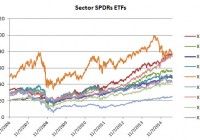
Summary Sector ETFs are great trading vehicles, but they are not weighted the best way for you. Equal weighting is always better than capitalization weighting. The problem with the existing equally-weighted ETFs is that they have too many stocks. You can do it yourself with fewer stocks and get better returns. There is no doubt that ETFs are a good way to invest. They reduce your exposure to the ups and downs of a single stock and avoid having to choose which stock in a sector is going to be the best next year. It turns out there is an easy way to get the same protection, better returns, and lower risk, doing it yourself. It goes back to understanding equal weighting versus capitalization weighting, but it doesn’t try to replicate the entire sector, it just focuses on the larger, more liquid stocks. Sector SPDRs are capitalization weighted, the same as the S&P. They deliver exactly what is expected, the portion of the S&P representing that sector, using the same calculations. We can’t evaluate every sector, so we’ll look at the best, Health Care (via the Health Care Select Sect SPDR ETF (NYSEARCA: XLV )) and one of the worst, Energy (via the Energy Select Sector SPDR ETF (NYSEARCA: XLE )). The chart below shows the performance of the major sector SPDRs since late 2006. If you combine them all, you get returns similar to the SPDR S&P 500 Trust ETF (NYSEARCA: SPY ). Equal weighting is not a new idea and the advantages are well known. Equal weighting maximizes diversification; therefore, it reduces risk. If you weight by capitalization, or any other scheme, then some stocks have greater exposure in the portfolio. For that to work, those stocks must have proportionately greater returns. Unfortunately, we don’t know that. It may turn out, strictly by chance, that the stock with the largest exposure also had the biggest returns. But the chances of that are small. The safest portfolio, and normally the most stable, is the one that has equal dollar exposure to each stock. In 2006, Guggenheim introduced ETFs that matched the sector SPDRs but were equally weighted. If there are 55 Health Care stocks in XLV then there are 55 stocks in the Guggenheim S&P Equal Weight Health Care ETF (NYSEARCA: RYH ). Similarly, there are 49 stocks in XLE and 49 in the comparable Guggenheim S&P Equal Weight Energy ETF (NYSEARCA: RYE ) . When we compare the returns of the SPDRs and the Guggenheim sectors, we see that the equally-weighted sectors performed slightly better. The information ratio, the annualized returns divided by the annualized risk, shows a similar pattern. Data source : CSI Is this what the investor, you and me, really wants? I would rather have a sector ETF that performed better than the weighted average of all the stocks in that sector, and we can do that. Components of XLV and RYH The Health Care SPDR, XLV, has 55 components, shown in the chart below in order of descending weights, with Johnson & Johnson (NYSE: JNJ ) at the top of the list with an allocation of 9.68%, and the 26 companies on the right all below allocations of 1%. Let’s look at the 9 on the left, representing 50% of the total weight of the XLV. Their performance from January 2010 is also shown below. (click to enlarge) Data source : sectorspdr.com Data source : CSI Nine stocks represent 50% of the index and the remaining 46 make up the other 50%. The smaller 50% are generally much less liquid, which tends towards greater relative volatility. More important, if we use them in an equally-weighted portfolio, will we be emphasizing companies that are very small and not representative of the performance we are seeking? Remember, we don’t care about duplicating the S&P, we are looking for better returns. Equally Weighting the Top 50% We’re going to select only a few of the stocks with the highest capitalization in the XLV, those that make up 50% of the index. Those are the 9 stocks shown in the previous chart. We’ll dollar weight them equally, then compare the results of XLV with the capitalization and equally-weighted versions using the smaller group of 9 stocks. The results are impressive. By discarding the smallest components of the index, you can increase returns significantly and reduce risk at the same time. The numbers can be seen in the Table below. Besides looking at the rate of return (AROR), the ratio of returns to risk shows that equal weighting had the best investment profile. Data source : CSI The Health Care Industry has taken off since 2008, not coincidentally timed with the passing of the Affordable Care Act. We’re not judging the merits or good intentions of that Act, but it gave the health care companies an opportunity to raise prices in advance of services, and maintain those high prices; hence, large and continued profits. Given the aging population, the industry should continue to prosper, although it seems unlikely that it could continue at this rate. The Energy Sector: XLE and RYE The Health Care sector may be an outlier, given its exceptional performance. While the energy stocks have seen wide ranging price swings, the net effect is nearly the worst performance of all sectors, certainly the highest risk. Does equally weighting the top members of this sector also improve returns? In this case we’ll choose the top 10, representing 60% of the allocations, because it’s a similar number of stocks and the allocations to energy stocks vary much more. We don’t think it makes any real difference if you use 50% or 60% of the weighting. Going through the same steps as with Health Care, we first compare the SPDR XLE with Guggenheim’s RYE in the chart below. In this case the XLE outperforms since 2010; however, the pattern is very similar. Data source : CSI We then take the 10 stocks that represent the top 60% of the XLE allocation and equally weight them. We construct cap-weighted and equally-weighted portfolios from 2010 using the same weighting as XLE. The results, in the chart below, show that equal weight again outperforms cap weighting. The numbers, also in the table that follows, shows a similar picture of higher returns and a better reward to risk ratio. Data source : CSI Doing It Yourself There is no magic in equally weighting a small number of stocks. You want enough companies to give diversification, but none of the low-cap ones. The weighting of the XLV and XLE will change regularly, but since we will be equally weighted, that won’t matter. Only the specific stocks in the top 9 for Health Care, and the top 10 for Energy will be used. “Equal” means allocating an equal dollar amount for each stock. Then an investment of $100,000 in 9 stocks means putting $11,111 into each, not much of a strain on the liquidity of these companies. JNJ at $99 would get 112 shares and Pfizer (NYSE: PFE ) at $34.50 would be allocated 322 shares. They should be rebalanced quarterly. Current Holdings The current top 50% holdings of the Health Care and 60% Energy sector ETFs are: (click to enlarge) Disclosure: The author is long XLV. (More…) The author wrote this article themselves, and it expresses their own opinions. The author is not receiving compensation for it (other than from Seeking Alpha). The author has no business relationship with any company whose stock is mentioned in this article.