Tag Archives: earnings-center

2 Hot Sector ETFs Soaring To Rank #1 This Summer

The U.S. stock market has started to feel the heat of summer in some corners. While the S&P 500 and the Dow Jones Industrial Average have seen a lazy summer lull so far, the Russell 2000 Index and Nasdaq Composite Index have been burning with impressive gains of 3.6% and 1.8%, respectively, over the past one month. Increased confidence in the U.S. economy as well as a slower-than-expected Fed rate hike path is boosting specific sector stocks. In particular, financials are soaring on a rising rate environment while technology and health care have been the investors’ darlings when it comes to defensive trading. These sectors are likely to witness strong growth for the rest of summer. In fact, the spread out exposure to all market caps or a definite tilt toward small caps might lead to outsized gains. Additionally, U.S.-focused sectors offer investors with protection from the worst of the global turmoil, especially the looming Grexit fears. That being said, there are number of choices in these sectors but looking at the Zacks ETF Rank could help us to pick the likely best. The system looks to take into account a variety of factors, such as industry outlook and expert surveys; and then apply ETF-specific factors (like expense ratios and bid/ask spreads) in order to find the best funds in each segment. Using this system, we have found a handful of ETFs in the hot sectors that have earned themselves a Zacks ETF Rank #1 (Strong Buy) in the latest ratings update, and could thus outperform. In fact, a couple of funds in their respective sectors have seen their Ranks surging to the top hierarchy from #3 (Hold) and could make great summer picks. iShares U.S. Broker-Dealers ETF (NYSEARCA: IAI ) With the prospect of rising rates later in the year albeit at a slower pace, financials will remain on investors’ hot list for the coming months. This is because rising rates would boost income for banks, insurance companies and discount brokerage firms. Additionally, the more volatile but improving market bodes well for exchanges like ICE (NYSE: ICE ), NYSE or CME (NASDAQ: CME ) and those with large investment portfolios. Given this, the broker-dealers corner of the financial segment looks brighter and one way to tap the bullish trend is with IAI. This fund offers exposure to the U.S. investment banks, discount brokerages, and stock exchange firms by tracking the Dow Jones U.S. Select Investment Services Index. The product currently holds 25 securities with double-digit allocation going to Goldman Sachs (NYSE: GS ) and Morgan Stanley (NYSE: MS ). Other firms hold no more than 8.3% of assets. The ETF has a nice mix of all cap securities with 49% going to large caps, 32% to small caps, and the rest to mid caps. It has a certain tilt toward value securities, which tend to be less volatile and offer nice price appreciation opportunities. The fund has accumulated $354.2 million in AUM while sees good volume of nearly 76,000 shares a day. The product charges 43 bps in fees per year from investors and gained 2.2% over the past one month. PowerShares S&P SmallCap Health Care Portfolio ETF (NASDAQ: PSCH ) This ETF has been the clear winner in the broad health care world, returning nearly 23.5% so far this year and up 4.7% over the past one month. This is primarily thanks to strong earnings, merger frenzy, aging population and the Affordable Care Act or Obamacare. The sector’s non-cyclical nature is an advantage in the current environment, where concerns are spiking on global growth, stretched valuations, Greece crisis and uncertainty regarding rate hike. Apart from these, the concentrated exposure to the small cap health care securities is benefiting PSCH given the gradually improving economy. The fund tracks the S&P Small Cap 600 Capped Health Care Index and holds 72 securities in its basket with each holding less than 4.4% share. From an industry look, about one-third of the portfolio is allotted toward health care equipment and supplies followed by health care providers and services (29.2%) and pharmaceuticals (12.6%). The ETF is unpopular, having amassed $233.8 million in asset base and trading in lower volume of about 19,000 shares per day, while charging a relatively low fee of 29 bps a year. Bottom Line These sector ETFs have been the leaders to start summer and look protected from the global turmoil. Given that this trend will continue for the rest of the season, investors should definitely look at these ETFs or the other funds in the sector that have recently seen their Zacks Rank surging to #1. Originally published on Zacks.com
Best And Worst: Small Cap Blend ETFs, Mutual Funds And Key Holdings

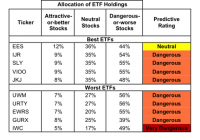
Summary Small Cap Blend style ranks last in Q2’15. Based on an aggregation of ratings of 29 ETFs and 678 mutual funds. EES is our top rated Small Cap Blend ETF and PXQSX is our top rated Small Cap Blend mutual fund. The Small Cap Blend style ranks 12th out of the 12 fund styles as detailed in our Q2’15 Style Rankings report . It gets our Dangerous rating, which is based on an aggregation of ratings of 29 ETFs and 678 mutual funds in the Small Cap Blend style. Figures 1 and 2 show the five best and worst rated ETFs and mutual funds in the style. Not all Small Cap Blend style ETFs and mutual funds are created the same. The number of holdings varies widely (from 24 to 2544). This variation creates drastically different investment implications and, therefore, ratings. Investors seeking exposure to the Small Cap Blend style should buy one of the Attractive-or-better rated ETFs or mutual funds from Figures 1 and 2. Figure 1: ETFs with the Best & Worst Ratings – Top 5 (click to enlarge) * Best ETFs exclude ETFs with TNAs less than $100 million for inadequate liquidity. A total of six ETFs are excluded from Figure 1 because their total net assets are below $100 million and do not meet our liquidity minimums. Figure 2: Mutual Funds with the Best & Worst Ratings – Top 5 (click to enlarge) * Best mutual funds exclude funds with TNAs less than $100 million for inadequate liquidity. A total of five mutual funds are excluded from Figure 1 because their total net assets (TNA) are below $100 million and do not meet our liquidity minimums. The WisdomTree SmallCap Earnings ETF (NYSEARCA: EES ) is our top-rated Small Cap Blend Style ETF and the Virtus Quality Small-Cap Fund (MUTF: PXQSX ) is our top-rated Small Cap Blend Style mutual fund. EES earns a Neutral rating and PXQSX earns an Attractive rating. One of our favorite stocks held by Small Cap Blend funds is The Buckle Inc. (NYSE: BKE ). Buckle is a casual apparel, footwear and accessories retailer. As a retailer, the company has achieved very consistent financial performance. Over the last decade Buckle has grown after-tax operating profit ( NOPAT ) by 17% compounded annually. Buckle’s return on invested capital ( ROIC ) in 2014 was 32%, placing it in the top quintile of all companies we cover. Over the past seven years ROIC has never fallen below 28% indicating a very resilient business franchise. Given its strong fundamentals, The Buckle is currently undervalued. At its current price of ~$47/share, BKE has a price to economic book value ( PEBV ) ratio of 1.0. This ratio implies the market expects Buckle’s NOPAT to never grow from current levels. However if the company is able to grow NOPAT by just 6% compounded annually for the next 10 years the stock is worth $73/share today – a 55% upside. The iShares Micro-Cap ETF (NYSEARCA: IWC ) is our worst-rated Small Cap Blend style ETF and the Chartwell Small Cap Value Fund (MUTF: CWSVX ) is our worst-rated Small Cap Blend style mutual fund. Both earn our Very Dangerous rating. One of our least favorite stocks held by Small Cap Blend funds is Mobile Mini (NASDAQ: MINI ). Since 2009, Mobile Mini’s NOPAT has not grown at all, and in fact has declined by $2 million. The company’s ROIC has not risen either, and at only 4% in 2014, ranks in the bottom quintile of all companies we cover. To top it off, Mobile Mini has not generated positive economic earnings in any year for the last 16 years. However, to justify its current price of ~$43/share, Mobile Mini must grow NOPAT by 13% compounded annually for the next 18 years . A history of stagnant NOPAT coupled with poor profitability make Mobile Mini an overvalued stock. The expectations implied by the current price are just too high given the actual economics of the business. Figures 3 and 4 show the rating landscape of all Small Cap Blend ETFs and mutual funds. Figure 3: Separating the Best ETFs From the Worst ETFs (click to enlarge) Figure 4: Separating the Best Mutual Funds From the Worst Funds (click to enlarge) Sources Figures 1-4: New Constructs, LLC and company filings D isclosure: David Trainer owns BKE. David Trainer and Allen L. Jackson receive no compensation to write about any specific stock, style, style or theme. Disclosure: I am/we are long BKE. (More…) I wrote this article myself, and it expresses my own opinions. I am not receiving compensation for it. I have no business relationship with any company whose stock is mentioned in this article.

Southern Co. And Exelon – ‘Why Don’t You Try Me’

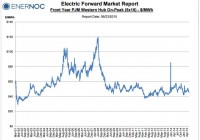
Southern Company and Exelon could outperform the anticipated average annual total return of 6% to 8% for the electric utility sector. Southern Company’s historic strength is a strong balance sheet and friendly regulatory environment. A return to these attributes will drive share prices higher. Exelon’s return to above average growth lays in future power prices in the Northeast and Midwest. Slide guitar aficionado Ry Cooder released a version of Snooky Young’s “Why Don’t You Try Me?” in 1980 that is beyond outstanding. Ry Cooder was ranked eighth on Rolling Stone’s 2003 list of “The 100 Greatest Guitarists of All Time.” The song’s refrain could ring true for some utility investors looking for a bit more potential oomph from their utility selections: I ain’t saying I’m all you need, but If your regular man ain’t treating’ you right Why don’t you try a man like me tonight? Some investors seem to get lulled to complacency with the dull and boring regular returns usually associated with utility investments. Steadily increasing and inflation-matching dividends coupled with slowly rising share prices lack the fireworks excitement of the next tech fad, but can provide long-term rewards for patient investors. Based on today’s valuations, many analysts are anticipating a 6% to 8% annual total return for long-term holdings of utility stocks. However, if you are willing to take on a bit more risk and controversy, Southern Company (NYSE: SO ) and Exelon (NYSE: EXC ) could end up treatin’ you better, just like Ry Cooder says. The story line for Southern Co. is its two large power generation projects, one utilizing first of its kind technology of “clean coal” and the other constructing two new nuclear power units. For some investors, the uncertainly of these projects offset the historically positive regulatory environment of their service territory. The news from both projects has not been encouraging. The chameleon transformation from a dirty and cheap coal-fired power producer to an efficient lower-carbon footprint has not been quick or low cost. The complex and new technology of recycling and sequestering of carbon emissions at the Kemper plant has been plagued by cost overruns, earnings charges and delays. The expansion of their nuclear capacity is one of the first projects of its kind after a 30-year nuclear plant construction hiatus. There are plenty of issues to be discouraged about, if an investor chooses to focus on them. However, management is moving ahead towards completion of the Kemper clean coal plant and it should be fully operational within the next year (which is what was said a year ago as well). With the recent departure of one of its equity partners, the economics of the plant may shift to a higher merchant power profile than its original regulated production profile. The resulting higher merchant power risk could pan out with higher profits as well, as Southern Company has a successful merchant power business, Southern Power, with 26 plants in nine states generating 9,800Mw. Southern Power contributed $1.5 billion in 2014 revenues and $172 million in before-tax earnings. Southern Company offers higher exposure to overall economic improvements than some of its peers. Population is growing in the southeast, and an overall business-friendly environment is expanding the south’s economic base. SO traditionally trades at a sector premium due to a strong balance sheet and a supportive regulatory environment, but the uncertainty of its two large construction projects is reducing current market valuations. With the retirement of its soon-to-be uneconomical coal generating capacity, this investment cycle for SO should last only a few more years. Investor attention will then focus again on the underlying attributes of SO’s management and geography. The investment story for Exelon focuses on a recovery of power prices in the Mid-Atlantic and Northeast in addition to the company’s increasing exposure to the stability of regulated income vs commodity merchant power pricing. With the completion of its recent mergers, EXC will generate over 50% of its earnings from regulated business, up from about 20% pre-financial crisis. As power prices are substantially below 2007-2008 levels, merchant power margins have been reduced reflected in lower earnings and a cut in the dividend several years back. Below is a chart of power prices going back to 2001, courtesy of sriverconsulting.com: (click to enlarge) Unlike its merchant power peers in the south and west who use 20-year power purchase agreements, the service area for EXC is mainly controlled by 3-year rolling auctions, supervised by PJM, a quasi-government regional regulatory agency responsible for electricity reliability and distribution. Eighteen months ago, the polar vortex caused havoc with coal and natural gas power generation, exposing risks to the NE electric grid as an unbelievable 22% of the region’s generating capacity was shutdown. The Jan 2014 price spike is a result of the severe supply problems exposed with very cold weather. As the largest nuclear plant operator, EXC also has the benefit of being one of the most reliable PJM merchant power providers. PJM has recently approved a revised “premium” for reliability, which will favor EXC, for the 2018/2019 auction scheduled for this August. According to Bloomberg, the reliability “pay-for-performance” plan could substantially increase wholesale market prices from $50 to $60 a megawatt per day for those plants not meeting the reliability standard to upwards of $120 to $140 for those that do. The longer-term impact, while delayed until 2018, could be quite positive as a bottoming of power prices should be at hand. Power pricing is partially driven by costs of competitive fuel supplies, such as natural gas. As gas prices increase over time, so will the price of power generation in PJM markets. EXC’s power costs are not dependent on low gas prices for profitability and rising natural gas markets favor EXC’s steadier-cost nuclear power margins. The auction process is a double-edged sword. Last May, three of EXC’s nuclear plants in Illinois and New Jersey bid higher than competitors bid and were not selected as base-load power providers for the 2017/2018 auction. Known as a “failure to clear,” the company will not provide about 4,500Mw out of 25,000Mw of generating capacity using the auction capacity payment program. EXC will not see regulated revenues for these plants from June 2017 to May 2018 but may contract the capacity during this time using spot pricing to any willing buyer. However, revenues could fall short of similar auction capacity sales, leading to discussions of closing these three plants on a permanent basis. Southern Company offers a current 5.1% dividend yield, outsized to the average 3.5% of utility ETFs. To match the anticipated utility long-term average total return of 6% to 8%, share prices need to move by only 1% to 3% above current price. As the uncertainly clears with the completion of the capacity addition, this would be a minor hurdle for investors. Exelon offers a sector average 3.8% yield with the prospect of improving power prices driving total earnings faster than some of its peers. While potentially higher risk than some of their competitors, utility investors might consider Ry Cooder’s lyrics : “Do yourself a favor, why don’t you try me?” Note: Please review disclosure in author’s profile. Disclosure: I am/we are long EXC, SO. (More…) I wrote this article myself, and it expresses my own opinions. I am not receiving compensation for it (other than from Seeking Alpha). I have no business relationship with any company whose stock is mentioned in this article.