Tag Archives: earnings-center

VNQ Share Fall, Yields On REITs Rise As Treasury Yields Fall
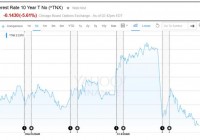
Summary The Vanguard REIT Index ETF appears to be on sale. Despite falling treasury yields and rising prices for utilities, equity REITs are showing weakness. I believe we are seeing a flight to quality as investors angle for more conservative assets. For investors that believe the markets are reasonably efficient, it makes sense to hold a large position in a low fee ETF like the Vanguard REIT Index ETF (NYSEARCA: VNQ ). I believe the markets are reasonably efficient, but I also believe that fear and greed occasionally overpower rational analysis and we see movements that fail to make adequate sense. On June 29th, it appears that fear was the emotion of the day and VNQ was becoming even more attractive. The Fear If you haven’t heard already, there are some issues in Greece. The Greek banks and their stock market are closed for the day and there are expectations of a payment due to the IMF to be missed. There was a nice little piece on it in the SA news feed earlier in the day . The piece there contains a little more information for readers that are interested. Rather than repeat the issues with Greece, I want to focus on the irony in the interest rate market. Let us begin with a look at a yield chart I pulled from Yahoo: (click to enlarge) The yields fell sharply lower today. If an investor is simply interested in what level of yield they can get on their investment, this should indicate that too many people are buying bonds and that they should be less attractive. By comparison, other sources of income should be more attractive. They should see prices increases and yields fall. However, that is precisely not what we saw with the Vanguard REIT Index ETF. I put together a quick chart from Google showing the price movements for VNQ and the Utilities Select Sector SPDR ETF (NYSEARCA: XLU ). (click to enlarge) As you can see, the movements previously were relatively similar and this morning they both jumped higher, but since then VNQ has been trading down while XLU has maintained part of the gain. My Take I’m seeing yields falling on treasury securities as investors have a “flight to quality”. Since the treasury securities are seen as the most reliable investment available, that is where the money is being placed. We see the same logic over the course of the day as investors are picking XLU over VNQ. The theory may be that if economic conditions worsen, the utilities will still have safe profit margins. Renters can move in with their parents and stop renting an apartment, but they won’t stop consuming electricity. The logic makes sense in the context of a flight to quality, but it ignores everything else about the business. I’d Rather Have REITs Owning a piece of the utility companies is a reasonable choice for portfolio diversification and very reasonable for investors focused on dividend yields. However, REITs remain an extremely attractive investment for the tax advantaged accounts. In my opinion, VNQ is a screaming buy relative to the 10 year treasury. The yield on VNQ just broke 4%. It is offering investors substantially higher levels of income than the Treasury, though I will grant it is also a significantly riskier security. The reason the risk is worth it can be viewed in the long term context. When we focus on investing and buying yield rather than on short term price movements, it is reasonable to say that an investor buying a bond should expect to achieve roughly the yield to maturity if they hold the security to maturity. In the event of a zero coupon bond (no reinvestment risk), we would expect precisely that yield absent any brokerage costs. When it comes to income, the investor in VNQ would need to see future dividends fall by over 40% before they would receive less in their yield on VNQ than they would on investing in the treasury security. It could happen, at least theoretically equity REITs could find themselves forced to reduce dividends if the economic environment worsens and revenues decline, however I have yet to see any plausible argument for a 40% reduction across the industry. The worst year for VNQ when measured in dividends paid out was 2010. The total dividend payment was $1.89. Compared to the current share price, that would still result in a 2.52% yield. Acceptable Capital Losses If we assume that dividends will average roughly the same level they are at now over the next ten years, then we have superior performance by about 1.7% per year. Using simple math, the premium in yield would compound to just over 18% in ten years. So long as VNQ ended the period with the share price falling by less than 18%, the shares would have delivered a superior total return. The most logical case for VNQ to underperform treasury investments would be a substantial cut in dividends that matches a substantial decline in share price as investors would continue to expect a reasonable yield on new investments. In that manner, if dividends were cut to less than $2.00 per share, I would expect capital losses to easily surpass the acceptable levels. I find that scenario to be very improbable. On the other hand, since late 2004 through early June VNQ delivered a CAGR (compound annual growth rate) counting reinvested dividends of 8.75% per year. Over the next decade I’m expecting the dividends to grow on average by 4% to 5% per year and I’m expecting share price to grow at a slightly slower rate as higher interest rates on bonds will require higher yields from other income securities. Conclusion I’m long VNQ and I have a buy-limit order to add to my REIT holdings. I’m hoping to see the major REIT index funds decline more over the next year so I can keep adding to my positions at prices I consider attractive. I’m not just rebalancing into more REIT investments; I’m increasing my exposure to equity REITs because I see attractive long term investment opportunities. The situation right now resembles a falling knife, but I see it as a falling knife of gold. I may get cut several times as I keep buying into the REIT sector, but the long term expected returns at these yield levels are enough to keep me happily buying more. Disclosure: I am/we are long VNQ. (More…) I wrote this article myself, and it expresses my own opinions. I am not receiving compensation for it (other than from Seeking Alpha). I have no business relationship with any company whose stock is mentioned in this article. Additional disclosure: Information in this article represents the opinion of the analyst. All statements are represented as opinions, rather than facts, and should not be construed as advice to buy or sell a security. Ratings of “outperform” and “underperform” reflect the analyst’s estimation of a divergence between the market value for a security and the price that would be appropriate given the potential for risks and returns relative to other securities. The analyst does not know your particular objectives for returns or constraints upon investing. All investors are encouraged to do their own research before making any investment decision. Information is regularly obtained from Yahoo Finance, Google Finance, and SEC Database. If Yahoo, Google, or the SEC database contained faulty or old information it could be incorporated into my analysis.

Use Market Dips To Buy VTI

Low rates will push stocks higher well in to 2016. Passive ETFs are still the best bet for average investors. VTI offers greater diversification, stronger performance, and lower fees than SPY. The purpose of this article is to discuss the attractiveness of the Vanguard Total Stock Market ETF (NYSEARCA: VTI ) as an investment option. To do so I will review the funds recent and long-term performance, current holdings, and trends in the market to determine if this investment is suitable for average investors. VTI has performed very strongly over the past few years, but with some serious headwinds on the horizon, it makes sense to revisit this investment strategy and see if it has the potential to be as profitable in the new year. First, a little about VTI. VTI attempts to track the performance of the entire stock market, unlike other popular ETFs, such as the SPDR Dividend ETF (NYSEARCA: SDY ) or the iShares Select Dividend ETF (NYSEARCA: DVY ), which track specific companies within the S&P 500 or Dow Jones, respectively. Th e fund is designed to track the performance of the CRSP U.S. Total Market Index and does so by holding stocks that are large, mid, and small-cap. As of 5/31/2015, VTI has 3824 stocks in its portfolio, making it one of the most diversified funds you can buy. Currently, VTI is trading at $107.95/share and pays a quarterly dividend of $.47/share, giving the fund an annual yield 1.74%. Year to date, the fund is up roughly 2% and over the past year the fund is up around 6% (both figures exclude dividend payouts, which would increase its total return). While VTI does not just track the Dow or S&P 500, it is worth noting that the investment has slightly outperformed those benchmark indexes over the past year, as they returned 5.5% and 6% , respectively. (Dividends give VTI its superior return.) Aside from its strong historic performance there are a few other reasons why I believe VTI will continue to outperform over the next 12-18 months. First, I expect stocks to continue to rise going in to 2016 because of macroeconomic events that will benefit the U.S. economy. Interest rates are going to stay low until at least the end of next year, U.S. hiring is coming to show grow – lowering the unemployment rate, and wages may finally be starting to climb for the average U.S. worker. Given these trends, I would look to increase positions in U.S. equities during market dips on issues such as Greek debt or other international concerns such as flare-ups in the Middle East. The U.S. economy is pushing forward, and the bigger trends over the next year will outweigh current headwinds and should increase stock prices. Let’s look at each point in turn, starting with interest rates. The on-going discussion on when the Federal Reserve will raise their key benchmark rate has been influencing the market for years. Most predictions indicate that in September, the Fed will finally increase rates for the first time since the financial crisis. When we get closer to that date, expect to see some volatility in the market and there is a chance equities could move lower as higher rates have the potential to curtail growth and stall the recovery. However, I think these fears are overblown and will provide investors with another good buying opportunity. While I just mentioned that interest rates are set to rise, the increases are sure to be modest and slow. In fact, Janet Yellen indicated, after the most recent Fed meeting, that interest rates will rise slower than previously anticipated . The current consensus now is that rates will not exceed 2% by the end of 2016, meaning that the U.S. will continue to experience a historically low rate environment for at least another year and a half. I think that the market will benefit under these conditions, as the Fed will be signaling that the U.S. economy is strong enough to stand on its own, yet rates will still be low enough to encourage investors to search for a greater return in the stock market. Second, U.S. hiring has been steadily increasing and the Labor Department recently reported that, while the number of people seeking unemployment aid rose slightly last week, the figures remained at a historically low level that signals “an improving job market.” Job growth is especially important for the stock market as the resulting domino effects, such as increased consumer spending, increased demand for housing, and greater consumer confidence, are all positive for equities. In fact, these trends are already beginning to take hold as The Commerce Department recently reported that consumer spending rose 0.9 percent last month (May). Finally, wages, a drag on the U.S. economy for some time, may be finally starting to rise. An increase in wages will benefit the economy and stocks much in the same way that the improving employment figures will, discussed in the previous paragraph. May’s figures indicate that the “average wage of American workers rose 0.3% in May to $24.96 a hour, pushing the increase over the past year up to its highest level since mid-2013.” If this trend continues, inflation will start to increase and equities will continue their march higher, directly benefiting VTI. While the trends I just talked about will benefit VTI, they will also benefit most equity investments, so I will now point out why I prefer VTI to other similar investments, such as the SPDR S&P 500 Trust ETF ( SPY). VTI and SPY have almost identical returns over the past year and pay similar yields of 1.85% and 1.94%, respectively. However, over the past five years VTI has beaten SPY with a return of over 96% compared to a return of just under 93% for the SPY. So longer term, VTI seems to be a stronger bet, and there are a few reasons for this. One, VTI covers the entire stock market, and thus has exposures to stocks in the Dow Jones Index, S&P 500, and the Nasdaq. Therefore, when, for example, technology stocks in the Nasdaq outperform, VTI will benefit to a greater degree over the SPY. This additional exposure provides a greater chance of upside in a rising market, which is what I expect to happen. I mentioned that VTI has over 3800 stocks in its portfolio, this compares with 500 for the SPY , giving investors greater diversification. Also importantly, VTI sports a lower expense ratio than SPY, at .05% for VTI compared to .1098% for SPY . While the difference is not huge, how could one argue that paying less for greater diversification is a bad thing? With more holdings, a superior long-term return, and a cheaper cost to own, VTI seems the obvious choice. Of course, investing in VTI is not without risk. The stock market is headed in to a time period of uncertainty, as we enter uncharted territory with events such as a Greek exit from the Eurozone and an increase in interest rates from the Fed for the first time since the recession. The market could hit a period of volatility that sends stocks sharply lower. Additionally, employment figures could stall, giving employers added leverage to keep a lid on wages and, in effect, inflation. Finally, rates could rise faster than anticipated, which could send investors away from equities and into safer investments that would then offer a higher yield, which would hurt the stock market overall and take VTI lower. However, these are not scenarios I expect to occur. The U.S. economy has increased consistently, and I expect domestic growth will outweigh scares from abroad, such as Greece. Additionally, the Fed has repeatedly noted it is mindful that raising rates too fast could derail the recovery, so I do not expect them to be too aggressive, too quickly. Bottomline: The stock market been on an incredible bull run over the past few years and VTI, as it covers the entire stock market, has directly benefited. Heading in to summer, headwinds exist that could send stocks sharply lower. However, these are perfect opportunities to “buy the dip,” as the U.S. economy is proving each month, through employment and consumer spending figures, that the rebound is real and sustainable. VTI should continue to increase as rates, while set to increase, will remain low through 2016 and passive investors continue to favor cheap ETFs that offer broad exposure. VTI offers investors a cheap way to gain exposure to the entire stock market, and also a history of outperforming the S&P 500 and its flagship ETF, the SPY. Because of this, I would encourage investors to consider VTI as an investment option on each, and any, market drop we have over the next few months. Disclosure: I am/we are long VTI, SPY, DVY. (More…) I wrote this article myself, and it expresses my own opinions. I am not receiving compensation for it (other than from Seeking Alpha). I have no business relationship with any company whose stock is mentioned in this article.

PPL Corp. – Early Birds Catch The Worm

PPL has changed their business strategy to focus on a niche market. It is now a regulated utility focused on transmission and distribution assets. The company’s risk profile has been reduced. PPL could become a takeover target. PPL Corp. (NYSE: PPL ) is beginning to look attractive. In early June, PPL spun off their fleet of merchant power plants to a new company called Talen Energy (Pending: TLN ). By spinning off one part of their business, PPL changed its profile from a hybrid to a niche utility. The new PPL is a regulated utility. It is no longer exposed to the volatility associated with nation’s new deregulated power markets. It is no longer exposed to financial and political risks associated with U.S. Environmental Protection Agency or Nuclear Regulatory Commission actions. Instead, most of their revenues will be regulated and their earnings will become stable. PPL’s potential value is understood in the context of industry trends. Until recently, large utilities hedged their bets by spreading their positions along the utility value chain. Most wanted to diversify their portfolio of assets by owning power plants, transmission lines, pipelines, distribution wires, metering systems and energy service companies. They wanted to own regulated assets. They also wanted to own deregulated assets. For those utilities who tried owning everything, it did not work out well. Some were burned by the market. Others were overwhelmed with indirect expenses. A few saw their bond ratings limited as investors assessed their risks. Today, utilities are adopting a new strategy. One by one, the nation’s largest utilities are shifting their portfolios. One example is Duke Energy (NYSE: DUK ). Last April, Duke sold two deregulated businesses to Dynegy (NYSE: DYN ) for $2.8 billion in cash. One business was Duke’s fleet of deregulated power plants. The other was their deregulated energy services business. Today, most of Duke’s assets are regulated. Another example is Dominion Resources (NYSE: D ). Dominion sold a fleet of deregulated power plants and prematurely retired a nuclear plant. They also sold their deregulated energy services business to NRG Energy (NYSE: NRG ). While they still own a merchant nuclear facility, most of Dominion’s assets are regulated. Some utilities are unable to sell disaffected assets. Instead, they decided to do the next best thing. They decided to change the percentage of assets within their portfolio. To change their portfolio to more favorable emphases, they buy more of one asset and reduce numbers of other assets. Today, two large utilities are attempting to change their portfolios by acquiring distribution-only utilities. One example is NextEra Energy (NYSE: NEE ). NextEra is attempting to acquire Hawaiian Electric Industries’ (NYSE: HE ) utility. They are also attempting to acquire OnCore Electric Delivery (the Texas-based electric distribution utility owned by bankrupt Energy Future Holdings Corp.). By acquiring more distribution utilities, NextEra increases their footprint, reduces their reliance on one state’s regulator and de-emphasizes their generating profile. Another is example Exelon (NYSE: EXC ). They cannot easily sell their huge fleet of merchant power plants, which is mostly nuclear. They can adjust their profile by acquiring a wires-only utility, which is one reason why they are in the process of acquiring Pepco Holdings (NYSE: POM ). Pepco is mostly a regulated wires-only utility. If Exelon’s acquisition is successful, Exelon will become more of a regulated utility and less of a merchant utility. As a result, their access to capital is improved and their cost of capital is reduced. These examples are relevant to the new PPL. Now that PPL is mostly a wires-only utility, the company has become a niche player. This change in strategy should be attractive to investors. It could also be attractive to other utilities who might want to expand their footprint or alter their profiles. To be clear, the new PPL could be an attractive takeover target. If another utility attempts to buy PPL, shareholders could be rewarded. It may take time. It may not happen overnight. However, PPL is paying a stock dividend. That dividend could help buy shareholder patience. However, investors should be careful. There is a reason PPL’s dividend is attractive. It is possible PPL’s management could lower the dividend. The possibility seems remote. In their February conference call , PPL’s chairman and CEO addressed the complany’s dividend plans: But as we’ve said, post spin, our intent is to continue to maintain the same level of dividend prior to the spin. And we’ll look at opportunities where appropriate to grow it if we can. So that’s kind of still the game plan going forward. There appears to be equivocation. We can see why in their May conference call . In that call, PPL’s CFO addressed the dividend issue again: We recognize that the domestic payout ratio to fund our dividend was over 100% beginning in 2016. With our ability to dividend between $300 million and $500 million a year from WPD over the next few years, we would target to get the domestic payout ratio back under 100% for 2016 and continue to lower that domestic payout ratio in 2017 and 2018. Today, forward ratios appear to support PPL’s dividend goals. If everything goes as planned, the dividend should remain intact and possibly grow. However, PPL owns WPD utility system. WPD serves end-users in Wales and England. It has several subsidiaries operating in Wales and England. Over 40% of PPL’s assets are owned by their WPD subsidiaries. Approximately 33% of PPL’s forward revenues are derived from WPD subsidiaries. With billions of dollars in another country, PPL is exposed to United Kingdom’s economy and currency. They are also exposed to U.S. taxes on repatriated funds. If any unforeseen event takes place, there is risk PPL’s dividend may require adjustment. As a reminder, Exelon surprised their shareholders by cutting their dividend . Prior to acquiring Constellation Energy, Exelon’s management suggested dividends could be maintained. A few months after they completed their Constellation acquisition, Exelon’s dividends were cut. The stock tumbled. For PPL investors, the challenge is the company’s fundamentals. It is difficult to reference a baseline when the baseline suddenly shifts. In PPL’s case, when they spun off their generating company, it became difficult to reference past performance. As a result, it may take several quarters for investors to digest the full effects PPL’s spin-off. Nevertheless, speculators may want to accept management’s guidance and jump in. As uncertain as they may be, some ratios look attractive. PPL’s current yield is about 5%. Its price/earnings ratio is below 11, its forward earnings appear healthy, and its risk/reward suggests buying now — even if some critical facts are largely unknown. Fundamental investors may want to wait. PPL’s management has aggressive capex plans. They may attempt to buy a competitor and expand their wires business. There could be some dilution. Ratios could be adjusted. Then again, a hungry utility may want to jump in, pay a premium and buy PPL. In that case, ratios and earnings estimates are largely academic. Those who bought early may catch the worm. Disclosure: I/we have no positions in any stocks mentioned, and no plans to initiate any positions within the next 72 hours. (More…) I wrote this article myself, and it expresses my own opinions. I am not receiving compensation for it. I have no business relationship with any company whose stock is mentioned in this article.