Tag Archives: earnings-center

History Says Shorting Volatility Is The Right Move Here
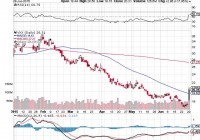
VXX spiked almost 17% on Monday. That is the fourth largest move it has ever had. I believe this represents a unique opportunity to benefit from panicking investors. In the last couple of months of last year and into 2015, I spent a lot of time trading volatility (NYSEARCA: VXX ). I was fortunate enough to have pretty good success but when markets largely calmed down earlier this year, there wasn’t much going on. Well, for anyone that wasn’t under a rock on Monday, volatility returned all at once as the VIX spiked 34% on the day amid worries imported from Greece. I won’t go over the Greece drama because you can read about it many other places so in this article, I’ll focus directly on what I think is a very tradable move in the VIX via the ETF VXX. (click to enlarge) We can see the move in the VXX yesterday was absolutely massive. It gapped up on the open but that was just the start of the action as we can see from the chart. That sets up what I believe is a reasonably high risk, high reward setup in volatility that investors can consider if you believe the Greek crisis will be a ‘sell the news’ kind of event. The VXX moved up nearly 17% on Monday so that got me to thinking; that’s a huge move, how many times has this happened before? I pulled pricing data since VXX’ inception from Yahoo! and looked to see how many daily moves were in excess of Monday’s gain and the answer is just three. Three days in 2011 (two in August, one in November) posted up moves of more than Monday’s 16.8% move. First off, there have been more than 1,600 trading days for VXX so the fact that Monday’s move was larger than all but three days is quite extraordinary in itself. That alone would suggest a bit of value seeking may be in order simply due to the magnitude of the move. However, the three days in 2011 that saw moves this large were in the midst of a global meltdown in stocks. The S&P was getting crushed along with every other major index around the world so shorting the VXX after the first spike in early August would have been a rough trade. Here’s what happened starting with the day of the first 17%+ spike up in VXX back in 2011. VXX almost doubled after the first move up so in today’s terms, we’d be right there at the beginning of this chart if the pattern repeats. Shorting VXX would have produced sizable losses until the end of 2011 when VXX began to normalize. It looks like a blip on this chart but four months of gut-wrenching losses can get the best of anyone. That is why I always reiterate that trading volatility is not for everyone. There are days when you get crushed and you have to take the pain but if that’s not for you, there are plenty of other instruments to trade. The other point I wanted to make with this chart is that even though VXX nearly doubled after a similar spike to what happened on Monday, in time, it returned to its normal, wealth-destroying self. That is what I want to take advantage of and given that Greece is a small sliver of the Eurozone’s economic output, I’m betting that is exactly what is going to happen. I can’t tell you when it will happen but one thing I know with virtual certainty is that VXX will spike and fall as it always does. I don’t know how high it will go before it falls but fall it will and when it does, it will probably fall hard. That has been the pattern and I’m betting it will take place again. I bought some (NASDAQ: XIV ) on Monday as a way to short the VXX in a virtually costless way and to take advantage of when the VXX does roll over and begin to destroy wealth again. If the market is down again on Tuesday I will buy more because there is a very small chance this trade won’t work out in the favor of VXX shorts over the medium term. VXX is a trading vehicle that erodes value over time so holding the inverse creates value over time, on average. You can put the odds more in your favor when you short into intense strength like what we saw on Monday so that is what I have done. Best of luck out there, it should be entertaining. Disclosure: I am/we are long XIV. (More…) I wrote this article myself, and it expresses my own opinions. I am not receiving compensation for it (other than from Seeking Alpha). I have no business relationship with any company whose stock is mentioned in this article.

If Greece Defaults, Buy These 4 ETFs To Profit

Unless you haven’t been paying attention at all over the last few months, you should be well-aware of the tumultuous situation taking place in Greece right now. Thanks to a huge debt load and few good choices, Greece appears to be perilously close to an outright default, and with payments due at the end of the month, it appears as though Greece may be out of options. If a default happens, it looks to be catastrophic for the Greek markets, at least in the near term. While it might help to promote long-term growth (eventually), the short-term pain could be quite severe and especially if we use the Global X FTSE Greece 20 ETF (NYSEARCA: GREK ) as a proxy. This fund was down over 15% in Monday trading on extremely heavy volume while it has been having a horrendous 2015 as well. In fact, since the start of the year, the Greek ETF has lost over one-fourth of its value while the S&P 500 has remained more or less flat in the same time frame. What’s an Investor to Do? Worries over a Greek default are not limited to Athens by any means though. A number of European banks stand to lose a great deal in a default scenario while a variety of other European markets could be impacted by Greece leaving the euro. And with Europe being a major market for U.S. corporations, it shouldn’t be surprising to note that many American stocks are being hit by this turmoil too. Save for a few rate sensitive beneficiaries, pretty much every U.S. stock has been rocked by European concerns in the past couple of days. However, there are a few places where you can stash your cash in the ETF world in this difficult time. Below, we highlight four exchange-traded funds that look to offer up stability – or even profit – as the Greek situation continues to unfold: SPDR Gold Trust (NYSEARCA: GLD ) In difficult market environments, gold is considered a great store of value. And when you aren’t sure what your currency is going to be at the end of the year, gold becomes even more important and especially so given the long list of bank closures and currency concerns hitting the Greek market right now. These worries could impact other European markets too, increasing gold demand across the continent. We have already started to see this trend take place as GLD is pretty much flat over the last five sessions though GREK has lost 16%, the S&P 500 has declined 2.4%, and Vanguard FTSE Europe ETF (NYSEARCA: VGK ) (broad Europe) has fallen over 5%. For these reasons, a look to the most popular gold ETF of GLD could be an interesting way to hedge exposure in the near term. And if you are looking for a slightly longer-term investment, iShares Gold Trust ETF (NYSEARCA: IAU ) is also a viable option as it charges a bit less in fees though it doesn’t have as tight of a bid ask spread (due to having a lower per share price). iShares 20+ Year Treasury Bond ETF (NYSEARCA: TLT ) Concerns over a rate hike have plagued bond ETF investments as of late, but the Greek situation could be just the kick to get things moving back in the right direction. After all, given the uncertainty in Europe, the demand for safe American bonds will increase, helping to push yields lower in the process. We have already seen part of this take place with TLT as lower rates help to boost the prices in this fund, as it added about 2% in Monday trading. And if Greece slides closer to default, look for the gains to continue here as more investors pile into American debt. It should be noted that there are a variety of bond ETFs trading in the market right now, but TLT and other long-dated securities look to be the biggest winners. That is because they are the most sensitive to changes in rates so a big drop stands to make these securities benefit more than most in the fixed income world. iPath S&P 500 VIX Short-Term Futures ETN (NYSEARCA: VXX ) The VIX is often known as the ‘fear index’ as it can surge when investors are skittish about the market’s current direction. Obviously, this is the case right now, and we have been seeing prices for the ETN tracking this benchmark, VXX, surge as a result. VXX was up double digits in Monday trading, and I’d expect this trend to continue as the Greek situation becomes increasingly dire. Just remember that this is a terrible long-term investment due to the futures curve, so be careful when trading volatility. VXX has lost over 35% of its value so far in 2015, and most of this is due to a difficult futures curve which makes long-term investing very hard. With that being said, an outright default in Greece will likely make this ETN a big winner and a very liquid choice for traders seeking to make a bet on fear levels in the market. Volume levels here average over 38 million shares a day, and if anything I think you could argue we were long overdue for a bout of volatility in markets. ProShares UltraShort FTSE Europe ETF (NYSEARCA: EPV ) If you are looking to outright bet against Europe, then an inverse ETF could be the way to go in your portfolio. A fund that offers to pay the opposite of the return of a European benchmark seems built to profit in this uncertain time, and that is exactly what investors have with EPV. This ETF tracks the -2x return of the FTSE Developed Europe Index, which is a broad-based benchmark offering up exposure to a number of European companies across the continent. The euro currency accounts for about half of the exposure in the ETF, while financials make up the biggest single allocation at 22% of the total. The fund is up about 5% today, and it could continue to rise if the Greek impact ripples across the continent. Just remember, this is a daily resetting ETF, so it isn’t really intended for long-term investors (though the -200% daily factor should have been a clue to that as well). Original Post

Should Investors Take A HACK At This Idea?

The latest case of cyber espionage has resulted in the theft of personal information of more than 4 million government employees. The sophistication, scale and frequency of cyber-attacks has only increased, and threats are becoming more and more complicated. Let’s get a lay of the land of companies that are poised to help put down such criminal behavior, and how investors can play this secular theme. You may be surprised by our favorite idea in this space. “The new generation of cyber-attacks on organizations, including large and small enterprises and governments worldwide, is characterized by an unprecedented escalation in the complexity and scale of advanced malware created by criminal organizations and nation-states. These modern attacks are built on dynamic, stealthy and targeted malware that penetrates defenses in multiple stages and through multiple entry points of an IT network. These highly targeted, “single-use” cyber-attacks easily circumvent legacy security solutions that rely on pattern-matching detection technologies. Additionally, because legacy solutions reference outdated signatures of past threats, they also generate a high number of false-positive alerts.” – FireEye (NASDAQ: FEYE ) Annual Report, 2014 The statistics are striking. According to a 2011 survey of ~580 US IT experts by research center Ponemon Institute, an estimated 90% of organizations have at one time suffered a cybersecurity breach. Believe it or not, the Pentagon said in a 360+ page report that as of 2014, nearly every US weapons program that was tested showed ” significant vulnerabilities ” to cyberattacks. The news reminds us of the 1980s flick WarGames . It flat-out irks us that there’s a chance that hackers can access US weapons programs. Just this week, US officials announced that it believes China was behind a breach affecting the information of at least 4 million federal employees. This was allegedly the second intrusion by the country in the past few months, and the largest breach of federal employee data in some time. Russia has also been tied to cybercrimes against White House computers. It appears the US is fighting yet another war – not one with guns, and bullets but one against cyber adversaries. The plot of that 1980s teenage Matthew Broderick movie can’t happen in real life, can it? The world is simply not prepared for the latest round of criminal activity… in cyberspace. The sophistication, scale and frequency of cyberattacks, coupled with the complexity of new technologies from cloud computing and virtualization to enterprise mobility and social networking have made it incredibly difficult to keep important information and data safe. Reports from the Snowden documents, for example, contend that China stole “many terabytes” of data about Lockheed Martin’s (NYSE: LMT ) F-35. China’s new J-31 Gyrfalcon does look a lot like the F-35. In 2014 alone, there were 20 major data breaches , with Home Depot (NYSE: HD ), Target (NYSE: TGT ), and JPMorgan (NYSE: JPM ) perhaps making the biggest headlines, but even companies such as Staples (NASDAQ: SPLS ), Bebe (NASDAQ: BEBE ), and Sony (NYSE: SNE ) were impacted. Sony’s network was taken hostage by a grinning skull . Some estimates peg the cyber security market to surpass $150 billion by 2019 from under $100 billion today, but the reality is that the changing and evolving landscape could make this figure much larger. Traditional players such as Hewlett-Packard (NYSE: HPQ ), Cisco (NASDAQ: CSCO ), Check Point Software Technologies (NASDAQ: CHKP ), Computer Sciences Corp. (NYSE: CSC ), IBM Corp. (NYSE: IBM ), Booz Allen (NYSE: BAH ), Lockheed Martin, Northrop Grumman (NYSE: NOC ), Trend Micro ( OTCPK:TMICY ), Fortinet (NASDAQ: FTNT ), Barracuda Networks (NYSE: CUDA ), and Symantec Corp. (NASDAQ: SYMC ) will be vying for share. But there are others as well. FireEye, Palo Alto Networks (NYSE: PANW ), Imperva (NYSE: IMPV ), VASCO Data Security (NASDAQ: VDSI ), Zix Corp. (NASDAQ: ZIXI ), Qualys (NASDAQ: QLYS ), Proofpoint (NASDAQ: PFPT ), AVG Tech (NYSE: AVG ), and CyberArk Software (NASDAQ: CYBR ) will be looking to capture a piece of the pie (potential industry earnings). Many of these firms are losing money hand over fist at the moment. From an investment standpoint, it’s simply too early to pick the long-term winners. But even if we we’re pinned down to selecting just one or two potential winners, we’d maintain that the best consideration for investment exposure to rapidly expanding cybersecurity demand is via the PureFunds ISE Cyber Security ETF (NYSEARCA: HACK ), which seeks to track the investment results of the ISE Cyber Security Index (the ETF’s holdings can be downloaded here ). Our investment thesis on HACK rests not on identifying which company will capture the greatest share of industry earnings, but on the view that spending on cybersecurity will increase considerably more than current expectations – a far “safer” bet. Disclosure: I/we have no positions in any stocks mentioned, and no plans to initiate any positions within the next 72 hours. (More…) I wrote this article myself, and it expresses my own opinions. I am not receiving compensation for it (other than from Seeking Alpha). I have no business relationship with any company whose stock is mentioned in this article.