Tag Archives: consumer

Consumer Discretionary Sector Starts To Feel Its Oats

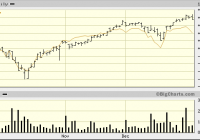
Consumer discretionary stocks underperformed during most of 2014. This trend began to reverse as the year neared its end. I expect this sector to continue to lead in 2015. Let me start the new year by highlighting one of my better forecasts from a few months ago. (I promise I will highlight some of my not-so-good forecasts in the very near future.) SA readers know that I periodically review the risk adjusted performance of the S&P 500 Sector SpyDers to see what sectors are under or over performing and, perhaps, to sniff out bargains or overvaluation. Last September 29th I suggested the Consumer Discretionary Sector ETF (NYSEARCA: XLY ) had lagged the overall market that year. I continued: XLY has been lagging all year. Given the fillip (no pun intended) to consumers’ wallets from lower gasoline prices, I do not expect this underperformance to continue. For outstanding returns at low risk in the near future, I suggest investors look at this sector. I am happy to report that this process is underway. Source: bigcharts.com Keep in mind that not only has XLY nearly doubled the S&P 500 Index (NYSEARCA: SPY ) in recent weeks, but that XLY has a lower beta (less risk) than the broader market. The outperformance is even better than it looks. I expect this trend to continue. Not only have lower oil and gasoline prices helped, but the lower prices will be sticking around for a while, as I make clear here . In addition the economy has picked up steam in recent quarters: 3rd-quarter real GDP grew at a 5% clip, and the 2nd-quarter GDP figures were revised upward. Whatever the outlook for the overall market, investors should continue to expect XLY to outperform on a risk adjusted basis. And while SPY offers a higher dividend yield than XLY (2.21% vs 1.63% respectively) the latter’s payout has been growing faster than the broad market over the past five years. Additional disclosure: Keep in mind I refer to RELATIVE performance, in either advancing or declining markets. Now that you’ve read this, are you Bullish or Bearish on ? Bullish Bearish Sentiment on ( ) Thanks for sharing your thoughts. Why are you ? Submit & View Results Skip to results » Share this article with a colleague

Dallas Fed Fisher’s Prescience And GLD

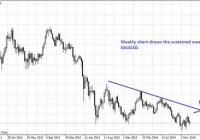
Recent third quarter GDP growth of 5% at 11 years high brings credibility to Fisher’s bullish dissent which is unforeseen by the FOMC. This brings greater possibility of an earlier rate hike forward to the March or April 2015 meeting especially if it is reflected in the upcoming labor figure. GLD paused its decline in this quiet festive market. This is the time to go short GLD before the market resumes fully in the second week of 2015. Voting against the action were Richard W. Fisher, who believed that, while the Committee should be patient in beginning to normalize monetary policy, improvement in the U.S. economic performance since October has moved forward, further than the majority of the Committee envisions, the date when it will likely be appropriate to increase the federal funds rate.” The quote is extracted from the statement of the Federal Open Market Committee (FOMC) released on 17 December 2014 . Dallas Federal Reserve President Richard Fisher took on a more bullish stance than the rest of the committee. During the meeting, the FOMC took reference from the October 2014 economic data and came to a bullish stance where you can read on my previous article ‘ Dissents At The December 2014 FOMC Meeting Hints At Earlier Rate Hikes ‘. At that point, I was not very convinced about Fisher’s outlook as I believe were the case of the rest of the FOMC. The US were showing some strong number such as the November 2014 non farm payroll of 321,000 which is better than the previous reading of 243,000 and expectations of 231,000 and average hourly earnings increase of 0.4% over 0.1% in October and 0.2% of market expectations. However there were misses as well such as the 0.3% contraction of the consumer price index in November after no change in October. Flash manufacturing purchasing manager index came in lower at 53.7 in November compared to a 54.8 reading in October and market expectations of 56.1. However with the 23 December 2014 revision of the third quarter 2014 from 3.9% to 5.0% which is not seen in 11 years since the third quarter of 2003, I am beginning to think that Fisher might be prescient in his observation. The FOMC will meet again next month from 27 to 28 January 2015. They will observe that GDP grew by 5.0% in the third quarter of 2014, at a 11 year high and agree with Fisher’s observation. During Chair Janet Yellen’s latest press conference , she had the following projection about GDP growth: The central tendency of the projections for real GDP growth is 2.3 to 2.4 percent for 2014, up a bit from the September projections.” The fact that GDP grew at such a rapid rate should persuade the Fed to raise rates at an earlier date perhaps in the March or April meetings instead of the June meeting as widely expected in the market. This would be so especially if there is continued improvement in the labor market. Hence we should keep a lookout for 09 January 2015 figures for the non-farm payroll and unemployment rate data. During the same press conference, Yellen set an unemployment target of 5.2% to 5.3% in the quote below: The central tendency of the unemployment rate projections is slightly lower than in the September projections and now stands at 5.2 to 5.3 percent at the end of next year, in line with its estimated longer-run normal level.” However I don’t think that the FOMC would start rising rates when unemployment rate is at 5.2% -5.3%. Instead I am of the opinion that they would start to rise rates as unemployment start to move towards their target as GDP grows. This would obviously be bullish on the United States Dollars (USD) after the market returns from the holiday season on the second week of 2015. Then I turned my thoughts to gold. You might have heard of this argument in one form or another before but it is worth repeating. As the US rises interest rates, it will be more expensive to hold onto gold as it gives no return and in fact cost you in terms of insurance and storage if you were to hold physical gold. Of course, there is the theory that holding gold is an insurance against the economic collapse but this is getting less and less traction especially with GDP growth of 5%. Then there is the argument that gold is a hedge against inflation but inflation is low and even the Fed foresees 1.0% to 1.6% inflation for 2015 if you refer to Yellen’s press conference. However, today I am going to offer a slight twist to it. The USD has not responded much to the record 11 year high GDP reading. You can read about it in my article ‘ USD Asleep As Q3 2014 GDP Hits 11 Years High ‘. In normal trading day, we would have seen USD raise by at least 100 pips but today if you are reading it before the market returns from the holiday, you might be in a position to short gold at a good price as gold gains partial strength by default after sustained selling in the past week with a lesser possibility of being hit by a retracement. Even if you miss the chance to sell gold by the time you read it, you can also sell it but with a wider stop loss. You can take the daily volatility as a guide. (click to enlarge) (click to enlarge) The 2 charts above shows the weekly and daily chart of XAU/USD. XAU is the symbol for gold while USD represents United States Dollar which we are all familiar with. The weekly chart shows that this pair is under constant pressure even if there are periodic upticks. The current weekly chart looks like it is on the downtrend after completing its recent bounce to a high of $1238 two weeks back. The daily chart shows us that the XAU/USD is having one of its uptick but this is likely to be temporary. This is a function of the thin trading market during the festive season and traders can take this opportunity to sell and set their stop loss at $1230. Of course, there is no sure thing in trading and one should set the position size accordingly. For those who want to avoid the leverage inherent in forex, they should use the SPDR Gold Trust ETF (NYSEARCA: GLD ) instead. GLD is listed on the New York Stock Exchange and highly liquid with $26.90 billion of market capitalization and transaction volume of 1.5 million shares. (click to enlarge) The chart above shows the weakness of the GLD after the peak 2 weeks back which is an interim retracement. Now is the time to go short the GLD as it pauses before its downtrend and catch the trend before it slowly resumes again next week.

A Popular Emerging-Markets Consumer ETF Rocked By Currency Volatility

By Patricia Oey EGShares Emerging Markets Consumer (NYSEARCA: ECON ) has enjoyed strong inflows since its launch in 2010, thanks to its portfolio of high-quality consumer firms that have direct exposure to one of the main drivers of growth in the emerging markets: the rise of the middle class. This exchange-traded fund invests in 30 large-cap consumer companies domiciled in the emerging markets (which in this case excludes Taiwan and South Korea). Many of these companies, such as Brazilian brewer and soft drink company Ambev (NYSE: ABEV ) , Mexican convenience store operator and coke bottler FEMSA (NYSE: FMX ) , and Russian grocery chain Magnit, are well-run, market-dominating companies with industry-leading profit margins. Over the five-year period ended June 30, 2014, this fund’s index generated significantly higher annualized returns relative to the market-cap-weighted benchmark MSCI Emerging Markets Index (20.0% versus 9.2%) on slightly less volatility. This was because the weaker areas of the emerging markets, such as China large caps and commodity names, are not included in this consumer fund. However, while most of this fund’s constituents are high-quality companies, many are domiciled in countries that have experienced an uptick in currency volatility, especially over the second half of this year. Like most funds that invest in foreign equities, ECON does not hedge its foreign-currency exposure, so the returns of this fund reflect the change in the prices of individual securities as well as the change in the value of their respective local currencies versus the U.S. dollar. Relative to the MSCI Emerging Markets Index, this fund is heavy in countries such as South Africa (19% versus 8%), Brazil (15% versus 11%), and Chile (7% versus 2%). All of these countries have recently experienced sharp declines in the value of their currencies against the U.S. dollar. This is attributable, in large part, to falling commodity prices. Commodities comprise a significant portion of each of these countries’ exports. In South Africa, miner strikes over the past few years have weighed on commodity exports. More recently, power outages, which have an impact on all business sectors, are further exacerbating the nation’s current accounts deficit. In Brazil, the economy remains weak and there is uncertainty regarding the policies of new finance minister Joaquim Levy. While Levy has promised to impose more fiscal discipline, he will face many challenges given the Brazilian economy’s numerous structural issues. As for Chile, this copper-rich country is still struggling from the fallout of the commodity bubble. In the near term, it is likely the economies of these countries will remain weak, which may result in more currency volatility. Fundamental View The investment thesis for this fund is a logical one: Emerging-markets consumers increasingly are reaching middle-class status and have more disposable income to spend on items from cars and electronics to packaged foods and beverages. Other growth drivers include the rise of consumer credit, urbanization, and relatively young populations in a number of emerging markets. Personal incomes are growing rapidly as well. According to the International Labour Organization, from 2000 to 2010, real wages rose 86% and 13% in Asia and Latin America, respectively. This compares with 6% real wage growth in the developed economies over this same span. The rapid growth in Asia was driven primarily by China, where real average wages have more than tripled over that period. This fund’s Mexican holdings, which account for about 16% of its portfolio, include companies such as FEMSA and Grupo Televisa (NYSE: TV ) . These companies are highly profitable, have durable competitive advantages, and possess the economies of scale needed to service regional markets. Mexico’s current leadership is working on a reform program to address long-standing issues such as inefficiencies in the labor market, underinvestment in the state-owned energy sector, and the government’s dependence on oil revenue–all of which may help unlock Mexico’s growth potential and drive growth for this fund’s Mexican holdings. ECON is trading at 24 times trailing 12-month earnings, a significant premium to the MSCI Emerging Markets Index’s 13 times trailing 12-month earnings. This is partly attributable to a higher earnings outlook for ECON’s holdings relative to the MSCI benchmark’s holdings. There is also strong investor demand for the firms in ECON’s portfolio, as there are relatively fewer consumer names in emerging markets–consumer companies account for about 17% of the MSCI Emerging Markets Index, which is lower than their 23% weighting in the S&P 500. However, while ECON’s price/earnings premium over the MSCI Emerging Markets Index has widened over the past three years, ECON’s P/E premium versus an index of global consumer firms and U.S. consumer firms has been relatively steady over the same time period, which suggests that ECON’s current valuations are not expensive relative to its global consumer peers, although consumer firms as a group are a little pricey–they are trading at P/E multiples slightly higher than their 10-year average. Portfolio Construction This ETF tracks the Dow Jones Emerging Markets Consumer Titans Index, which is a modified market-cap-weighted index that includes 30 leading emerging-markets companies that are in the consumer goods and consumer services industries. Since its inception, ECON’s portfolio has had low turnover. However, following its annual rebalance in September 2013, ECON’s weighting in Chinese companies rose to 16% from 6% because of a change in classification of Chinese p-chips (non-government-controlled Chinese companies listed in Hong Kong) from Hong Kong companies to Chinese companies. New additions include two companies with Narrow Morningstar Economic Moat Ratings–Hengan International (a personal-care products company) and Belle International (a footwear manufacturer and sportswear retailer)–along with unrated Want Want China (a snack food company) and China Mengniu Dairy. ECON’s larger China allocation came primarily at the expense of its India allocation, which fell to 7% from 10% after this year’s reconstitution. South African media firm Naspers (ECON’s largest holding at 10%) also can be considered a China play. It has a 34% stake in the China Internet company Tencent Holdings, and this represents a significant portion of Naspers’ market value. Fees This ETF’s 0.84% expense ratio makes it one of the most expensive emerging-markets ETFs. Alternatives ECON’s portfolio has better exposure to emerging-markets consumption trends relative to other similar choices. IShares MSCI Emerging Markets Consumer Discretionary (NASDAQ: EMDI ) has a heavy 30% weighting in South Korean auto and consumer electronics companies; these firms serve the global marketplace and have relatively lower exposure to the emerging-markets consumer. Also, EMDI, by design, invests only in consumer discretionary firms, whereas ECON has about a 50/50 exposure to consumer discretionary and consumer staples firms, making ECON less volatile. The other option is WisdomTree Emerging Markets Consumer Growth (NASDAQ: EMCG ) , which launched in September 2013. This fund is slightly different in that it has a 60% allocation in consumer firms and a 40% allocation in firms likely to benefit from consumer spending, primarily banks and telecoms. EMCG also screens for companies with relatively stronger earnings growth outlook, higher historical returns, and lower valuations. The fact that this fund employs numerous quantitative screens makes it difficult to predict how much the portfolio may change during its annual reconstitution. We recommend investors monitor EMCG’s live performance for at least a year before considering this fund. Disclosure: Morningstar, Inc. licenses its indexes to institutions for a variety of reasons, including the creation of investment products and the benchmarking of existing products. When licensing indexes for the creation or benchmarking of investment products, Morningstar receives fees that are mainly based on fund assets under management. As of Sept. 30, 2012, AlphaPro Management, BlackRock Asset Management, First Asset, First Trust, Invesco, Merrill Lynch, Northern Trust, Nuveen, and Van Eck license one or more Morningstar indexes for this purpose. These investment products are not sponsored, issued, marketed, or sold by Morningstar. Morningstar does not make any representation regarding the advisability of investing in any investment product based on or benchmarked against a Morningstar index.