Tag Archives: china

Revisiting Eurozone ETFs As Economic Growth Falters

After a solid start to 2015, growth in the 19-member Euro zone economy lost momentum due to the Greek debt crisis and deterioration in many emerging market economies as commodities saw a slump and China witnessed a turmoil. The economy grew just 0.3% in the second quarter, down from a two-year record growth of 0.4% in the first quarter and well below the market expectation. This suggests that the Euro zone continues to lag recovery in the U.S., which recorded 2.3% growth in the same period. France and Italy – representing 40% of the currency bloc’s growth – were the major setbacks to the region’s growth in the last quarter. This is especially true, as France recorded zero growth in the second quarter after 0.7% in the first and Italy’s growth slowed to 0.2% from 0.3%. On the positive side, Spain once again turned out to be the outperformer with its quarterly growth increasing from 0.9% in the first quarter to 1% in the second. This was the highest growth rate among the Euro zone nations. Growth in Germany accelerated to 0.4% from 0.3%, while Greece unexpectedly grew 3.1% in the last quarter from 0.1% in the first quarter. Outlook Remains Bright It can be said that the Euro zone has shown strong resilience in a tough environment, which was disturbed by Greece, China and the commodity turmoil. The outlook for the region remains solid heading into the second half of the year given the numerous economic tailwinds that the Euro zone is enjoying. These include ultra-cheap money flows, a boost to liquidity from the European Central Bank’s (ECB) quantitative easing program, a weaker euro and lower oil prices. Improving economic and business activity as well as growing consumer confidence is fueling growth in the 19-member economy. The Euro zone successfully emerged out of the four straight months of deflationary spiral in April and inflation is above the zero level. Notably, annual inflation was 0.2% in July. Further, unemployment across the Euro zone has been falling and remained steady at a three-year low of 11.1% as of June. Given several monetary tools in place, the Euro zone is expected to show strength in the coming months providing a boost to the stocks and ETFs in the region. As a result, we have taken a closer look at some of the ETFs that have the largest exposure to the Euro zone economies. These funds have generated decent returns so far in the year and could continue to do so. iShares MSCI EMU Index Fund (NYSEARCA: EZU ) This product provides exposure to the EMU member countries (those European Union members that use the Euro as currency) by tracking the MSCI EMU index. EZU is one of the most popular ETFs in the broader European space with AUM of nearly $10.9 billion and average daily volume of roughly 6.5 million shares. It charges investors 0.48% in annual fees. The fund holds about 243 securities in its basket with none holding more than 3.15% share. The ETF is a large cap centric fund as about 82% of the portfolio is concentrated on this market cap level. The product has a definite tilt toward financials at 24%, followed by consumer discretionary (14.4%), industrials (13.1%) and consumer staples (10.5%). From a country look, France and Germany take the largest share in the basket with 32.4% and 29.2%, respectively, while Spain, the Netherlands and Italy round off the top five. The fund has returned about 7.1% so far this year and has a Zacks ETF Rank of 3 or ‘Hold’ rating with a Medium risk outlook. SPDR EURO STOXX 50 ETF (NYSEARCA: FEZ ) This fund follows EURO STOXX 50 Index, which measures the performance of some of the largest companies across the components of the 20 EURO STOXX Supersector Indexes. The fund appears rich with AUM of nearly $4.7 billion, and average daily volume of more than 2.5 million shares. Expense ratio came in at 0.29%. Holding 53 securities in its basket, the product is pretty well spread out across components with no firm making up for more than 5.09% of assets. The ETF is skewed toward financials, as it takes about more than one-fourth of the total assets, while the other sectors receive modest exposure. In terms of country allocation, France and Germany are leading with 36.2% and 30.6% share, respectively, followed by Spain (12.7%), Italy (8.0%), the Netherlands (7.6%), Belgium (3.7%) and Finland (1%). The fund is up nearly 5.6% in the year-to-date time frame and has a Zacks ETF Rank of 3 with a Medium risk outlook. SPDR STOXX Europe 50 ETF (NYSEARCA: FEU ) This ETF is quite similar to FEZ having amassed $280 million in its asset base and trading in volume of less than 74,000 shares per day. It charges 29 bps in annual fees and holds 56 stocks in its basket. While the fund tracks the same index, it is slightly different from FEZ in terms of sector and country holdings. Here, financials and health care take the top two spots in terms of sectors with over 24% share each while consumer staples and energy round off the top four with double-digit exposure each. Country weights for the top three are United Kingdom (35.4%), Switzerland (23.1%) and Germany (14.7%). The product is up 6.1% so far this year and has a Zacks ETF Rank of 3 with a Medium risk outlook. iShares Currency Hedged MSCI EMU ETF (NYSEARCA: HEZU ) For investors looking to manage currency risk while remaining invested in the Euro zone stocks, HEZU might be a good option. The fund follows the MSCI EMU 100% USD Hedged Index and is a play on the popular unhedged fund ( EZU ) with a hedge to strip out the euro currency exposure. The fund holds 263 well-diversified securities in its basket dominated by financials (24.4%) and followed by consumer discretionary (14.7%), industrials (13.3%) and consumer staples (10.7%). The ETF has amassed $1.8 billion in its asset base since its debut a year ago and trades in good volumes of more than 941,000 shares a day. The fund charges 50 bps in annual fees from investors and has delivered impressive returns of over 15% so far this year. It has a Zacks ETF Rank of 1 or ‘Strong Buy’ rating. Bottom Line Given the encouraging trend, Euro zone will likely get a boost in the coming months. So investors could jump into this space and could ride out the strength with any of the above-mentioned ETFs. Original Post
New Normal Income

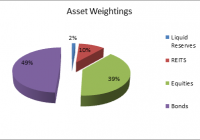
The State Street Fund is mainly comprised of the well-known SPDR ‘Sector Select’ funds. An Income Allocation fund provides better returns than a Government Bond fund. An Income Allocation fund is less risky than a high yield fund. Investors are living in interesting times. Before the 2008 credit crisis, the only mention of deflation might be heard or described in a television documentary. Deflation , as far as most people were concerned, was a thing of the past, the aftermath of an asset bubble combined with a naive economic policy. To be sure, deflation may have faded in living memory, but was still very much a reality of macroeconomics. Since 2008, many advanced global economies have been slipping in and out of deflation and their central banks have been walking a fine line on decisions to direct economic policy. The problem, it seems, is primarily due to a digitally connected, integrated global economy. Disinflation in one region will directly or indirectly affect interest rates and currency values in others. This ‘network effect’ has impacted individual investors who seek relatively safe income. However, to attain reasonable incomes, investors now must venture further out on the risk curve. This begs the question whether there’s some comfortable median, in particular, a way to reasonable returns without incurring high risk. State Street Global Advisors offers investors the opportunity to do just that; earn a steady stream of income with manageable risk through its actively managed SPDR Income Allocation ETF (NYSEARCA: INKM ) . According to State Street the fund’s objective seeks to: Provide total return by focusing on investment in income and yield-generating assets. The fund tracks primarily the MSCI World Index , and secondarily , Barclays U.S. Long Government/Credit Bond Index . According to the prospectus , the fund invests primarily in four different asset classes through exchange traded products (ETP): domestic and international equities; domestic and international investment grade and high yield debt securities; preferred and convertible securities and lastly, real estate investment trusts. Since the fund seeks to achieve its objectives through investments in Exchange Traded Products it is essentially a fund of funds. There are similar funds; however, SPDR’s Income Allocation ETF has the best short and long term returns when compared to the top three similar as summarized below: Fund and Inception 1 Month YTD 1 Year 3 Year Since Inception Types of Holdings SPDR (INKM) 4/25/2012 1.25% -0.35% 1.07% 5.10% 5.46 ETP; Reits convertibles, Equities PowerShares CEF Income Composite Portfolio ETF (NYSEARCA: PCEF ) 2/19/2010 -1.61 0.84 -3.04 5.52 6.41 ETP investment grade funds; high yield funds iShares Morningstar Multi-Asset High Income Index ETF (BATS: IYLD ) 4/3/2012 -0.55 -2.57 -2.65 4.15 5.21 ETPs, high yield fixed income funds (Data From State Street Global Advisor ) T he fund is compact, holding just 21 funds; 17 of those holdings are State Street Advisor’s SPDR funds . Of the top five holdings accounting for nearly half of the fund’s asset allocations, three are SPDR bond funds, one SPDR REIT and the WisdomTree Japan Hedged Equity ETF (NYSEARCA: DXJ ) . (Data from State Street) The fund’s heaviest allocation is in bonds, accounting for nearly half of the funds asset allocation. Of the 7 bond funds, 2 are U.S. Treasury bond funds, 10.83%; 2 are corporate bond funds, 14.32%; 1 high yield fund, 15.79%; 1 emerging market bond fund, 3.05%, and 1 convertible securities fund accounting for 5.08%, of total holdings. Hence, the fund is well diversified over the risk spectrum. The next heaviest allocation is in dividend generating equity funds. Of the 11 equity funds, 6 are international, 22.99%; three are SPDR ‘Select Sector’ funds, 6.09%; one SPDR preferred equity fund, 5.13% and one SPDR dividend fund accounting for 5.11% of the fund’s total holdings. Two SPDR REITs account for 10.27% of the fund’s holdings and lastly 1.34% is classified as ‘liquid reserves’. The question sure to arise is on the usefulness of allocating a fund of funds in a long term portfolio. The question may be answered when the long term investor makes a careful study of the global fixed income market. Most advanced economies are experiencing “disinflation’ or outright “deflation”. In order to prevent a deflationary spiral, central banks have gone to extraordinary lengths to depress deposit rates in order to direct liquidity into economies. These extreme efforts have met with some measure of success, but by far, have not returned fixed income markets to ‘normalcy’. Three recent notable examples of central bank actions in ‘secular stagnation’ economies are for instance, Japan’s unexpected expansion of its bond purchasing program in October of 2014 weakening the Yen to historic lows against major currencies; the ECB’s expansion of its bond purchasing program and depressing its deposit rate to -0.20%; most recently the People’s Bank of China reference rate reductions and an outright devaluation of the dollar pegged currency. The list is long and growing. Worsening the matter has been the commodity market collapse, particularly in crude oil and decelerating global demand. By all indication, the individual investor might, at the very best, expect a gradual return to normalcy, which might take several years. There’s a risk in being locked into historically low yielding high quality sovereign debt at the long end of the curve. Should sovereign rates return to normal after just a few years, the loss of principal on bonds purchased at the highs, would certainly result in a negative yield when held to maturity, particularly should inflation return to a 2% rate. On the other hand, should major global economies continue to struggle to “reflate”, even the most risky high yield bonds will experience declining yields. (click to enlarge) It has often been said that a ‘fund of funds’ results in over-diversification. In a new normal world, a fund of diversified fixed income funds, particularly if it’s actively managed such as the State Street Global Advisors Income Allocation Fund ETF is a far more holding tool for the individual investor, well diversified over many income producing sectors and, most importantly, diversifies risk as well. The fund has total net assets of $118.94 million distributed over the 21 holdings including the liquid reserves. The trailing dividend yield is currently 3.28% and the ETF shares currently are trading at its NAV price, hence neither at a premium nor discount to NAV; there are 3.80 million shares outstanding. The fund has a somewhat high management fee of 0.70% without any mention of waivers or cap. Disclosure: I/we have no positions in any stocks mentioned, and no plans to initiate any positions within the next 72 hours. (More…) I wrote this article myself, and it expresses my own opinions. I am not receiving compensation for it (other than from Seeking Alpha). I have no business relationship with any company whose stock is mentioned in this article. Additional disclosure: CFDs, spread betting and FX can result in losses exceeding your initial deposit. They are not suitable for everyone, so please ensure you understand the risks. Seek independent financial advice if necessary. Nothing in this article should be considered a personal recommendation. It does not account for your personal circumstances or appetite for risk.