Tag Archives: author

Utilities ETFs – Power To The People
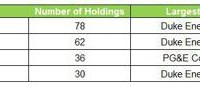
Summary Utilities are a solid income-producing, low volatility plays. Look at utility ETFs as alternatives to one-stock options (Con-Ed, Duke Energy, Dominion) for more geographic and industry diversification. These utilities are largely made in America domestic investment options. Profiling the contenders (unless otherwise stated, market prices, NAV and SEC yield as of 1/23/15) : Vanguard Utilities ETF (NYSEARCA: VPU ) This ETF seeks to track the performance of a benchmark index that measures the investment return of stocks in the utilities sector and includes stocks of companies that distribute electricity, water, gas or that operate as independent power producers. Market price: $106.55 30-day SEC Yield: 3.14% Number of holdings: 78 iShares U.S. Utilities ETF (NYSEARCA: IDU ) This ETF seeks to track the investment results of an index composed of U.S. equities in the utilities sector. Market price: $123.23 30-day SEC Yield: 2.56% Number of holdings: 62 Guggenheim S& P 500 Equal Weight Utilities ETF (NYSEARCA: RYU ) This ETF seeks to replicate as closely as possible, before fees and expenses, the performance of the S&P 500 Equal Weight Index Telecommunication Services & Utilities. Market price: $81.17 30-day SEC Yield: 2.91% Number of holdings: 36 Utilities Select Sector SPDR ETF (NYSEARCA: XLU ) This ETF seeks to provide investment results that, before fees and expenses, correspond generally to the price and yield performance of the S&P Utilities Select Sector Index. Market price $49.14 30-day SEC Yield: 3.04% Number of holdings: 30 1) Diversification Diversification is the process of reducing non-systematic risk by investing in a variety of assets or asset classes that (hopefully) do not move up or down in value at the same time or magnitude. As the 2008 financial crisis taught us , there are certain unforeseeable events (think global recession, world wars) that no amount of diversification can protect us from. With diversification, you are at risk, without it you are doomed. a) Number of holdings An ETF does not need to hold every company of every sector that comprises its benchmark index, but 2 – 3 companies per industry is my subjective minimum to achieve adequate diversification. The utilities sector can be broken up into various industries including: electric utilities, multi-utilities, gas utilities, independent power and renewable electricity providers and water utilities. (click to enlarge) Winner: Guggenheim. While iShares and Vanguard both have more holdings, the concentration of risk with Duke Energy should not be ignored. Every dollar invested in Duke Energy is a dollar that can’t be invested in smaller regional electric and water companies that potentially could provide under the radar value for investors. b) Industry concentration Vanguard Utilities ETF (Courtesy of Vanguard) iShares U.S. Utilities ETF (Courtesy of BlackRock) Guggenheim S&P 500 Equal Weight Utilities (click to enlarge) ( (Courtesy of Guggenheim Investments) Utilities Select Sector SPDR ETF (Courtesy of State Street Global Investors) Winner: Guggenheim. I like that it has three industries that make up 10% or more of total investments, compared to only two for the competition. While diversified telecommunication services sounds a lot like AT&T, Verizon et al, this high barrier-to-entry quasi utility addition adds recurring revenue and relatively higher yield to the mix. 2) Expense ratio The SEC defines expense ratio as the total of a funds operating expenses, expressed as percentage of average net assets. The expenses include management fees, Distribution/service or “12b-1” fees, custodial, legal, accounting, etc. Lower expense ratios, either through larger size or smaller nominal expenses mean higher investment returns. (click to enlarge) Winner: Vanguard. John C. Bogle , founder of Vanguard: The grim irony of investing, then, is that we investors as a group not only don’t get what we pay for, we get precisely what we don’t pay for. So if we pay for nothing, we get everything. Honorable mention: the other three. According to Morningstar data , the average expense ratio for similar funds is 1.28%. 3) Total return (click to enlarge) Winner: Guggenheim. The Guggenheim S&P 500 Equal Weight Utilities ETF has outperformed Vanguard, iShares, and SPDR on both three and five year horizons. Past performance is no indicator of future results, naturally, but I believe this result is indicative of a superior indexing methodology. 4) Valuation multiples Winner: Vanguard. The Vanguard ETF is trading at a slightly lower multiple to TTM earnings, and a reasonable price/book ratio related to its competitors. 5) Liquidity The ability to get out of a great investment is just as important as the ability to get in. While ETFs are generally regarded as having higher liquidity than mutual funds (primarily because they can be traded throughout the day, rather than just at the end), there are reasons to avoid ETFs with excessively low volume. Chief among these are higher bid-ask spreads, which may result in the inability to profitably execute a short-term trade (not a real issue for long-term investors). However, one of the issues that arises from low liquidity (a deviation between price and NAV) can actually be an opportunity. If an ETF is trading slightly below its NAV, but the market is not active enough for it to quickly resume equilibrium, you can shave a few points off your basis by looking for opportune entry points. (click to enlarge) (click to enlarge) Winner: SPDR. Higher volume means tighter bid-ask spreads, full stop. 6) Yield (click to enlarge) Winner: Vanguard. Honorable mention: Everyone else. All four ETF options offer better income producing prospects than a 30 year treasury (2.38%), the S&P 500 (1.97%), and Dow Jones Utility Average (2.40%). 7) Volatility (click to enlarge) Winner: SPDR. Over three and five-year time-frames, SPDR has been less volatile than Vanguard, iShares and Guggenheim, and significantly less volatile than markets as a whole. 8) Dividend history and growth Source: finance.yahoo.com Winner: Tie: SPDR and iShares. The SPDR and iShares ETF have increased their annual dividend each year since 2009. Growing dividend payments is one way to try and keep up with inflation, and based on this 6 year time-frame, SPRD and iShares best accomplish this. So, which Utility ETF should you own? SPDR! The Utilities Select Sector ETF by SPDR is: the most active (liquid), the least volatile, offers the second highest yield, the second lowest expense ratio, and is one of only two of the funds analyzed that has increased dividends each year since 2009. A word of caution Utilities stocks are generally thought of as defensive plays, and could underperform in a rising or bull market. Also, significant sustained changes in the cost of energy production and delivery or interest rates could negatively impact all of these stocks. That is no excuse, however for not considering allocating at least a portion of your portfolio to these low-volatility ETFs. Do your homework, review the composition and risk profile of each of these ETFs and monitor your holdings.
How To Buy And Hold Leveraged ETFs: The Top 7 Outperforming 3x ETFs Over The Past Year

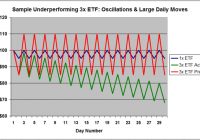
Summary Leveraged ETFs can be dangerous buy-and-hold vehicles due to their extreme volatility and tendency for many to decay over time. However, leveraged ETFs offer the long-term trader an effective means to make a large investment in a particular sector without risking substantial capital, if the position is chosen properly. Leveraged ETFs that trade linearly with small daily intervals and few reversals tend to track their 1x ETF counterparts very well or even outperform on yearly timeframe. This Top-7 list highlights multiple sectors ranging from bonds and currencies to retail to commodities whose leveraged ETFs have outperformed the returns predicted based on their 1x counterparts. Conventional wisdom holds that the leveraged ETFs are the playthings of daytraders, that their volatility and underperformance versus their underlying indices and unleveraged ETFs makes them unsuitable for long-term investing. And there is certainly an element of truth to this – a large number of buy and holds of the 3x leveraged ETFs will end in disaster. However, these ETFs offer the longer-term trader an effective means to make a large investment in a particular sector without risking substantial capital, if the position is chosen properly. This article discusses the top 7 performing 3x leveraged ETFs Relative To Their Indices and corresponding 1x ETF over the last year. These are not necessarily the top overall percent-returning ETFs – a 3x leveraged ETF can double in a year, but if its underlying index was up 50%, that 100% return has to be pretty disappointing. These are the ETFs that best tracked three-times their underlying index, or even outperformed it. Before I go through the list of ETFs, it is first necessary to understand why a leveraged ETF outperforms or underperforms the index that it is designed to track. A leveraged ETF will underperform for three reasons (and therefore outperform when the opposite is true). First, leveraged ETFs that track commodities with a futures market that frequently trades in contango will underperform. These funds must sell near-term futures contracts prior to expiration and use funds from the sale to purchase more-expensive later-period contracts. Sectors that often trade in contango include natural gas and VIX futures where monthly contangos often range from 0.5% to about 3% on average. A 1x ETF such as UNG or VXX will see monthly losses equaling the contango, which can be unfortunate, but not devastating. But 3x ETFs such as UGAZ see losses equal to the contango multiplied by 3, meaning that some months may see as much as a 10% degradation in value of the fund and 40-50% over the course of a typical year. On the other hand, ETFs whose underlying futures trade with a nearly flat futures strip (or, rarely, in backwardation) will see minimal rollover losses on a monthly basis. Such funds include silver, gold, and occasionally oil. Secondly, leveraged ETFs that trade in a sine curve-like pattern with large rallies followed by large corrections tend to underperform versus their underlying index. On the other hand, leveraged ETFs that track indices that trade linearly with small moves in a single direction tend to outperform. The math behind this is complicated, so, I will illustrate this principle with two graphs. Figure 1 below shows a commodity or sector that moves up and down 5% each and everyday, oscillating between 95 and 100 for eternity. The red line shows the predicted movement of the corresponding 3x leveraged ETF while the green line shows what actually happens. After 28 days, the actual ETF is trading at a 20% discount than if the fund truly tracked the ETF on a longer-term 3:1 basis. (click to enlarge) Figure 1: Sample Underperforming Leveraged 3x ETF. Figure 2 on the other hand, shows another sector or 1x ETF that, for a 30-day period gains 1% per day each and every day. After 30 days, this fund is up 31% percent. The 3x ETF would be predicted to be up 93% if it tracked the index 3:1. However, we find that the leveraged ETF actually gains 122%. (click to enlarge) Figure 2: Sample Overperforming Leveraged 3x ETF. Finally, leveraged ETFs outperform their underlying indices and 1x ETFs when the latter suffers large losses. For example, if ETF XYZ loses 50%, the 3x ETF cannot lose 150% of its value and will probably be down 80-90%. This is sort of like winning the battle yet losing the war, so losing ETFs such as these will not be included in the list. With this in mind, onward to the top 7 outperforming 3x ETFs over the last 12 months. Again, these are not necessarily the top performing ETFs (although it sort of turns out that way), but those that best tracked or outperformed, their 1x ETF counterparts. # 7: Nasdaq: TQQQ and QQQ It was a banner year for the Nasdaq with the tech-heavy index up 13.4% and approaching 5000 for the first time since the dot-com bubble burst. The largest component of the 1x ETF PowerShares QQQ Trust (NASDAQ: QQQ ) – Apple (NASDAQ: AAPL ) which comprises 13.6% of the index – hit a new lifetime high in November and two of the other stalwarts in the top 4 – Microsoft (NASDAQ: MSFT ) and Oracle (NYSE: ORCL ) – hit their highest values since the dot-com bubble. Overall, QQQ is up 19.6% over the past year through January 23, 2015. The 3x ETF ProShares UltraPro QQQ (NASDAQ: TQQQ ), on the other hand, is up 58.6% vs. a predicted gain of 58.9% if it were to match QQQ 3:1. This represents almost perfect tracking with a end-of-period underperformance of just 0.3%. Its greatest underperformance during the year was 4% during the large October correction. Figure 3 below shows the performance of QQQ, the predicted performance of TQQQ, and the actual performance of TQQQ. (click to enlarge) Figure 3: 3x ETF TQQQ Actual Performance vs. Predicted Performance vs. 1x ETF QQQ #6: The US Dollar: UUPT and UUP Throughout 2014, the US dollar surged against foreign currencies, gaining nearly 20% versus the Euro, 10% versus the Pound, and about 15% against the Yen. As a result the PowerShares US Dollar Index (NYSEARCA: UUP ) gained 16.7% over the last 12 months. The 3x leveraged ETF PowerShares 3x Long US Dollar Index (NYSEARCA: UUPT ) gained 54.5% vs. a predicted gain of 50.3% during the same period. Thus, the leveraged ETF actually outperformed its underlying index by 3.8%. This outperformance can be explained by a generally linear trend, particularly during the second half of the year, and small mean daily movement and no major reversals with a mean daily change of a measly 0.9% vs. an average of 1.7% among all 62 eligible 3x ETFs. Figure 4 below shows the performance of UUPT vs. UUP vs. predicted performance. (click to enlarge) Figure 4: 3x ETF UUPT Actual Performance vs. Predicted Performance vs. 1x ETF UUP (Source: Yahoo Finance Historical Quotes) #5: Retail: RETL and XRT It was a banner year for retail as holiday sales increased 4% over 2013. The 1x SPDR S&P Retail ETF (NYSEARCA: XRT ) was up 16.6% over the last 12 months driven by all-time highs in major holding CarMax (NYSE: KMX ), and multi-year highs in The Pantry (NASDAQ: PTRY ) and Rite Aid (NYSE: RAD ). The corresponding 3x leveraged product Direxion Daily Retail Bull 3x (NYSEARCA: RETL ) was up 54.7% during the same period vs. a predicted gain of 49.5%, meaning that the leveraged fund outperformed by 5.2%. Figure 5 below shows RETL vs. XRT vs. RETL predicted performance. Of note, while both RETL and XRT are retail ETFs, they do not track the identical index. RETL tracks the Russell 1000 Retail Index while XRT tracks the S&P Retail Index, so it is possible that the two ETFs may vary unrelated to their degree of leverage. (click to enlarge) Figure 5: 3x ETF RETL Actual Performance vs. Predicted Performance vs. 1x ETF XRT (Source: Yahoo Finance Historical Quotes) #4: Healthcare: CURE and XLV The Healthcare Industry enjoyed yet another fantastic year in what is rapidly becoming a 21st century revolution in the medical and pharmaceutical industries. The 1x Health Care SPDR ETF (NYSEARCA: XLV ) has had three consecutive yearly gains of at least 15% and is up 120% since 2010. The ETF has gained 26.2% over the past 12 months bolstered by major holdings Johnson & Johnson (NYSE: JNJ ) and Gilead Sciences (NASDAQ: GILD ), which both hit all-time highs this past year. GILD is up 350% since 2010 on the heels of its blockbuster Hepatitis C drugs Sovaldi and Harvoni, in addition to its highly profitable HIV and Influenza product line. The leveraged Direxion Daily Healthcare 3X ETF (NYSEARCA: CURE ), on the other hand, is up 85.2% over the same period vs. a predicted gain of 78.9%. This equates to an outperformance of 6.3%. Since the leveraged ETF’s start date in mid-2011, the fund has returned a massive 593% vs. a predicted return of 306% for an outperformance of 287%. Figure 6 below shows the 1-year performance of CURE vs. XLV vs. predicted performance. (click to enlarge) Figure 6: 3x ETF CURE Actual Performance vs. Predicted Performance vs. 1x ETF XLV (Source: Yahoo Finance Historical Quotes) #3: 20-Year Bonds: TMF And TLT Thanks to nosediving yields in the face of the impending end of Quantitative Easing, US 20-year treasury bond ETFs have enjoyed their best year since 2008. The 1x iShares 20+ Yr Treasury Bond ETF (NYSEARCA: TLT ) gained 30.0% over the past 12 months. The 3x leveraged Direxion Daily 30-yr Treasury Bull ETF (NYSEARCA: TMF ), on the other hand, gained 108.7% vs. a predicted gain of just 89.8% for an impressive outperformance of 18.9%. Figure 7 below shows the 1-year performance of TMF vs. TLT vs. predicted performance. This is a textbook case of a leveraged ETF outperforming. TLT traded in a generally linear direction from the very start of the period. The leveraged fund had a small average 1.5% daily move which allowed the fund to trend steadily higher with fewer corrections that would eat up the leverage. Indeed, the fund traded higher on average 58.1% of the days over the past year, vs. an average of just 48.7% for all other ETFs. (click to enlarge) Figure 7: 3x ETF TMF Actual Performance vs. Predicted Performance vs. 1x ETF TLT (Source: Yahoo Finance Historical Quotes) #2: Real Estate: DRN and VNQ Boomtimes continued for REITs in 2014 with the 1x Vanguard REIT ETF (NYSEARCA: VNQ ) up 36.0% over the last 12 months. The fund was led by its largest holding Simon Property Group (NYSE: SPG ) – making up 8.3% of the fund – which was up 32% and hit an all-time high for the fourth consecutive year. On the other hand, the 3x leveraged ETF Direxion Daily Real Estate Bull 3x ETF (NYSEARCA: DRN ) gained 137.9% during the same period vs. a predicted gain of 108.2%, an impressive 29.7% outperformance. Figure 8 below shows this in chart form with the 1-year performance of DRN vs. VNQ vs. predicted DRN performance. You will note that for the first two-thirds of the period, VNQ traded slowly higher with only one real correction to note in September and October and therefore DRN tracked the 1x ETF very well 3:1. From October through January to-date, the sector caught fire and VNQ rocketed higher, gaining nearly 30% linearly. It was at this time that DRN really stretched its legs and the 3x leverage really began to work in its favor. (click to enlarge) Figure 8: 3x ETF DRN Actual Performance vs. Predicted Performance vs. 1x ETF VNQ (Source: Yahoo Finance Historical Quotes) #1: Oil: DWTI and USO The first six ETF pairs were all bullish funds. That is, for every 1% that the underlying index rose or fell, the 1x and 3x leveraged product would rise or fall (approximately) 1% and 3%, respectively. For our champion, we see the first inverse ETF on the list. The falling price of crude has been front-and-center news in both the financial and popular spheres over the last five months or so. After sitting near $100/barrel for the past few years, the price of oil has abruptly been slashed in half since June due to an oversupplied market thanks to US shale production and OPEC remaining steadfast on production quotas. As a result the 1x ETF United States Oil Fund (NYSEARCA: USO ) has tumbled 51.0% during the 12-month period ending January 23. On the other hand, the leveraged ETF VelocityShares 3x Inverse Crude product (NYSEARCA: DWTI ) – which is designed to track 3x the opposite of the price of oil – has surged. The ETF has rallied a massive 444.4% during the same period vs. a predicted performance of just 151.3%. This equates to a 293% outperformance. If you were to have sold short $3000 worth of USO last January, you would have profited $1530. On the other hand, if you were to have purchased just $1000 of DWTI, you would have made $4443 and change. Even if you chose a more apples-to-apples comparison using the United States Short Oil Fund (NYSEARCA: DNO ), which is designed to track 1x the inverse of the price of oil, DWTI still outperformed by 182% given that DNO rose just 86.9% during the 12-month period and predicted only a 260.1% rally in DWTI. Figure 9 below shows the 12-month performance of USO vs. actual performance of DWTI vs. predicted performance of DWTI. (click to enlarge) Figure 9: 3x ETF DWTI Actual Performance vs. Predicted Performance vs. 1x ETF USO (Source: Yahoo Finance Historical Quotes) Why did DWTI so dramatically outperform its commodity and USO? Due to minimal contango/backwardation in the absence of major price swings through June, DWTI tracked its predicted change based on USO very well, never underperforming by more than 10%. And then come September when oil really began to swandive, it did so quickly, relentlessly, and in large intervals which based on the discussion at the beginning of this article, includes all of the ingredients for a major outperformance of the leveraged ETFs. Table 1 Below shows a summarization of the Top 7 Outperforming ETFs discussed above. Table 1: Summary of top outperforming leveraged ETFs. In conclusion, this article is not intended necessarily to be a shopping list for outperforming leveraged ETFs as past performance does not equal future returns – even if several such as DRN, CURE, and TMF have a multi-year history of outperformance. Rather it is intended also to be a 7-part case study in how to invest in leveraged products without suffering the gradual decay seen in many of the 3x ETFs. I do not currently have a position in any of these positions currently, having closed out my DWTI a few weeks ago. I am considering opening a position in CURE on a pullback in the next couple of weeks. Stay tuned next week for a follow-up article discussing the Bottom 10 underperforming leveraged ETFs.

How To Analyze Insider Selling

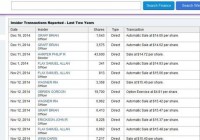
Summary Insider activity can be an extremely valuable tool when analyzing an investment. Insider buying is typically straight-forward, while insider selling is trickier to analyze. Insider sells should be analyzed by their size and frequency, the number of insiders selling, and insiders’ overall holdings and wealth. First Solar in 2007 – 08 provides a classic illustration of how large amounts of insider selling can be a red flag. If you told me that I had to invest in a portfolio of any 10 American companies for the next 3-5 years and I was only allowed to look at one metric or one data piece to make my decision, the choice would be a simple one. There’s no metric that can tell you more about a company that insider activity. In a world where corporate officers and directors are coached to “spin” their performance like politicians and are often incentivized to exaggerate results, insider activity lets you cut through the bullcrap and see what officers and directors of the company truly believe. Insider activity is often under-utilized by investors. Two likely reasons for this: (1) it’s inconclusive in the vast majority of cases and (2) it’s sometimes difficult to analyze. If you gave me a random sample of 100 companies, it’s likely that we would not be able to form a legitimate preliminary thesis on any more than 20 of these companies. And that’s being generous. In reality, no more than 3-10 will likely have significant activity in either direction. Yet, the few cases where there is significant insider activity provide us more insight than any other metric or data point out there. Analyzing insider buys can be reasonably straight-forward. If you see 2+ officers or directors buying significant amounts of shares at prices similar to the current stock price in the past six months, that’s generally a good sign. It means that these key individuals believe the company’s stock is undervalued and represents a good bargain. Of course, anyone can be wrong even about their own company, so it’s no guarantee of superior performance. Nevertheless, insiders know more about the company than anyone else and while their buying might not tell you much about macro conditions or the future price environment for their products, it does tell you what the insider think about their own company’s relative position. In most cases, that’s quite valuable information. Insider selling, however, is a much trickier piece of data to analyze I’ve heard many individuals discount the idea of looking at it entirely, but I think this is because people often find themselves frustrated with complex data series. Insider sales can be quite meaningful if you know how to analyze them. Diversification of Assets The first thing to note with insider sales is that they aren’t automatically “bad news.” Many insiders sell shares for perfectly legitimate reasons that have nothing to do with the stock’s valuation or company fundamentals. Put yourself in the shoes of an executive that has 90% of his or her wealth invested in one company. No matter how much you believe in your company and no matter how much of a bargain you believe the stock to be, it still makes sense to diversify a bit, so if the worst case scenario does happen, you still have a considerable bit of wealth. For this reason, it should be no surprise that executives at companies that have had good runs sell out of some of their shares in order to diversify wealth. Likewise, many executives and directors simply have other uses for the cash. This could include investments in other potential business opportunities, philanthropy, or real estate purchases. Indeed, it’s fairly common for high-level company stakeholders to sell shares, and that’s why insider selling can be tricky to analyze. This doesn’t mean it’s impossible, however. Insider Dumping There are several pieces of data to analyze when examining insider selling. I focus on: (1) Size of insider sells, (2) The number of insiders selling, (3) Frequency of selling activity, (4) Insider buys, and (5) Insider sells relative to total inside ownership Companies with consistent insider sells of large amounts by at least 3+ officers or directors, with little or few offsetting buys are the ones that give me cause for skepticism. This is particularly true with a company where inside ownership is fairly low to begin with (e.g. 2% – 3% of outstanding shares). That a director might need to take money out now and again is no surprise. Several officers and directors taking out large amounts of money in a short time frame, on the other hand, indicates a general pessimism on the company’s future stock prospects. Even in the odd event that company execs are selling large numbers of shares and the stock is undervalued, it would lead me to question management’s abilities. Management has a greater level of knowledge on a company than anyone else. If management can’t tell when their own stock is a good bargain, I have to suspect that they are also not good at understanding value in their own business, as well. Example #1: American Capital (NASDAQ: ACAS ) The reason this topic was on my mind was an excellent article from Stanislav Ermilov on American Capital . Stanislav’s thesis is that there is considerable hidden value at ACAS. He believes that once they spin off some of their assets, the much of that value will be unlocked. I found Stanislav’s case compelling enough to start looking at it myself. The first thing I did, naturally, was take a look at insider buying activity . I reasoned that if the officers of the company understood the “hidden value”, there would likely be a few that had been buying the hypothetically undervalued shares. Unfortunately, what I discovered was the exact opposite: officers have been dumping shares like mad. (click to enlarge) The screenshot above shows the past couple of months, but the track record of insider selling has been consistent over the past few years. Since December 2012, I estimate that there was a total of over $80 million in insider sales by at least 7 different officers and directors. Almost all of these sales have come at prices close to the current market price. I see no insider buying activity at all. No matter how compelling the thesis for ACAS might seem, I have to think there are some significant risks being missed. Unless Yahoo Finance is inaccurate (and it sometimes is), it also states that there is only 2% inside ownership for ACAS, which has a market cap of about $4 billion. 2% of $4 billion is $80 million. In other words, the insiders have sold off nearly half the shares in the past two years. I’m not necessarily suggesting that ACAS’s management is poor. Given that they make a lot of higher-risk investments, the company’s value would naturally suffer in market downturns. Perhaps, management merely thinks we’re near a cyclical peak. It is worth noting, however, that the stock lost 97% of its value during the last financial crisis. I have no opinion on ACAS and have done little research, but I know that the insider selling alone is enough to keep me away from it, even with a compelling “buy” thesis. Example #2: Zillow (NASDAQ: Z ) I’ve been skeptical of Zillow’s valuation for quite awhile. Indeed, I wrote an article, ” 7 Reasons Why Zillow is Extremely Overpriced ” back in August 2013. At the time I penned the article, Zillow sold for around $91 per share. As I’m writing this, it sells for $103, which is arguably a poor return over that 16-month period (13.1% versus 23.1% for the S&P 500), but hardly disastrous. However, this ignores the wild ride it’s taken in that timeframe, skyrocketing to $160 back in July, before plunging down to its current price. My thesis on Zillow hasn’t changed one bit. It still looks significantly overvalued to me at over 14x revenue, it is at best a break-even company, and its competitive position is weaker than typically imagined by investors (an issue repeatedly hammered on by short-selling outfit , Citron Research). Nevertheless, I’ve never recommended shorting it for precisely the reasons elucidated in the famous J.M. Keynes quote: ” the market can stay irrational longer than you can stay solvent .” While there are numerous reasons I view Zillow’s stock as overvalued, the insider sells paint a story that the officers of the company believe it’s overvalued, as well. Assuming my data is correct, I calculated over $1.4 billion in insider sales over the past 2 years, with a large chunk coming at lower prices than the current one (with the selling spree beginning around $40). The current market cap of Zillow is $4.2 billion, so the total insider selling amounts to 33.3% of the company’s current value. There are some differences between Zillow and ACAS. For one, the officers and directors of Zillow owned a much larger percentage of shares than their equivalents at ACAS. Moreover, it’s likely that many of the major stakeholders had a significant bit of their wealth tied up in Zillow. At the same time, once an officer sells over $20 million in shares in a few years, you have to think they have a pretty sizable cushion of safety and that insider selling becomes a statement on the value of the stock, rather than merely a “diversification strategy.” Even if 50% of your wealth is tied up in one company, that’s not a huge deal when your total wealth exceeds $50 million. I have and continue to view Zillow’s massive insider selling as a signal for long-term shareholders to get out until the price has significantly corrected; below the $50 range at a minimum. I personally wouldn’t even consider it unless the price fell below $35. Example #3: First Solar (NASDAQ: FSLR ) in 2008 Thus far, I’ve given you two current examples of stocks where the insider selling activity raises questions about valuation risks. But I also want to give you a historical example where massive insider dumping was quite predicative of an eventual crash in a stock. First Solar in 2008 is one of the most dramatic examples I can recall. First Solar peaked at over $310 in May 2008. It gave up 72% of its value in six months, plunging all the way to $87 in late November 2008 before rebounding. Since that point, it continued to lose value till bottoming out in June 2012 around $13. Today, it’s trading back at $44 meaning that if you bought at the peak and held, you would’ve lost over 85% of your investment. (click to enlarge) The dramatic insider selling activity in FSLR in 2007 and 2008 was a clear message that the stock was significantly overvalued. From May 2007, when FSLR sold in the $60 – $70 range, till August 2008, before the stock crashed, there were over $1.5 billion in insider sales. While that figure might arguably be inflated due to sales by the Estate of John T. Walton, there was considerable activity amongst the executives, as well, with CEO Michael Ahern selling over $350 million in shares in that 15-month window. When an executive holding a massive stake in his or her own company sells off $5 or $10 million in a year, it’s reasonable in many cases to assume that he or she is diversifying their portfolio. When he sells off $350 million, that’s a statement on the value of the stock! Conclusions In most instances, insider activity doesn’t tell us much about a stock. For the average company, there is little activity, or a handful of small sells. In the few instances, however, where there is a significant amount of insider activity, it can tell us quite a bit about management’s perception of valuation. Insider buying is relatively straight-forward to analyze. Significant buys by multiple insiders show that the people running the company have confidence in their performance and view the stock as undervalued. Insider selling is much trickier to analyze, but an equally valuable tool. In most cases, the activity that you see will be inconclusive at best. However, when there is significant activity, it should be analyzed by the size and frequency of sells, the number of insiders selling, and the overall context (e.g. overall stake in company by insider, portion of total wealth, relationship to company). When you see a clear and consistent pattern of share dumping by officers and directors, this is more often than not, a clear indication that a stock is overvalued.