Tag Archives: author

Why I’m Buying Gilead And Selling Celgene
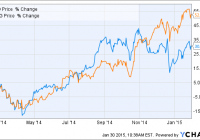
Summary Gilead appears very cheap compared to Celgene. In this article I compare growth expectations to valuation for the two companies. I think that a “pair trade” long Gilead and short Celgene makes sense at this time. Today I am starting a new mock portfolio on Seeking Alpha: the Pairs Trade Portfolio. Every transaction made in the portfolio will be a pair of trades of equal value (as close to $20,000 for each stock as can be), one long trade and one short trade. I plan on adding to this portfolio – and readjusting as necessary – over the next months and years and it will probably end up being a rather large study. The first trade is to go long Gilead (NASDAQ: GILD ) and short Celgene (NASDAQ: CELG ). My apologies for the length and description of this article. As it is the first in the series I will define and describe the strategy of pairs trading in detail here and refer to this page in future articles. Those readers familiar with the concept can skip over the next part and begin reading at the “Gilead vs. Celgene” section below. What is a “pair trade” and why would an investor want to do it? Pairs trading takes two highly correlated investment instruments and essentially pits them against each other. What stock will do better, Lowe’s or Home Depot? Pfizer or Merck? The investor goes long on the stock he/she thinks is undervalued relative to the overvalued one. The (relatively) overvalued one gets shorted. The investor is thus hedging bets and isolating a trade that only takes into account the relative value between two stocks. The strategy is often thought of as a very technical, statistics-driven exercise in which an outperforming stock is always shorted and the underperforming one is always the long. “Reversion to the mean” is counted on to make money in the pair trade. However, I feel that approach is short-sighted and I won’t be a slave to it. There are countless examples of stocks that outperform others consistently despite a high degree of correlation in the short term. Those are cases in which a pair trade with the underperforming stock as the long should be avoided. The motivation for making a pair trade is largely due to the fact that the strategy is a market-neutral hedge. It does not matter if the overall market crashes or zooms to new heights; the investor makes money if and only if the long stock pick outperforms the short stock pick. For example, let’s assume we set up a pair trade that is long Gilead at $100 per share and short Celgene at $120 per share and a market crash hits us in 2014. At the end of 2014, Gilead sits at $60 per share and Celgene goes to $60 as well. If the original position was $20,000 in each stock, then our pair trading investor has made $2,000 during 2014 (long GILD loses $8,000, short CELG gains $10,000) – a gain of 5% overall. Pairs trading is potentially a great defensive strategy. The market-neutral aspect of it makes it something to consider when it appears that stocks are overvalued in general. Pairs trading protects the investor from high valuations. Here’s a simplistic example: an investor believes that company A is a great company in a great industry. He/she really wants to invest in company A but the market is in the stratosphere and A sports a P/E of 70 – the risk seems to outweigh the reward. But he/she sees that company B, which has similar prospects to company A has a P/E of 110. The investor can go ahead and invest in company A as a pair trade with B and those P/E ratios might as well be 7 and 11, or 700 and 1100 for that matter. Recently I hear a lot of statements like “there’s nothing to buy”, “money has to be invested somewhere”, or “I’m afraid of valuations, but I don’t know what else to do but buy and hold.” At this point in time, I feel that every investor should consider any and every conservative strategy available. In my opinion, the US markets are in for a correction and I have written about the macro outlook a couple of times recently: One could think of a pairs trade strategy as another “what to do” when a bear market looks likely. Gilead vs. Celgene Both Gilead and Celgene are large biotech companies (market caps of about $157 billion and $96 billion respectively) and therefore it is not surprising that the correlation between the stock prices of the two companies was high during the past year: GILD data by YCharts A major divergence occurred recently – in early November – when Gilead started drifting lower/sideways while Celgene powered higher. On December 22, GILD took a fairly large plunge when Express Scripts (NASDAQ: ESRX ) announced that it would exclusively cover the AbbVie (NYSE: ABBV ) hep C drug. The question is, does that divergence mean that Gilead is undervalued compared to Celgene? The above chart suggests that might be the case and a further look is in order. I think that GILD is a better buy than CELG and the next sections will cover the growth prospects and valuation comparisons. Growth for Gilead The average analyst estimate for sales growth in 2015 is 17.8%. A quick look at where that growth will come from is in order to see if it makes sense. Estimates for worldwide growth in Sovaldi/Harvoni sales in 2015 are all over the map and while it is certainly difficult to guess where that will land, I’d say a conservative estimate is for 5% growth in sales. I’ve seen estimates from -5% to 30% growth. Sovaldi/Harvoni will likely account for more than half of Gilead’s total sales in 2015, but other drugs are growing fast and becoming more important for the company. In a previous article about Gilead, I noted that: According to Thomson Reuters, sales of idelalisib [Zydelig] are forecast to exceed $1 billion by 2017, with consensus sales forecasts of $1.218 billion that year. Zydelig began sales last quarter and it will be interesting to see how well it did in Q4 2014. It should add somewhere between $500 million to $700 million in 2015. In my article referenced above, I also singled out Stribild and noted that it was expected to see sales of over $2 billion in 2016. In 2014, it should easily clear the $1 billion mark. Like Zydelig, Stribild should also add a considerable amount to the top line. My estimate is an additional $700 to $900 million in 2015 sales. Complera/Eviplera is another in Gilead’s best-in-class HIV stable of drugs that is growing fast. In the first nine months of 2014, sales grew over 60% year to year and will eclipse the $1 billion mark for all of 2014. I expect it to add $500 to $600 million in sales to 2015 figures. A look at Gilead’s most recent 10-Q (see part 13. Segment Information) shows that the other drugs will likely be slightly up or slightly down. Add in any new approvals and there should be slight growth in the “other” category of those products that I did not mention above. Adding everything up (and making some assumptions for Q4 2014) puts my rather conservative 2015 revenue growth at about 12% – 14%. So by my back-of-the-envelope reckoning, the analyst expectations for 17.8% revenue growth look reasonable to me. Growth for Celgene Celgene’s growth is much easier to estimate as the company just gave guidance yesterday. Management expects 2015 revenue to grow 22.3% over 2014. Analyst estimates show a number of 21%, so it looks safe to assume something in the low 20s. Valuation I have recently written about Celgene’s GAAP and non-GAAP reporting in an article titled ” Celgene: Could You Be More Like Gilead, Please? ” and because I believe that the non-GAAP numbers inflate EPS, I will use GAAP figures for the P/E calculations below. Gilead should report EPS of about $7.25 for 2014. At a current stock price of $104.80, that equates to a P/E of 14.5. Celgene has reported EPS of $2.39 for 2014. At a current stock price of $119.16, that equates to a P/E of 49.9. Let’s take a look at cash generation: GILD Cash from Operations (TTM) data by YCharts Gilead’s market cap is about 60% higher than Celgene. However, it generates more than 300% cash than Celgene. The above chart shows the trailing 12 months, so once Gilead’s Q4 results are put into it, the figure will likely be something like 400% more cash from operations. Finally, a look at revenue: GILD Revenue (TTM) data by YCharts Again, Gilead’s soon-to-be-released Q4 results are not included. Once they are, the TTM sales number should be around $23 billion, or 200% higher than Celgene. Conclusion When we look at sales, earnings, and cash flow, we can see that Gilead is at a level anywhere from two to four times higher than Celgene. And yet the market cap of Gilead is only 60% higher than Celgene. 2015 growth estimates favor Celgene by 22.3% to 17.8%. Gilead’s incredible growth in 2014 will plateau and we will see good – but not exceptional – growth in 2015. For that reason, Celgene clearly does deserve a higher multiple, but not a multiple that is more than three times that of Gilead. I expect to see the difference in multiples between the two stocks narrow, thus favoring GILD in a pair trade. The Portfolio So here is what the mock portfolio looks like so far after executing the first pair trade: (click to enlarge) Not terribly exciting yet, but there will be more to come. Be sure to click “follow” if you would like to get real-time alerts on my future articles. Disclosure: The author is long GILD. (More…) The author wrote this article themselves, and it expresses their own opinions. The author is not receiving compensation for it (other than from Seeking Alpha). The author has no business relationship with any company whose stock is mentioned in this article.
Why Should You Buy EQT Corporation?

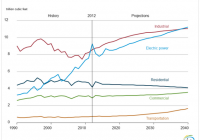
Summary EQT’s strong and well-diversified asset base will successfully support its ability to cater to the growing market. Moreover, the company plans to drill about 181 wells this year, which will further expand its production capacity. EQT’s leading cost structure and financial flexibility further aid its future growth. Based in Pittsburgh, Penn., EQT Corporation (NYSE: EQT ) is one of the largest natural gas producers in the Appalachian Basin and has been reporting healthy financial results for over a decade. Its improving financial performance year over year is indicative of the company’s strong business model. In my opinion, the company enjoys a strong competitive position in the market because of factors that not only support its future profitability, but also make it a worthy investment in the long term. Let’s analyze a few of these factors. Strong Asset Base Supports Its Ability to Successfully Cater to the Growing Market According to the U.S. Energy Information Administration (EIA), the demand for natural gas is expected to sharply rise in the coming years. Consumption is expected to increase from 25.6 trillion cubic feet (Tcf) in 2012 to about 31.6 Tcf in 2040, reflecting a compounded annual growth rate of nearly 0.7%. Except for residential, the use of natural gas is expected to rise in every end-use sector. The demand for gas in the residential sector has declined as a result of many U.S. citizens moving to warmer areas of the country. Source: EIA . I believe EQT can successfully accommodate the growing demand for natural gas as it owns a diversified and strong asset base. The company has been a major player in the Appalachian Basin for more than 120 years and seems to be taking full benefit of the Marcellus play, which is one of the most productive natural gas plays in North America. EQT owns about 3.6 million gross acres, which includes nearly 580,000 gross acres in the Marcellus play. It has total reserves of about 36.4 trillion cubic feet equivalent (Tcfe) of which half (18.5 Tcfe) are located in the Marcellus play, which has registered an annual growth rate of about 32% during the past few years. The company has over 14,500 gross productive wells, and has been witnessing a strong growth in its natural gas and oil reserves over the past few years. The total proved reserves grew from only 4,068 billion cubic feet equivalent (Bcfe) in 2009 to about 8,348 Bcfe in 2013. That reflects an annual increase of about 15%. Source: Investor Presentation . Moreover, the company plans to drill about 181 wells this year, which will further expand its production capacity — thus strengthening its ability to successfully cater to the growing market. Industry Leading Cost Structure and Financial Flexibility Accelerate Future Earnings EQT has an attractive cost structure that would definitely help it generate attractive profits, compared to those in its peer group. The company incurs nearly $0.88 per Mcfe of finding and development costs compared to the industry average of $2.74 Mcfe. The operating expenses per unit of $0.52 incurred by EQT is also much lower than the industry average of $1.68. Source: Investor Presentation . Furthermore, the company has ample liquidity to successfully execute its business plan. The total cash and cash equivalents and restricted cash increased from $845 million at the beginning of 2014 to nearly $1,355 million at the end of the third quarter of 2014, reflecting an attractive rise of about 60%. The company’s current net debt to total capital ratio is 21% and looks quite reasonable. Moreover, except for $166 million of debt maturing this year, no major debts/liabilities are payable earlier than 2018. The manageable debt maturities have raised EQT’s ability to appropriately finance future drilling operations and important projects, thus increasing its profitability. Source: Investor Presentation . A Risk to Consider Natural gas is a commodity and therefore the company receives market-based pricing. The market for natural gas is quite volatile and any fluctuation in its price can significantly affect EQT’s future revenues and profits. The current market scenario does not seem to favor EQT as natural gas prices continue to fall. During December 2014, the U.S. natural gas price declined below $3 per million British thermal units for the first time since 2012. The rapidly rising production of natural gas along with comparatively stable demand will put downward pressure on its price. According to some estimates, increasing natural gas production will leave inventories at a level of more than 4 trillion cubic feet by the end of October 2015. Analysts have lowered their estimates for average natural gas price in 2015 from $3.75 per million Btu to $3.60. Although EQT exercised a few hedging activities to protect its cash flows from exposure to the risk of changing commodity prices, it still cannot fully immunize itself from the any fluctuation in natural gas market. The company utilizes several derivatives commodity instruments, including NYMEX swaps, collars and futures where it enters into fixed price natural gas sales agreements. However, these agreements involve contracts that fix only the NYMEX portion of the price and contracts that fix the NYMEX and basis. In this way, the full price still cannot be hedged, thus putting the company’s future profitability at risk. Conclusion The sum and substance of my analysis is that EQT is well-positioned to cater to the growing natural gas market. EQT’s diversified and strong asset base and industry-leading cost structure give it an edge over its industry peers. Moreover, EQT’s financial flexibility further supports the successful execution of its business plan. Based on my analysis, I give the stock a buy rating. Disclosure: The author has no positions in any stocks mentioned, and no plans to initiate any positions within the next 72 hours. (More…) The author wrote this article themselves, and it expresses their own opinions. The author is not receiving compensation for it (other than from Seeking Alpha). The author has no business relationship with any company whose stock is mentioned in this article.

When The Dollar Crashes

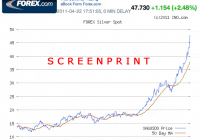
Editor’s note: Originally published on January 26, 2015 Back in late April of 2011, legendary investor Jim Rogers made one brilliant call combined with one incredibly stupid observation. So he was hitting about 50%. That’s not bad, the very best prognosticators rarely do better than getting it right 65% of the time. Most people get it dead wrong most of the time. Speaking of silver on April 20, 2011, Rogers was quoted as saying, “If silver continues to go up like it has been over the past 2 or 3 weeks, yes, then it would get to triple digits this year. And then we’ll have to worry. It’s not parabolic yet”. Rogers concluded silver wasn’t yet in a bubble. That may well turn out to be one of the very worst predictions Jim Rogers ever made in his life. A week later, on April 28, silver peaked at just a smidgen under $50. In two weeks, by May 12th, silver dropped by an incredible 33%. But Rogers got one thing dead right when on April 20th, he said, “A parabolic move and all parabolic moves end badly.” Silver went parabolic and Rogers couldn’t look at a chart and recognize a parabolic move when it stared him in the face. He knew enough to understand the effect of a parabolic move; he just didn’t see it in front of him. If you want to retire rich, go to a tattoo parlor and have them inscribe on your forehead, in reverse writing, “ALL PARABOLIC MOVES END BADLY.” In the same way that people tend to think in absolutes about politics, either you are a Republican or a Democrat; investors want to think in terms of either Technical Analysis or fundamentals. That tends to suggest there are no other alternatives in either politics or investing. I don’t know a single investor made rich by either TA or fundamentals. Maybe they work for some, some of the time. I’ve just never seen it. In April of 2011 silver went parabolic. At least to those who were capable of recognizing a parabolic chart in front of them. There were probably 100 fundamental reasons to buy silver. TA suggested silver was headed to the moon. Both were wrong. There are 100 reasons to buy a commodity, any commodity, at every top. And if you actually believe TA is valid, invert the chart and see what is suggests then. That’s what Warren Buffett did before rejecting TA as an investment guide. The investment psychology as measured by the bullish consensus toward silver in April of 2011 was higher than it was at the very top of silver at $50.25 in late January of 1980. And silver went parabolic. ALL PARABOLIC MOVES END BADLY. I was working on a piece for Friday, last week, and I needed to know what the Dollar Index was doing. I pulled up a chart and saw that the Dollar Index was up a remarkable 2% for the day . It actually went above 2% during the day but I couldn’t capture it on a screen print. I did capture the 2% move and used it in a piece. 2% in a day is a lot in any currency much less the Dollar Index. For one reason or another, I watched again on Friday to see what the Dollar Index would do. Between Thursday and the high on Friday the 23rd of January the Dollar Index climbed a remarkable 3.25% in 36 hours. I’ve never seen such a move in a currency. No one that I know saw that or at least no one remarked on the move. So I went back to the piece I wrote about silver on April 25th of 2011 and looked at the chart I had posted of silver where I claimed, “Silver is going parabolic.” I took a lot of flak at the time in 2011 because all the silver clowns were convinced silver was going to $500 an ounce overnight. I was right, they were wrong. Silver went parabolic and then crashed in two weeks by 33%. About five guys got it dead right in April of 2011 and everyone hated them for it. A 3.25% move in any currency is a parabolic move. It is the kind of move that ends a trend, no matter up or down. There are a hundred fundamental reasons to buy the dollar right now. TA suggests the Dollar Index is going to 125. Everyone loves the dollar. The bullish consensus on the Dollar Index is the highest in recorded history. That is what marks tops. ALL PARABOLIC MOVES END BADLY. Black Swan events are those hard to predict and rare events that are beyond the realm of normal expectations. Parabolic moves may not qualify as in the realm of normal expectation but that doesn’t mean you can’t recognize them in front of your nose. The dollar index will crash one day. It won’t be down 33% in two weeks similar to that move in 2011 in silver. But the Dollar Index could be down 1/3 of the move since July of 2014 in as little as two weeks. The index was around 80 on July 1st and rocketed higher to 95 last week. I can see the dollar dropping 5 points in two weeks. Wouldn’t everyone be shocked?