Tag Archives: author

Back To The Box Paradigm: A U.S. Fixed Income ETF Portfolio
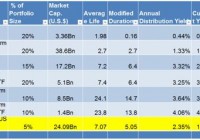
Summary As markets make incomprehensible moves, stick to your rules, build a box. Do not attempt to chase market shadows, but devise and maintain strategies that fit your needs. One such strategy entails accepting duration risk for a higher distribution yield relative to a benchmark. Back To The Box Paradigm: A U.S. Fixed Income ETF Portfolio When the markets are moving in directions you cannot comprehend and cynicism erupts, stick to your rules. Make a box and stay inside of it. Do not attempt to chase shadows, but devise and maintain strategies that work. One such strategy, the box paradigm, is designed to accept duration risk for a higher distribution yield than its benchmark, the iShares Core U.S. Aggregate Bond ETF (NYSEARCA: AGG ). An ETF portfolio was selected to meet these objectives and is seen below in Table 1: (NYSEARCA: FLOT ) – iShares Floating Rate Bond ETF (NYSEARCA: BSV ) – Vanguard Short-Term Bond ETF (NYSEARCA: BIV ) – Vanguard Intermediate-Term Bond ETF (NASDAQ: VCIT ) – Vanguard Intermediate-Term Corporate Bond ETF (NYSEARCA: BLV ) – Vanguard Long-Term Bond ETF (NASDAQ: VCLT ) – Vanguard Long-Term Corporate Bond ETF AGG – iShares Core Total US Bond Market ETF Table 1 – Box Paradigm: U.S. Fixed Income ETF Portfolio As At January 30 th 2015 (click to enlarge) Environment Outside The Box The environment should first be ascertained, so that a proper box can be constructed. In its latest FOMC statement, the Fed thinks that the U.S. economy is growing at a solid pace. Labor market indicators have improved further as job gains grew and the unemployment rate fell. Household spending is also showing signs of improvement as a result of the decline in energy prices. Businesses have also been investing while core inflation remains low but stable. Table 2 – Economic Projections Of Federal Reserve Board Members And Federal Reserve Bank Presidents, December 2014 (click to enlarge) Source: Federal Reserve Charts 1-3: Central Tendencies Of Economic Projections, 2014-2017 And Over The Longer Run Source: Federal Reserve Initial estimates show that U.S. GDP grew 2.5% year over year in the 4th quarter of 2014. This rate is above the 4-quarter moving average of 2.4%, so the U.S. is still growing at an above-trend pace. Consumer spending was strong as real PCE rose 4.3% versus 3.2% in the previous quarter. This was the strongest quarterly increase in the post-financial crisis era. Residential investment improved given the loosening of mortgage credit and this trend is likely to continue. Chart 4 – U.S. GDP Growth (Year-Over-Year %) As At December 2014 (click to enlarge) Source: Bloomberg Given the current moves in the U.S. economy and expectations for a rate hike in the 3rd quarter of 2015, yields in the U.S. should be rising. But they are not. The U.S. 10-year yield is nearing historical lows, around 1.65%. The chart below shows a 3-year chart of the U.S. 10-year yield. Chart 5 – U.S. 10-Year Yield Weekly Candlestick Chart As At January 30 th 2015 (click to enlarge) Source: Bloomberg Quantitative Easing of other central banks appears to be keeping U.S. yields low as investors shift their portfolios from their local currency fixed income portfolios to U.S. dollar-denominated portfolios to attain the higher yield. Assumptions & Box Metrics Trying to predict market movements produces a certain level of cynicism as there is a 60% probability that the prediction made is wrong. With this level of duplicity, investors should assume the worst-case scenarios which would prevent ruin but leave room for gains, a personal put option. Let us take a look at the table below which shows the box metrics of the U.S. Fixed Income ETF Portfolio. Table 3 – Box Metrics Of U.S. Fixed Income ETF Portfolio (click to enlarge) The box paradigm portfolio weightings hold until the triggers are achieved, that is, a recognizable change in the interest rate environment in the U.S. Furthermore, box constructions prevent chasing the market and ensure that the objectives are set and met. Disclosure: The author has no positions in any stocks mentioned, and no plans to initiate any positions within the next 72 hours. (More…) The author wrote this article themselves, and it expresses their own opinions. The author is not receiving compensation for it (other than from Seeking Alpha). The author has no business relationship with any company whose stock is mentioned in this article.
Wealth Manager Strategies For Uncertainty: Jean Brunel On Meeting Client Goals

By Susan Hoover January was a turbulent month for European markets that left investors grappling with uncertainty. The Swiss National Bank removed the long-standing euro peg from the Swiss franc . The European Central Bank began an open-ended quantitative easing program . And in Greece, the newly elected Syriza party vowed to renegotiate the country’s bailout package , which has implications for the stability of the entire eurozone. Wealth managers and advisers of high-net-worth clients now find themselves undertaking two separate but equally important tasks: identifying investment opportunities and reassuring nervous clients at risk of abandoning their current investment strategies. Both of these tasks are easier for private wealth managers who understand their clients’ goals and anxieties. Jean L.P. Brunel, CFA, managing principal of Brunel Associates, argues that a detailed analysis of client goals will allow advisers to construct portfolios that more accurately reflect risk profiles while seeking out sources of investment returns. In these resources from CFA Institute, Brunel explains his ideas in greater detail: Psychological Influences on Investor Decisions : Brunel argues that current tools for optimizing private client portfolios are powerful and insightful, but clients do not have the time to understand them. In this presentation, he discusses how advisers must take highly quantitative results based on rough answers and adapt them to changing client needs, goals, and risk over a lifetime – in effect, putting themselves in the shoes of their clients to develop a goal-oriented approach to asset allocation. Alternative Assets : In this presentation, Brunel questions the industry definition of “alternative assets,” suggesting that inappropriate benchmarks are used to measure them. The lower-than-expected liquidity and lower-than-expected downside risk protection of alternative assets mean that proper benchmarks are especially important, and an increased emphasis should be placed on manager selection. The industry has matured, according to Brunel, which means that there are solid opportunities, particularly in relative value. Goals-Based Wealth Management in Practice : The 2008 global financial crisis created opportunities for advisers ready to meet client concerns by focusing on those clients’ goals. In this article, Brunel discusses ways that wealth managers can address family issues, using goals-based wealth management concepts to generate specific portfolios driven by the client’s expressed goal. Brunel’s model allows for a high degree of flexibility and responsiveness to client needs while retaining a practical level of standardization. Is a Behavioral Finance-Based Allocation Really Suboptimal? Modern portfolio theory works marvelously in a world of institutions, but individual investors do not make decisions according to the logic of financial theory. According to Brunel, high-net-worth investors need an approach that reduces the likelihood of suboptimal performance while recognizing their unique behavioral tendencies. In this presentation, he discusses how a goal-based allocation that is adjusted to include overall risk optimization can assemble portfolios that are better matched to client intuition, which means portfolios that clients are more likely to accept and retain. Goal-Based Asset Allocation : In this presentation, Brunel explores a sequential approach to setting goals, stating that advisers need to change the definition of risk to mean “the probability of not achieving one’s goal.” According to Brunel, integrated wealth planning for individuals must evolve into an analysis of the client’s goals – what matters to the family, what are the worst nightmares, and what are the most cherished dreams. He further discusses the skills necessary to identify and quantify assets for each goal to match its risk profile. Private Asset Management or Private Wealth Management? Private asset management can be viewed as a separate discipline from private wealth management, even though the two terms are frequently used interchangeably. In this article, Brunel explains that private wealth management must go beyond the asset allocation and tax efficiency that is the focus of private asset management, encompassing more extensive issues and introducing more complex interactions. The larger number of factors involved leads to an exponentially larger number of possible interactions. Disclaimer: Please note that the content of this site should not be construed as investment advice, nor do the opinions expressed necessarily reflect the views of CFA Institute. Share this article with a colleague

American Electric Earns Bullish Thesis With Its Solid Growth Prospects

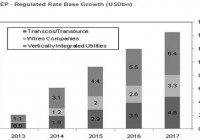
Summary Company making correct decisions to grow regulated operations. Regulated operations will provide sales, earnings and dividend stability. Aggressive capital expenditures will fuel AEP’s earnings growth in future. I reiterate my bullish thesis on American Electric Power (NYSE: AEP ); the company’s strategic growth plan focused on broadening and improving its regulated asset base will help it better its sales and attain a sustainable cash flow base through a decent increase in its rate base. As part of its long-term growth plan, the company is working to improve its competitive business results, and it will be making aggressive investments in transmission operations, which will portend well for both AEP’s top-line and bottom-line numbers. As regulated operations will gather more cash flow stability for the company, AEP will continue to reward its shareholders through dividends. Moreover, the company’s cost saving plan will positively affect its bottom-line numbers. The stock offers a potential price appreciation of 8.3%, as per my price target calculations, shown below. AEP Making Right Moves to Excel in Long Term 2014 was a good year for AEP; the stock is up approximately 35% in the last 12 months. The company’s performance has been positively affected by the low yield environment and improving demand from industrial and consumer segments. The company’s increased dependence on regulated operations has been helping it exploit the industry’s growth prospects. AEP’s strategic growth formula is centered on generating sales growth through increased capital expenditures for the infrastructure development of transmission business. The company has laid out its plan to make an investment of around $4.8 billion towards the betterment of its transmission business over the next three years. Owing to its large scale capital expenditure plan for regulated operations, especially for the transmission business, I believe the company’s regulated rate base will grow at a decent pace, delivering significant upside to its top-line numbers. The following chart shows AEP’s expected regulated rate base growth for upcoming years. Source: Power&RenewableInsights.com Along with the transmission infrastructure growth expenditures, the company is also looking at all possible options to better the results of its competitive business. AEP has made an announcement that Goldman Sachs will assist in improving and exploring the options of its competitive business operations. As utility companies like Duke Energy (NYSE: DUK ) are shedding their competitive operations , I believe AEP will also consider the option of selling its competitive energy assets to address the prevailing challenges and increase its focus on regulated asset base. Moreover, if the company opts to sell its competitive operations, the sales proceeds of competitive assets could be approximately $2.8-$3.6 billion . In addition, AEP has been actively pursuing its cost reduction plan, the “lean deployment” plan, to reduce its expense burden and support its future profitability. The plan has been rolled out to 13 distribution districts and 13 more districts are under review in order to deliver the management’s anticipated cost savings of $100-$200 million from the lean deployment plan by the end of 2016. In fact, the cost saving plan will grow the company’s bottom-line trajectory and will add towards its EPS growth. AEP have reiterated its earnings guidance for 2015 in its recent 4Q14 earnings conference call; the company expects its earnings to grow in a range of $3.40-$3.60 per share. Owing to its ramped up efforts to grow regulated rate base and healthy cost saving initiatives, I believe AEP will be able to grow its earnings at a decent base. Analysts are also anticipating that the company will deliver a healthy next five-year earnings growth rate of approximately 4.92% . Financial Performance The company recently reported 4Q’14 operating EPS of $0.48 , down from $0.60 per share in 4Q’13. The company’s quarterly earnings were negatively affected by its plan to speed up its capital expenditures and shift its O&M expenditures from 2015 and 2016, to 2014. The company’s decision to shift the future expenses to 2014, have improved earnings visibility and will positively affect its future earnings growth rate. Despite soft earnings for 4Q’14, the company reported an operating EPS of $3.43 for full year 2014, up 6% year-on-year. Investors Remain Rewarded AEP has a strong history of rewarding its shareholders through healthy dividends. The stock currently offers a safe dividend yield of 3.35% . The company’s healthy cash flow base has been supporting its hefty dividend payments and its current payout ratio of 55% indicates that AEP can increase its payout ratio to increase dividends in upcoming years. Keeping track of its impressive dividend payment policy, the company recently announced a quarterly dividend payment of 53 cents , an increase of 6%, year-over-year. Owing to AEP’s increased focus on regulated operations, I believe the company will attain more cash flow stability in the years ahead, ensuring the stability and security of its long-term dividend payment plan. The following table shows the dividend per share and dividend payout of AEP from 2012-2014, and includes figures for 2015, based on my estimates. 2012 2013 2014 2015(NYSE: E ) Dividend Per Share (In-$) $1.88 $1.95 $2.02 $2.10 Dividend Payout Ratio (In-%) 61% 60% 57% 61% Source: Company’s Yearly Earnings Reports & Equity Watch Estimates Risks Despite the company’s sturdy growth efforts, strict environmental regulations from authorities will remain an overhang on its future stock price performance. Since AEP has been making huge investments to develop its transmission infrastructure, I believe future capital expenditures could weigh on its cash flows. Price Target I have calculated a price target of $69 for AEP through a dividend discount model. In my price target calculations, I have used cost of equity of 6% and nominal growth rate of 3%. The stock offers an upside price potential of approximately 8.3%, as per my price target calculations, shown below. 2015 2016 2017 Terminal Value Dividend Per Share (In-$) 2.10 2.12 2.20 75.53 Present Value of Dividend Per Share (In-$) 1.98 1.88 1.85 63.45 Source: Equity Watch Calculations & Estimates Total Present Value of Dividend per Share = Price Target = $1.98 + $1.88 + $1.85 + $63.45 = $69/share Conclusion The company has been delivering a healthy financial performance in the recent past. The company has been making the correct decisions to grow its regulated operations, which will improve its financial performance. Also, regulated operations will provide sales, earnings and dividend stability. The company’s aggressive capital expenditures will fuel its earnings growth in the future. The stock offers a safe dividend yield of 3.35%, which makes it a good investment option for dividend-seeking investors. The stock also offers a potential price appreciation of 8.3%, based on my price target. Due to the aforementioned factors, I am bullish on AEP. Disclosure: The author has no positions in any stocks mentioned, and no plans to initiate any positions within the next 72 hours. (More…) The author wrote this article themselves, and it expresses their own opinions. The author is not receiving compensation for it (other than from Seeking Alpha). The author has no business relationship with any company whose stock is mentioned in this article.